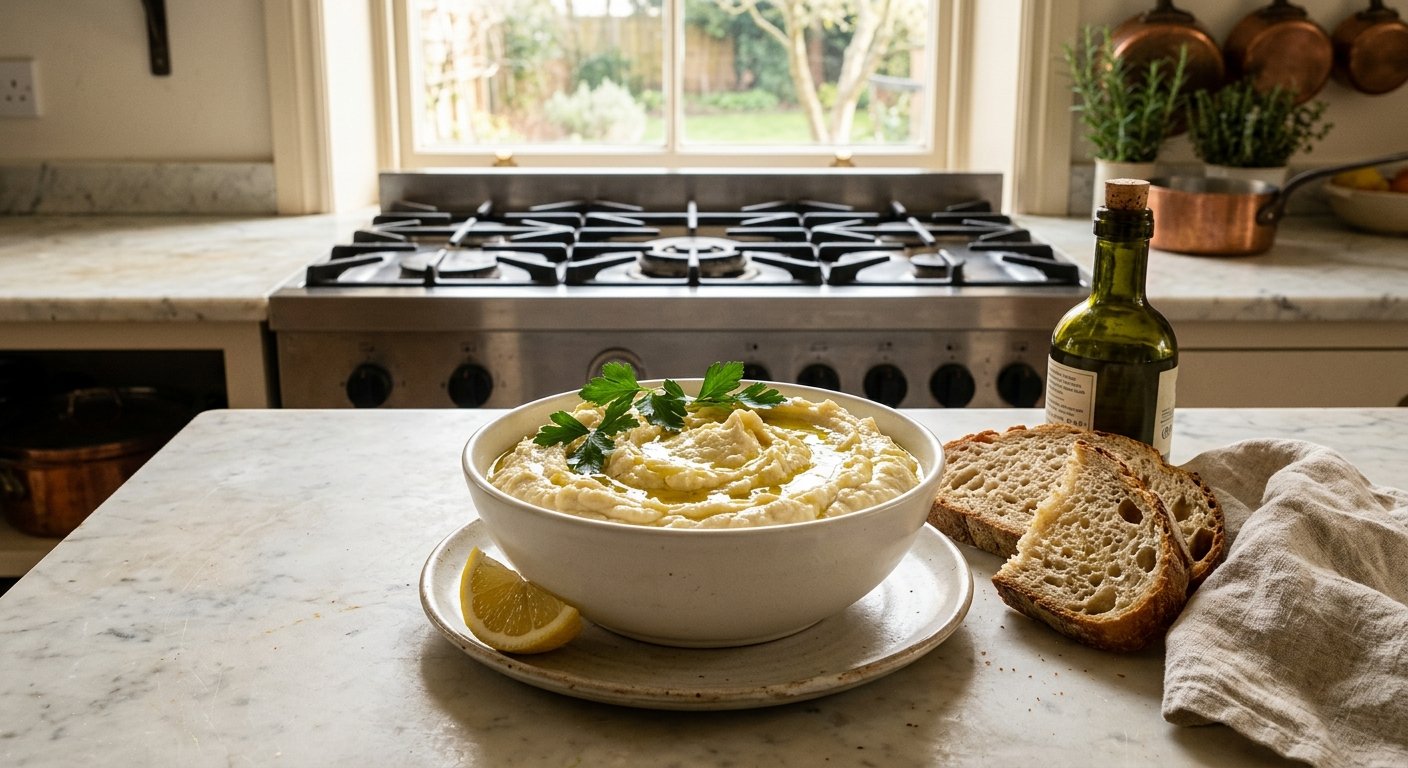
Classic Skordalia (Greek Garlic Dip)
The bold Greek garlic dip made two traditional ways. Aggressively garlicky, smooth, and rich with olive oil. Serve as a meze, alongside fried fish, roasted beets, or grilled vegetables.
Ingredients
Bread-Based Skordalia (Classic Island Version)
- 150 g stale white bread crusts removed
- 4-6 large cloves fresh garlic peeled
- 1 tsp fine sea salt plus more to taste
- 120 ml extra-virgin olive oil
- 3 tbsp fresh lemon juice about 1 large lemon
- 1 tbsp white wine vinegar optional
- cold water as needed
Walnut-Based Skordalia (Northern Greek Style)
- 120 g shelled walnuts lightly toasted and cooled
- 50 g stale white bread crusts removed
- 4-6 large cloves fresh garlic peeled
- 1 tsp fine sea salt plus more to taste
- 100 ml extra-virgin olive oil
- 3 tbsp fresh lemon juice
- 1 tbsp red wine vinegar
- cold water as needed
Instructions
Bread-Based Skordalia
- Soak the bread. Tear the stale white bread into chunks and submerge in cold water for 10 minutes. It should absorb the water fully.
- Squeeze completely dry. Lift the soaked bread and squeeze with both hands until no more water can be extracted. This step is not optional — excess water prevents the emulsion from forming. The squeezed bread should feel dense and almost rubbery, not wet.
- Pound the garlic. In a mortar, combine the garlic cloves and salt. Pound steadily until you have a completely smooth paste. The salt acts as an abrasive and helps break down the cell structure. If you do not have a mortar, crush the garlic on a cutting board using the flat of a knife with salt underneath.
- Combine and emulsify. In a food processor (or continuing in the mortar), work the garlic paste into the squeezed bread until the mixture is uniform. With the machine running — or while stirring vigorously — add the olive oil in a slow, thin, steady stream. Alternate every 2–3 tablespoons of oil with a splash of lemon juice. Continue until all the oil is incorporated and the mixture is pale, thick, and smooth.
- Adjust consistency and season. If the skordalia is too thick, add cold water one tablespoon at a time. Taste and adjust with salt and lemon juice. The flavor should be intensely garlicky with a clean, bright finish.
Walnut-Based Skordalia (Northern Greek Style)
- Soak and squeeze the bread as above.
- Pound the garlic to a paste with salt in the mortar.
- Process the walnuts. In a food processor, pulse the toasted walnuts until they are finely ground — not a paste, but no large pieces remaining. Add the squeezed bread and garlic paste and process until combined.
- Emulsify with oil and acid. With the processor running, add the olive oil in a slow stream, alternating with lemon juice and red wine vinegar. The walnuts add enough fat that the emulsion comes together quickly. The finished dip will be slightly darker in color and noticeably richer in texture than the bread-only version.
- Adjust and season. Add cold water by the tablespoon to reach the consistency you want. Taste for salt and acid. The walnut version often benefits from an extra squeeze of lemon to cut through the nut richness.
Notes
The garlic quantity is correct. Four to six large cloves per batch is the traditional range. Do not reduce below four cloves. Bread-based skordalia is the island tradition; walnut-based is the northern Greek tradition. Both are authentic. Keeps in the refrigerator for up to 4 days. Bring to room temperature before serving. Do not freeze.
Nutrition
Serving: 1g | Calories: 200kcal | Carbohydrates: 9g | Protein: 2g | Fat: 18g | Saturated Fat: 2.5g | Sodium: 360mg | Fiber: 0.5g