
Introduction
Most Greek home cooks buy their phyllo, and there is no shame in it — the paper-thin commercial sheets are a genuinely good product. But there is a second kind of phyllo, the thicker village-style dough made in home kitchens across Greece, and it is a different thing entirely: sturdier, richer, with a chew that shop-bought sheets cannot give you.
This is that dough. Six ingredients, thirty minutes, and it will change what your spanakopita tastes like.
Why This Phyllo Dough Works
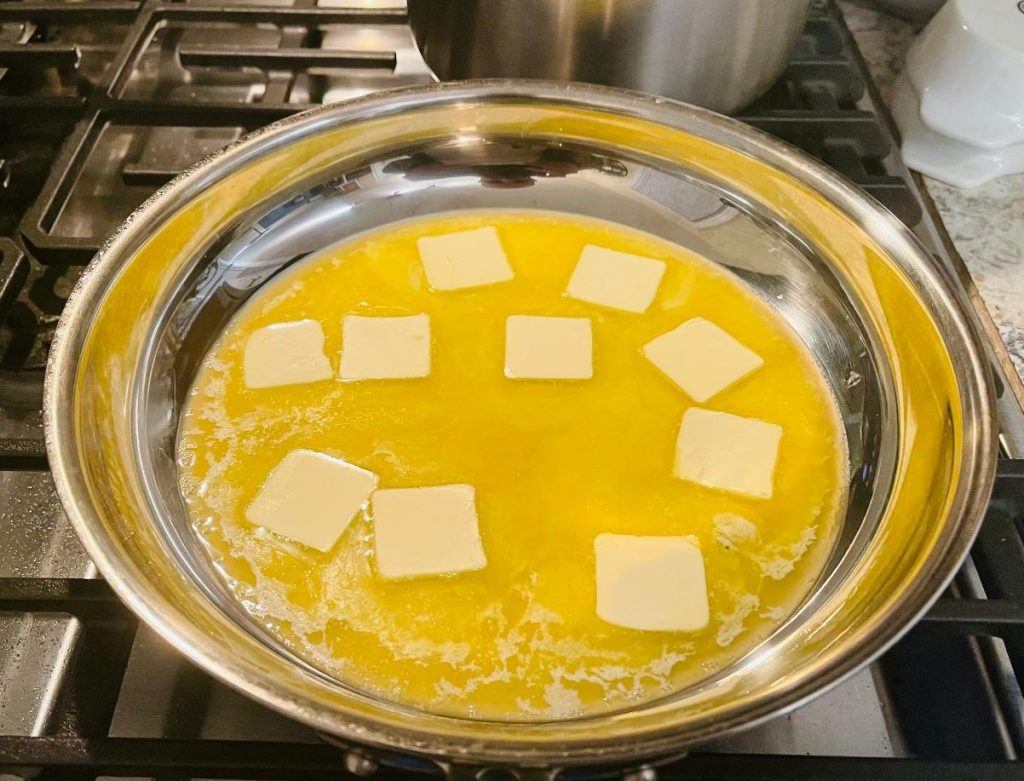
- Warm, clumpy butter — not melted. Fully melted butter disappears into the flour and you lose the layering. Warm it until it is soft and still lumpy and those lumps become flakiness.
- The well method. Making a hole in the flour and adding the wet ingredients to the centre lets you draw the flour in gradually, which prevents dry pockets.
- Rest it cold. Wrapped and refrigerated, the gluten relaxes. Skip the rest and the dough fights you every time you try to stretch it.
- Egg wash before filling. A brushed layer of egg seals the surface so a wet filling cannot soak through and turn the base to paste.
- Strips, not sheets. Cutting the rested dough into one-inch strips and rolling each one out is far easier than wrestling a single large sheet.
The Fresh Phyllo Dough Recipe
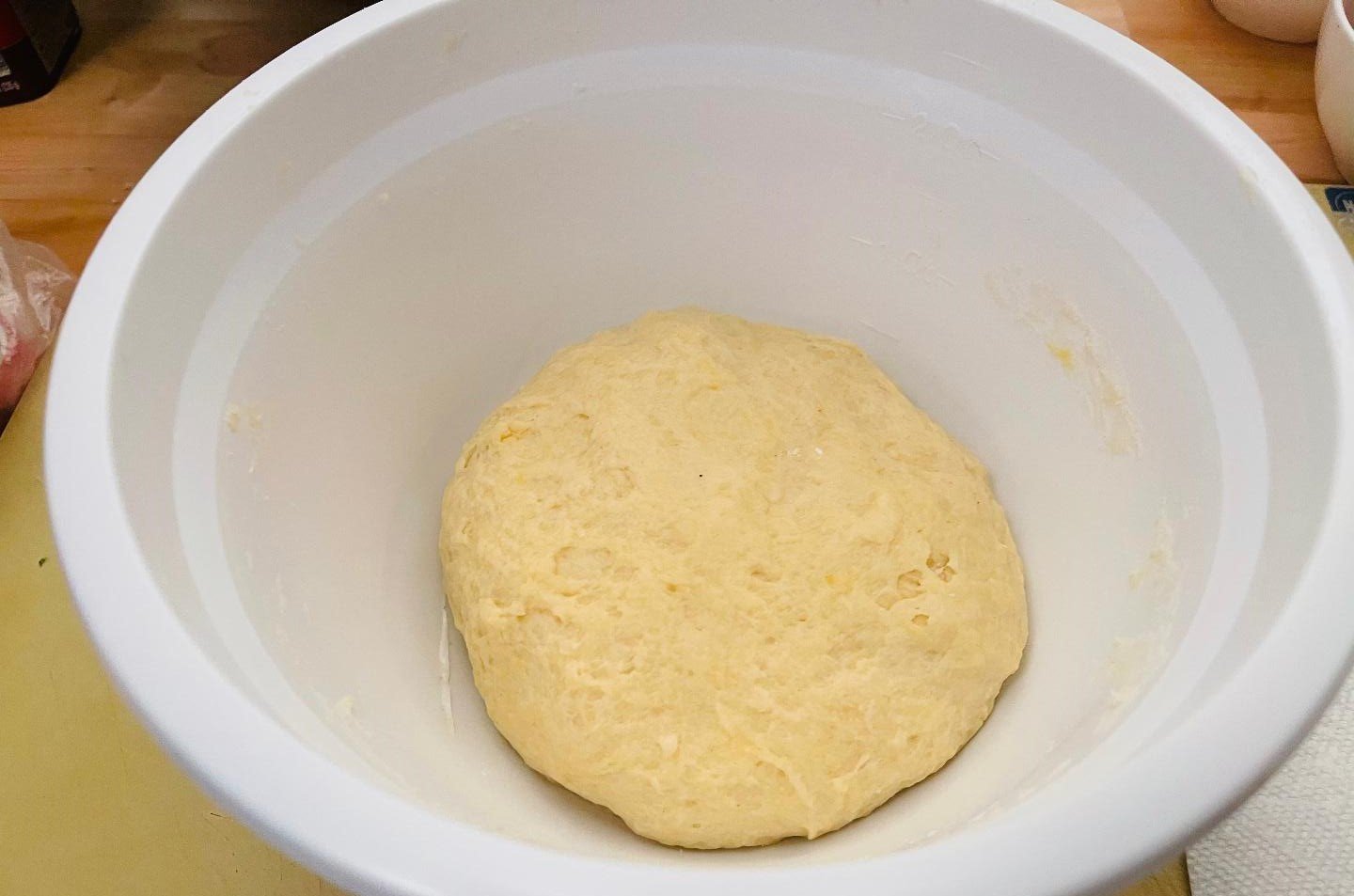
How to Make Fresh Phyllo Dough
Equipment
- (Help support our site!)Mixing Bowl
- (Help support our site!)Rubber Spatula
- (Help support our site!)Rolling Pin
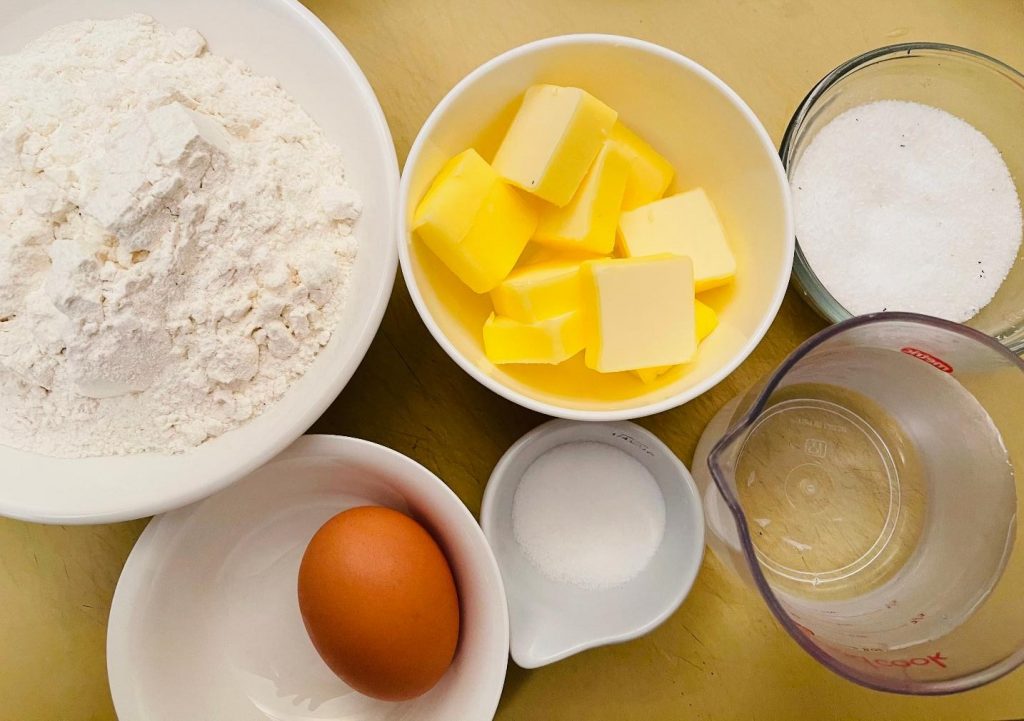
Ingredients
- 1 whole Egg
- 3 cup Flour All Purpose
- 3/4 cup Water
- 1 stick Butter Unsalted
- 1 tbsp Salt
- 1/2 tsp Sugar
Instructions
- Gather your ingredients. Begin by adding flour in a bowl.
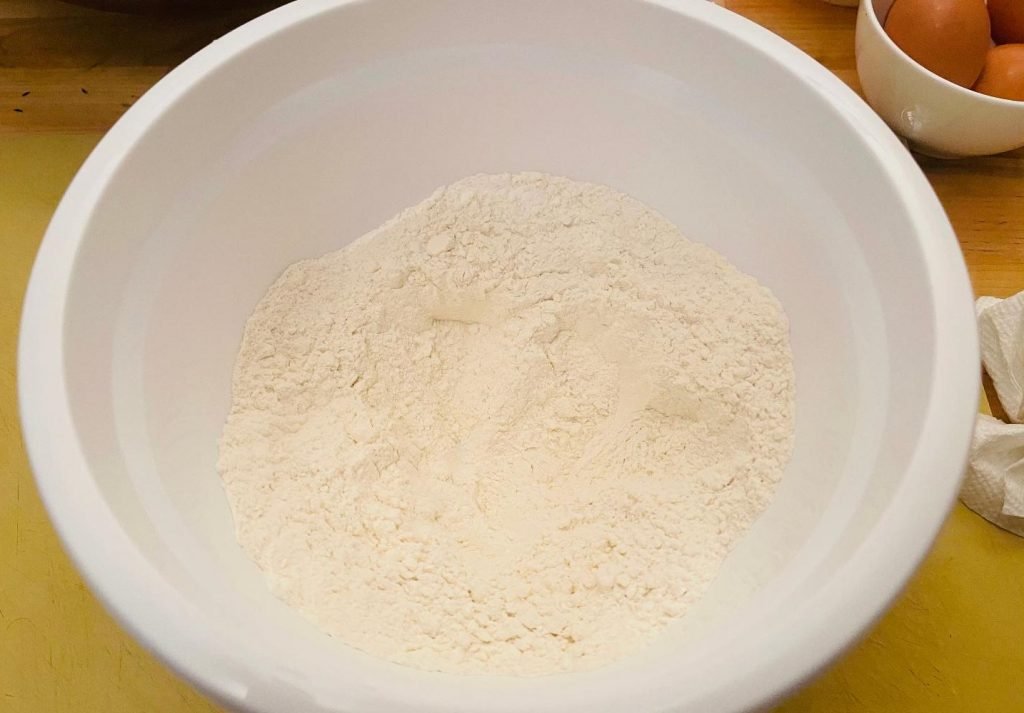
- Make a hole in the flour to add ingredients in center.
- Warm butter in pan but leaving it clumpy.
- Add all ingredients into center of flour.
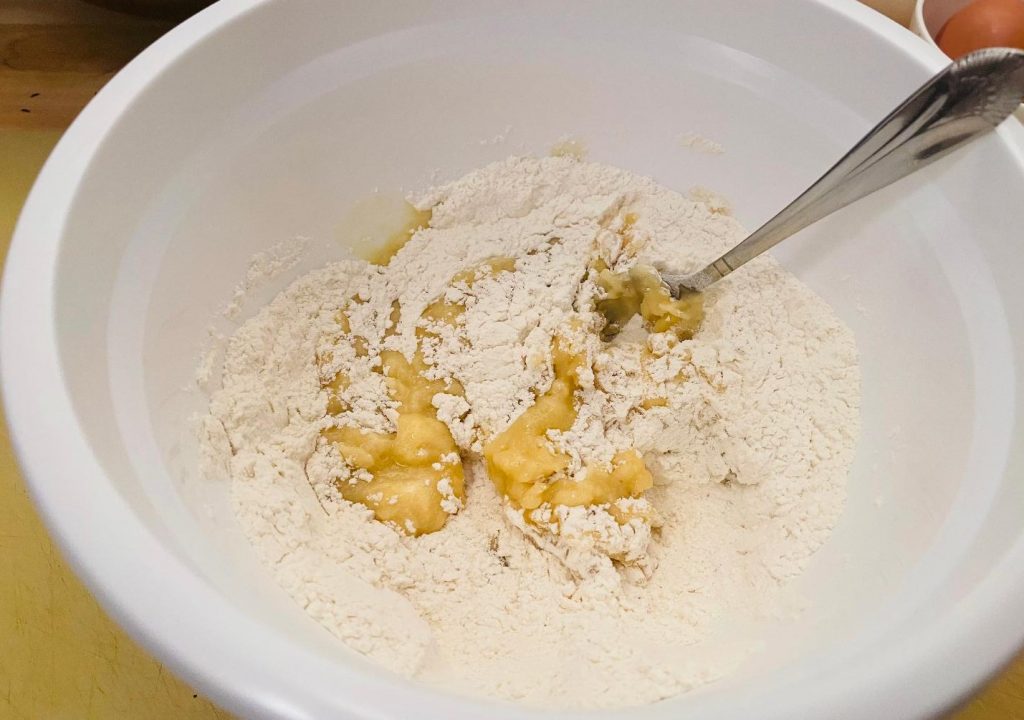
- Once all ingredients are incorporated place in plastic wrap and put in refrigerator till needed.
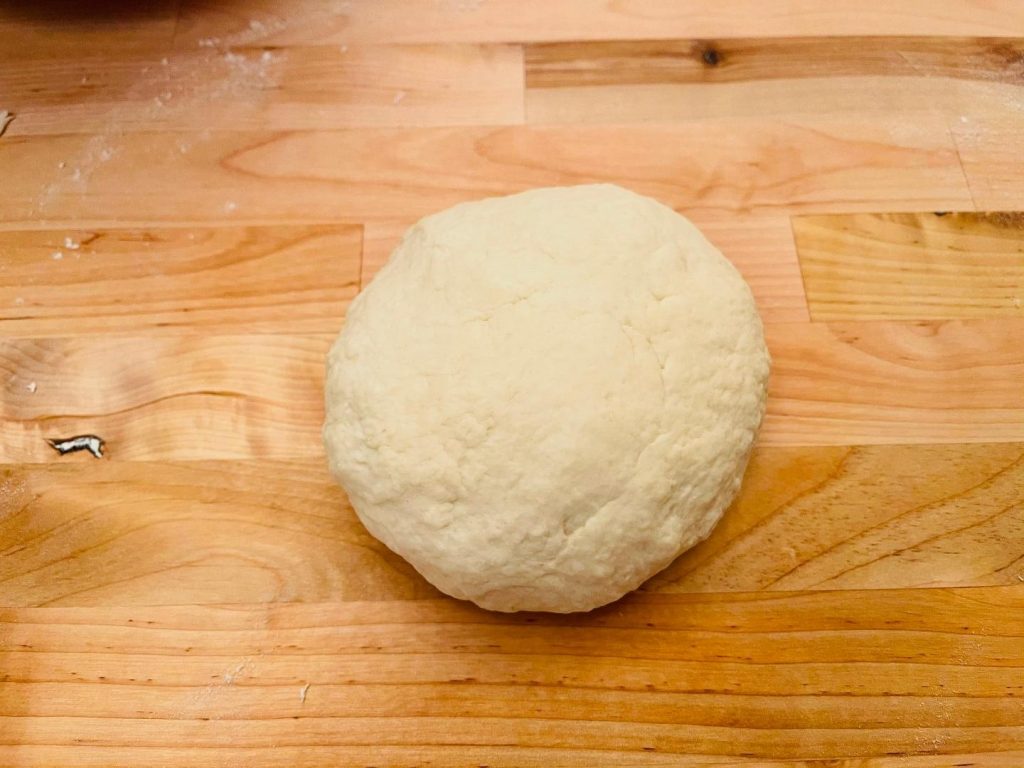
- When needed cut into 1 inch strips. Using some flour on board and rolling pin, begin to stretch dough. About 9 -10 inches in length.

- Make sure to egg wash before adding the desired stuffing of choice.

- Folding into triangular shapes and cut off excess.

Notes
Nutrition
How to Make Fresh Phyllo Dough: Step by Step
Step 1: Flour in the bowl, well in the centre
Three cups of all-purpose flour into a wide bowl. Push a well into the middle with your fist, wide enough to hold the liquids.
Step 2: Warm the butter
A stick of unsalted butter in a pan over low heat. Pull it while it is still visibly clumpy — this is the step people rush and regret.
Step 3: Everything into the well
Egg, water, the warm butter, salt and sugar into the centre. Start drawing the flour in from the sides with your fingers.
Step 4: Bring it together
Work until it forms a cohesive dough. It should be soft but not sticky. Do not knead it like bread — you are not building gluten here, you are combining.
Step 5: Wrap and chill
Plastic wrap, into the refrigerator, and leave it until you need it. An hour minimum; overnight is fine.
Step 6: Cut into strips and roll
Cut the cold dough into one-inch strips. Flour your board and pin, and stretch each strip to nine or ten inches.
Step 7: Egg wash, fill, fold
Brush with egg wash, add your filling, and fold into triangles. Trim the excess with a knife or a pastry wheel.
Chef’s Notes
What to use it for. Spanakopita, tiropita, kolokythopita — anywhere you want a substantial, home-style crust rather than a shattering commercial one.
Make ahead. The dough keeps three days wrapped in the refrigerator, or freeze it in portions for up to two months.
Thickness is a choice. Roll thinner for a crisper result, thicker for the rustic village texture. Neither is wrong.
Frequently Asked Questions
Is this the same as shop-bought phyllo?
No, and it is not trying to be. Commercial phyllo is stretched to tissue thinness by machine. This is the thicker home-style dough Greek cooks have made for generations.
Why is my dough tearing when I roll it?
It has not rested long enough, or it is too cold. Give it ten minutes at room temperature and try again.
Do I need a pasta machine?
No. A rolling pin and a floured board is all this needs. A pasta machine will get you thinner sheets if you want them.
Can I make it dairy-free?
Substitute a good olive oil for the butter. The texture shifts slightly and the flavour becomes more distinctly Greek, which is no bad thing.