
Introduction
Mashed potato is the dish that exposes a cook. There is nowhere to hide behind a sauce or a sear — it is potato, dairy, butter and salt, and the difference between a bowl people politely finish and a bowl people go back to is entirely technique. In professional kitchens this is pommes purée, and the French treat it with the seriousness it deserves.
The version below is the one I make at home: creamy, properly seasoned, and completely free of lumps. It takes twenty-five minutes and asks nothing of you except that you resist two temptations — the temptation to boil the potatoes too hard, and the temptation to reach for a food processor.
Why This Mashed Potato Recipe Works
- Even quarters, even cooking. Potatoes cut to the same size finish at the same time. Ragged chunks give you a pot where half is falling apart and half is still raw in the middle.
- Yukon Gold for flavour, Russet for fluff. Yukon Golds carry more natural starch and a buttery flavour that needs less help. Russets give a lighter, fluffier mash. Either works — the recipe is built for both.
- Warm the dairy. Cold cream hitting hot potato seizes the starch and turns the mash gluey. Warm cream and milk fold in cleanly.
- Butter first, liquid second. Fat coats the starch granules before the liquid arrives, which is the single biggest defence against a pasty texture.
- Never a food processor. Blades rupture the starch cells and you get wallpaper paste. A ricer, a food mill, or an honest hand masher.
The Mashed Potato Recipe
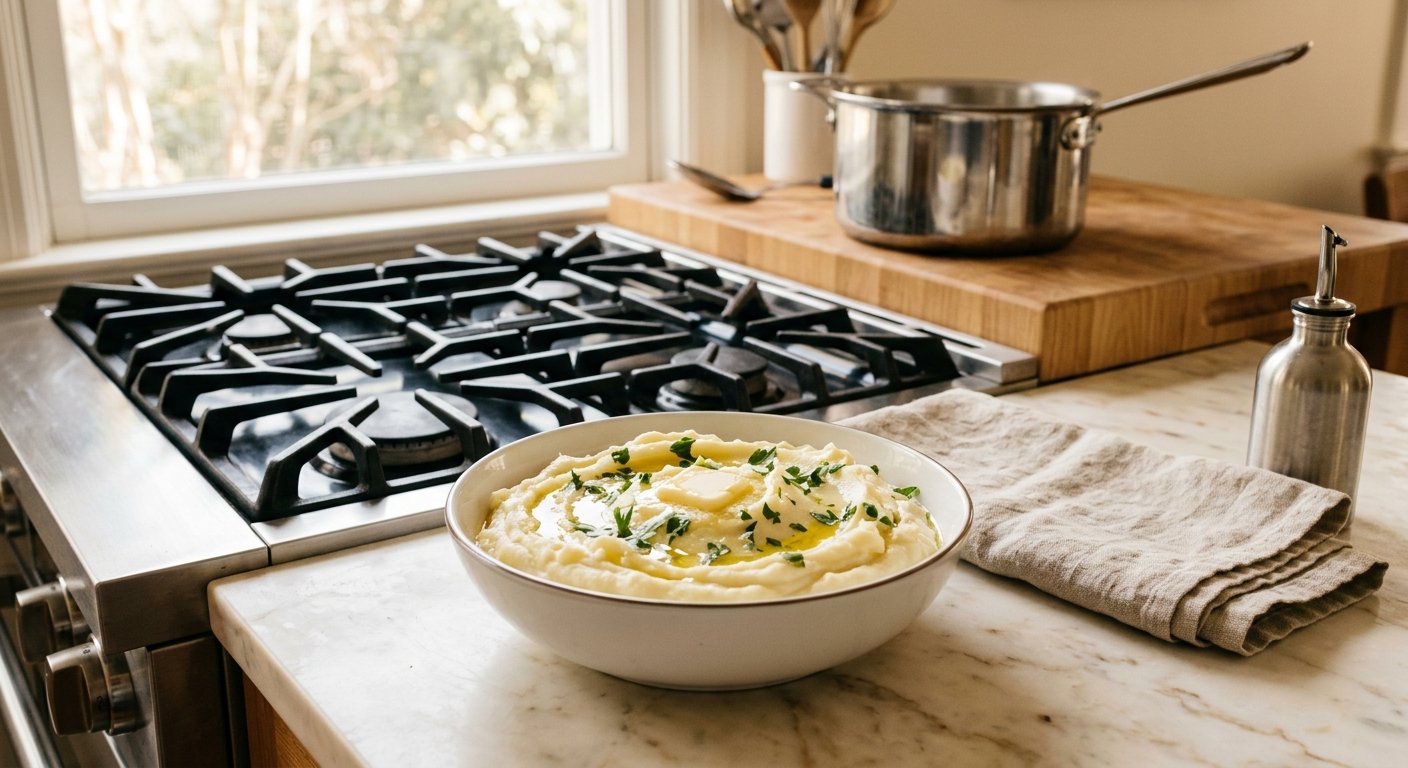
Home Made Mashed Potato
Equipment
- (Help support our site!)Whisk
- (Help support our site!)Sauce Pot
- (Help support our site!)Strainer
- Masher (Potato Ricer)
- (Help support our site!)Cutting Board
- (Help support our site!)Chefs Knife
- (Help support our site!)Rubber Spatula
- Large Spoon
Ingredients
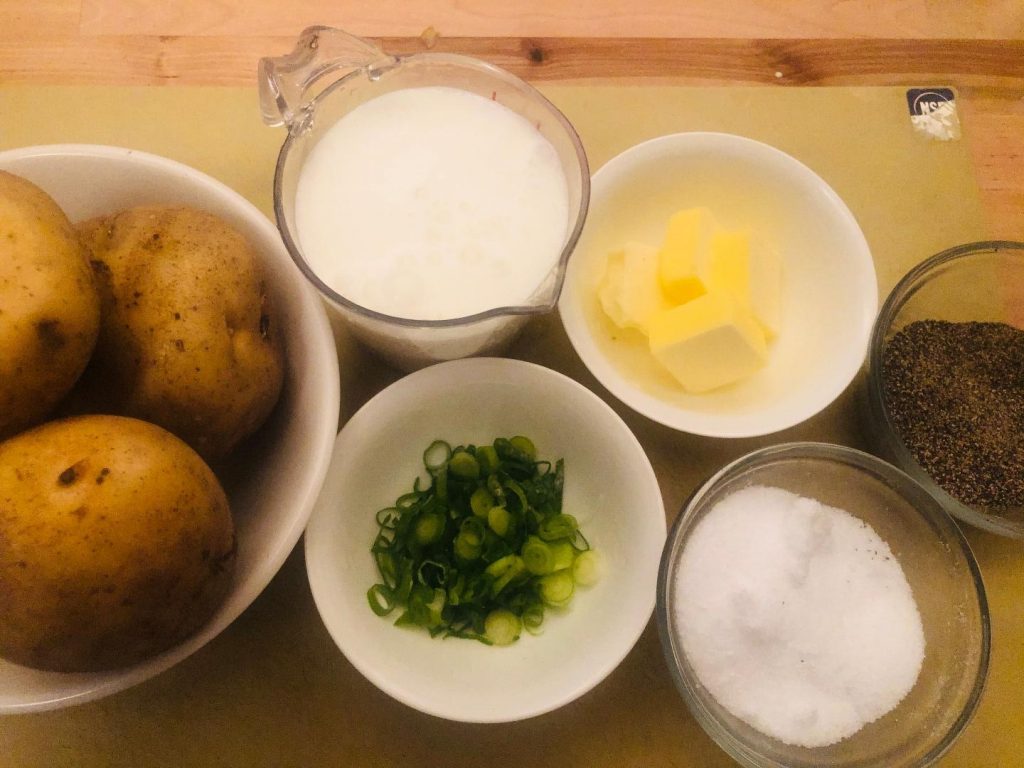
- 2-3 lb Russet Potato or Yukon Gold Cut into quarters
- ½ cup Heavy Cream
- ½ cup Whole Milk
- 6 tbsp Butter Cubed
- ¼ cup Scallions or Chives Thinly Sliced
- 1 To Taste Salt & Pepper
Instructions
- Add water to your sauce pot and place on medium heat. As your water is boiling, gather your ingredients.
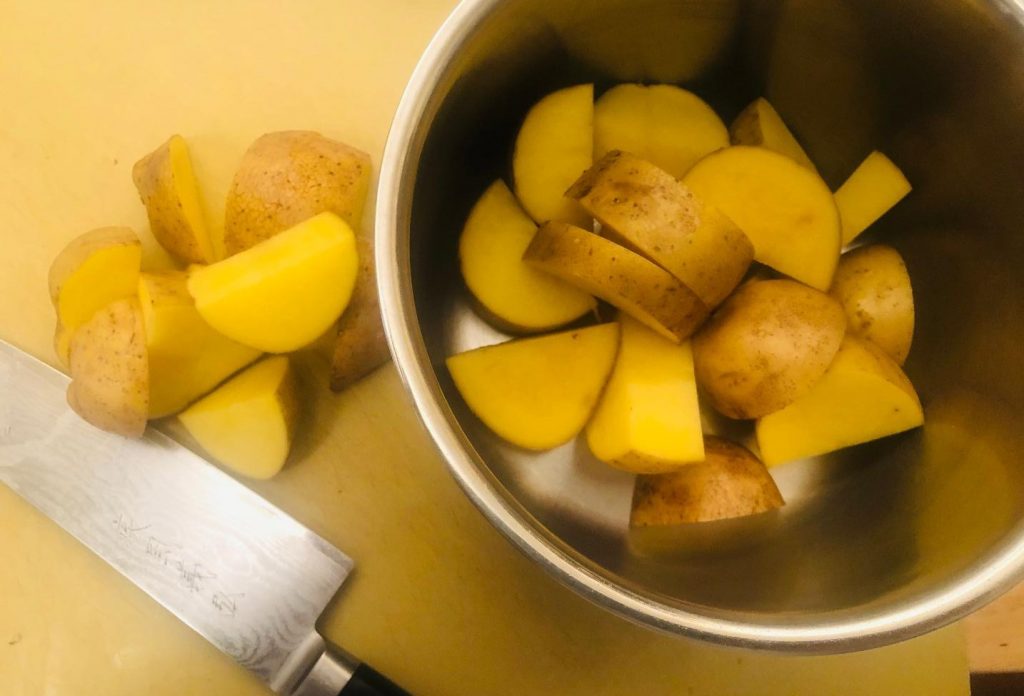
- Cut your potato into quarters. Try to keep potato quarters the same size in order to cook evenly.
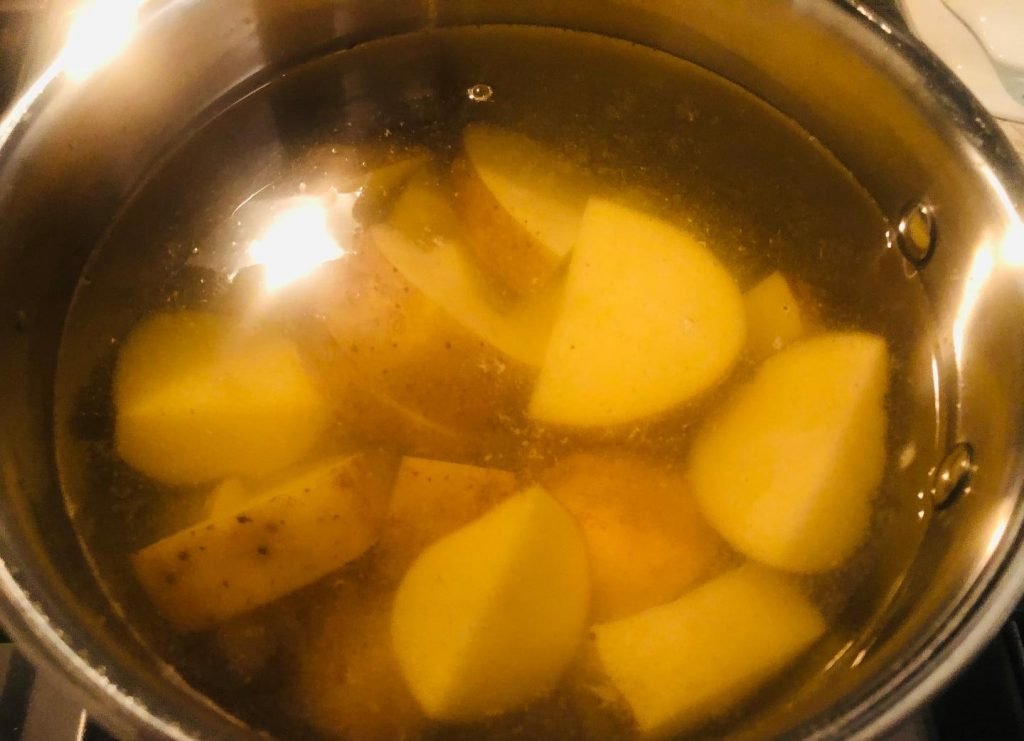
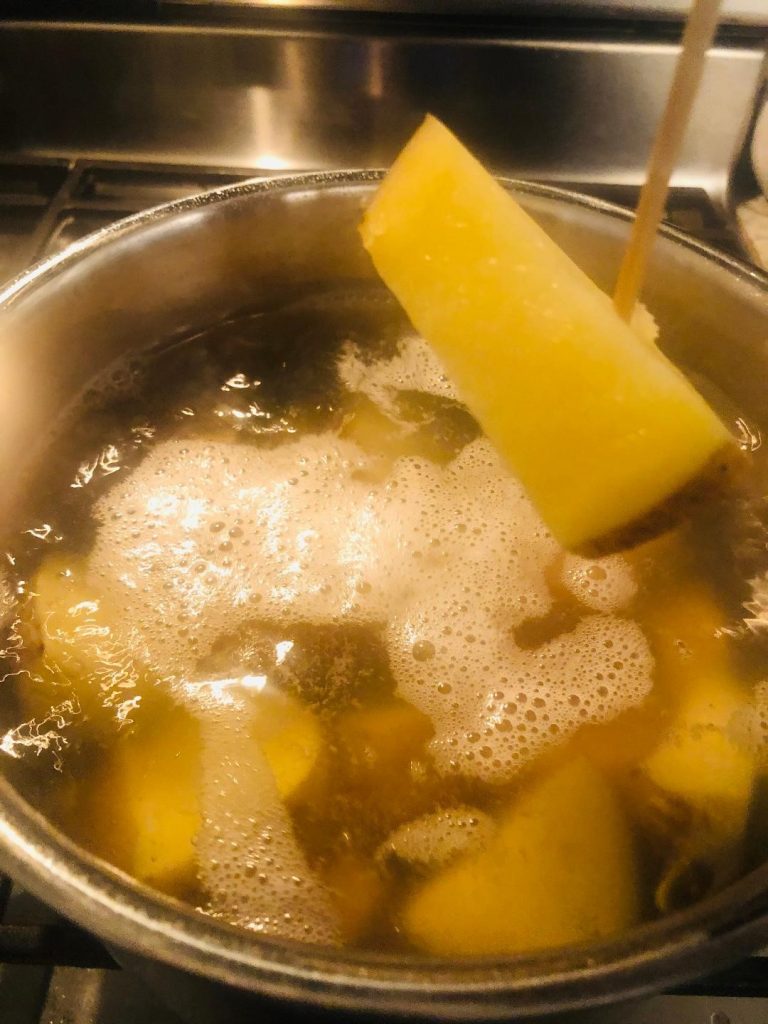
- Place the potatoes in your sauce pan and boil for 15-25 minutes depending on the potatoes size.
- To check if your potato is cooked, stick a skewer through the potato. You will know if your potatoes are ready if they falls= off with ease.
- Strain the potatoes and using the same sauce pot, begin mashing the potatoes with a masher. PLEASE NOTE: I use the potato ricer in the photo. I like this tool because then you don't peel the skin. If you are using a hand masher, peel the potatoes before boiling. You can also leave the skin on, if that is your preference.
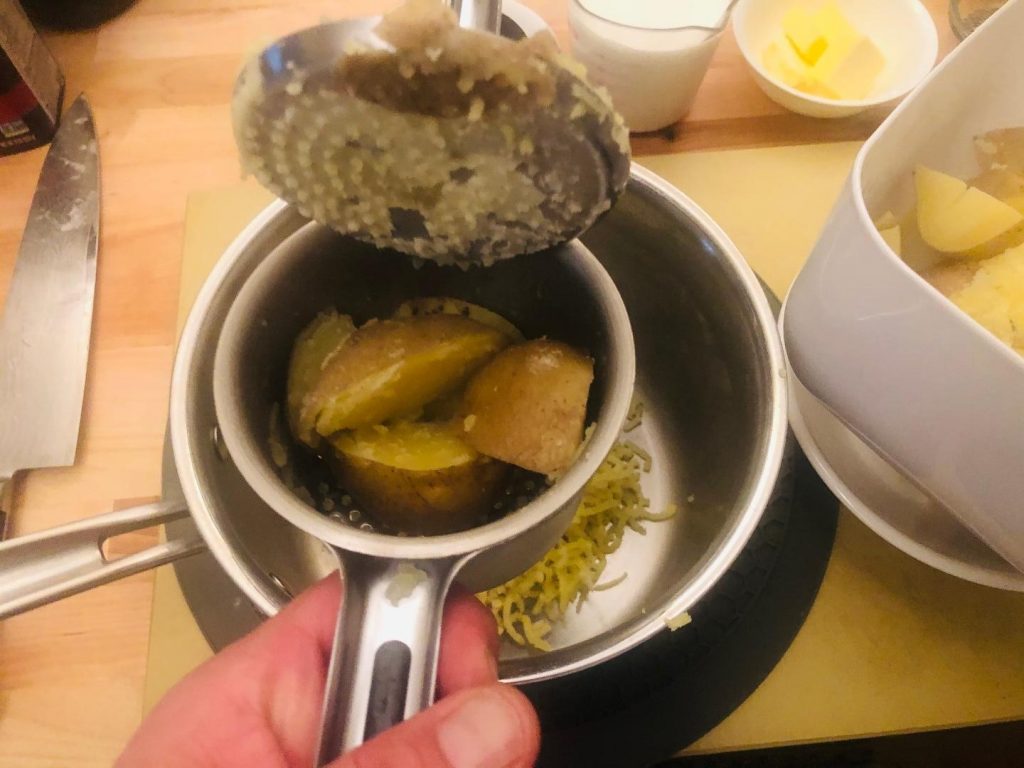
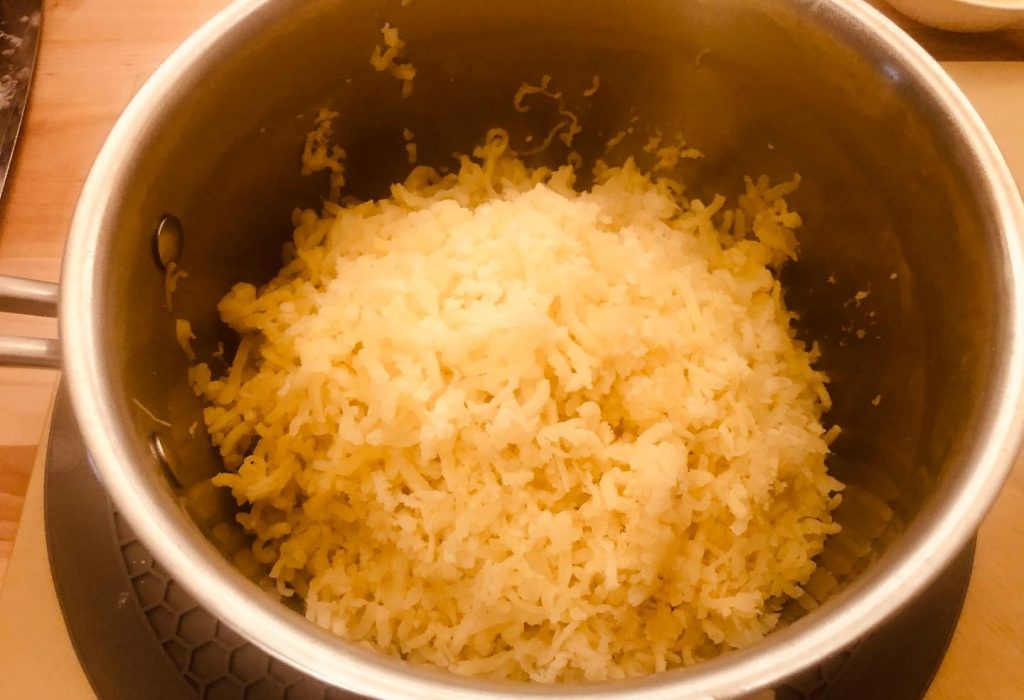
- This is what potato should look like when using a potato ricer.
- Add the heavy cream, milk and butter into the steaming hot mashed potato, begin to whisk your potatoes.
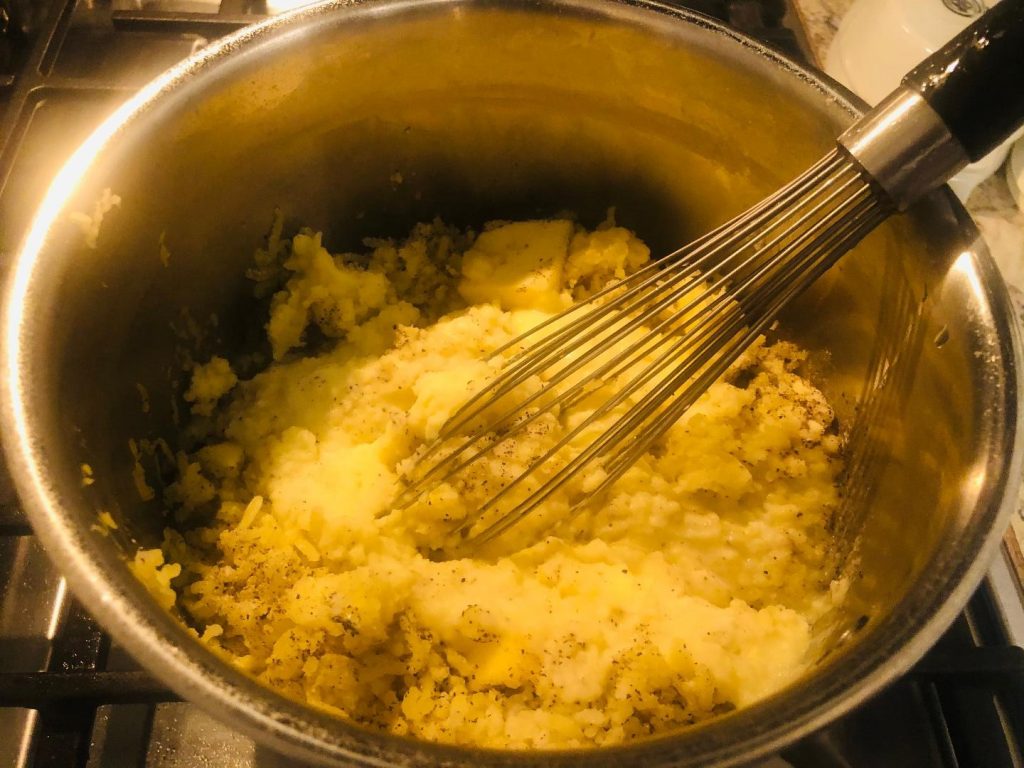
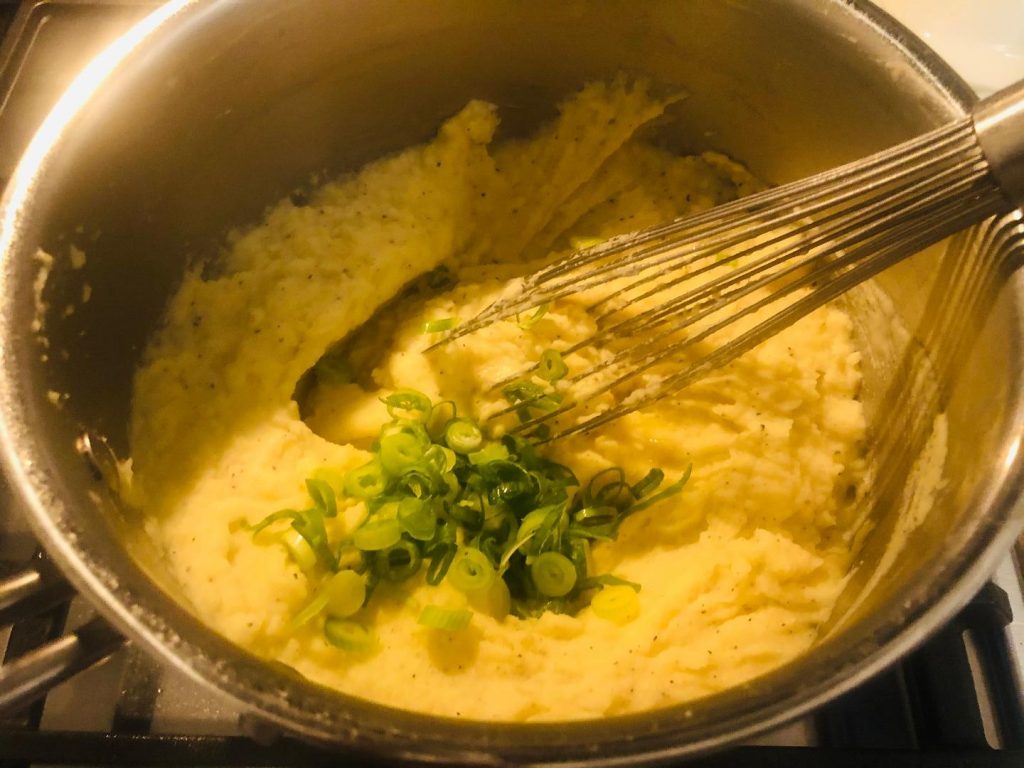
- Add your fresh herbs and give it a final whisk to blend in the herbs. Set aside and cover with plastic wrap to keep mash warm. Serve when ready.
Notes
Nutrition
How to Make Mashed Potato: Step by Step
Step 1: Get the water going first
Put your water on before you start peeling. Potatoes discolour once cut, and a pot already climbing to temperature means less standing around.
Step 2: Cut to a consistent size
Quarter the potatoes, and if one is noticeably larger than the rest, cut it smaller. Uniformity here is the whole game.
Step 3: Boil gently, not violently
A rolling boil batters the outsides into mush before the centres are done. You want a steady simmer for fifteen to twenty-five minutes, depending on size.
Step 4: Test with a skewer
Slide a skewer into the thickest piece. It should meet no resistance and the potato should slip off under its own weight. If you have to shake it loose, give it another three minutes.
Step 5: Drain and dry
Drain well, then return the potatoes to the hot empty pot for a minute off the heat. The residual steam drives off surface water — wet potatoes make watery mash.
Step 6: Butter, then dairy
Work the cubed butter through first, then add the warmed cream and milk in stages until you reach the texture you want. You may not need all of it.
Step 7: Season properly, finish with scallions
Mashed potato takes far more salt than most people expect. Season, taste, season again. Fold the sliced scallions or chives through at the very end so they stay bright.
Chef’s Notes
Make it ahead. Mashed potato holds well over a bain-marie for an hour. Press a sheet of buttered parchment directly onto the surface to stop a skin forming.
Variations. Fold through roasted garlic, a spoonful of horseradish for beef, or steamed broccoli and cauliflower for a vegetable-forward version.
Leftovers. Cold mashed potato is the foundation of potato cakes — bind with an egg, dust with flour, and pan-fry until crisp.
Frequently Asked Questions
Why is my mashed potato gluey?
Almost always over-working. A food processor or an aggressive stand mixer ruptures the starch cells and releases the starch that turns mash into glue. Use a ricer or a hand masher and stop as soon as it comes together.
Should I peel the potatoes?
For a classic smooth purée, yes. If you want a rustic mash, leave the skins on Yukon Golds — they are thin enough to disappear into the texture.
Can I use milk instead of cream?
You can, and it will be lighter and less rich. Keep the butter quantity where it is; the butter is doing the textural work, not the cream.
Do I salt the cooking water?
Yes, generously. Potatoes are bland and seasoning them from the inside during cooking is far more effective than trying to correct it at the end.