
On Kos, where I grew up, grilled octopus is not a restaurant dish. It is what happens on a Tuesday evening when a fisherman brings a fresh octopus to the taverna and the owner hangs it over the railing in the sun for a few hours before laying it on the grill. That is the version that matters — sun-dried, smoke-charred, dressed in nothing but olive oil, vinegar, and oregano.
This recipe is my attempt to bring that dish into a home kitchen, where you almost certainly do not have a seaside railing or a charcoal fire fed by driftwood. What you do have is a freezer, a pot of simmering water, and a grill. That is all you need.
The technique here — freeze, simmer, then finish on a scorching hot grill — is the approach I use in professional kitchens and at home. It is reliable. The freezing breaks down the muscle fibers and tenderizes the flesh in a way that beating alone cannot match. The simmering does the rest. The grill is only for the last few minutes, but those minutes matter enormously — they are where the char and the smoke come from.
Serve with horiatiki, a glass of ouzo, and bread. Or alongside saganaki as part of a meze spread.
Table of Contents
Why This Recipe Works
- Freezing is the first tenderizer. Ice crystals rupture the muscle fibers during freezing. When the octopus thaws, those fibers are already broken down — a significant head start on tenderness before the pot even goes on the stove.
- No salt in the poaching water. Salt toughens the skin during poaching. Leave it out entirely. The vinegar you add instead helps tenderize and subtly colours the surface.
- Rest before grilling. A rested, pat-dry octopus goes onto the grill with no excess surface moisture, which means it chars rather than steams. Twenty minutes of patience makes a real difference.
Ingredients
- 1 whole octopus (1–1.5 kg / 2–3 lbs), cleaned
- 1 bay leaf
- 6 black peppercorns
- 3 tablespoons red wine vinegar (for poaching)
- Water to cover
- 3 tablespoons Greek extra virgin olive oil, plus more for brushing
- 2 tablespoons red wine vinegar (for dressing)
- 1 lemon, cut into wedges
- Flaky sea salt and freshly cracked black pepper
- Dried Greek oregano, for finishing
- Fresh flat-leaf parsley, roughly chopped (optional)
Step-by-Step Instructions
- Freeze (if using fresh). If using fresh octopus, freeze overnight. Thaw completely in the refrigerator before cooking.
- Poach. Place octopus in a large pot and cover with cold water. Add bay leaf, peppercorns, and 3 tbsp red wine vinegar. Do not add salt. Bring to a gentle boil, reduce to a low simmer.
- Simmer until tender. Cook for 45 minutes to 1 hour, until a knife slides easily into the thickest tentacle with little resistance and the octopus sags visibly when lifted. Do not overcook.
- Rest and dry. Remove from the pot and rest on a rack for 20–30 minutes. Pat thoroughly dry with kitchen paper.
- Heat the grill. Heat your grill (or cast-iron grill pan) to the highest heat possible. Brush grates lightly with oil. Brush octopus all over with olive oil.
- Grill. Place octopus on the grill. Cook 2–3 minutes per side until charred and crisped at the edges. The grill marks should be dark, not pale.
- Rest and serve. Rest for 2 minutes, then cut tentacles at the joints. Arrange on a plate. Dress immediately with olive oil, red wine vinegar, salt, pepper, dried oregano, and parsley. Serve with lemon wedges.
Recipe Card
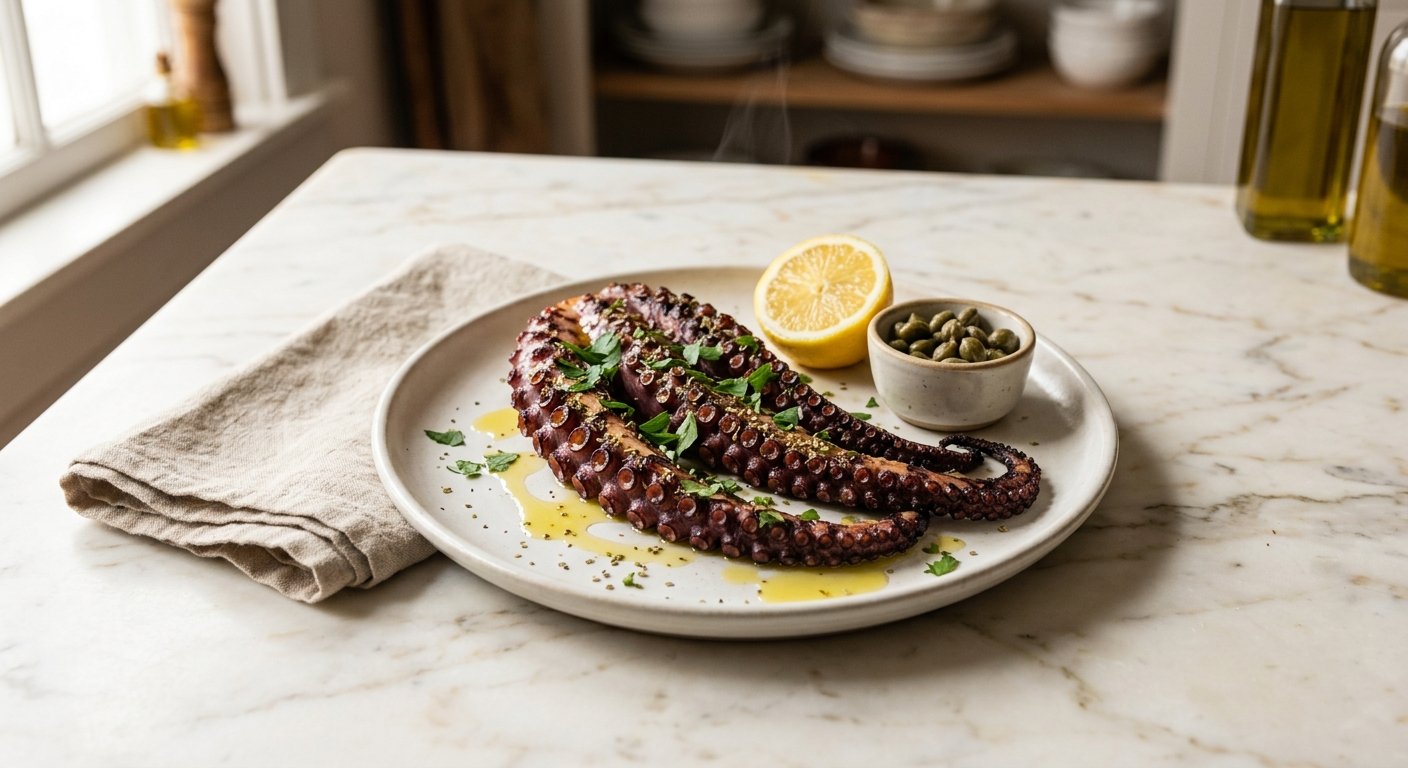
Greek Grilled Octopus (Htapodi sti Skara)
Ingredients
For the Octopus
- 1 whole octopus 1-1.5 kg / 2-3 lbs, cleaned
- 1 bay leaf
- 6 black peppercorns
- 3 tablespoons red wine vinegar for poaching
- water to cover
For the Dressing
- 3 tablespoons Greek extra virgin olive oil plus more for brushing grill
- 2 tablespoons red wine vinegar
- 1 lemon cut into wedges
- flaky sea salt and freshly cracked black pepper
- dried Greek oregano for finishing
- fresh flat-leaf parsley roughly chopped, optional
Instructions
- If using fresh octopus, freeze overnight. Thaw completely before cooking.
- Place octopus in a large pot and cover with cold water. Add bay leaf, peppercorns, and 3 tbsp red wine vinegar. Do not add salt. Bring to a gentle boil, reduce to a low simmer.
- Simmer for 45 minutes to 1 hour, until a knife slides easily into the thickest tentacle with little resistance and the octopus sags when lifted.
- Remove from the pot and rest on a rack for 20-30 minutes. Pat dry.
- Heat grill (or cast-iron grill pan) to the highest heat possible. Brush grates lightly with oil. Brush octopus with olive oil.
- Grill 2-3 minutes per side until charred and crisped at the edges. Rest for 2 minutes, then cut tentacles at the joints.
- Arrange on a plate. Dress immediately with olive oil, red wine vinegar, salt, pepper, dried oregano, and parsley. Serve with lemon wedges.
Notes
Nutrition
Chef’s Notes
On sourcing octopus: Most octopus sold at fishmongers and Asian grocery stores in Western countries has already been frozen at sea, which is actually to your advantage — the tenderizing work is largely done. Ask your fishmonger. If it has not been frozen, do it yourself.
On the vinegar: In Greece, red wine vinegar (ksydhi) is the default for dressing grilled seafood. It has a sharpness that cuts the richness of the olive oil without overwhelming it. White wine vinegar works, but it is more neutral. Lemon juice alone tends to be too sweet.
Serving: In Greek tavernas, grilled octopus is always a meze — an accompaniment, not a main course. A plate of four or five tentacle pieces, torn bread, and something cold to drink. At home, it pairs naturally alongside saganaki, a Greek salad, and souvlaki for a full spread.
FAQ
Does octopus really need to be frozen before grilling?
Yes, for most home cooks. Freezing breaks down the muscle fibers in a way that dramatically improves tenderness. The octopus you buy from a fishmonger or supermarket has almost always been frozen at sea already — this is not a flaw, it is an advantage. If yours has not been frozen, freeze it yourself for at least 24 hours before cooking.
How do I know when the octopus is done poaching?
Slide a thin knife into the thickest part of a tentacle. It should meet virtually no resistance — like inserting a knife into soft butter. The octopus should also sag visibly when you lift it with tongs. If it still feels springy or the knife meets resistance, give it another 10–15 minutes.
Can I grill octopus without a barbecue?
Yes. A cast-iron grill pan heated until smoking hot works very well. The key is the temperature — the surface needs to be hot enough to char the octopus in 2–3 minutes rather than slowly cook it. A grill pan that has not been preheated long enough will steam the octopus instead of charring it.
Why no salt in the poaching water?
Salt added during poaching toughens the outer skin and can make the texture leathery. The red wine vinegar in the poaching liquid does a better job — it helps break down the muscle fibers gently and gives the skin a subtly reddish tone that looks right on the plate. Season with salt only after grilling.
Can I prepare octopus in advance?
Yes. Poach the octopus up to 2 days ahead and refrigerate. Pat dry and grill just before serving. Do not dress it until the last moment — the vinegar will cause the color to change if it sits too long.