
Every Easter Sunday on Kos, the smell reached you before anything else. Somewhere between the church bells fading and the first glass of wine being poured, the charcoal would catch and the oregano would hit the heat, and that smell — smoke, lamb fat, dried herbs — would drift through the open windows and down the narrow streets toward the harbor. My mother would already be outside with the grill, turning paidakia with tongs she’d owned for thirty years, not looking at a clock, not using a thermometer. She knew what she was doing.
Paidakia — Greek grilled lamb chops — are one of the oldest and most honest things you can cook on a fire. They are the centerpiece of every Easter table I can remember from my childhood on Kos, and they appear all summer long at the tavernas along the waterfront, eaten with both hands, finished with a squeeze of lemon and a glass of cold Rhodian wine. No ceremony, no fuss. Just good lamb, good heat, and the right amount of oregano.
This is not a complicated recipe. What makes paidakia worth doing properly is understanding the few things that actually matter: the cut, the marinade timing, the heat of the grill, and the rest. Get those four things right and the lamb does the rest of the work.
Why This Recipe Works
- The marinade is short by design. Olive oil, lemon, oregano, salt, and pepper — classic. But the timing matters. Thirty minutes to two hours is the window. Beyond that, the acid in the lemon juice begins to denature the proteins on the surface of the meat, giving you a texture that is slightly mealy rather than tender.
- Room temperature before grilling is not optional. A cold lamb chop from the refrigerator goes onto a hot grill and the outside scorches before the center can catch up. Thirty minutes on the counter fixes this entirely.
- High direct heat is what creates the crust. Paidakia are thin chops. They cook fast — 3 to 4 minutes per side over genuine heat. That time on high heat builds the caramelized exterior, the slight char on the bone end, the color that holds the flavor.
- Resting carries the cook home. Pull the chops at 60°C / 140°F internal temperature and let them rest 3 to 5 minutes. Carryover heat will bring them to 63–65°C / 145–150°F — the pink, juicy medium that paidakia should be.
What Are Paidakia? The Cut Explained
The word paidakia (παϊδάκια) translates roughly as “little ribs.” They are individual lamb rib chops, cut from a rack of lamb — the same rack you might see presented whole in a restaurant setting, here broken down into its individual chops for fast, high-heat cooking.
The key is the bone. That thin rib bone conducts heat and allows the chop to cook evenly and quickly over a hot fire. It’s also what you pick up and hold when you eat them — and on Kos, you always eat paidakia with your hands. That’s not casual, that’s correct.
Ask your butcher to French the rack before cutting into chops. Frenching means the meat and fat are cleaned from the upper portion of each bone, leaving a clean handle. You can then ask them to cut the rack into individual single-rib or double-rib chops, approximately 2–3 cm thick. Double-rib chops give you a little more margin on the grill; single-rib chops cook faster and are more traditional for large Easter spreads.
Ingredients
Serves 4 | 12 single-rib lamb chops (approximately 1 rack)
For the Lamb
- 12 single-rib lamb chops, French-trimmed (from 1 full rack of lamb, approximately 1.2–1.5 kg before cutting)
- 60 ml (¼ cup) good extra-virgin olive oil
- 3 tablespoons fresh lemon juice (approximately 1 large lemon)
- 2 teaspoons dried Greek oregano (rigani — the wild mountain variety if you can find it)
- 1½ teaspoons fine sea salt
- ½ teaspoon freshly ground black pepper
To Serve
- 1 lemon, cut into wedges
- Additional dried oregano for finishing
- Tzatziki — highly recommended alongside
- Horiatiki (Greek village salad) — the natural companion
The Marinade
The marinade for paidakia is one of the simplest in Greek cooking, and that simplicity is deliberate. Lamb has a flavor worth protecting. The oregano amplifies it; the lemon brightens it; the olive oil carries both into the meat and helps the exterior char properly on the grill.
Combine: olive oil, lemon juice, dried oregano, salt, and black pepper in a shallow dish or zip-lock bag. Add the chops and turn to coat evenly. Cover and refrigerate — or simply leave at room temperature if you’re cooking within the hour.
Timing: 30 minutes minimum, 2 hours maximum. This is a firm limit, not a suggestion. Lemon juice contains citric acid, and that acid begins to break down the proteins in the lamb’s surface after about two hours. What you get beyond that window is a texture change on the outer layer — slightly mushy rather than tender.
About the oregano: In Greece we use rigani, which is wild mountain oregano — more pungent and slightly more bitter than the Mediterranean oregano sold in most supermarkets outside of Greece. If you can find it at a Greek grocer or specialty shop, use it. If not, good-quality dried Mediterranean oregano works.
Step-by-Step Instructions
Step 1: Prepare the Chops (30 minutes before cooking)
Remove the lamb chops from the refrigerator 30 minutes before you plan to grill them. Pat the chops lightly with a paper towel if they are very wet from the marinade. Excess surface moisture inhibits browning.
Step 2: Build the Heat
Charcoal: Light the charcoal and allow it to burn down to white ash with a strong, consistent heat — no flame. Arrange in a single layer for direct high heat. Charcoal is the traditional method and gives you a smoke character that gas does not.
Gas grill: Preheat all burners on high for 10–15 minutes. You want the grates very hot before the meat goes on.
Cast-iron grill pan: Heat over the highest flame your stove allows for at least 5 minutes. Add a small amount of olive oil and let it just begin to smoke before adding the chops.
Step 3: Grill the Chops
Place the chops on the grill and do not move them for 3 minutes. Leave them. The initial contact with hot grates is what creates the crust, and moving them prematurely tears that crust and causes sticking.
After 3 minutes, turn once. Cook 3 to 4 minutes on the second side for medium — pink at the center, not red, not grey. If you have a probe thermometer, pull at 60°C / 140°F internal temperature.
Chef’s note on the bone end: Stand the chops briefly on the bone end — 30 to 60 seconds — to caramelize the fat that runs along that edge. This is not strictly necessary but it finishes the chop properly.
Step 4: Rest the Meat
Transfer the chops to a warm plate or a board and tent loosely with foil. Rest for 3 to 5 minutes. The carryover heat during the rest will bring the internal temperature from 60°C to approximately 63–65°C / 145–150°F. This is medium — still pink at the center, fully safe to eat, and at the best possible texture.
Step 5: Serve
Arrange on a warm platter. Squeeze half a lemon over the chops immediately. Add a pinch of dried oregano over the top. Serve with additional lemon wedges, tzatziki, and a horiatiki alongside.
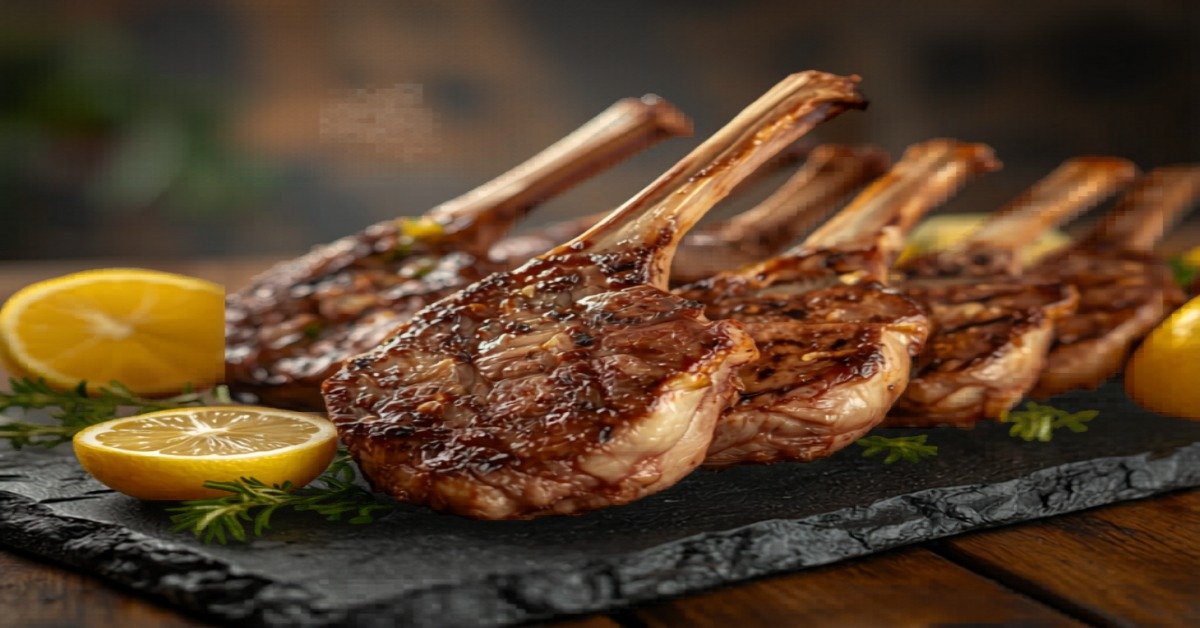
Paidakia (Greek Grilled Lamb Chops)
Ingredients
Lamb
- 12 single-rib lamb chops, French-trimmed (from 1 rack of lamb, approx. 1.2–1.5 kg)
- 60 ml extra-virgin olive oil
- 3 tablespoons fresh lemon juice approximately 1 large lemon
- 2 teaspoons dried oregano (rigani) wild mountain variety if available
- 1 1/2 teaspoons fine sea salt
- 1/2 teaspoon freshly ground black pepper
To Serve
- 1 lemon, cut into wedges
- extra dried oregano for finishing
Instructions
- Combine olive oil, lemon juice, oregano, salt, and pepper in a shallow dish. Add lamb chops and coat evenly. Marinate 30 minutes to 2 hours. Do not exceed 2 hours.
- Remove chops from refrigerator 30 minutes before cooking. Pat lightly dry.
- Preheat grill (charcoal, gas, or cast-iron pan) to high heat.
- Grill chops 3–4 minutes per side without moving. Pull at 60°C / 140°F internal temperature.
- Stand briefly on the bone end (30–60 seconds) to caramelize the fat edge.
- Rest on a warm plate, loosely tented with foil, for 3–5 minutes.
- Finish with a squeeze of lemon and a pinch of dried oregano. Serve immediately.
Notes
Nutrition
Chef’s Notes: Tips, Variations & Serving
On the quality of lamb: Wherever possible, buy lamb from a butcher rather than a supermarket case. Butcher-counter lamb is typically fresher, and more importantly, the butcher can prepare the rack correctly. Ask specifically for a single rack of domestic or New Zealand lamb, French-trimmed, cut into individual chops.
On charcoal versus gas: I use charcoal whenever I can. There is a flavor difference — not enormous, but real. The smoke from lump charcoal interacts with the lamb fat and the oregano in a way that gas simply doesn’t replicate. That said, a very hot gas grill produces a good result. What you cannot do is cook paidakia over low heat. They need intensity.
On doubling the recipe: Paidakia are excellent for a crowd. Double or triple the quantities without changing anything else. Grill in batches — do not crowd the grill, or you drop the temperature and the chops steam rather than sear.
Serving suggestions: On Kos, paidakia appear alongside tzatziki — the cool yogurt and cucumber sauce cuts the richness of the lamb beautifully. A proper horiatiki — tomatoes, cucumber, olives, feta, red onion, olive oil — is the natural companion. Good crusty bread for the plate juices is not optional.
Leftovers: Paidakia are best eaten immediately, but leftover chops sliced off the bone make an excellent addition to a salad the following day, or eaten cold with bread and olives.
For further reading on the history of lamb in Greek cuisine and the cultural significance of Easter lamb traditions, see this overview on Greek culinary culture via Wikipedia.
FAQ
What cut of lamb should I use for paidakia?
Paidakia are made from individual rib chops cut from a rack of lamb. Ask your butcher for a single rack of lamb, French-trimmed (meat and sinew cleaned from the upper portion of each bone), and cut into individual single-rib chops. Double-rib chops — two ribs left together — are also used and give you a slightly thicker chop. The thin rib bone is what makes this cut cook so quickly over high heat.
How long should I marinate lamb chops for paidakia?
Thirty minutes is enough. Two hours is the maximum. The marinade for paidakia contains lemon juice, which is acidic, and that acid begins to break down the surface proteins of the meat after about two hours. Beyond that window the texture on the outside of the chop becomes slightly soft and mealy rather than tender. There is no flavor benefit to marinating longer.
How do I know when paidakia are done?
The most reliable method is a probe thermometer. Pull the chops at 60°C / 140°F internal temperature, then rest them for 3 to 5 minutes; carryover heat will bring them to 63–65°C / 145–150°F, which is medium — pink at the center. Without a thermometer: 3 to 4 minutes per side over high heat for a standard single-rib chop approximately 2 cm thick.
What do you serve with paidakia?
Traditionally: lemon wedges and dried oregano to finish, tzatziki on the side, and a horiatiki (Greek village salad) alongside. For a full table, good bread and whatever vegetables are in season. On Kos at Easter, the table also has taramosalata, olives, feta, and olives.
Can I make paidakia in a pan or oven?
Yes, with caveats. A cast-iron grill pan heated very hot on the stove is the best indoor method — you get grill marks and a good sear, though you won’t have the smoke character of charcoal. Heat the pan over the highest flame for at least 5 minutes before the chops go in. Open windows; it will smoke. The oven alone is not recommended for paidakia — you need direct, intense surface heat to build the crust. If you want to finish thick chops in the oven, sear them hard in the cast-iron pan first, then transfer to a 200°C / 400°F oven for 4 to 5 minutes.