
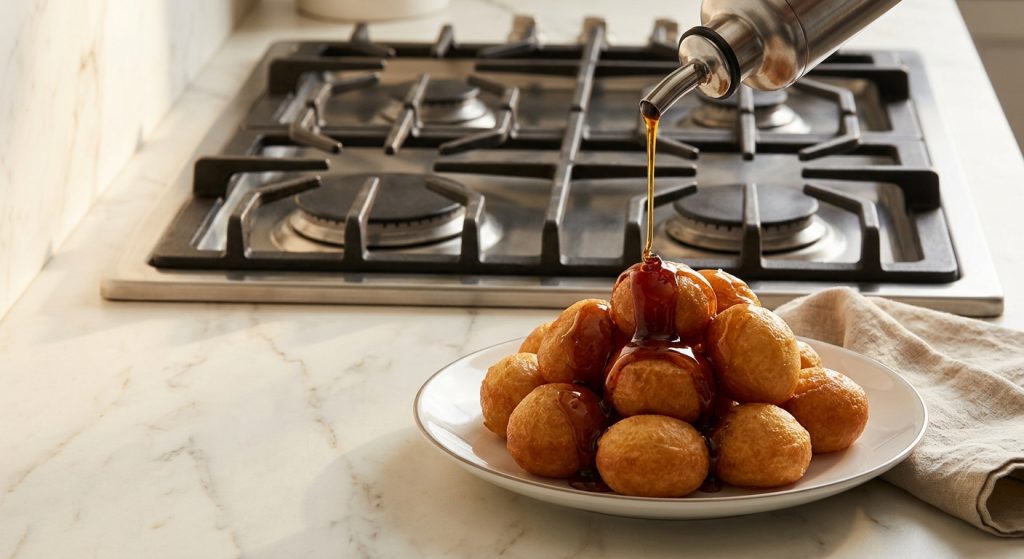
Some foods belong to a specific place and moment. Loukoumades — Greek honey donuts — belong to summer, to crowds, and to the particular pleasure of eating something hot, sweet, and entirely impractical while standing on a street corner. They are not meant to be saved for later. They are meant to be eaten now, while the honey is still pooling and the cinnamon is still fragrant.
On Kos, we had them at the panigiri — the village festivals that took over the main square in July and August, where a man with a cauldron of oil and a squeeze bottle of batter could draw a crowd faster than the musicians. I was maybe eight years old the first time I watched a loukoumades vendor work, amazed at how quickly the balls of dough transformed from pale blobs to burnished gold. He drizzled honey in a wide arc — not carefully, not sparingly — and the whole plate glistened before he even handed it over.
That image has stayed with me through forty years of cooking. Loukoumades are one of the oldest desserts in the world; fried dough balls with honey appear in ancient Greek texts dating back to the Olympic Games, where they were offered to victorious athletes. The recipe has barely changed in three thousand years. Flour, yeast, water, salt — cooked in hot oil, finished with honey and cinnamon. What has changed is our understanding of why the technique matters. Too many recipes treat loukoumades as simple, forgiving street food. They are simple in ingredient list. They are not forgiving of mistakes in method.
These five tips will give you loukoumades that are genuinely light and crispy — hollow inside, golden outside — rather than the dense, greasy version you may have encountered.
Why This Recipe Works
- Yeasted batter, not baking powder. Some shortcut recipes use baking powder for lift. They produce flat, cakey donuts. Yeast creates the hollow interior and the distinctive light chew that makes loukoumades worth making.
- Batter rest is non-negotiable. One full hour of fermentation develops flavor and creates the gas bubbles responsible for the airy texture. Rushing this step produces dense, disappointing results.
- Oil temperature is the single biggest variable. At 375F (190C), the outside sets quickly while the inside stays airy. Too cool and you get oil-soaked, heavy donuts. Too hot and you get burnt outsides with raw centers.
- Warm honey only. Cold honey solidifies on contact with fried dough and slides right off. Warmed honey soaks in slightly, coats evenly, and perfumes every bite with its full aroma.
Ingredients
For the batter
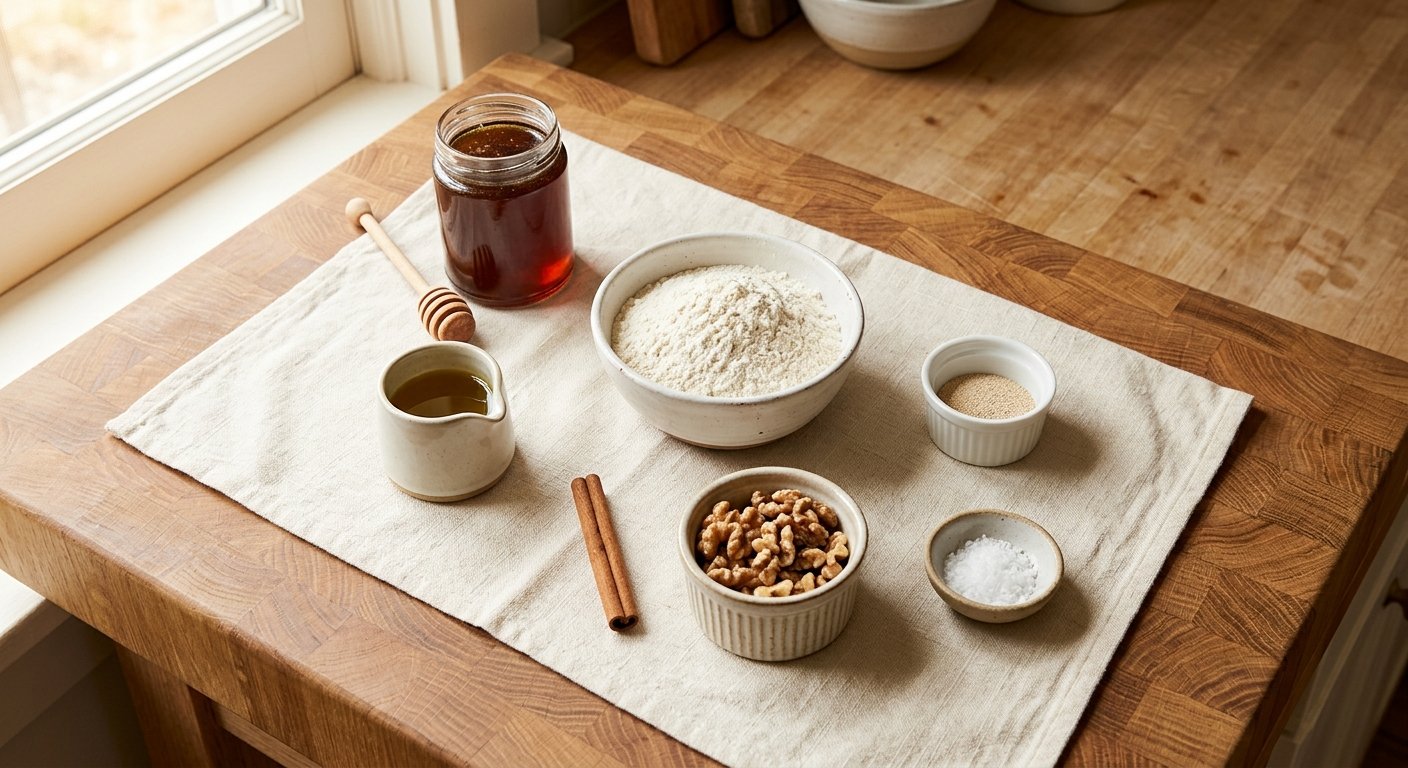
- 2 1/4 tsp (1 packet / 7g) active dry yeast
- 1 tsp granulated sugar
- 1 cup (240ml) warm water (110F / 43C), divided
- 1 1/2 cups (190g) all-purpose flour
- 1/4 tsp fine salt
- 1/4 tsp vanilla extract
For frying
- Vegetable oil or sunflower oil, enough for 3 inches depth in your pot (approximately 3-4 cups)
For finishing
- 1/2 cup (170g) Greek thyme honey, warmed
- 1 tsp ground cinnamon
- 1/4 cup (30g) crushed walnuts (optional, but traditional at many Greek festivals)
Step-by-Step Instructions
1. Activate the yeast.
Combine yeast, sugar, and 1/4 cup of the warm water in a small bowl. Stir briefly and let sit for 8-10 minutes until foamy and fragrant. If it does not foam, your yeast is spent — discard and start again with fresh yeast. This is not an optional step.
2. Make the batter.
In a large mixing bowl, whisk together flour and salt. Pour in the activated yeast mixture, the remaining 3/4 cup warm water, and vanilla extract. Whisk until smooth — no dry pockets, no lumps. The batter should be thick enough to mound slightly on a spoon but pourable enough to drop easily when tapped. Think thick pancake batter.
3. Let the batter rise.
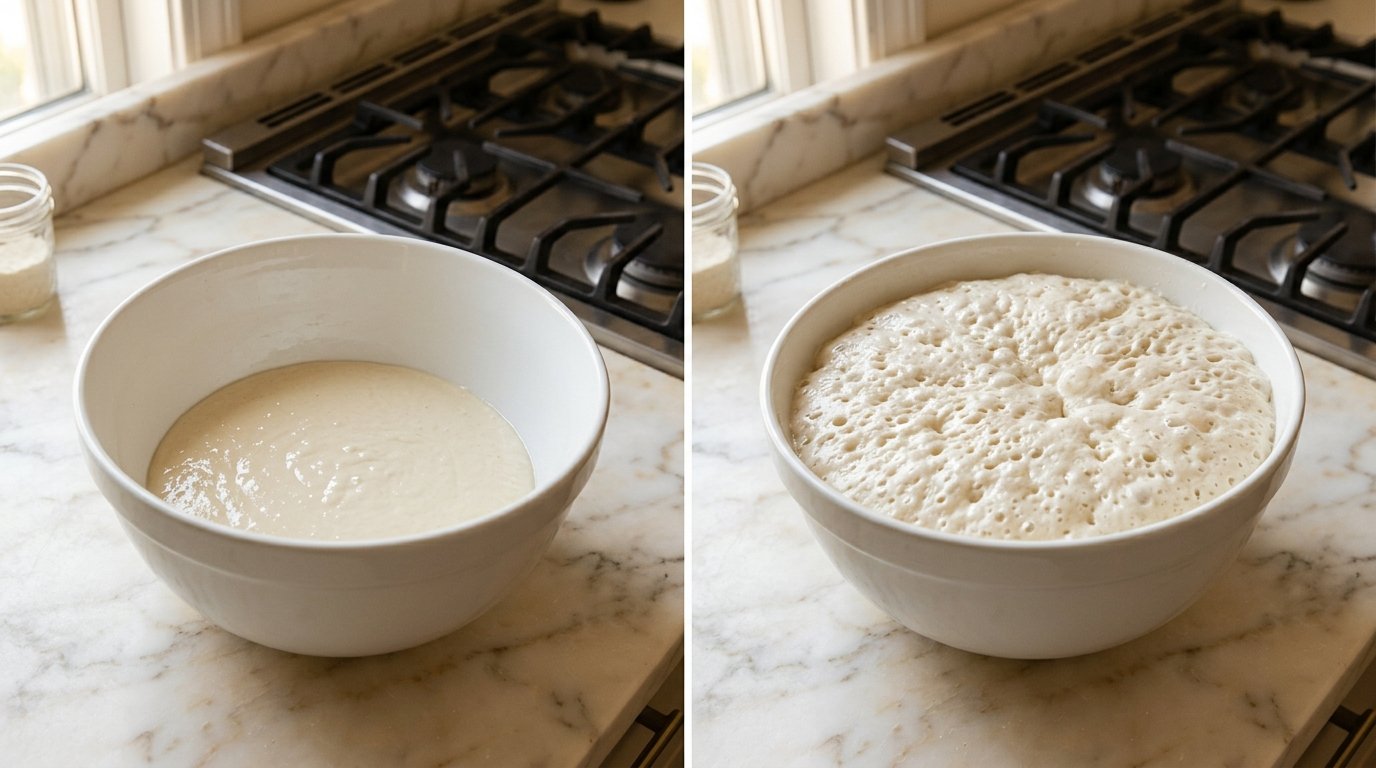
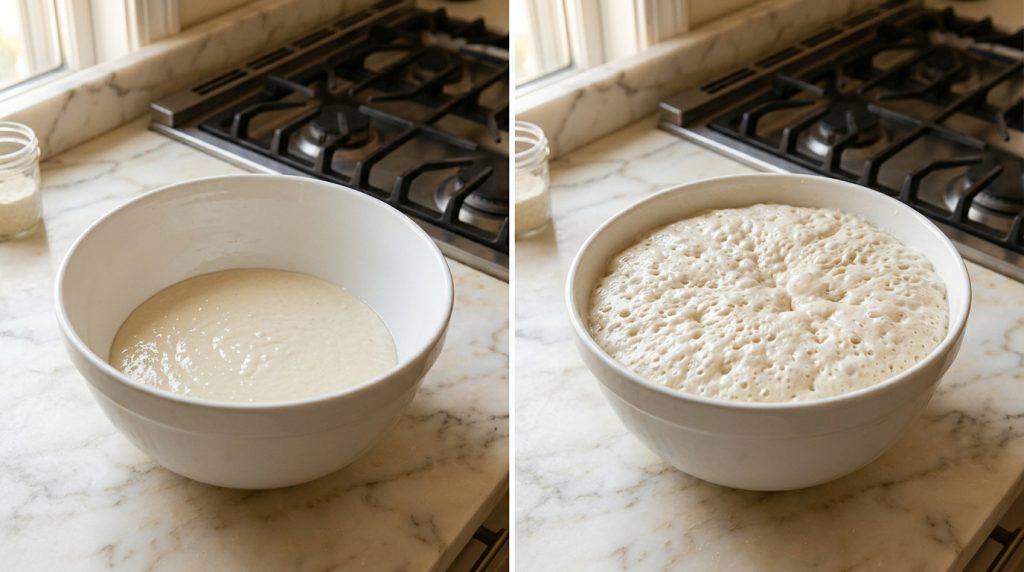
Cover the bowl tightly with plastic wrap or a damp towel. Leave it in a warm, draft-free spot for 1 full hour. The batter should double in volume and develop visible bubbles on the surface. This fermentation is what makes loukoumades light rather than dense.
4. Heat the oil.
Pour oil into a heavy-bottomed pot or Dutch oven to a depth of at least 3 inches. Clip a thermometer to the side. Heat over medium-high to 375F (190C). Maintain this temperature throughout frying — it will drop when batter enters the oil, so adjust heat between batches.
5. Fry in batches.
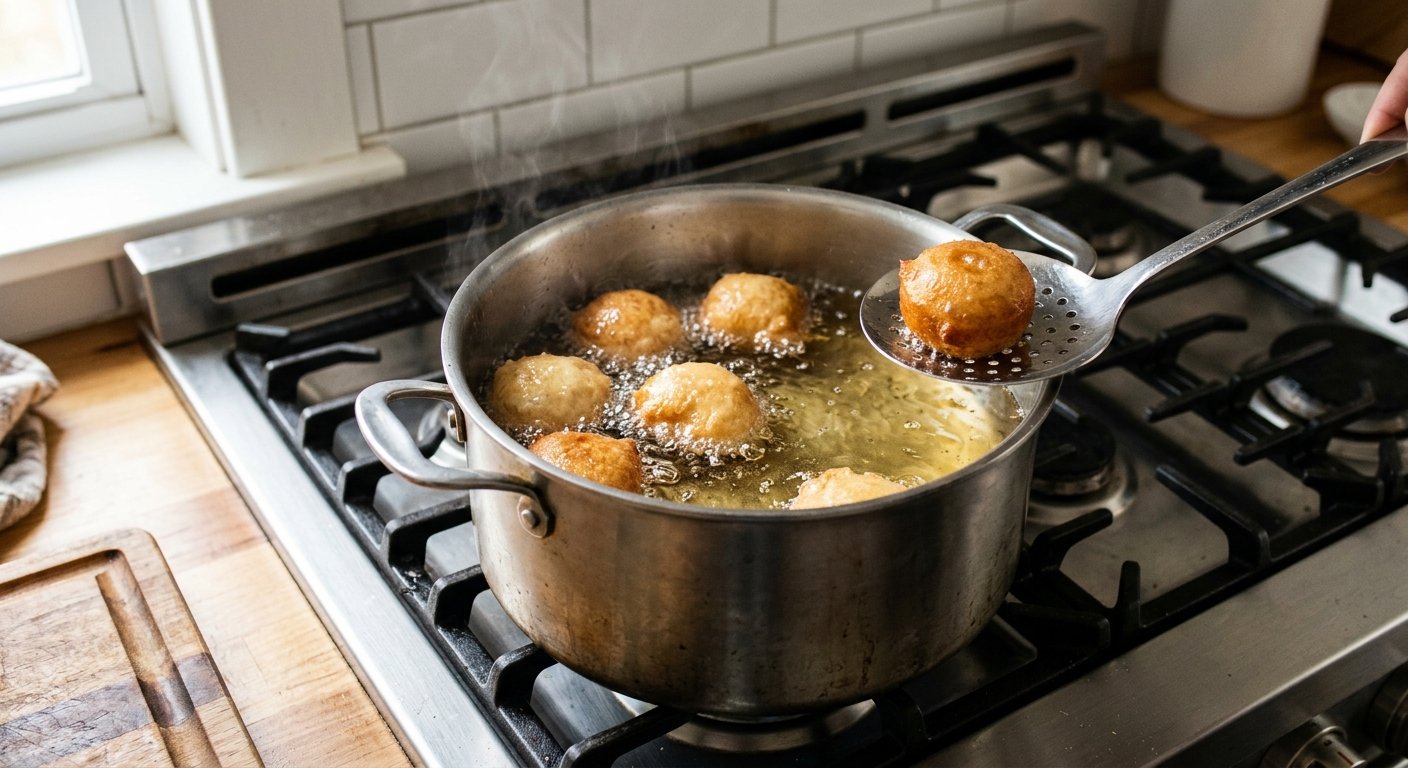
Dip a tablespoon in cold water before each scoop (re-wet between every scoop). Pick up a rounded tablespoon of batter and use a second spoon or your finger to nudge it gently into the oil. Work in batches of 6-8 — do not crowd the pot. Fry 2-3 minutes, turning once, until the loukoumades are a deep, uniform amber. They will rotate in the oil on their own once the bottom is properly set — that is your cue to turn them.
6. Drain and plate.
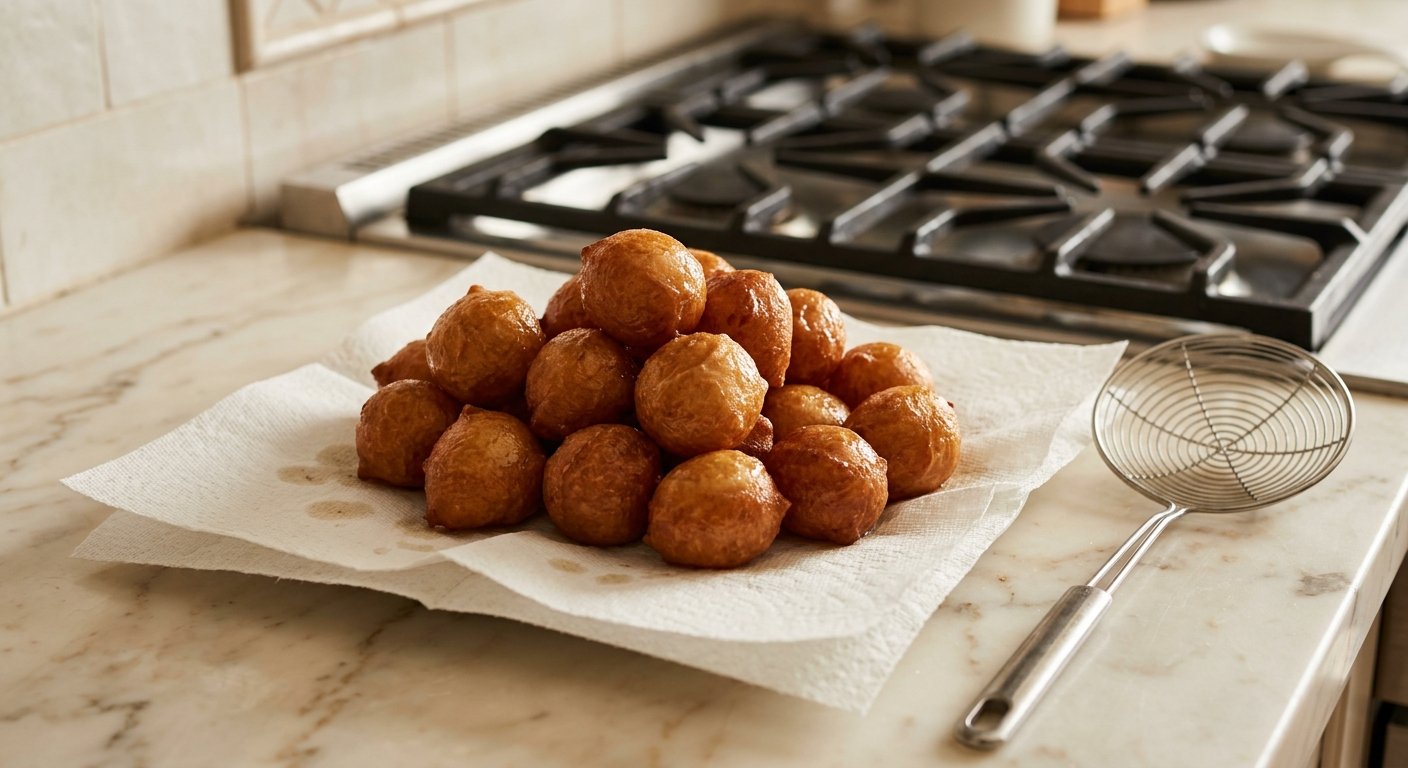
Remove with a slotted spoon. Drain briefly on a paper towel — just a few seconds — then transfer immediately to a serving plate. Do not stack them, do not cover them.
7. Finish and serve.
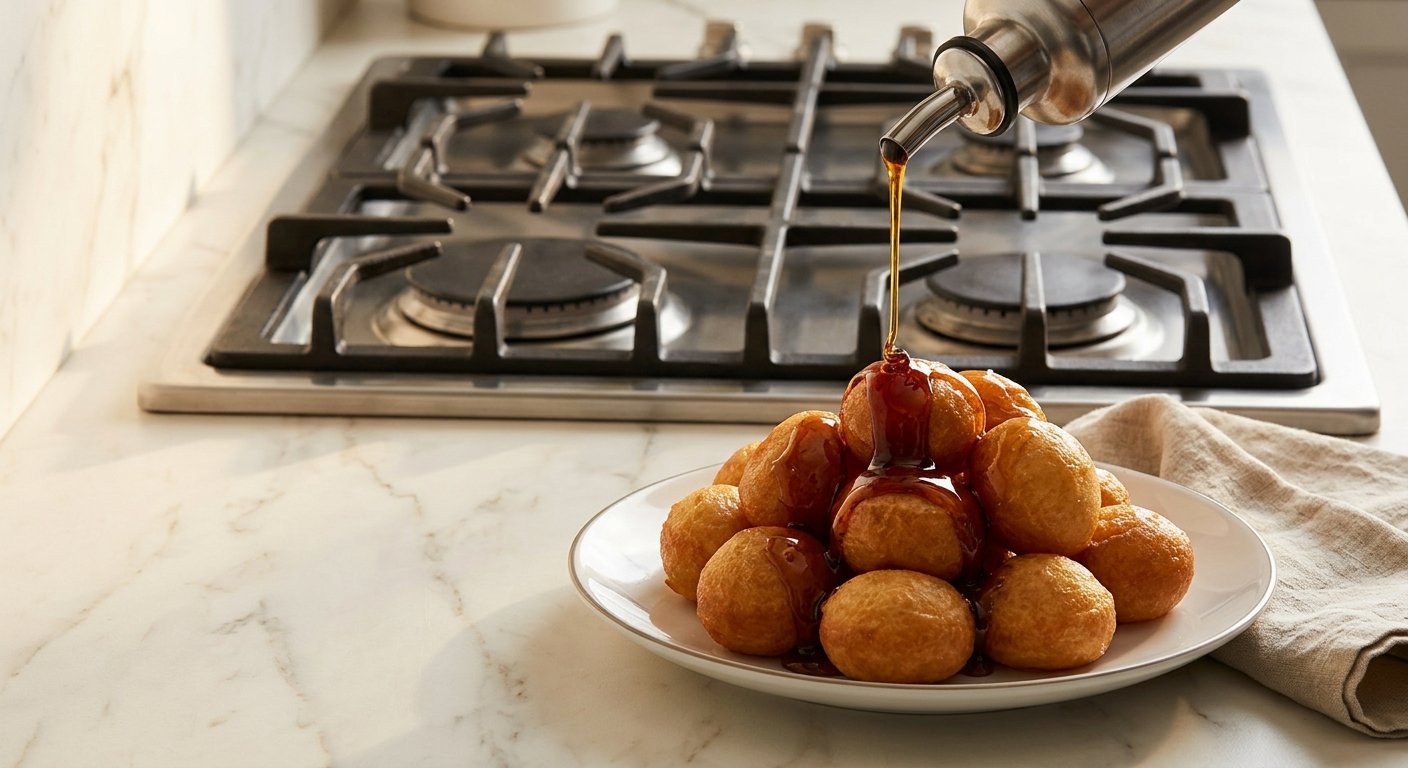
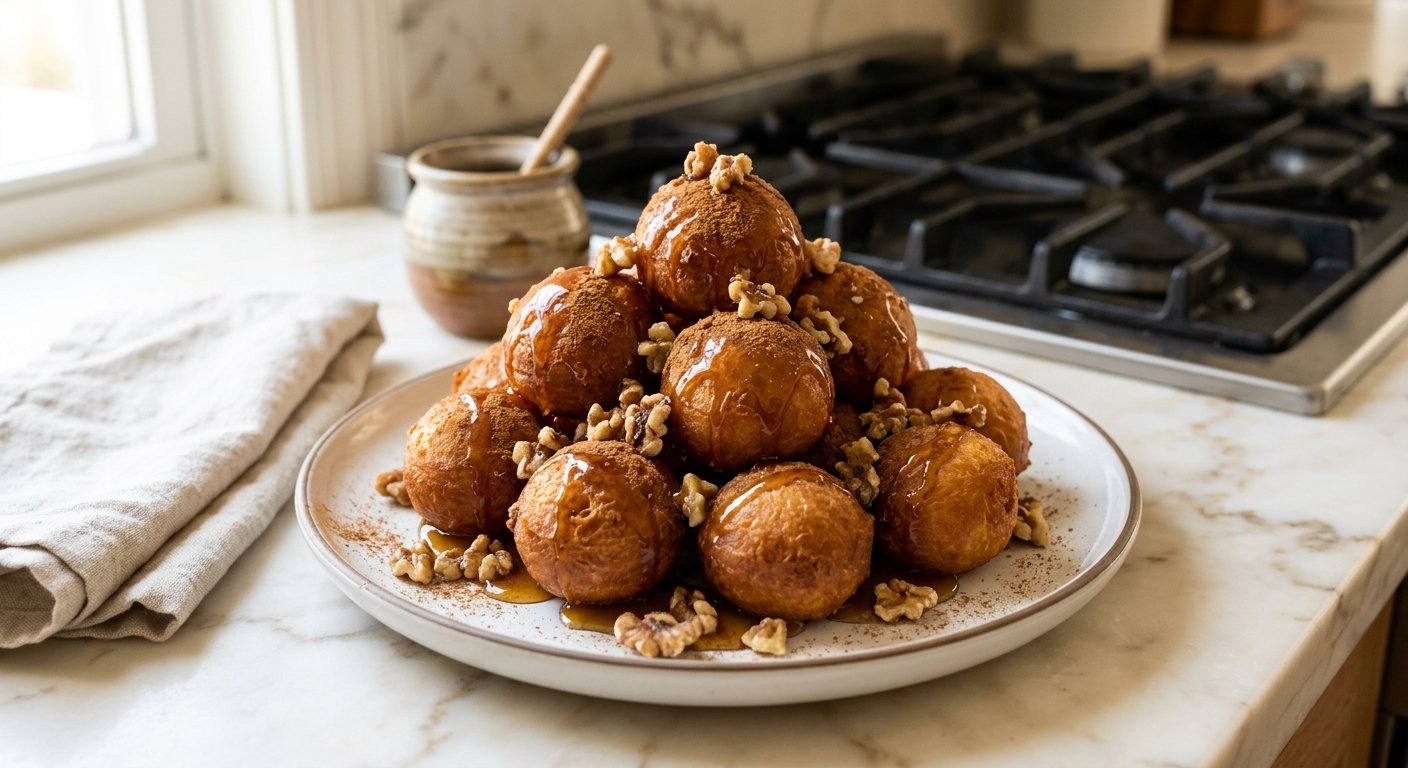
Warm the honey in a small saucepan or in the microwave for 20 seconds. Drizzle it generously over the loukoumades. Finish with a dusting of cinnamon and crushed walnuts if using. Serve immediately — loukoumades do not hold.
5 Tips for Perfect Loukoumades
These are the mistakes I see most often, and the fixes that matter.
Tip 1: Proof your yeast before committing.
Use active dry yeast and proof it in warm water before adding it to the flour. That 10-minute foam test is insurance. If the yeast is spent, you will know before you have wasted a full batch. Instant yeast will work, but active dry gives you the visual confirmation that the fermentation is live.
Tip 2: Get the batter consistency right.
Hold your spoon upright. The batter should slide off slowly in a thick ribbon, not run off like water. If it is too thin, add flour one tablespoon at a time. Too stiff, add water by the teaspoon. The right consistency produces round loukoumades; the wrong consistency produces flat blobs.
Tip 3: Do not skip or shorten the rise.
I know one hour feels long when you want loukoumades. Skip it and you will understand why it exists after your first bite of a dense, doughy ball. The rise is when flavor develops and when the yeast produces the CO2 that expands in hot oil to create a hollow, airy interior. There is no substitute.
Tip 4: Keep your oil at temperature.
Invest in a clip-on probe thermometer. Between batches, let the oil return to 375F before adding more batter. A drop in temperature is the most common cause of greasy loukoumades. I watch the number on the thermometer, not the appearance of the oil — appearance lies, temperature does not.
Tip 5: Warm honey is the difference between coated and glazed.
Cold honey pours over loukoumades and pools at the bottom of the plate. Warm honey — just 20 seconds in a microwave — is fluid enough to coat every surface and soak into the crust slightly, creating the glossy glaze that makes a proper loukoumades. Greek thyme honey is the traditional choice, and for good reason: the complex flavor profile of Greek honey, drawn from wild thyme, oregano, and other mountain herbs, gives loukoumades a depth that supermarket honey simply does not match.
These loukoumades pair naturally with other desserts built around honey and nuts. If you are assembling a Greek dessert spread, my baklava recipe is the natural companion — both lean on the combination of warm honey, crushed walnuts, and cinnamon, and the contrast of textures between the two is a pleasure at any table. For a complete Greek dinner, I often serve loukoumades as the finale after a savory meze spread that includes saganaki — salty fried cheese followed by sweet fried dough is one of those combinations that makes perfect intuitive sense once you experience it. If you want to explore the fuller landscape of Greek pastry before diving into fried dough, galaktoboureko — semolina custard wrapped in crispy phyllo and soaked with citrus syrup — gives you another dimension of Greek dessert-making that is worth knowing.
Traditional Loukoumades (Greek Honey Donuts)
Ingredients
Batter
- 2 1/4 tsp active dry yeast 7g, 1 packet
- 1 tsp granulated sugar
- 1 cup warm water 240ml, 110F/43C, divided
- 1 1/2 cup all-purpose flour 190g
- 1/4 tsp fine salt
- 1/4 tsp vanilla extract
For frying
- 3-4 cup vegetable or sunflower oil for deep frying, 3 inches depth
For finishing
- 1/2 cup Greek honey 170g, warmed, thyme honey preferred
- 1 tsp ground cinnamon
- 1/4 cup crushed walnuts 30g, optional but traditional
Instructions
- Combine yeast, sugar, and 1/4 cup of the warm water in a small bowl. Stir briefly and let sit for 8-10 minutes until foamy and fragrant. If it does not foam, your yeast is spent -- discard and start again with fresh yeast. This is not an optional step.
- In a large mixing bowl, whisk together flour and salt. Pour in the activated yeast mixture, the remaining 3/4 cup warm water, and vanilla extract. Whisk until smooth -- no dry pockets, no lumps. The batter should be thick enough to mound slightly on a spoon but pourable enough to drop easily when tapped.
- Cover the bowl tightly with plastic wrap or a damp towel. Leave it in a warm, draft-free spot for 1 full hour. The batter should double in volume and develop visible bubbles on the surface. This fermentation is what makes loukoumades light rather than dense.
- Pour oil into a heavy-bottomed pot or Dutch oven to a depth of at least 3 inches. Clip a thermometer to the side. Heat over medium-high to 375F (190C). Maintain this temperature throughout frying -- it will drop when batter enters the oil, so adjust heat between batches.
- Dip a tablespoon in cold water before each scoop (re-wet between every scoop). Pick up a rounded tablespoon of batter and use a second spoon or your finger to nudge it gently into the oil. Work in batches of 6-8. Fry 2-3 minutes, turning once, until the loukoumades are a deep, uniform amber.
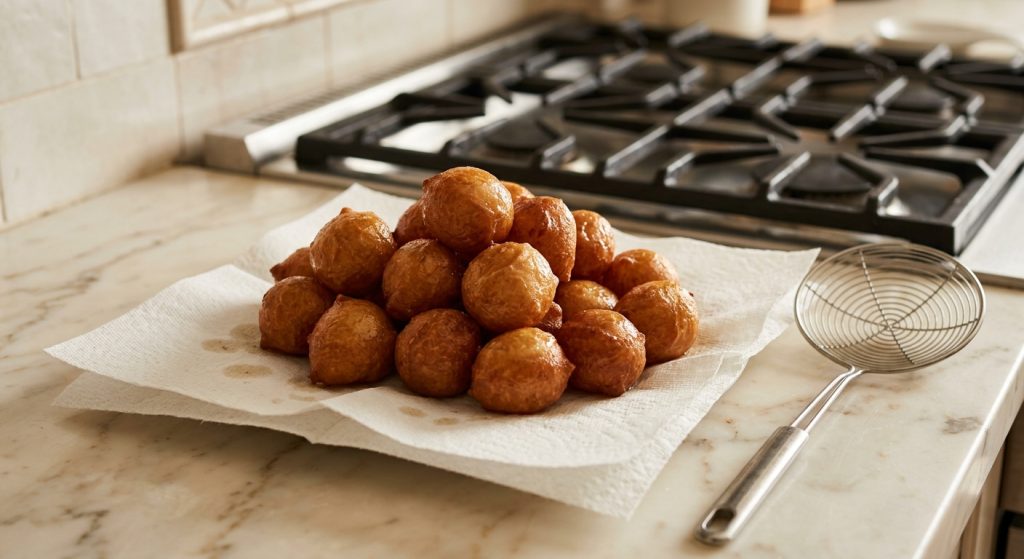
- Remove with a slotted spoon. Drain briefly on a paper towel -- just a few seconds -- then transfer immediately to a serving plate. Do not stack them, do not cover them.
- Warm the honey in a small saucepan or in the microwave for 20 seconds. Drizzle it generously over the loukoumades. Finish with a dusting of cinnamon and crushed walnuts if using. Serve immediately -- loukoumades do not hold.
Notes
Nutrition
Chef Notes
On the honey: Use Greek thyme honey if you can source it. It has a depth and faint bitterness that cuts through the sweetness of fried dough in a way that a mild clover honey simply does not. Any good-quality raw honey will work in its place, but seek out single-origin if you can — the flavor of the honey is the entire point of the dish.
On oil choice: Sunflower or vegetable oil only. Do not use olive oil for frying loukoumades — at 375F, olive oil burns and introduces bitterness that has no place in a sweet dessert. On Kos, at every festival I attended as a child, it was always neutral oil in the cauldron.
Variations:
- Chocolate drizzle: Melt dark chocolate (70%) and drizzle alongside or instead of honey. Common in modern Greek pastry shops and popular with children.
- Sesame finish: Some mainland Greek versions add toasted sesame seeds alongside the cinnamon, creating a slightly nuttier version.
- Smaller for parties: Use a teaspoon instead of a tablespoon for bite-size loukoumades. Reduce frying time to 90 seconds to 2 minutes. These make excellent passed desserts.
Storage: Loukoumades do not keep. This is intentional. Make them fresh and serve immediately. If you have leftover batter, refrigerate it for up to 24 hours and fry to order.
Make-ahead batter: The batter can be prepared through step 2 and refrigerated overnight before the rise. Remove from the refrigerator and let it come to room temperature and complete its rise — this may take 90 minutes from cold — before frying.
FAQ
What are loukoumades?
Loukoumades are traditional Greek fried dough balls, light and crispy outside with a soft, airy interior. They are made from a yeasted batter, deep-fried until golden brown, and served immediately drizzled with honey and cinnamon. They have been a Greek street food and festival tradition for thousands of years.
What is the difference between loukoumades and zeppole?
Both are fried dough balls with ancient Mediterranean roots. Italian zeppole are often made with choux pastry or ricotta and can be baked or fried, finished with powdered sugar or cream. Loukoumades are yeasted, always fried, and finished exclusively with honey. The texture differs significantly — loukoumades are lighter, less rich, and hollow in the center.
Why are my loukoumades not round?
Two most likely causes: the batter is too thin (it spreads rather than holds a shape), or you are not re-dipping your spoon in cold water between scoops. Check your batter consistency before frying and maintain the wet-spoon technique consistently.
Can I make loukoumades without yeast?
You can make fried dough without yeast using baking powder, but the result is a denser fritter — not loukoumades. The yeast fermentation is what creates the hollow, airy interior that defines the texture. I do not recommend substituting it.
What oil is best for frying loukoumades?
A neutral oil with a high smoke point: sunflower, vegetable, or canola. Do not use extra virgin olive oil — it burns at frying temperatures and adds bitterness to a sweet dish. Neutral oil is the standard at every Greek pastry shop and festival stand.
Can I reheat loukoumades?
A few minutes in a 350F (175C) oven will restore some crispness if you absolutely must. But they will not return to the texture of freshly fried. In Greece, the answer to “can I save these for later?” is simply: make fewer, eat them all.