
In my mother’s kitchen, tzatziki was not a recipe — it was a reflex. Every morning during the long Greek summers, she would grate a cucumber, squeeze it dry in a clean cloth, and fold it into thick, strained yogurt with a whisper of garlic and a drizzle of good olive oil. By the time lunch arrived, the flavors had married into something cool, tangy, and utterly addictive. That bowl of tzatziki went on the table alongside everything — grilled lamb chops, warm pita, roasted vegetables, even plain rice when the heat stole our appetites.
I have eaten tzatziki in restaurants across three continents, and most of them get it wrong. Real tzatziki — the kind that has earned its place on every Greek table for centuries — is thick enough to hold its shape on a spoon. The yogurt is rich and tangy. The cucumber adds freshness and a gentle crunch without making the dip soupy. And the garlic is present but balanced, not overwhelming.
This tzatziki recipe is the one I learned watching my mother, refined over decades of making it professionally. The secret is not in any single ingredient. It is in the patience — straining the yogurt, draining the cucumber, and giving the finished dip time to rest so the flavors come together.
Why This Recipe Works
- Properly strained yogurt is the foundation. Full-fat Greek yogurt that has been strained creates a thick, creamy base that does not become watery when the cucumber releases its moisture. This is the single most important step most recipes skip.
- Salted and squeezed cucumber prevents a soupy dip. Grating the cucumber, salting it, and then wringing it dry in a towel removes the excess water that would otherwise thin out your tzatziki within an hour.
- Restrained garlic for balanced flavor. One to two cloves for a full batch — not the six-clove bomb you see in many recipes. Tzatziki should taste of cool yogurt and fresh cucumber first, with garlic as a supporting note.
- Resting time lets flavors meld. At least two hours in the refrigerator before serving allows the garlic, herbs, and olive oil to infuse the yogurt.
Authentic Tzatziki Recipe
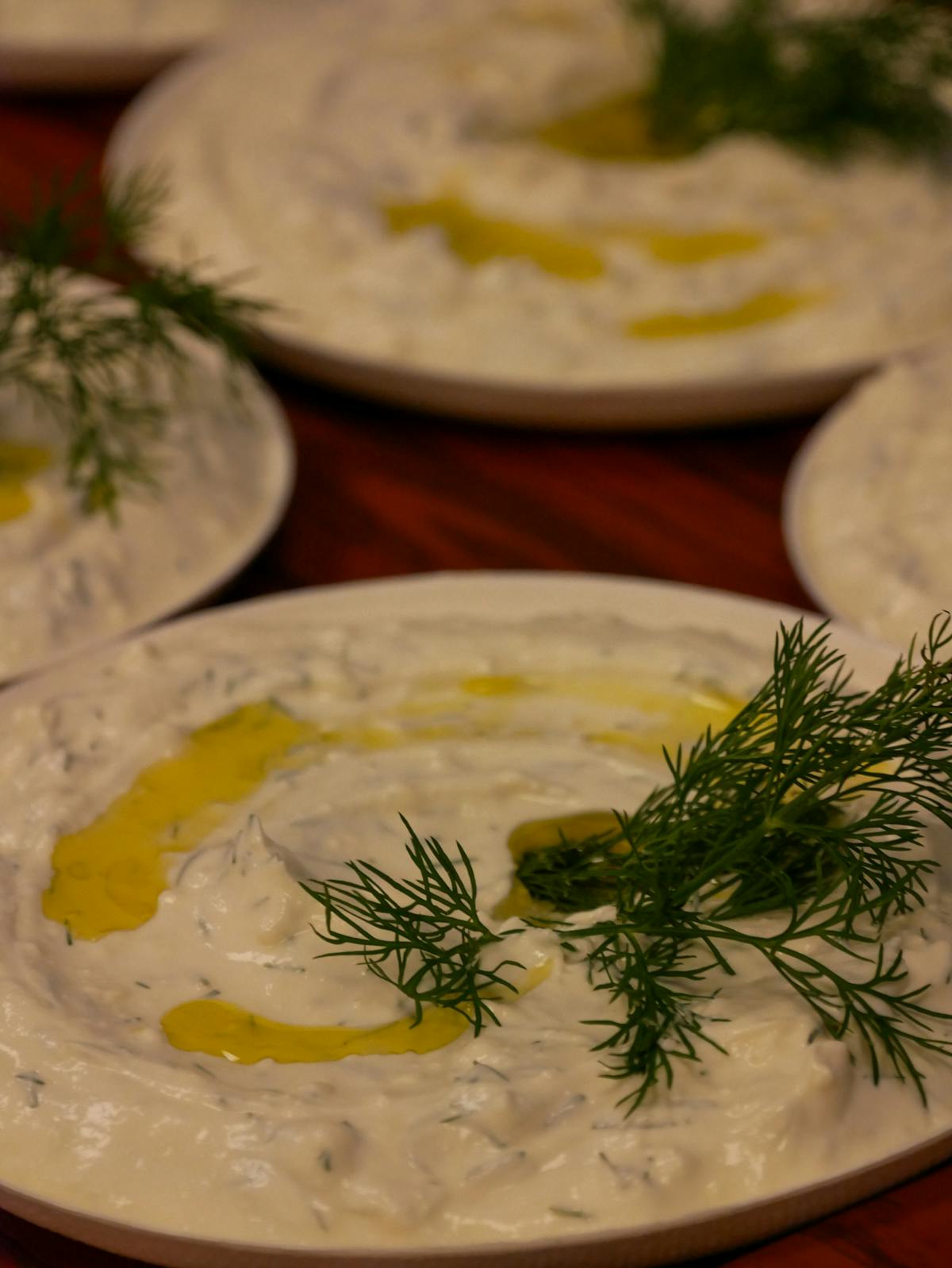
Authentic Greek Tzatziki
Ingredients
For the Tzatziki
- 2 cup full-fat Greek yogurt strained
- 1 medium English cucumber
- 1-2 clove garlic finely grated
- 2 tablespoons extra virgin olive oil plus more for serving
- 1 tablespoon white wine vinegar or lemon juice
- 1 teaspoon sea salt for cucumber
- 1/4 teaspoon white pepper optional
- 1 tablespoon fresh dill chopped, optional
For Serving
- extra virgin olive oil for drizzling
- sweet paprika or dried mint a pinch
- warm pita bread cut into triangles
- fresh vegetable crudites cucumber, bell pepper, cherry tomatoes
Instructions
- If yogurt is not very thick, strain through cheesecloth over a bowl in the fridge for 2+ hours.
- Peel and seed the cucumber. Grate on the large holes of a box grater.
- Salt the grated cucumber, let sit 10 minutes, then squeeze dry in a towel.
- Grate or mash garlic to a smooth paste.
- Combine strained yogurt, cucumber, garlic, olive oil, and vinegar in a bowl. Stir well.
- Season to taste with salt and pepper. Fold in dill if using.
- Cover and refrigerate at least 2 hours (overnight is best).
- Stir, transfer to serving bowl, drizzle with olive oil, and serve.
Notes
Nutrition
Chef’s Notes
Dill vs. Mint: The Great Herb Debate
In Greece, you will find tzatziki both ways. Fresh dill is the more common addition, giving the dip a gentle, aromatic quality. Some regions use fresh mint instead, which adds a brighter, cooler note that pairs beautifully with lamb. My mother never added either — she believed good yogurt, cucumber, and garlic needed nothing else.
Tzatziki as a Sauce vs. a Dip
For a thicker dip consistency (meze platters, vegetable crudites), use the recipe as written. For a thinner sauce (drizzling over souvlaki, gyros wraps, or grilled fish), stir in 1–2 tablespoons of extra olive oil or a splash of cold water until you reach a pourable consistency.
Frequently Asked Questions
What is the best yogurt for tzatziki?
Full-fat Greek yogurt is ideal — it has the right thickness and tang without needing extensive straining. Look for yogurt with a short ingredient list: milk and live cultures. If you cannot find Greek yogurt, any full-fat plain yogurt strained for 4–6 hours will work well.
How do you keep tzatziki from getting watery?
Two critical steps: strain your yogurt until it is very thick, and thoroughly squeeze the moisture out of the grated cucumber. Salt the cucumber first and let it sit for 10 minutes to draw out water, then wring it in a clean towel until nearly dry.
Can I make tzatziki without garlic?
Yes. While garlic is traditional, you can omit it entirely or replace it with a tablespoon of finely chopped fresh chives for a milder flavor.
How long does homemade tzatziki last?
Properly stored in an airtight container in the refrigerator, homemade tzatziki keeps for 3–4 days. The flavor actually improves on the second day as the ingredients have more time to meld.
What do you eat with tzatziki?
Tzatziki is one of the most versatile dips in Greek cuisine. Serve it with warm pita bread, as a sauce for souvlaki or gyros, alongside grilled lamb chops or chicken, with falafel, as a dip for fresh vegetables, or as a cool contrast to spicy dishes.