
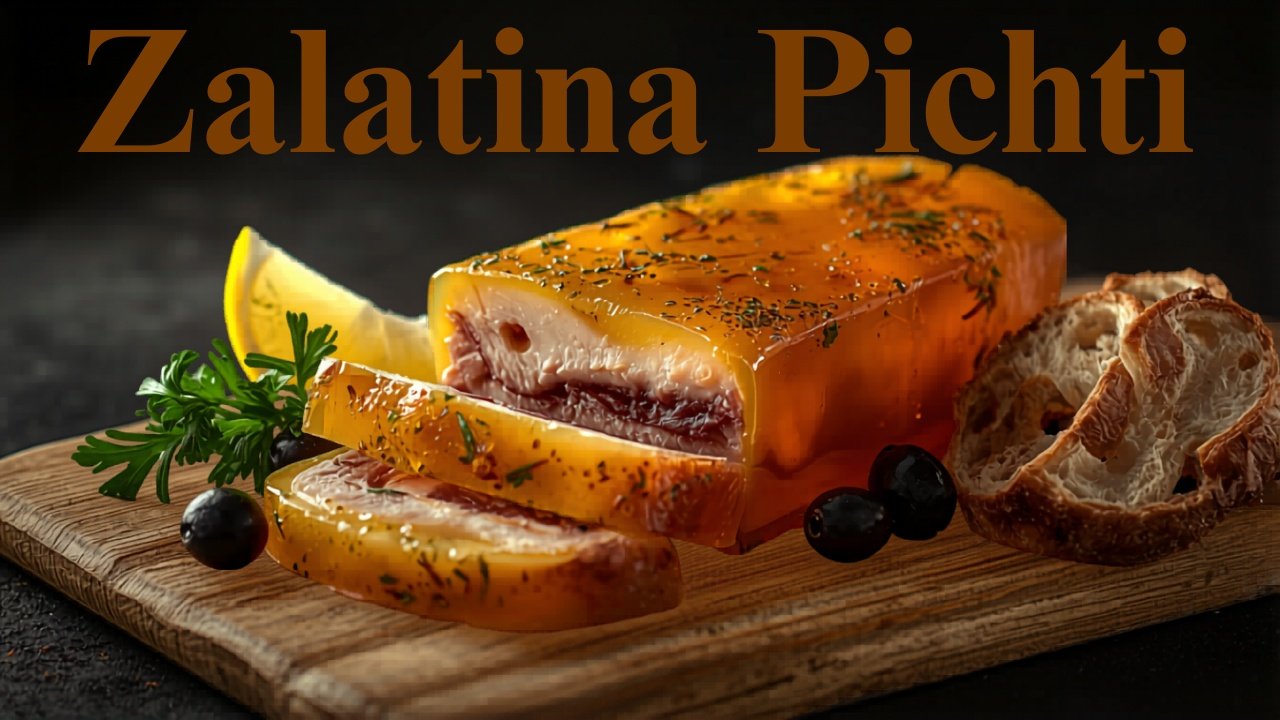
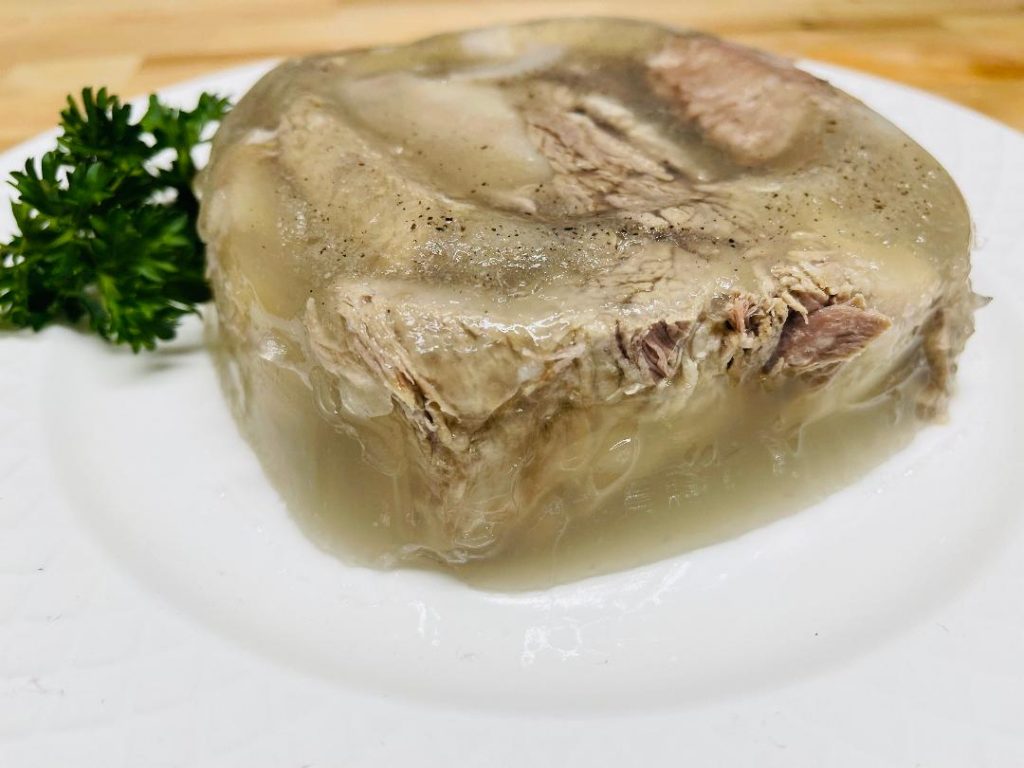
This zalatina recipe is one of the most cherished traditional dishes from Cyprus and Greece — a golden, lemon-scented pork aspic known as Pichti that has graced holiday tables for generations. Made from humble cuts of pork and transformed through slow simmering and patience, it is old-world cooking at its most deeply satisfying.
At MyPrepTable, Chef Niko grew up watching this dish being made every Christmas and Easter. The kitchen filled with the scent of simmering pork, lemon, and garlic — and when the zalatina finally emerged from the refrigerator the next morning, set into a glistening, golden aspic, it disappeared in minutes. This recipe honors that tradition exactly as it was passed down.
Table of Contents
- What Is Zalatina (Pichti)?
- Key Ingredients and Why They Matter
- Full Zalatina Recipe
- 5 Tips for Perfect Zalatina
- How to Serve Zalatina
- Storage and Make-Ahead
- Frequently Asked Questions
What Is Zalatina (Pichti)?
Zalatina is a traditional pork aspic — a cold, set dish made by simmering collagen-rich cuts of pork (primarily pigs’ feet and pork shoulder) in a seasoned broth until the natural gelatin is released. The strained, reduced broth is then poured over the cooked meat and left to set in the refrigerator, forming a firm, sliceable jelly around the tender pieces of pork.
The dish goes by many names across the Mediterranean and Eastern Europe. In Cyprus and Greece it is called Pichti (πηχτή), while Zalatina is a name used widely in Greek communities and across Southern Europe. Similar dishes appear across French cuisine as fromage de tête (head cheese) and across the Balkans in various forms. According to Visit Cyprus, pichti is considered one of the island’s most beloved traditional holiday foods, particularly associated with Christmas and Easter celebrations.
Key Ingredients and Why They Matter
Pigs’ feet are the non-negotiable foundation of this recipe. They are extraordinarily rich in collagen, which dissolves into the broth during the long simmer and is what allows the aspic to set firm without any added gelatin. Do not substitute or skip them — the dish simply will not set without them.
Pork shoulder, bone-in adds the bulk of the meat. The bone contributes additional gelatin and flavor to the broth, while the shoulder meat itself becomes incredibly tender after 2½ hours of simmering. Pigs’ ears are optional but traditional — they add texture and an extra boost of collagen.
Lemon juice is critical. It does two things: it brightens the rich, fatty broth into something clean and refreshing, and it helps the aspic set with a beautiful clarity. Use fresh lemons — bottled lemon juice is not a substitute here. The science of aspic-making shows that the acidic environment from lemon juice also helps extract more gelatin from the bones during cooking.
Red wine vinegar adds a subtle tang that cuts through the richness. Bay leaves, garlic, and black pepper round out the seasoning into something deeply aromatic and unmistakably Mediterranean.
Zalatina (Pichti) Recipe
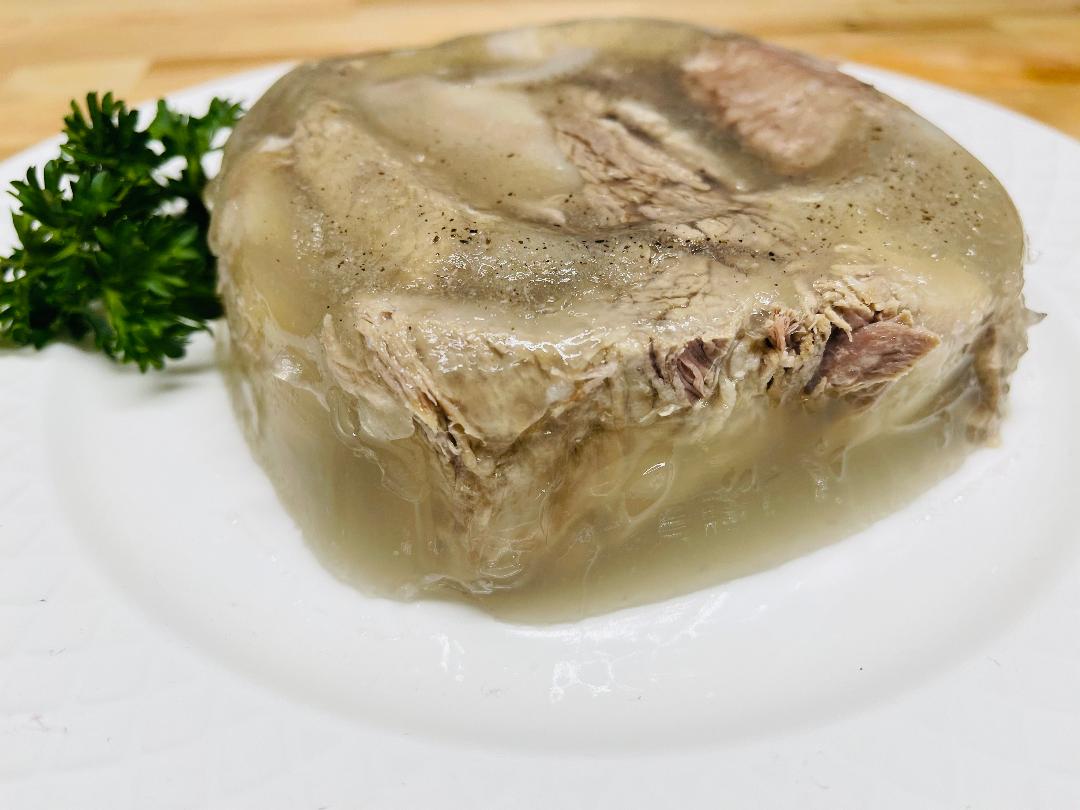
Zalatina (Pichti) – Traditional Pork Aspic
Equipment
- 2 Lg. Stock Pots
- Small Sauce Pot
- (Help support our site!)Mixing Bowl
- (Help support our site!)Chefs Knife
- (Help support our site!)Cutting Board
- (Help support our site!)Strainer
- Spider
Ingredients
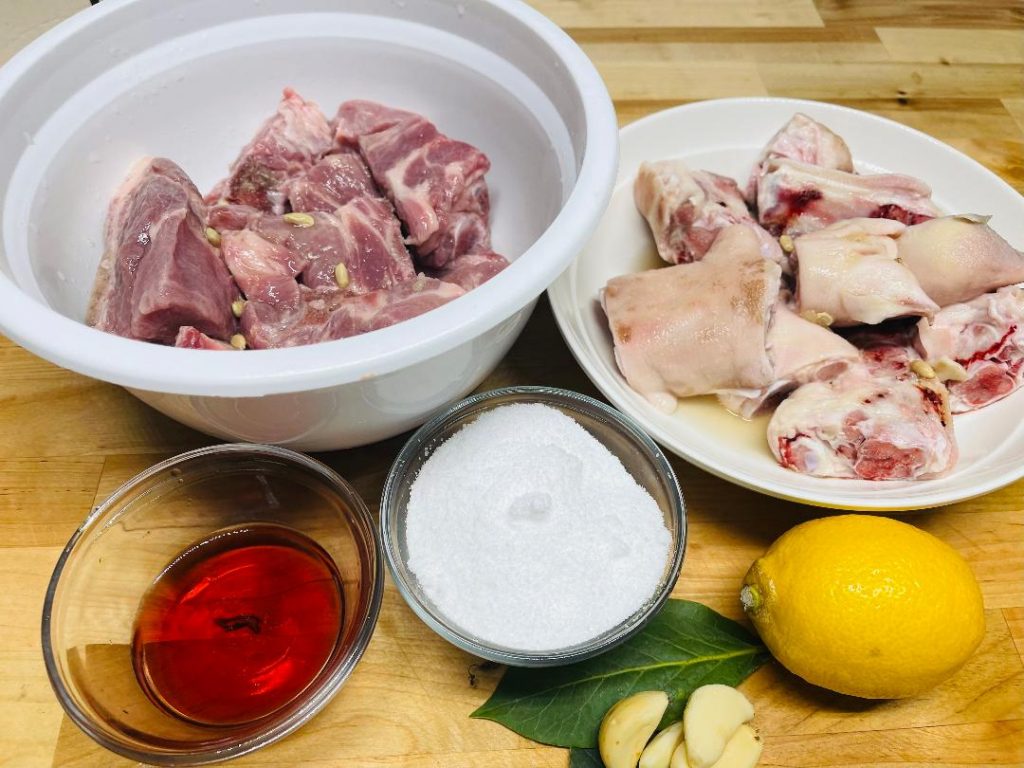
- 2 lb Sliced Pigs Feet
- 2 lb Pork Shoulder, Bone-In
- 1 pair Pigs Ears OPTIONAL
- 3 whole Lemons
- 1/2 cup Red Wine Vinegar
- 1/4 cup Salt
- 1 tsp Pepper
- 2 leaf Bay Leaves
- 5 clove Fresh Garlic
Instructions
- Gather and rinse all ingredients. After rinsing the pork, squeeze one whole lemon over it and let it sit for 5–10 minutes. This helps to clean and freshen the meat before cooking.
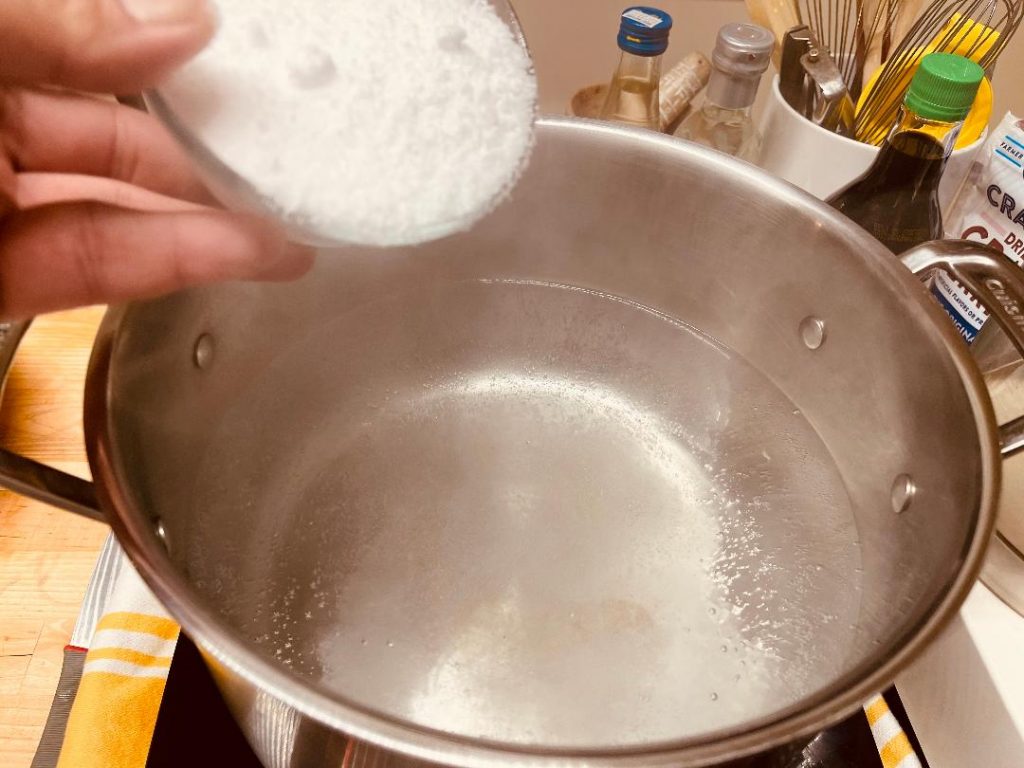
- Begin heating two stock pots with water and add salt.
- Begin adding all the pork meat into the first pot of boiling water and cook for 5-6 minutes. This will begin the cleaning of the impurities of the meat.
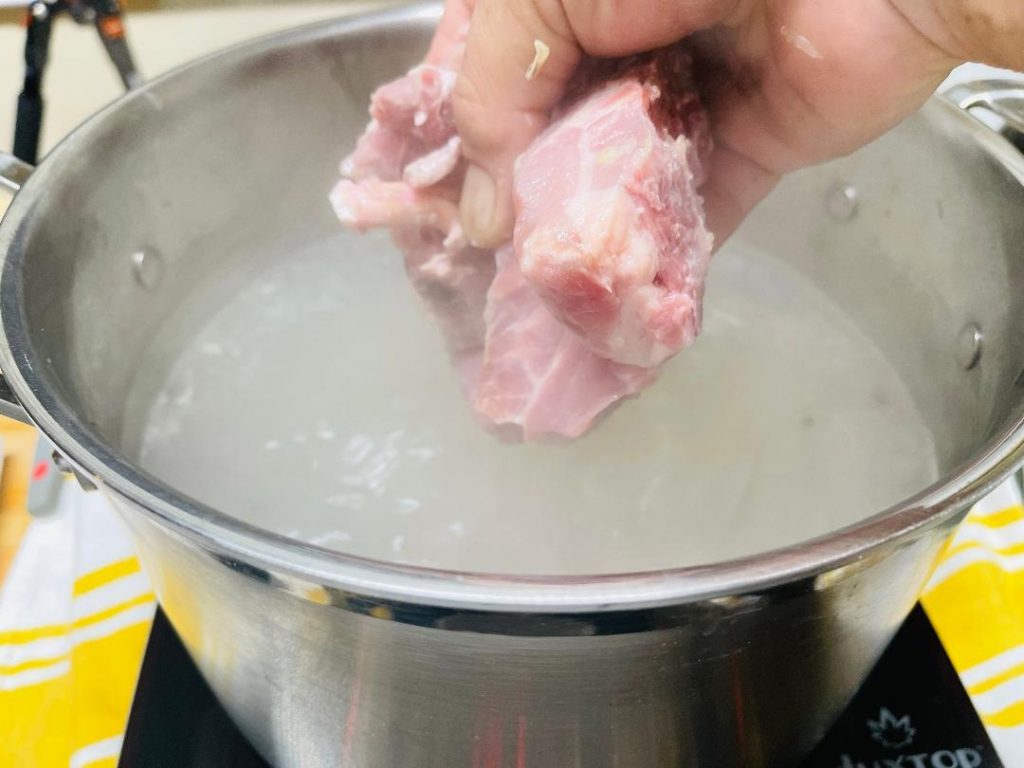
- Using a spider begin to transfer pork meat into the second stock pot.
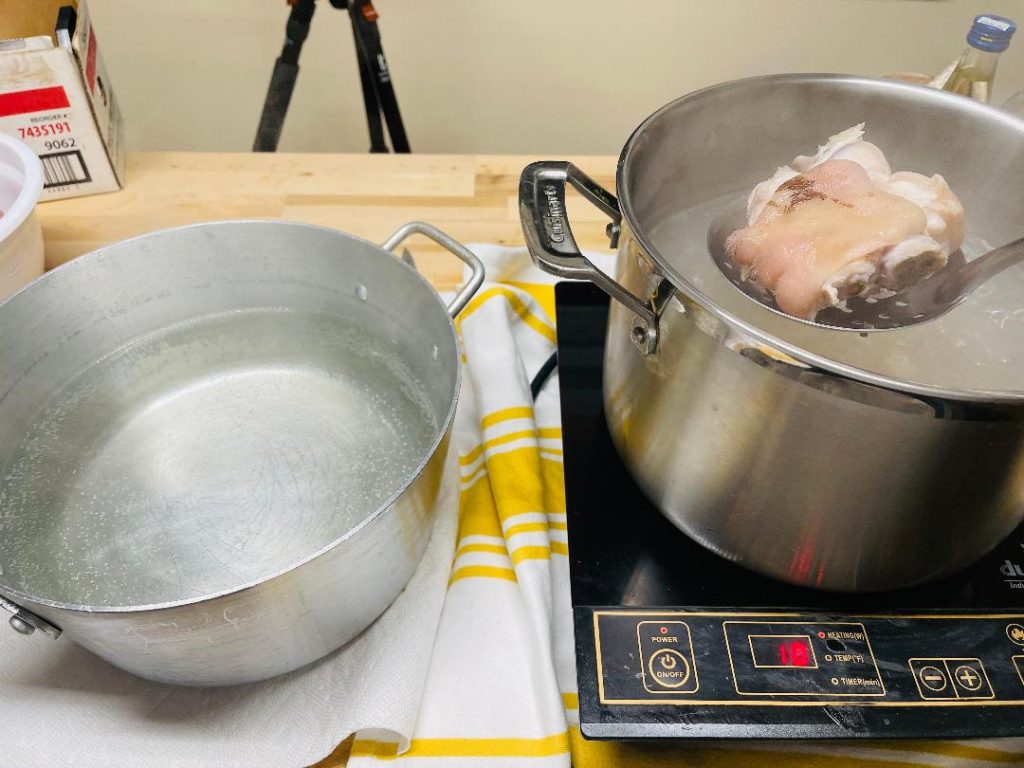
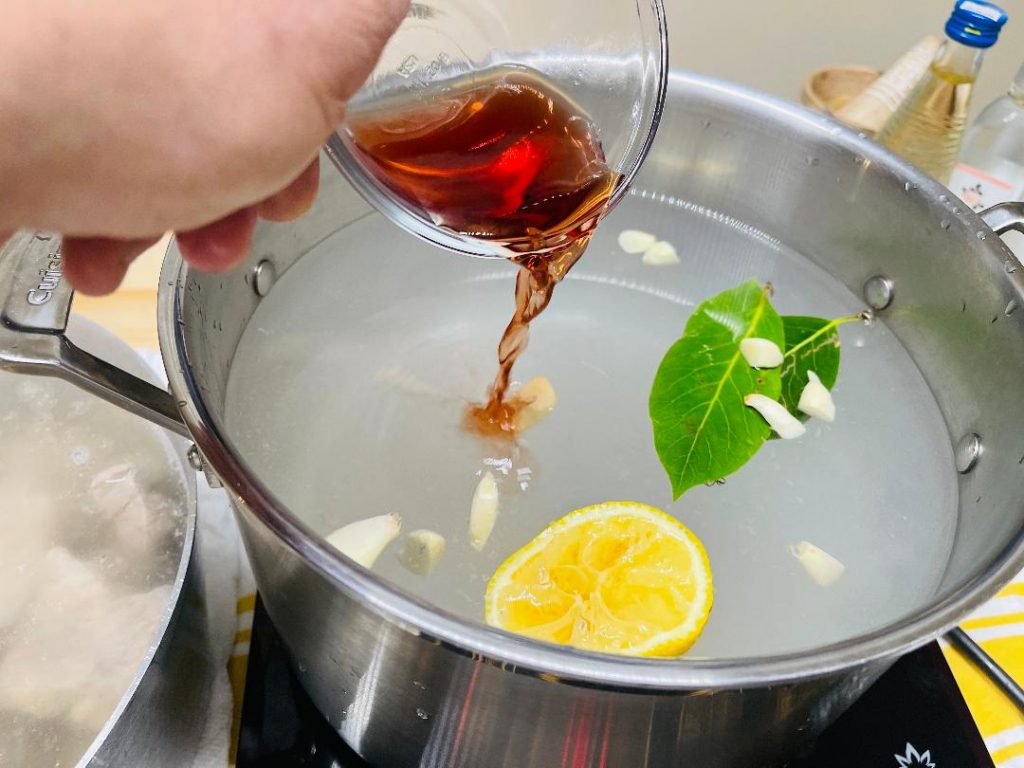
- Once all meat is transferred add the garlic, lemon juice, salt, pepper and the juice of 2 whole lemons.
- Once all ingredients are added bring to a boil and then lower to a high simmer for 2-2 1/2 Hrs.
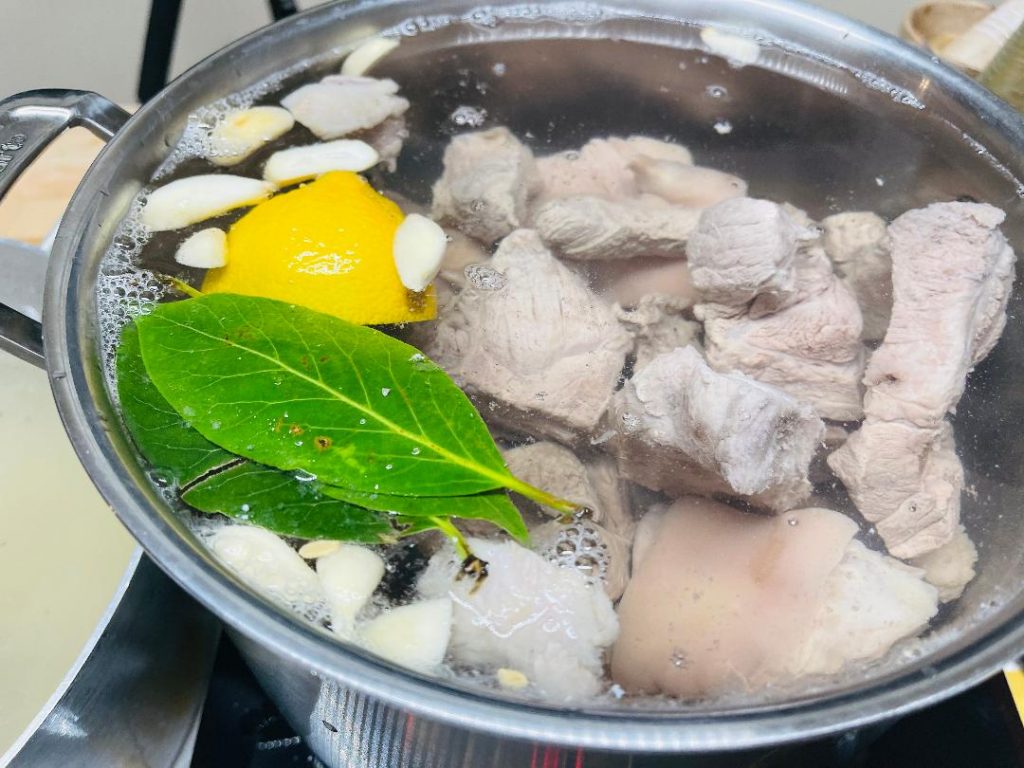
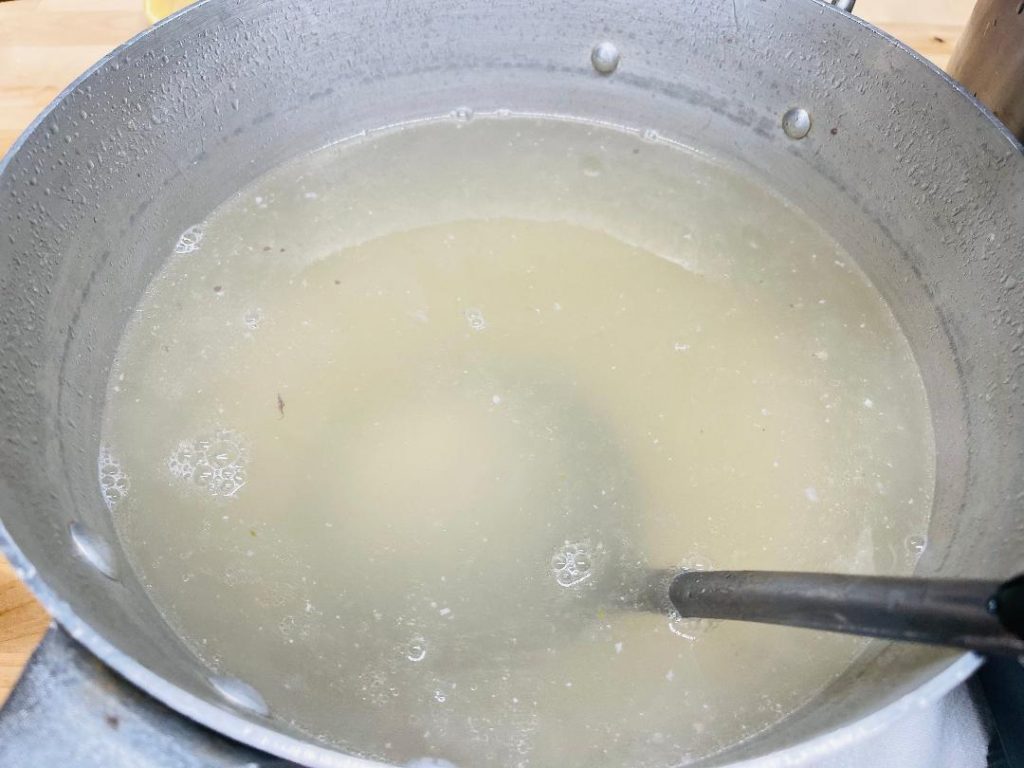
- Discard first pot as you can see how cloudy the water is.
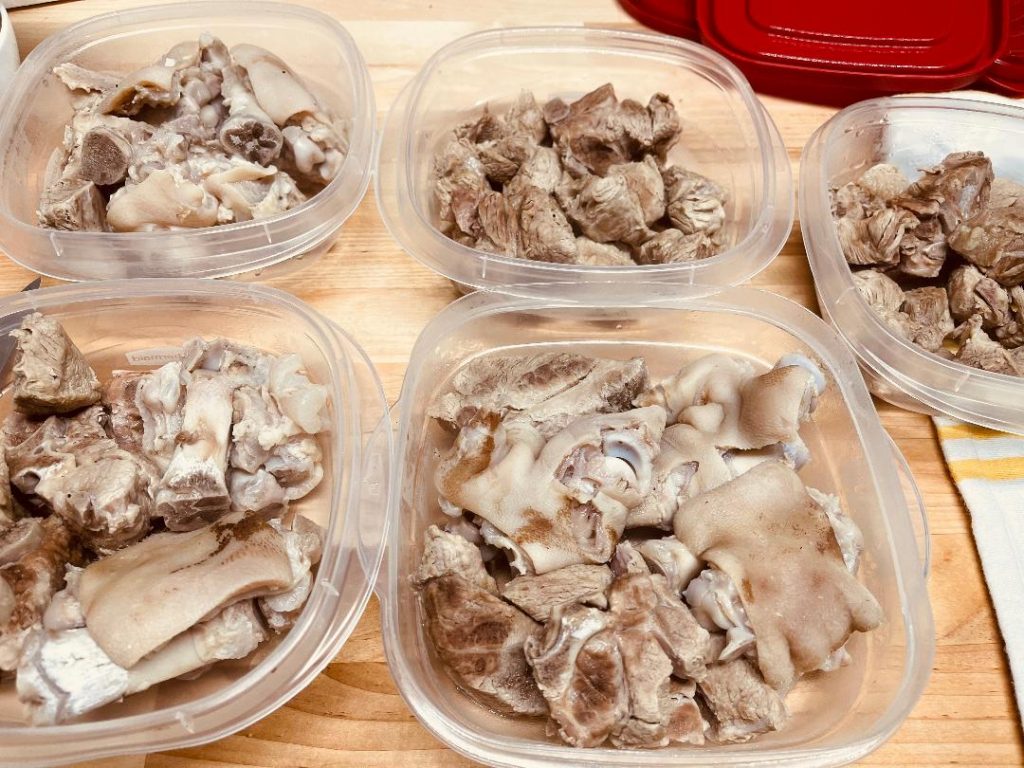
- Once you meat is soft and tender begin to place meat into a container.
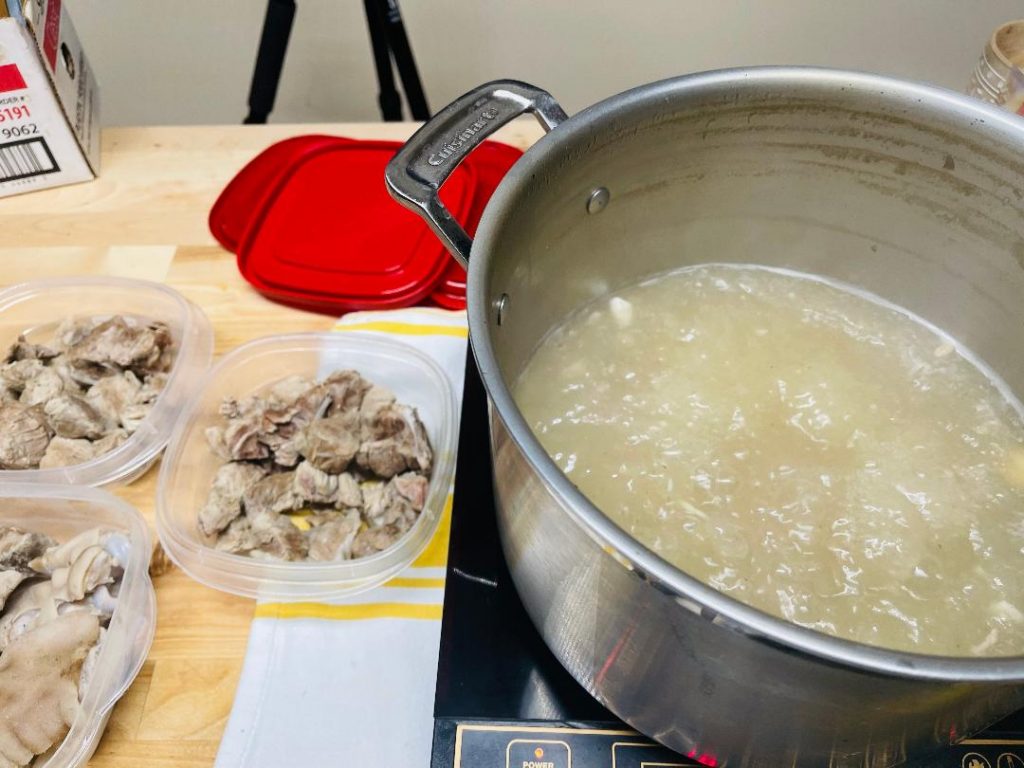
- Strain remaining liquid into a clean pot to remove all herbs and impurities and reduce stock liquid by half.
- Once reduction is reached pour the liquid into the container making sure to cover the meat as high as you can.
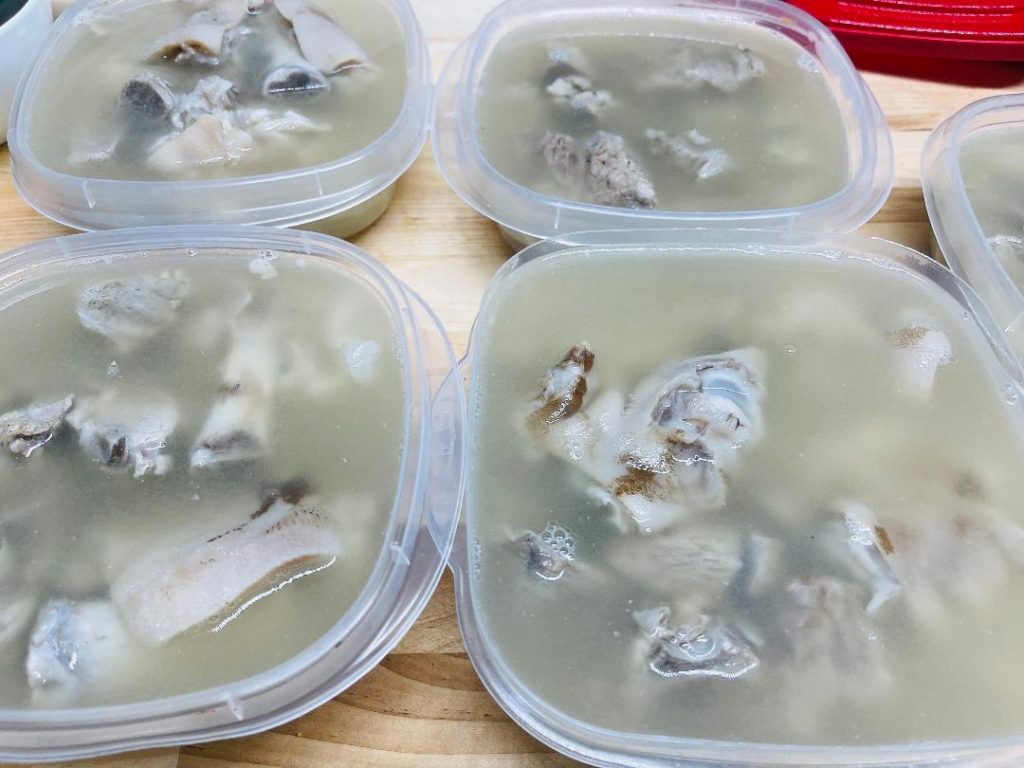
- Let it rest on counter until cool, cover the container and place into refrigerator for the aspic to gel. Remove after a minimum of 3 hours of refrigeration and serve.
Notes
Nutrition
5 Tips for Perfect Zalatina Every Time
1. Do not skip the blanching step. Adding the pork to the first pot and discarding that cloudy water is not optional — it removes blood, impurities, and off-flavors that would otherwise cloud your final aspic and make the flavor muddy. A clear, golden aspic is the mark of a well-made zalatina.
2. Simmer low and slow. A rolling boil will cloud the broth and toughen the meat. Once you have brought the second pot to a boil, reduce immediately to a steady, gentle simmer. The surface should barely bubble for the full 2 to 2½ hours.
3. Reduce the broth sufficiently. After removing the meat, the strained broth must be reduced by approximately half. This concentrates the gelatin so the aspic sets firmly rather than loosely. Test it by chilling a spoonful on a cold plate — it should gel within a few minutes.
4. Make it a day ahead. Zalatina genuinely improves overnight in the refrigerator. The flavors deepen, the aspic firms up beautifully, and it becomes much easier to slice cleanly. Resist the temptation to rush it.
5. Season generously. Cold food needs more seasoning than hot food — your taste buds are less sensitive to salt and acid when food is chilled. Taste the broth before pouring it over the meat and make sure it is boldly seasoned with lemon, salt, and pepper.
How to Serve Zalatina
Zalatina is served cold, sliced or scooped directly from its container. The classic accompaniment is crusty bread — a thick slice of village-style sourdough or a baguette to scoop up the wobbling aspic. A generous squeeze of fresh lemon over each portion is non-negotiable. Add a drizzle of good olive oil, a few black olives, and some sliced raw onion for a complete traditional presentation.
In the Mediterranean tradition, zalatina is almost always served as part of a larger spread — alongside Pastichio, roasted meats, and holiday side dishes. A small glass of ouzo, tsipouro, or a dry white wine makes the perfect pairing. The clean, lemon-bright flavors of the aspic cut beautifully through the anise of ouzo, which is why this combination has persisted across generations of Greek and Cypriot tables.
Storage and Make-Ahead
Zalatina keeps well covered in the refrigerator for up to 5 days. Keep it in its original container with plastic wrap pressed directly against the surface to prevent it from absorbing other odors. It also freezes well for up to 2 months — thaw overnight in the refrigerator and note that the texture of the aspic will be slightly softer after freezing, but the flavor is unaffected.
For make-ahead purposes, zalatina is ideal. Prepare it up to 2 days before your event — it will be at its very best on day 2 after setting overnight, and it holds perfectly through a second day in the refrigerator. According to the USDA food safety guidelines, cooked pork dishes keep safely refrigerated for 3 to 4 days.
Frequently Asked Questions
Can I make zalatina without pigs’ feet? Unfortunately, no — not authentically. The pigs’ feet are the source of the gelatin that allows the aspic to set. Without them, you would need to add powdered gelatin, which works but produces a softer, less flavorful result. If you cannot source pigs’ feet, ask your butcher — they are usually available on request.
Why did my zalatina not set? The most common reason is that the broth was not reduced enough. The gelatin needs to be sufficiently concentrated to set firmly when chilled. Return the broth to the heat and reduce further, then re-pour over the meat and chill again.
Can I make this recipe kosher or halal? This specific recipe is built around pork, so it cannot be made kosher. A halal version could be made using halal-certified pork cuts if available in your region. The technique would remain identical.
We hope this zalatina recipe brings the flavors of a traditional Mediterranean holiday table to your home. If you make it, leave a comment below — we would love to hear how it turned out. For more traditional recipes from the region, try our Classic Greek Beef Stew or our Delicious Pastichio. Kali orexi!