
The simplest things are the hardest to get exactly right. Horta vrasta is proof.
My grandmother on Kos kept a cloth bag hanging by the back door. Every morning when the light was still low and the air held that particular mix of salt and wild thyme that you only find on a Greek island, she would take that bag and walk the hillside paths behind the house. She came back with whatever she found: dark dandelion leaves, the tender shoots of stamnagathi, sometimes a bundle of amaranth that had pushed up near the stone wall. We called all of it horta — ta horta — and she cooked every variety the same way.
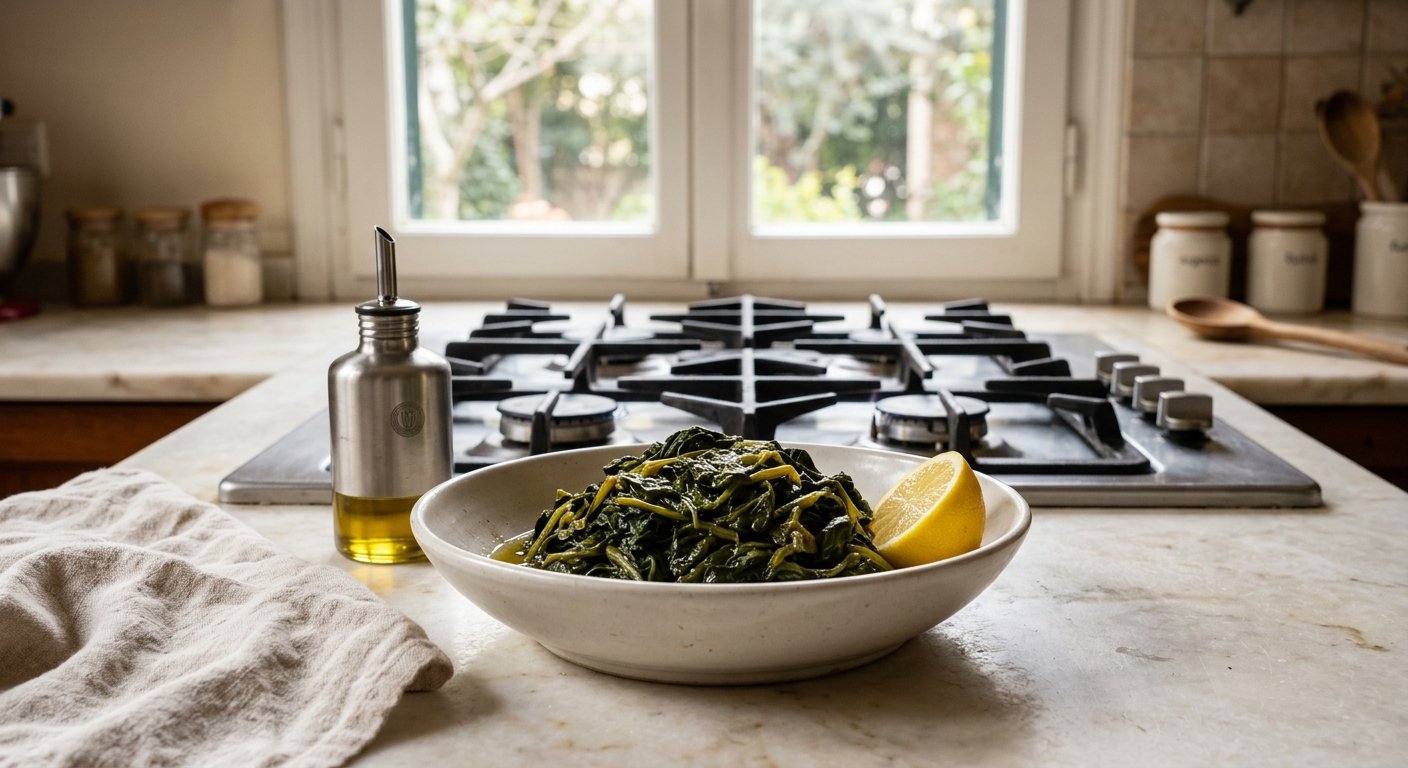
Boiled in a deep pot of well-salted water, drained, and laid into a wide bowl. Then she would pour over them a stream of olive oil that turned the leaves shining and dark, squeeze half a lemon, and set it on the table with bread and olives and a wedge of feta. That was dinner. Not a side dish, not a garnish — dinner.
Horta vrasta, meaning simply “boiled greens,” is one of the oldest preparations in the Greek kitchen. According to Oxford Reference’s food encyclopedia, wild greens have been part of the Greek diet since antiquity, valued both for their taste and their nutritional properties. Today you will find them on every Greek taverna table, often served alongside grilled fish or as part of a mezze spread. But at home on Kos, horta were everyday food. Serious food. A meal worthy of respect.
This post covers the technique that makes the difference, the greens that work best, and the five small details that separate properly made horta from the limp, bitter, under-dressed versions that give boiled vegetables a bad name.
Table of Contents
- Why This Recipe Works
- What Are Horta? Choosing Your Greens
- Ingredients
- Step-by-Step Instructions
- Recipe Card
- Chef Notes
- FAQ
Why This Recipe Works
- Generously salted water draws out the sharpest bitterness from the greens as they cook, the same way salt unlocks flavor in pasta water. Under-salted water produces flat-tasting greens that require more lemon and salt afterward to compensate.
- Cooking until fully tender — not al dente — is the key difference between Greek horta and the briefly blanched greens you find in other traditions. Fully soft greens have a silky texture that absorbs olive oil completely; firm greens repel it. My blanched vegetables technique guide explains why the cooking stage matters so much for flavor absorption.
- Good-quality extra-virgin olive oil, applied generously while still warm, penetrates the cell structure of the cooked greens and carries flavor throughout. A thin drizzle over already-cooled greens will sit on the surface.
- Serving at room temperature rather than piping hot allows the olive oil to thicken slightly on the leaves and lets the flavors settle. Horta that have rested ten minutes are better than horta served immediately off the heat.
What Are Horta? Choosing Your Greens
Horta is a broad category. In Greece, the word covers any edible wild or cultivated green that is boiled and dressed — there is no single correct plant. On Kos, my grandmother used whatever grew. In a modern kitchen, these are the most reliable choices:
Dandelion greens (radikia): The most common variety sold at Greek markets. Young leaves are milder; the large, mature leaves have a pleasant but assertive bitterness that softens considerably with cooking. This is the closest to what you will find in a Greek taverna.
Chicory: Similar bitterness profile to dandelion, slightly more tender. Works very well on its own or combined with dandelion.
Swiss chard or spinach: Much milder and sweeter. These produce a gentler-tasting horta that is a good introduction for people who find dandelion too sharp. They also cook faster — watch the time.
Vlita (amaranth greens): A summer green widely eaten in Greece and one of the most traditional varieties. Mild, slightly sweet, very tender. If you can find it at a Greek or Middle Eastern grocery, use it.
Mixed greens: My grandmother’s default. A mix of whatever is available produces a more complex flavor than any single green alone.
Ingredients
Serves 4 as a side dish or 2 as a light meal
For the horta:
- 700g (about 1.5 lb) fresh greens — dandelion, chicory, Swiss chard, vlita, or a combination
- 2 liters water
- 1 tablespoon coarse salt (for the cooking water)
For the dressing:
- 4-5 tablespoons extra-virgin olive oil (be generous)
- Juice of 1 lemon (about 3 tablespoons), plus extra wedges to serve
- Fine sea salt to taste
To serve:
- Good bread
- Olives
- Feta cheese
Step-by-Step Instructions
1. Prepare the greens
Sort through the leaves and discard any yellowed or damaged ones. For dandelion or chicory, cut away the very thick lower stems — they take too long to cook and the texture is unpleasant. Wash the greens thoroughly in two changes of cold water, lifting them out rather than draining through a colander, to leave any grit behind.
2. Bring well-salted water to a boil
Use a large pot. Add 1 tablespoon of coarse salt to 2 liters of water. The water should taste pleasantly salty — similar to well-seasoned pasta water. This is not optional: the salt penetrates the greens as they cook and is what controls the bitterness.
3. Add the greens and cook until completely tender
Add the washed greens to the boiling water — they will look like too much but will collapse quickly. Push them under with a wooden spoon. Cook over medium-high heat, partially covered, until completely tender. The timing varies by green:
- Spinach or vlita: 5-8 minutes
- Swiss chard: 8-12 minutes
- Dandelion or chicory: 15-20 minutes
Check by tasting a thick stem piece. It should be fully soft with no resistance at all. This is the difference. Do not undercook.
4. Drain and press
Transfer the cooked greens to a colander. Press firmly with the back of a large spoon or a folded kitchen towel to remove as much water as possible. Excess water dilutes the olive oil dressing. The greens should feel damp, not wet.
Press out as much water as you can. This step is what lets the olive oil do its work.
5. Dress while warm
Arrange the greens in a wide, shallow bowl. While still warm, pour over the olive oil in a thin, even stream — all of it. Squeeze over the lemon juice. Add a pinch of fine salt. Toss gently with tongs or two forks to distribute the dressing through every leaf.
6. Taste, adjust, and rest
Taste for salt and lemon. The greens should taste bright and clean, with the olive oil present in every bite. Let them rest at room temperature for 10 minutes before serving. Serve with bread, olives, and feta.
Recipe Card
Horta Vrasta (Greek Boiled Greens with Olive Oil and Lemon)
Ingredients
For the greens
- 700 g fresh greens -- dandelion, chicory, Swiss chard, vlita, or a combination about 1.5 lb
- 2 liters water
- 1 tablespoon coarse salt for the cooking water
For the dressing
- 4 tablespoons extra-virgin olive oil up to 5 -- be generous
- 3 tablespoons fresh lemon juice about 1 lemon, plus wedges to serve
- fine sea salt to taste
To serve
- good crusty bread
- olives
- feta cheese
Instructions
- Sort through the leaves and discard any yellowed or damaged ones. Cut away very thick lower stems from dandelion or chicory. Wash thoroughly in two changes of cold water.
- Bring 2 liters of well-salted water to a boil in a large pot. The water should taste pleasantly salty -- similar to pasta water.
- Add greens and cook until completely tender: 5-8 min for spinach/vlita, 8-12 min for Swiss chard, 15-20 min for dandelion/chicory. Taste a thick stem -- it should be fully soft with no resistance.
- Transfer to a colander and press firmly with the back of a spoon to remove as much water as possible. The greens should feel damp, not wet.
- While still warm, arrange in a wide bowl and pour over all the olive oil in a thin, even stream. Squeeze over the lemon juice. Add a pinch of fine salt.
- Toss gently with tongs or two forks. Rest 10 minutes at room temperature before serving.
- Serve with bread, olives, and feta.
Notes
Dress while warm so the olive oil absorbs into the leaves.
Leftovers keep 2 days refrigerated. Bring back to room temperature or warm gently before serving.
Nutrition
Chef Notes
On bitterness: Bitterness is part of the dish. Greeks do not try to eliminate it — they manage it. Well-salted cooking water and full cooking time reduce the most aggressive edge. If using dandelion, younger, smaller leaves will be noticeably milder. If you want something with almost no bitterness at all, use chard or spinach.
On olive oil quantity: More than you think. Greeks pour olive oil the way Italians pour olive oil — not as a condiment to be used sparingly, but as the primary flavor agent. Four tablespoons for four portions is the minimum. Five is more honest.
Variations: Some regions add a small clove of raw garlic, grated, into the dressing. Others add a tiny pinch of dried oregano. My grandmother added nothing. I serve it plain and put the garlic on the table for those who want it.
Storage: Horta keeps well in the refrigerator for two days. They are often better the next day, once the olive oil has had time to work through all the leaves. Serve at room temperature or warmed briefly in a pan.
The ladera tradition: Horta vrasta is the simplest expression of a whole category of Greek cooking — ladera, meaning “olive oil dishes,” in which vegetables are the main event and olive oil is the sauce. If you want to explore this tradition further, Gemista (Greek stuffed tomatoes and peppers) is the right next dish to try. And for a light meal pairing, the classic Greek salad alongside horta vrasta is exactly what a summer table on Kos looks like.
FAQ
What are horta?
Horta is the Greek word for edible wild or cultivated greens. It refers to a broad category — any leafy green that can be boiled and dressed with olive oil and lemon. Common varieties include dandelion, chicory, amaranth (vlita), spinach, and Swiss chard. In Greece, horta are often foraged from hillsides and roadsides; at home or in a market context, you use what is available and fresh.
Which greens work best for horta vrasta?
Dandelion greens are the most traditional and widely used. Chicory is similar with a slightly softer texture. Swiss chard and spinach produce a milder, sweeter result. Vlita (amaranth greens) is very traditional in Greece but harder to find outside Greek or Middle Eastern markets. A mix of two or three varieties gives the most complex result.
Why do Greeks cook greens until fully soft instead of al dente?
Texture and absorption. Fully cooked greens have a silky quality that allows olive oil to penetrate and coat every leaf. Greens left with any firmness repel the oil — it sits on the surface rather than becoming part of the dish. Additionally, full cooking reduces bitterness more effectively than brief blanching.
Can I use frozen greens for horta vrasta?
You can, but the result will be different. Frozen spinach or chard works reasonably well — drain and press very thoroughly. Frozen dandelion is harder to find and less successful. Fresh greens give a cleaner flavor and better texture. If using frozen, reduce cooking time and focus on pressing out all water before dressing.
What do you serve with horta vrasta?
In Greece, horta are served as a side dish to grilled or baked fish, alongside other mezze, or as a light meal in themselves with good bread, olives, and feta. The olive oil and lemon from the greens pool slightly into the bowl — you want bread to catch it. A glass of crisp white wine or ouzo fits naturally.