
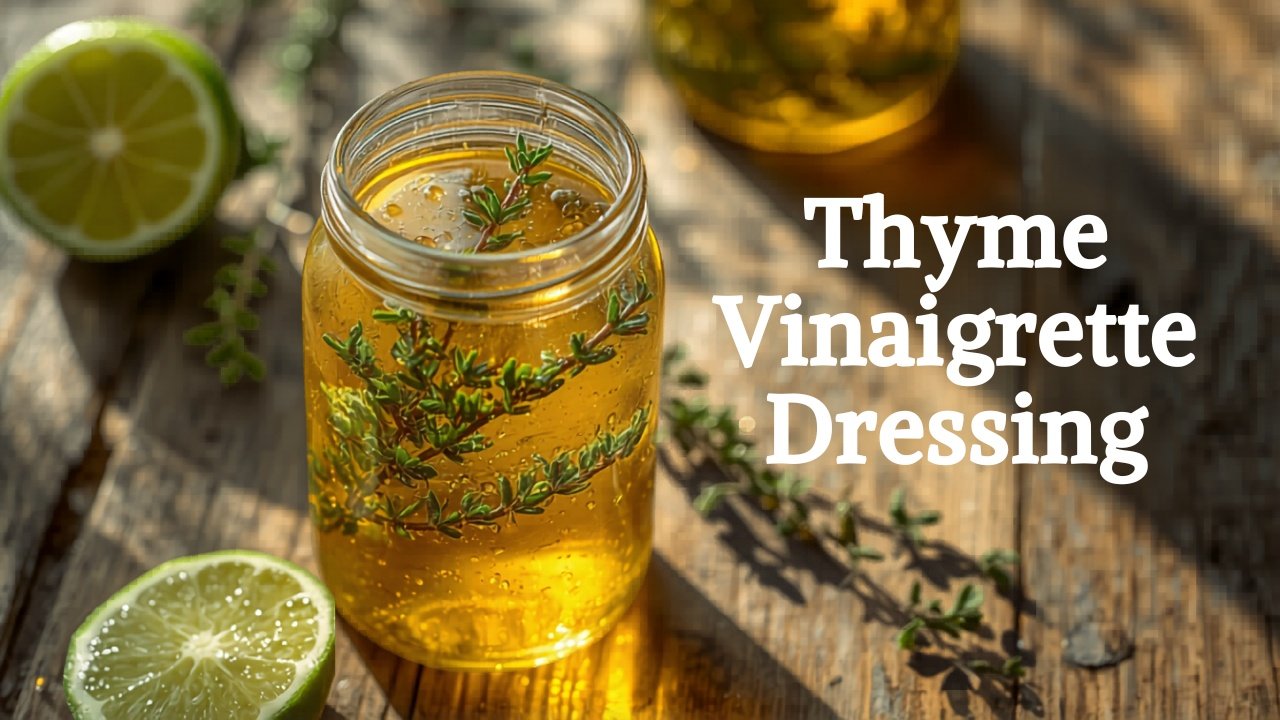
This thyme vinaigrette recipe is one of the simplest and most versatile dressings you can make at home — ready in just 5 minutes with a bowl and a whisk. Bright with fresh lime, fragrant with thyme, and given a sophisticated depth by white balsamic vinegar, this homemade herb dressing will make everything it touches taste better.
At MyPrepTable, Chef Niko keeps a jar of this thyme vinaigrette dressing in the refrigerator year-round. It is the kind of recipe that elevates a simple green salad into something worth talking about, and works equally well drizzled over roasted vegetables, grilled fish, or a grain bowl.
Table of Contents
- What Is a Vinaigrette?
- Why Thyme Works So Well
- Key Ingredients Explained
- Thyme Vinaigrette Recipe
- 5 Tips for the Best Homemade Vinaigrette
- How to Use This Dressing
- Storage and Make-Ahead
- Frequently Asked Questions
What Is a Vinaigrette?
A vinaigrette is an emulsified salad dressing made from an acid and a fat, typically in a 1:2 or 1:3 ratio, combined by whisking vigorously. According to Serious Eats, the key to a great vinaigrette is balance — the acid assertive but not overwhelming, the fat full-flavored enough to stand up to it.
Why Thyme Works So Well in This Dressing
Fresh thyme has a slightly earthy, floral quality that bridges bright citrus and richer olive oil. Unlike stronger herbs such as rosemary, thyme is subtle enough to add complexity without dominating. It pairs beautifully with lime — both have a citrus-floral quality that amplifies each other in this thyme vinaigrette dressing.
Key Ingredients Explained
Olive oil (90/10 blended): A blend of 90% regular olive oil and 10% extra virgin gives you a neutral base with just enough fruitiness for a well-balanced vinaigrette.
White balsamic vinegar: Light in color and flavor — mildly sweet, slightly acidic. The perfect acid for a delicate herb dressing like this thyme vinaigrette.
Fresh lime: Both zest and juice. The zest adds aromatic brightness; the juice provides clean acidity. According to Bon Appetit, one lime yields about 2 teaspoons of zest and 2 tablespoons of juice. Always zest before you juice.
Fresh thyme sprigs: Use fresh, not dried. Dried thyme has a dusty quality that does not work well in a cold dressing. Strip the leaves from the stems and add whole to the bowl.
Thyme Vinaigrette Recipe
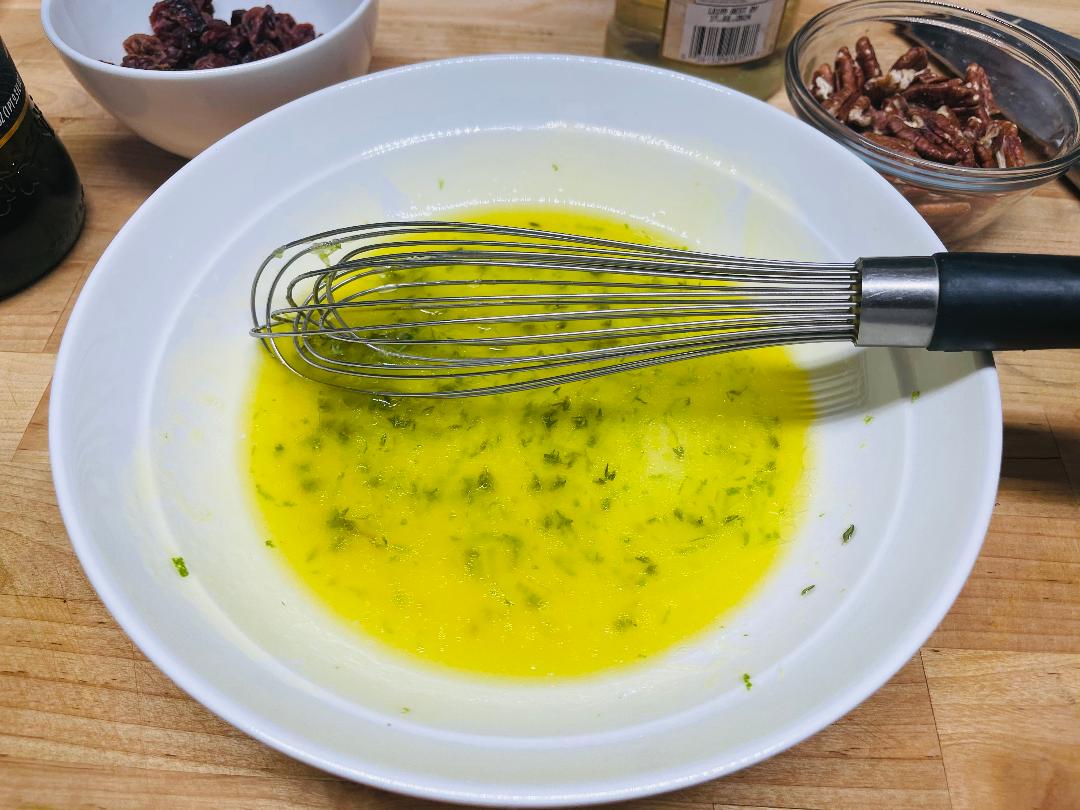
Thyme Vinaigrette Dressing
Equipment
- (Help support our site!)Mixing Bowl
- (Help support our site!)Whisk
- Zester
Ingredients
- 1 cup Olive Oil 90/10 Blended
- 1/4 cup White Balsamic
- 1 whole Lime Juice Juice lime that was zested
- 1/2 whole Lime Zest Use only half lime
- 3 sprig Thyme
Instructions
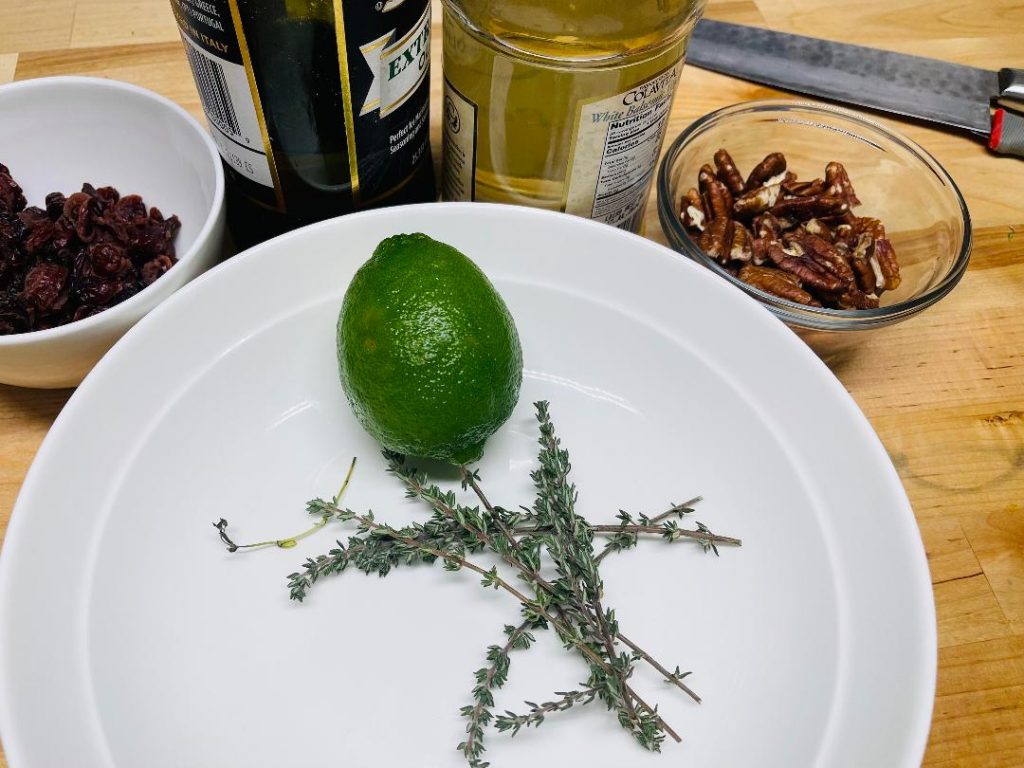
- Gather all ingredients and lets bring it to the board.
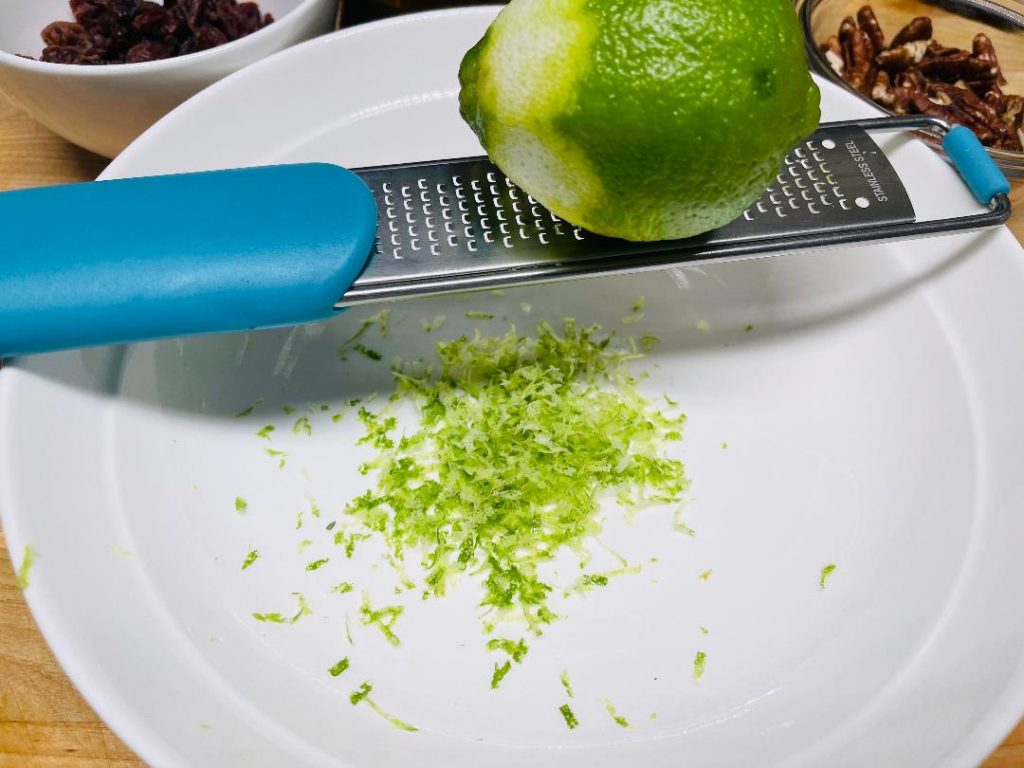
- Zest 1/2 a lime add to bowl.
- Add white balsamic to bowl and juice whole lime into bowl.
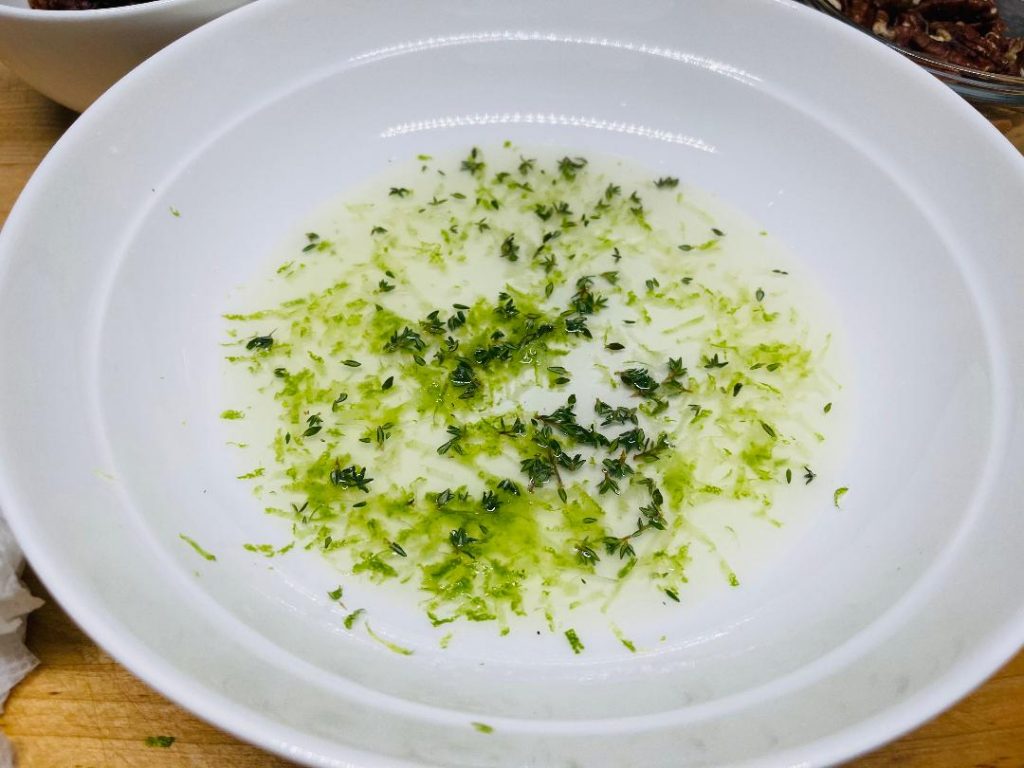
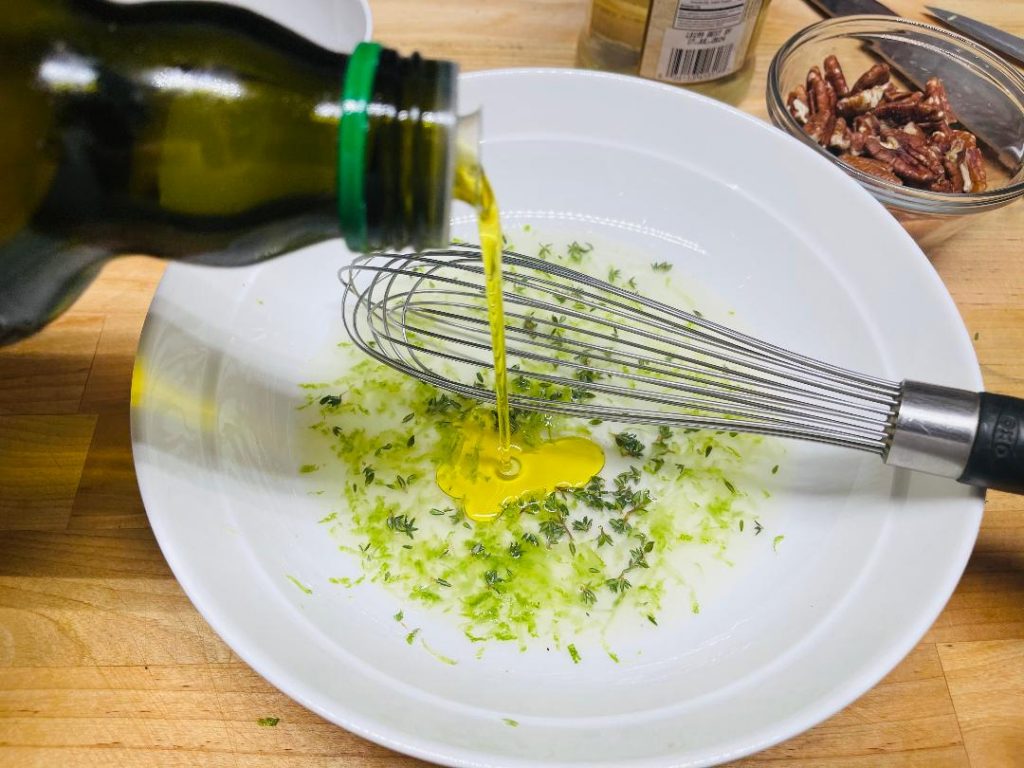
- using a whisk add one cup of Blended oil whisking as you slow stream oil.
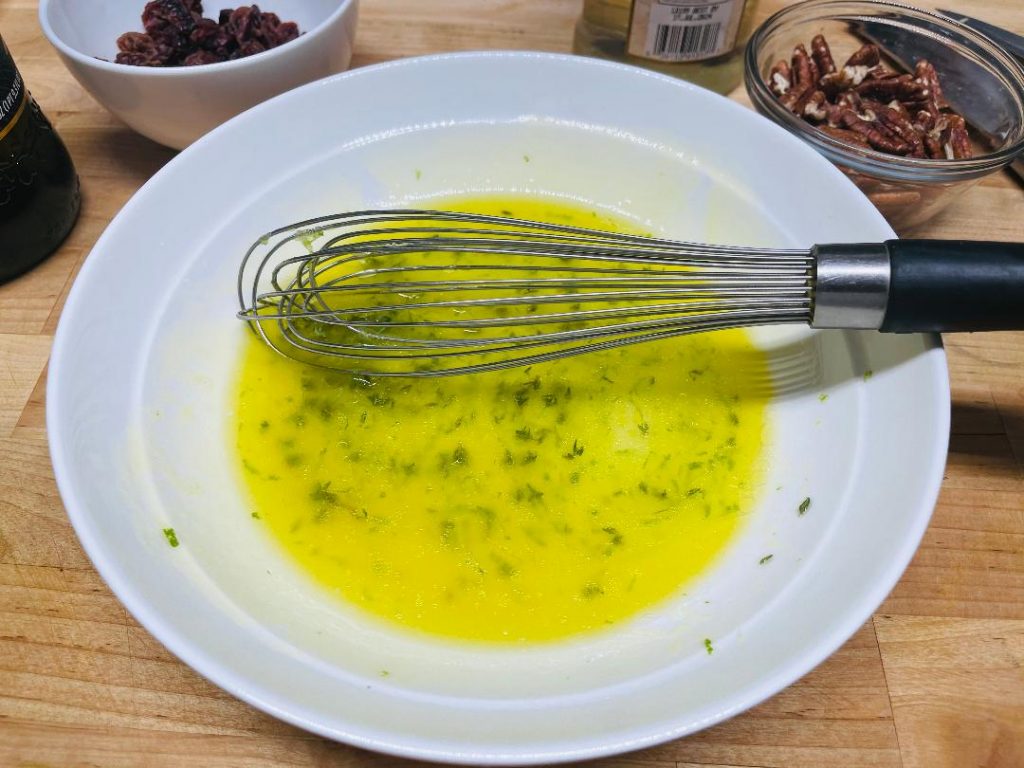
- Whisk well to for emulsion add enough oil to you liking.
Notes
Nutrition
5 Tips for the Best Homemade Vinaigrette
1. Zest first, then juice. Always zest the lime before cutting and squeezing it. Once cut, it is nearly impossible to grip firmly enough to zest without losing juice.
2. Stream the oil slowly. The key to a proper emulsion is adding oil gradually while whisking constantly. If you add it all at once, the dressing will separate immediately rather than coming together.
3. Taste before serving. Cold dressings need more seasoning than you think. Taste after emulsifying and adjust — more lime, a touch more vinegar, or a pinch of salt. Every batch is slightly different.
4. Use a jar for easy storage. Transfer to a clean jar with a tight lid after making. It makes storage simple and re-emulsifying easy — just shake vigorously before each use.
5. Try the maple syrup variation. For a fall version, add one teaspoon of pure maple syrup before emulsifying. It deepens the sweetness and pairs beautifully with roasted root vegetables and bitter greens.
How to Use This Thyme Vinaigrette
This herb dressing is genuinely versatile. Beyond the obvious green salad, try it drizzled over warm roasted vegetables like asparagus, zucchini, or green beans straight from the oven. It works beautifully over grilled seafood — shrimp, scallops, or salmon — and tossed with grain bowls of farro, quinoa, or couscous. It also makes an excellent quick marinade for chicken, pork tenderloin, or tofu for 30 minutes to 2 hours before cooking. Pair with our Spanakorizo (Greek Spinach Rice) for a complete Mediterranean meal.
Storage and Make-Ahead
This thyme vinaigrette keeps well in a sealed jar in the refrigerator for up to 5 days. It will naturally separate — this is normal. Simply shake vigorously for 10 to 15 seconds before each use. The olive oil may solidify slightly when cold — let the jar sit at room temperature for a few minutes before shaking. The USDA recommends keeping oil-based dressings with fresh ingredients refrigerated at all times.
Frequently Asked Questions
Can I use dried thyme? We strongly recommend fresh. Dried thyme has a concentrated, dusty flavor that can taste medicinal in a cold dressing. If unavailable, substitute with 1 teaspoon of fresh tarragon or oregano.
Can I substitute the white balsamic? Yes — apple cider vinegar or champagne vinegar are both excellent substitutes giving a slightly sharper, crisper result. Dark balsamic will work but adds caramel-like sweetness and changes the color.
Why is my vinaigrette separating? All vinaigrettes without an emulsifier will eventually separate — this is natural. Simply whisk or shake before use. For a more stable emulsion, whisk in half a teaspoon of Dijon mustard at the start.
We hope this thyme vinaigrette recipe becomes a staple in your kitchen. If you try it, drop a comment below! For more quick recipes, check out our Garlic Confit and our Easy Baked Feta Pasta.