
When someone in my family was sick, my mother made kotosoupa. Not avgolemono — that was the celebration version, the elevated one, finished with egg and lemon and served at Easter. Kotosoupa was the other one: plain, honest, and deeply restorative. A whole chicken in cold water with celery and onion and carrots, brought slowly to a simmer, left to cook until the broth turned golden and the meat fell from the bone.
I still make it the same way. The whole chicken is important. Not just because of yield — though a whole chicken gives you both the broth and the meat — but because of what the bones and cartilage release into the liquid over an hour and a half of gentle cooking. That gelatin is what gives the broth its body and what makes the soup actually feel like it does something. A boneless chicken breast produces a watery, thin broth that doesn’t deserve the name.
Kotosoupa is not complicated. It requires patience and a whole chicken. After that, it mostly takes care of itself.
Why This Recipe Works
- Start in cold water. Placing the chicken in already-boiling water seals the exterior before the interior proteins have fully dissolved into the liquid. Starting cold draws gelatin and flavor into the broth gradually. The result is a more deeply flavored, slightly richer liquid.
- Low simmer, not a boil. A hard boil agitates the fat and proteins into the broth and produces a cloudy, less clean result. A gentle simmer — visible movement but not turbulent — keeps the broth clear and golden. Skim the foam for the first 10–15 minutes, then leave it alone. Research on collagen extraction from chicken bones confirms that long, slow simmering maximizes gelatin yield — see this NIH study on bone broth composition for background on why the technique matters.
- The orzo or rice cooks in the broth. Not in separate water. This is what concentrates starch into the soup and gives kotosoupa its characteristic slight thickness at the finish.
- Lemon at the table, not in the pot. Adding lemon to the full pot will make the leftovers unpleasantly acidic. Each bowl gets its own lemon. This is also why kotosoupa stores better than Avgolemono (Greek Egg-Lemon Soup), which cannot be reheated without breaking.
Ingredients
For the Soup (serves 4–6)
- 1 whole chicken (3.5–4 lbs / 1.6–1.8 kg)
- 10 cups (2.5 liters) cold water
- 1 medium onion, halved
- 3 ribs celery with leaves, in large pieces
- 2 medium carrots, in large pieces
- 1 bay leaf
- 8–10 whole black peppercorns
- 1½ teaspoons fine sea salt
- 3 tablespoons extra-virgin olive oil
- 1 cup orzo or medium-grain rice
- Fresh dill and lemon wedges, for serving
Step-by-Step Instructions
1. Build the pot.
Place the whole chicken in a large pot. Cover with cold water — all 10 cups. Add the halved onion, celery, carrots, bay leaf, peppercorns, and salt. Set over medium-high heat and bring to a gentle boil.
2. Skim and reduce to a simmer.
As the water heats, foam will rise to the surface — grey-white protein and impurities from the chicken. Skim this off with a ladle or spoon for the first 10–15 minutes. Add the olive oil. Then reduce the heat to low and let the pot simmer gently, uncovered or with the lid slightly ajar.
Chef’s note: A proper simmer looks like lazy bubbles breaking the surface occasionally — not a rolling boil. If you’re maintaining this correctly, you’ll hear almost nothing from the pot.
3. Cook the chicken.
Simmer for 1 hour to 1 hour 15 minutes, until the chicken is cooked through and the meat pulls easily from the bone. The leg should feel completely loose when you lift it.
4. Remove and strain.
Lift the chicken out carefully and set aside to cool. Remove and discard the onion, celery, bay leaf, and peppercorns. Leave the carrots in the broth — they’re soft and good. Taste the broth for salt and adjust.
5. Shred the chicken.
Once cool enough to handle, pull the meat from the carcass, discarding the skin and bones. Shred the meat roughly — you want pieces, not fibers. Set aside.
6. Cook the orzo or rice in the broth.
Bring the broth back to a gentle boil. Add the orzo or rice directly into the broth and cook, stirring occasionally, until tender: 8–10 minutes for orzo, 15–18 minutes for rice. The broth will thicken slightly as the starch releases.
7. Return the chicken and serve.
Add the shredded chicken back to the pot. Stir to distribute. Ladle into deep bowls. Finish each bowl with a pinch of fresh dill and a wedge of lemon — squeeze at the table.
Chef’s Notes
Kotosoupa vs. avgolemono:
These are two different soups. Kotosoupa is the plain version — broth, chicken, grain, done. Avgolemono is the same base finished with a tempered egg-lemon sauce that turns it creamy and bright. Both come from the same pot of chicken broth; the difference is what you do in the final five minutes. Kotosoupa is the everyday version. Avgolemono is the one you make when you want something a little more special.
On the whole chicken:
You need a whole chicken. Chicken pieces (thighs, drumsticks, bone-in breasts) work in an emergency but produce less gelatin and a thinner broth. The carcass and connective tissue are what gives this soup its body. If you can find a hen (an older chicken) rather than a standard broiler, use it — the meat is tougher but the broth is significantly richer.
Make-ahead note:
Kotosoupa is better the next day. Make it without the orzo or rice, refrigerate overnight, and skim the solidified fat from the surface before reheating. Add the grain fresh when you reheat — this prevents the orzo from absorbing all the broth and turning mushy.
Storage:
Store the soup (without grain) for up to 4 days in the refrigerator. Freeze the plain broth for up to 3 months. Always add the orzo or rice fresh.
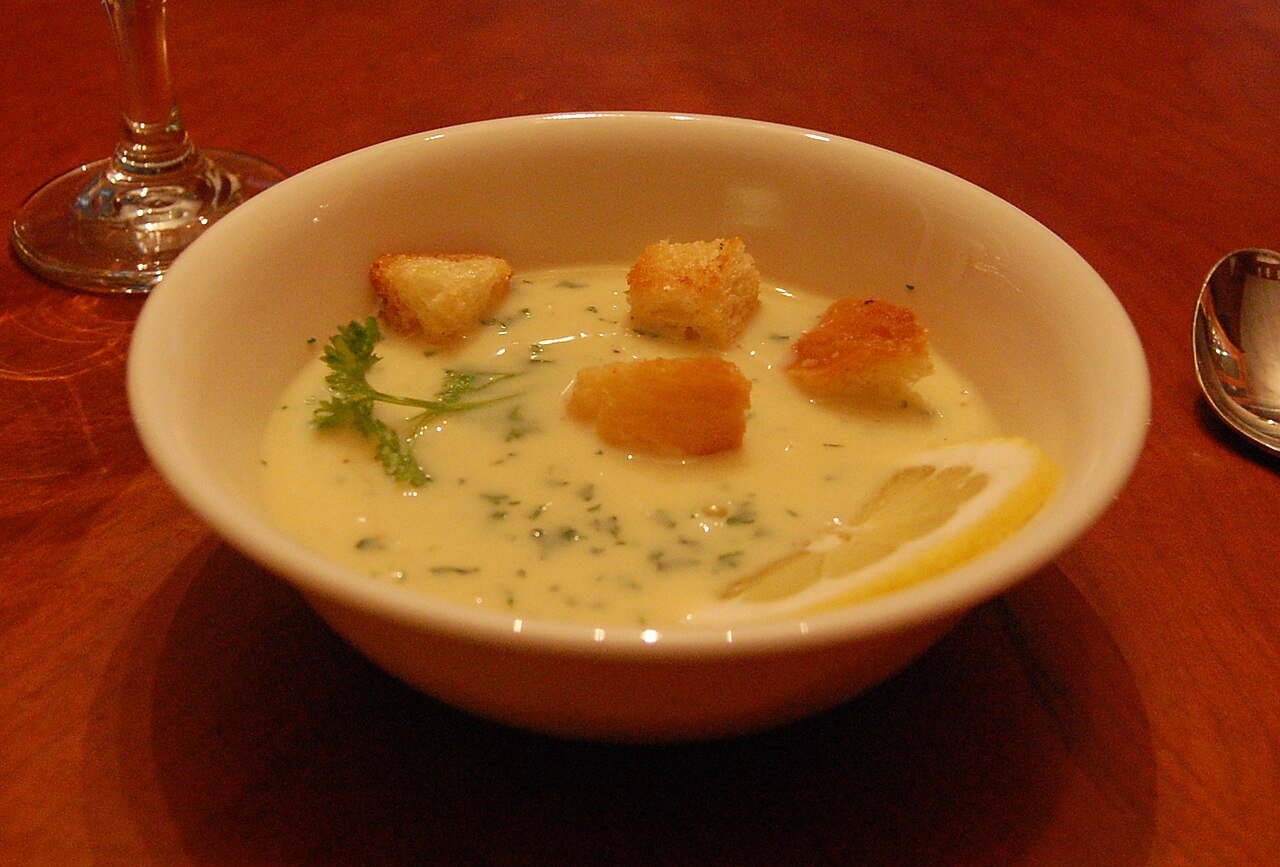
Kotosoupa (Greek Chicken Soup)
Ingredients
- 1 whole chicken 3.5-4 lbs / 1.6-1.8 kg
- 10 cups cold water
- 1 medium onion halved
- 3 ribs celery with leaves in large pieces
- 2 medium carrots in large pieces
- 1 bay leaf
- 8-10 whole black peppercorns
- 1.5 teaspoons fine sea salt
- 3 tablespoons extra-virgin olive oil
- 1 cup orzo or medium-grain rice
- fresh dill and lemon wedges for serving
Instructions
- Place whole chicken in a large pot. Cover with cold water. Add onion, celery, carrots, bay leaf, peppercorns, and salt. Bring to a gentle boil, skimming foam for the first 10-15 minutes.
- Add olive oil. Reduce to a low simmer. Cook uncovered or partially covered 1 hour to 1 hour 15 minutes until chicken is cooked through and meat pulls easily from the bone.
- Remove chicken and let cool slightly. Discard onion, celery, bay leaf, and peppercorns. Leave carrots in the broth. Shred the chicken, discarding skin and bones.
- Bring broth to a boil. Add orzo or rice and cook until tender, 8-10 minutes for orzo or 15-18 minutes for rice.
- Return shredded chicken to the pot. Taste and adjust salt. Serve in deep bowls with fresh dill and lemon wedges.
Notes
Nutrition
FAQ
What is kotosoupa?
Kotosoupa is Greek chicken soup — a whole chicken simmered in water with aromatics until the broth is golden and rich, finished with orzo or rice cooked directly in the broth and shredded chicken meat. It is one of the most fundamental comfort foods in the Greek kitchen, made throughout the country in slightly different forms depending on the region and family. The name comes from kotopoulo (chicken) and soupa (soup).
What’s the difference between kotosoupa and avgolemono?
They start from the same base — chicken broth, shredded chicken, grain. The difference is the finish. Kotosoupa is served as-is, with lemon wedges at the table. Avgolemono is finished with a tempered mixture of eggs and lemon juice that makes the soup creamy, silky, and tart. Kotosoupa is plainer and stores better. Avgolemono cannot be reheated after the egg is added.
Can I use chicken pieces instead of a whole chicken?
Yes, but the broth will be thinner and less flavorful. Bone-in, skin-on pieces (thighs, drumsticks) produce better broth than boneless. For the best result, add any available chicken bones or a carcass to the pot even if you’re using pieces. A whole chicken remains the best option.
Should I use orzo or rice?
Both are traditional. Orzo produces a slightly thicker, heartier soup with a pleasant pasta texture. Rice produces a cleaner, more delicate result. Medium-grain rice is most common in Greek kitchens, but any short or medium grain rice works. Long-grain rice is less traditional but acceptable.
How do I store leftover kotosoupa?
If possible, store the broth and chicken separately from the cooked grain — orzo and rice continue absorbing liquid in the refrigerator and will become mushy. Store the broth and chicken in the refrigerator up to 4 days. Reheat, bring to a boil, add fresh orzo or rice, and cook through. The broth can be frozen without the grain for up to 3 months.