
The name means little shoes in Greek, and if you look at a baking dish of melitzanes papoutsakia — four eggplant halves filled to the brim, topped with puffed golden bechamel — you can see why. The eggplant acts as a vessel. The cinnamon-spiced meat sauce fills it. The bechamel seals it all in and browns in the oven until it has the same fragrant quality you find on top of a proper moussaka.
This is individual moussaka, essentially. Same flavor principles, same technique, but each person gets their own two halves, which makes it easier to serve and means the portions are built in. The dish is fully assembled and can be made ahead, refrigerated, and baked when needed. It reheats better than almost anything else I make.
The eggplant itself does something important here that gets overlooked in most descriptions of the recipe: it roasts first, until it collapses, and then it becomes the container. That first roast softens it and concentrates its flavor. The slightly bitter, smoky quality that raw eggplant has disappears, and what’s left is mild and rich and completely receptive to everything that goes on top of it.
Why This Recipe Works
- Salt and roast the eggplant first. Salting draws out moisture and softens the flesh. Roasting concentrates flavor and creates a stable vessel. An unsalted, unroasted eggplant will release water into the filling and make the bottom soggy.
- The kima must be dry. The meat sauce needs to cook down until most of the liquid has evaporated. A wet kima will saturate the eggplant and prevent the bechamel from crisping. Keep it on the heat until you can drag a spoon through it and the path stays clear for a moment.
- Cinnamon is not optional. Greek kima — the spiced meat sauce used in Makaronia me Kima and Pastitsio — gets its distinctive warm depth from cinnamon and allspice. These are not strong flavors in the finished dish; they’re background notes that make the sauce taste unmistakably Greek. Without them, you have Italian bolognese. With them, you have kima.
- The bechamel goes on thick. It needs to be thick enough to hold its shape on top of the filling and puff slightly in the oven without running off the sides. Thinner bechamel will spread into the dish and not brown properly.
Ingredients
For the Eggplant
- 4 medium eggplants, halved lengthwise
- 3 tablespoons extra-virgin olive oil
- Fine sea salt
For the Kima (Meat Sauce)
- 1 lb (450g) ground beef, or a mix of ground lamb and beef
- 2 tablespoons olive oil
- 1 small onion, finely chopped
- 2 cloves garlic, minced
- 1 can (400g) crushed tomatoes
- 1 tablespoon tomato paste
- ½ teaspoon ground cinnamon
- ¼ teaspoon ground allspice
- 1 bay leaf
- Salt and pepper to taste
For the Bechamel
- 3 tablespoons unsalted butter
- 3 tablespoons all-purpose flour
- 1½ cups (360ml) whole milk, warmed
- ¼ teaspoon grated nutmeg
- Salt and white pepper to taste
- 1 egg yolk (optional — makes the bechamel richer)
- 2 tablespoons grated kefalotyri or Parmesan
Step-by-Step Instructions
1. Salt and roast the eggplant.
Halve the eggplants lengthwise. Score the flesh in a crosshatch pattern if you like — this helps them cook more evenly. Salt the cut surfaces and leave cut-side up for 15 minutes; moisture will bead on the surface. Pat dry with kitchen towels. Brush generously with olive oil. Place cut-side down on a baking sheet lined with parchment.
Roast at 400°F (200°C) for 25–30 minutes until the eggplant is soft, collapsing slightly, and the skin is deeply roasted. Remove and let cool enough to handle.
2. Make the kima.
Heat the olive oil in a wide pan over medium-high heat. Add the ground meat and cook, breaking it up, until browned. If there’s significant fat in the pan, drain most of it. Add the onion and garlic and cook 3–4 minutes. Add the tomatoes, tomato paste, cinnamon, allspice, and bay leaf. Stir to combine and simmer over medium heat for 20–25 minutes until the sauce is thick and relatively dry — no visible liquid pooling. Season with salt and pepper. Remove the bay leaf.
3. Make the bechamel.
Melt the butter in a medium saucepan over medium heat. Add the flour all at once and cook, stirring constantly, for 1–2 minutes until the mixture smells slightly nutty. Remove from heat briefly and add the warm milk gradually, whisking to prevent lumps. Return to medium heat and cook, whisking constantly, until the sauce thickens to the consistency of thick custard — it should coat a spoon and hold its shape when a line is drawn through it. Remove from heat. Add nutmeg, salt, white pepper, egg yolk if using, and cheese. Stir to combine.
4. Prepare the eggplant shells.
Using a spoon, scoop out some of the roasted flesh from each eggplant half to create a deeper well — about one-quarter to one-third of the interior. Roughly chop this scooped flesh and stir it into the kima. This adds flavor and avoids waste.
5. Fill and top.
Arrange the eggplant shells in a baking dish. Fill each generously with kima, pressing it in so it fills the well completely. Spoon a generous amount of bechamel over each — it should cover the kima entirely and extend slightly to the edges of the eggplant shell.
6. Bake and rest.
Bake at 375°F (190°C) for 20–25 minutes until the bechamel is golden and slightly puffed. Remove from the oven and rest for at least 10 minutes before serving — this allows the filling to settle and the bechamel to firm slightly.
Chef’s Notes
On eggplant in Greek cooking:
Eggplant (melitzana) is one of the most versatile vegetables in the Greek kitchen — it appears roasted, grilled, fried, stuffed, pureed, and braised. For more on its history and culinary properties, the Britannica entry on eggplant provides useful context on its origins and spread across Mediterranean cuisines. In Greece, the best eggplant dishes tend to share a common principle: they require time. Raw eggplant resists; cooked eggplant becomes something else entirely.
The kima connection:
The meat sauce in papoutsakia is the same sauce — with minor variations — used in Makaronia me Kima, Pastitsio, and moussaka. Once you know it, you’ll recognize it immediately: the cinnamon depth, the tomato richness, the slightly sweet-savory balance. It is one of the most useful things in the Greek kitchen to have in the refrigerator.
Make-ahead:
Melitzanes papoutsakia are excellent made ahead. Assemble fully — roasted eggplant, filled with kima, topped with bechamel — and refrigerate covered for up to 24 hours before baking. Add 5–10 extra minutes to the oven time if baking straight from cold.
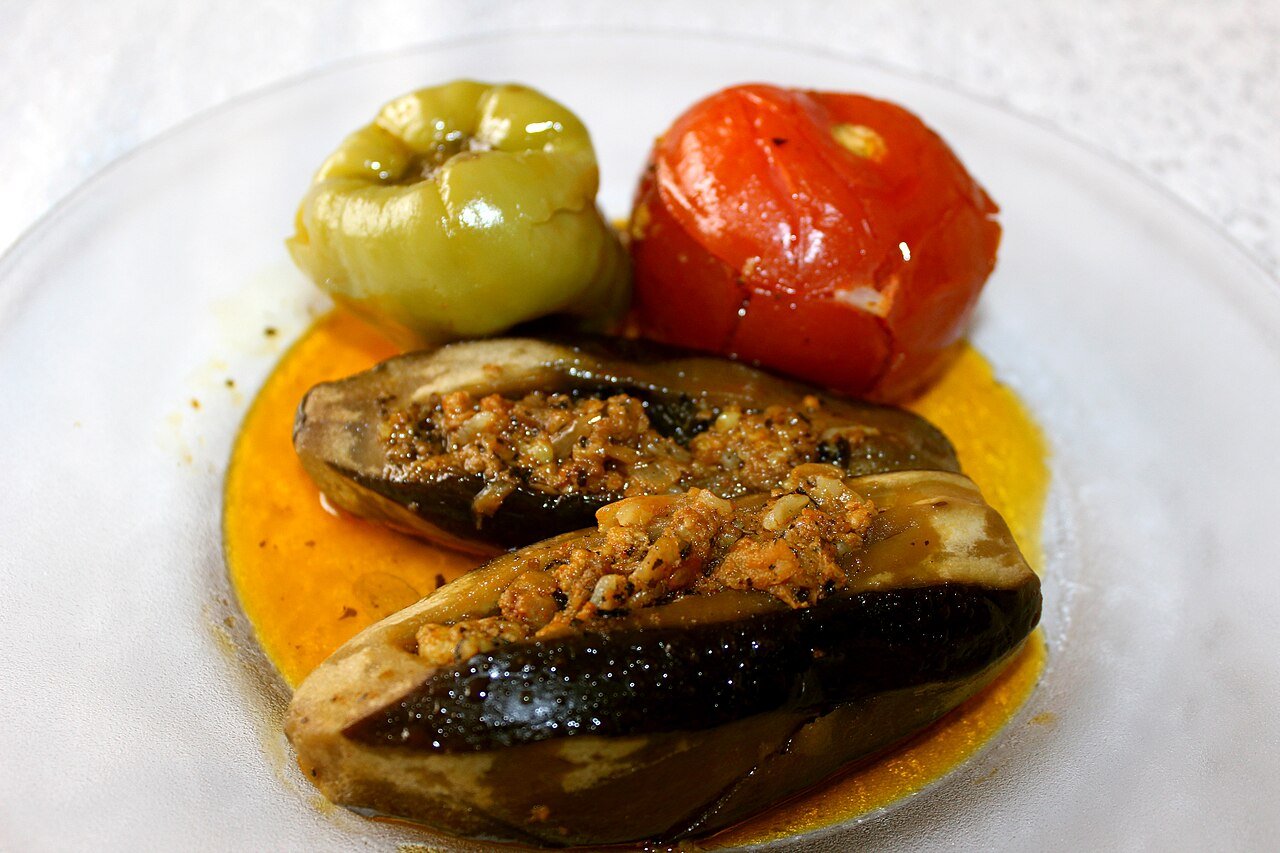
Melitzanes Papoutsakia (Greek Stuffed Eggplant)
Ingredients
For the Eggplant
- 4 medium eggplants halved lengthwise
- 3 tablespoons extra-virgin olive oil
- fine sea salt
For the Kima (Meat Sauce)
- 1 lb (450g) ground beef or lamb/beef mix
- 2 tablespoons olive oil
- 1 small onion finely chopped
- 2 clove garlic minced
- 1 can (400g) crushed tomatoes
- 1 tablespoon tomato paste
- 1/2 teaspoon ground cinnamon
- 1/4 teaspoon ground allspice
- 1 bay leaf
- salt and pepper to taste
For the Bechamel
- 3 tablespoons unsalted butter
- 3 tablespoons all-purpose flour
- 1.5 cups (360ml) whole milk warmed
- 1/4 teaspoon grated nutmeg
- salt and white pepper to taste
- 1 egg yolk optional
- 2 tablespoons grated kefalotyri or Parmesan
Instructions
- Salt eggplant halves cut-side up for 15 minutes. Pat dry. Brush with olive oil. Roast face-down at 400F (200C) for 25-30 minutes until soft. Let cool slightly.
- Make the kima: Brown ground meat in olive oil over medium-high. Add onion and garlic, cook 3-4 min. Add tomatoes, tomato paste, cinnamon, allspice, bay leaf. Simmer 20 min until thick and dry. Season.
- Make the bechamel: Melt butter, whisk in flour, cook 1-2 min. Gradually add warm milk, whisking until thick. Off heat, stir in nutmeg, salt, white pepper, egg yolk if using, and cheese.
- Scoop a little roasted eggplant flesh from each half to create a well. Mix scooped flesh into kima. Fill each eggplant shell with kima.
- Top each filled eggplant with a generous spoonful of bechamel.
- Bake at 375F (190C) for 20-25 minutes until bechamel is golden and puffed. Rest 10 minutes before serving.
Notes
Nutrition
FAQ
What does papoutsakia mean?
Papoutsakia means little shoes in Greek (the singular is papoutsaki). The name refers to the shape of the finished dish: the halved eggplant shells, filled and topped with bechamel, look vaguely like small stuffed shoes or slippers when presented on the plate. It’s a common naming pattern in Greek cuisine — many stuffed vegetable dishes are described by their resemblance to containers or small objects.
Do I have to salt the eggplant before cooking?
Yes, for this recipe. Salting draws out some of the moisture that would otherwise make the filling soggy. It also softens the eggplant slightly before roasting. Leave it for the full 15 minutes, pat thoroughly dry, and proceed. If you’re short on time, even 5 minutes of salting is better than none.
Can I make this vegetarian?
Yes. Replace the ground meat with a combination of finely chopped mushrooms and lentils (about 1.5 cups total), cooked down the same way with the same aromatics. The cinnamon and allspice are even more important in the vegetarian version — they provide the warm depth that the meat would otherwise contribute. The bechamel is already vegetarian.
Can I prepare melitzanes papoutsakia in advance?
Yes, and I recommend it. Assemble the dish fully — filled eggplant with bechamel on top — cover, and refrigerate up to 24 hours before baking. Bake from cold, adding 5–10 minutes to the time. The flavors are better after the components have had time to meld.
How does this differ from moussaka?
Moussaka is a layered casserole: layers of eggplant, kima, and bechamel baked together and then cut into portions. Papoutsakia is individual: each eggplant half is its own vessel, filled and topped individually. The flavor profile is very similar — both use kima with cinnamon and bechamel — but the eating experience is different. Papoutsakia are more elegant to serve and don’t require slicing.