
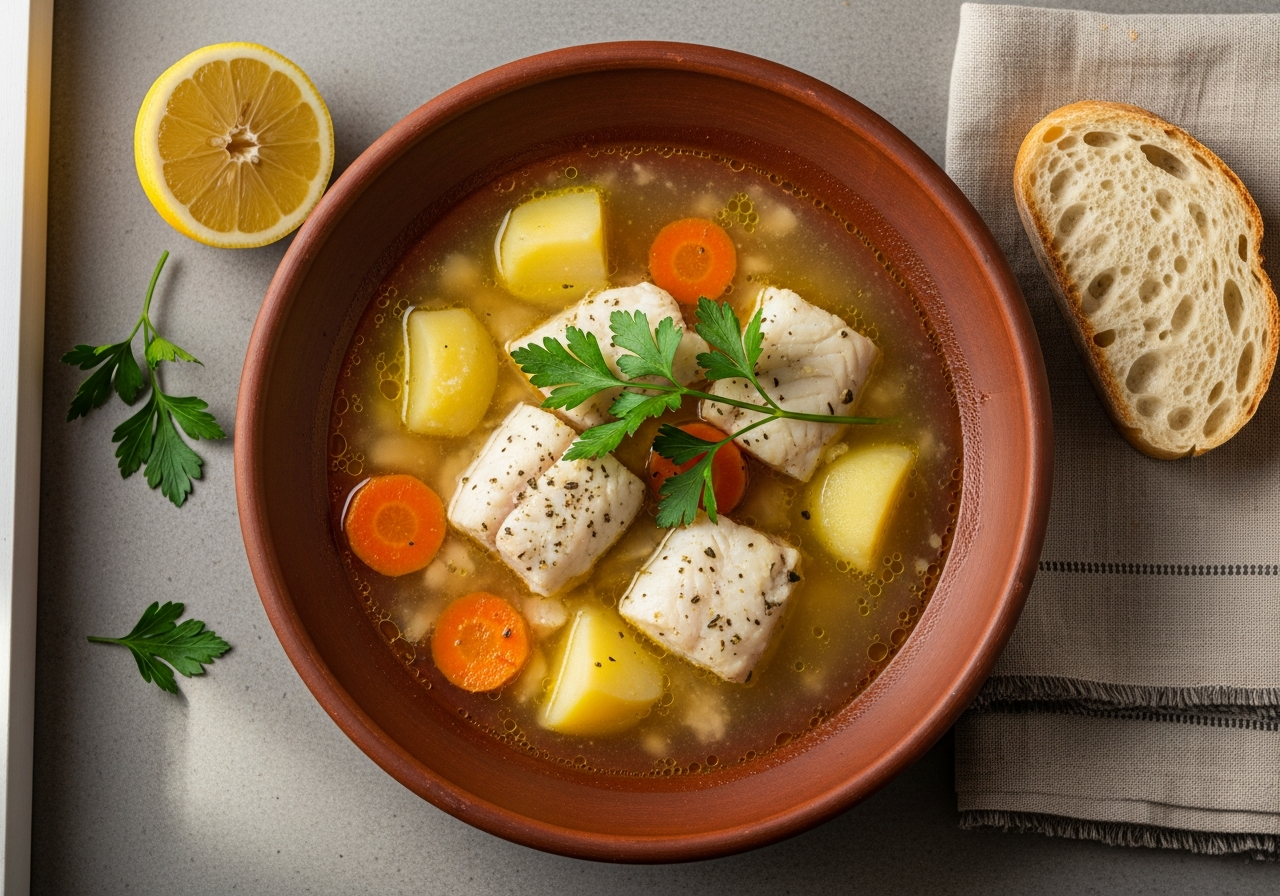
When I was eight years old, my uncle Yannis hauled in his nets at the harbor of Kos just before sunrise. The Aegean was flat and pale, the air thick with salt and diesel. Whatever didn’t sell at the morning market went straight into the pot: a rockfish here, a small mullet there, whatever the sea offered that day. By noon, kakavia was simmering on his boat’s small burner, filling the harbor with a smell I have never forgotten.
Kakavia is not a refined dish, and it was never meant to be. It is the fisherman’s answer to what to do with the morning’s catch — a simple, honest broth of water, olive oil, onion, and whatever fish came up in the net. No stock. No cream. No complicated technique. Just the sea, distilled into a bowl.
What surprises most people who taste kakavia for the first time is its depth. The fish release their gelatin and flavor directly into the water, building a broth that no store-bought stock can replicate. A squeeze of lemon at the end — or a full avgolemono egg-lemon finish if you want something richer — transforms that broth into something worth sitting down for.
Many food historians consider kakavia the ancestor of the French bouillabaisse, and the parallels are clear: coastal fish, olive oil, aromatics, a simple broth. But where bouillabaisse has evolved into an elaborate restaurant production, kakavia remains exactly what it always was. A fisherman’s meal, cooked in the pot that gave it its name.
This is my kakavia recipe as I learned it on Kos — simple enough for a weeknight, honest enough to honor the original.
Table of Contents
What Is Kakavia?
Kakavia (κακαβιά) takes its name from the kakavi — the rounded, three-legged copper or clay pot that Greek fishermen have used for centuries to cook on open boats. The dish is as old as Greek maritime life itself. Ancient records describe fishermen simmering their catch in water with olive oil and onion directly over coals, and the tradition has changed very little since then.
At its core, kakavia is a fish broth soup: whole fish simmered with vegetables in water (never stock), finished with lemon. Depending on the region and the cook, the pot might also hold potatoes, celery, carrots, and tomatoes. Some versions finish with avgolemono — the Greek egg-lemon emulsion — to add body and richness to the broth. Others stay clear and light.
What sets kakavia apart from other Mediterranean fish soups is its philosophy: use what the sea provides, add nothing that distracts from the fish, and let the cooking do the work. There is no saffron. No fennel. No rouille. Just fish, water, olive oil, and lemon.
Why This Recipe Works
- Water, not stock. Starting with cold water and building the broth from the fish themselves produces a cleaner, more concentrated flavor than any pre-made stock. The fish do all the work.
- Whole fish over fillets. Bones and heads release gelatin and minerals that give the broth body and depth. Fillets alone cannot achieve this — they give you proteins but not the collagen that makes a broth feel alive in your mouth.
- Layered cooking order. Vegetables go in first to build a base; delicate fish goes in last to avoid overcooking. Ten extra minutes on a fish is enough to ruin it.
- Lemon in two stages. A squeeze during simmering brightens the broth from within; more lemon at the table lets each person tune the balance to their taste.
Ingredients
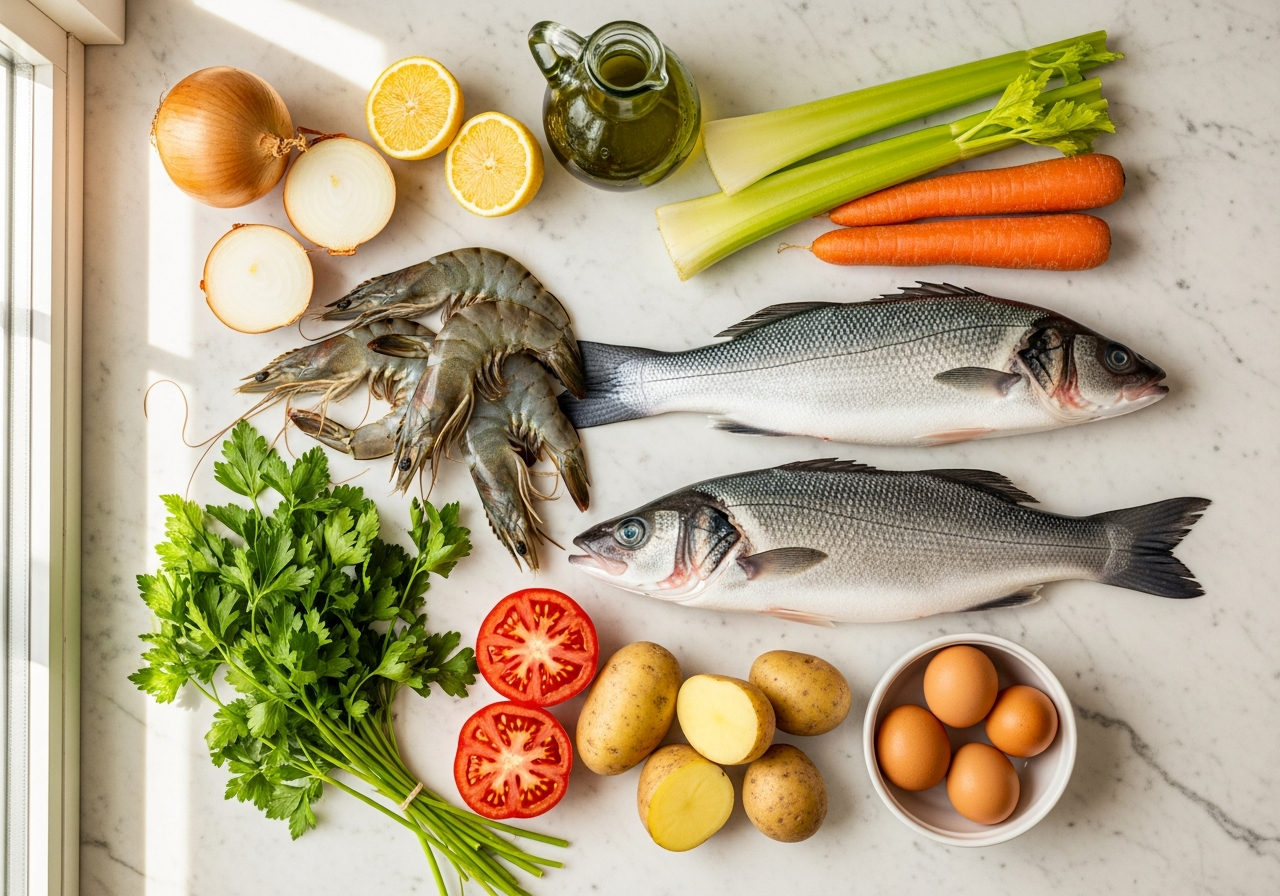
Serves 4
For the Soup
- 2 lbs (900g) mixed whole fish, cleaned and scaled — sea bass, sea bream, mullet, red snapper, or rockfish. A mix of 2–3 varieties is ideal.
- ½ lb (225g) large shrimp, shells and heads on (optional, adds excellent flavor)
- ½ cup (120ml) extra virgin olive oil
- 1 large onion, thinly sliced
- 3 stalks celery, cut into 1-inch pieces
- 2 medium carrots, sliced into rounds
- 3 medium Yukon Gold potatoes, quartered
- 2 medium ripe tomatoes, roughly chopped (or ½ cup canned crushed tomatoes)
- 6 cups cold water
- Juice of 2 lemons, divided
- 1 tsp fine sea salt, plus more to taste
- ½ tsp freshly cracked black pepper
- A small bunch of flat-leaf parsley, roughly chopped, for garnish
For the Avgolemono Finish (Optional but Traditional)
- 2 large eggs
- Juice of 1 additional lemon
Step-by-Step Instructions
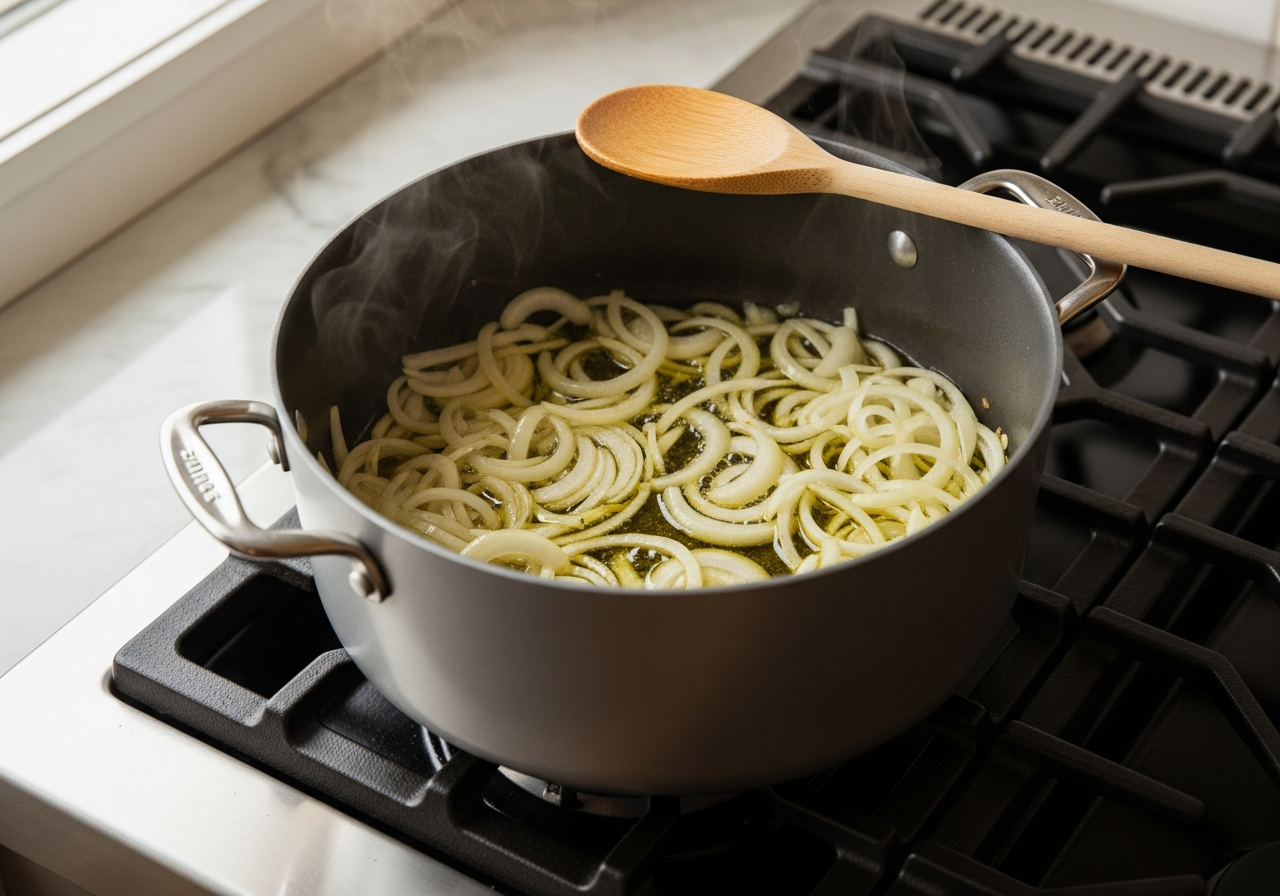
Step 1 — Build the Vegetable Base
In a large, heavy-bottomed pot, warm the olive oil over medium heat. Add the onion and cook, stirring occasionally, until fully softened and translucent — about 8 minutes. Do not hurry this. The onion sweetens as it cooks and forms the backbone of the broth.
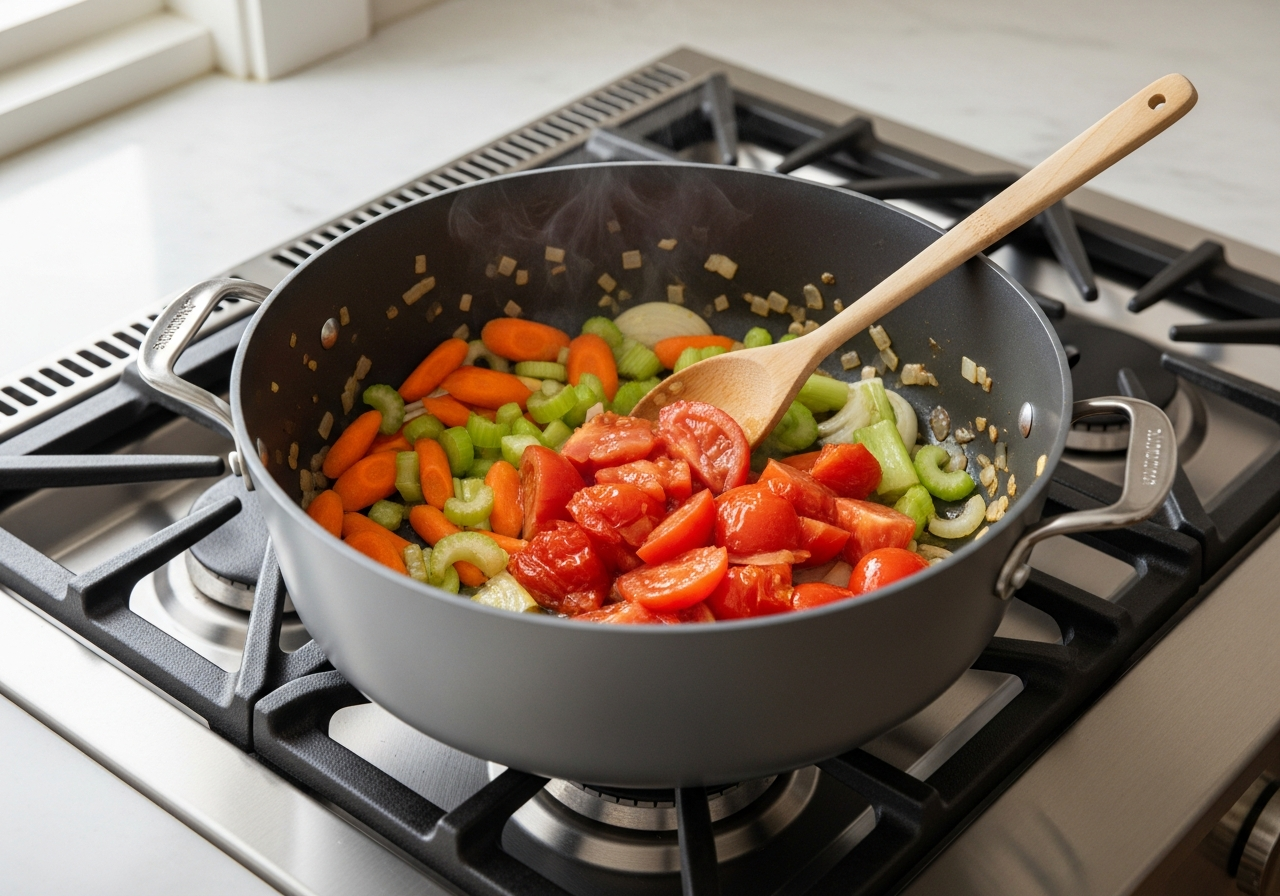
Add the celery, carrots, and tomatoes. Season with the salt and pepper. Stir well and cook for another 5 minutes, until the tomatoes soften.
Step 2 — Simmer the Vegetables
Add the cold water. Raise the heat to medium-high and bring to a steady simmer. Add the potatoes and the juice of one lemon. Cover partially and simmer for 15 minutes, until the potatoes are just beginning to soften but not yet cooked through.
Taste the broth at this point. Adjust salt as needed.
Step 3 — Add the Fish
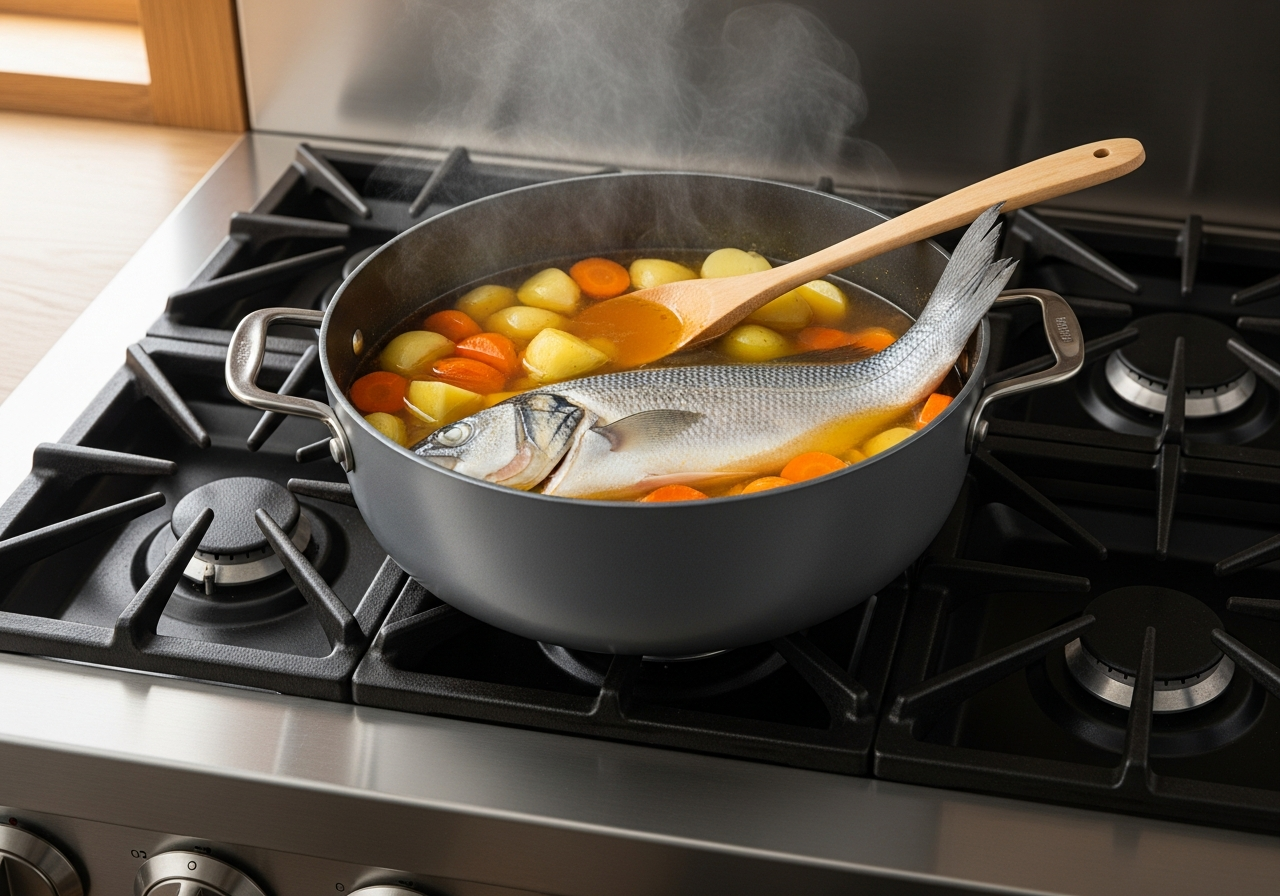
Add the shrimp (if using) and lay the whole fish gently into the pot. The broth should barely cover them. Add a splash more water if the fish sit above the surface.
Return to a gentle simmer — never a rolling boil. Hard boiling will break the fish apart and cloud the broth. Cook for 12–15 minutes, until the fish flesh is fully opaque and lifts from the bone without resistance.
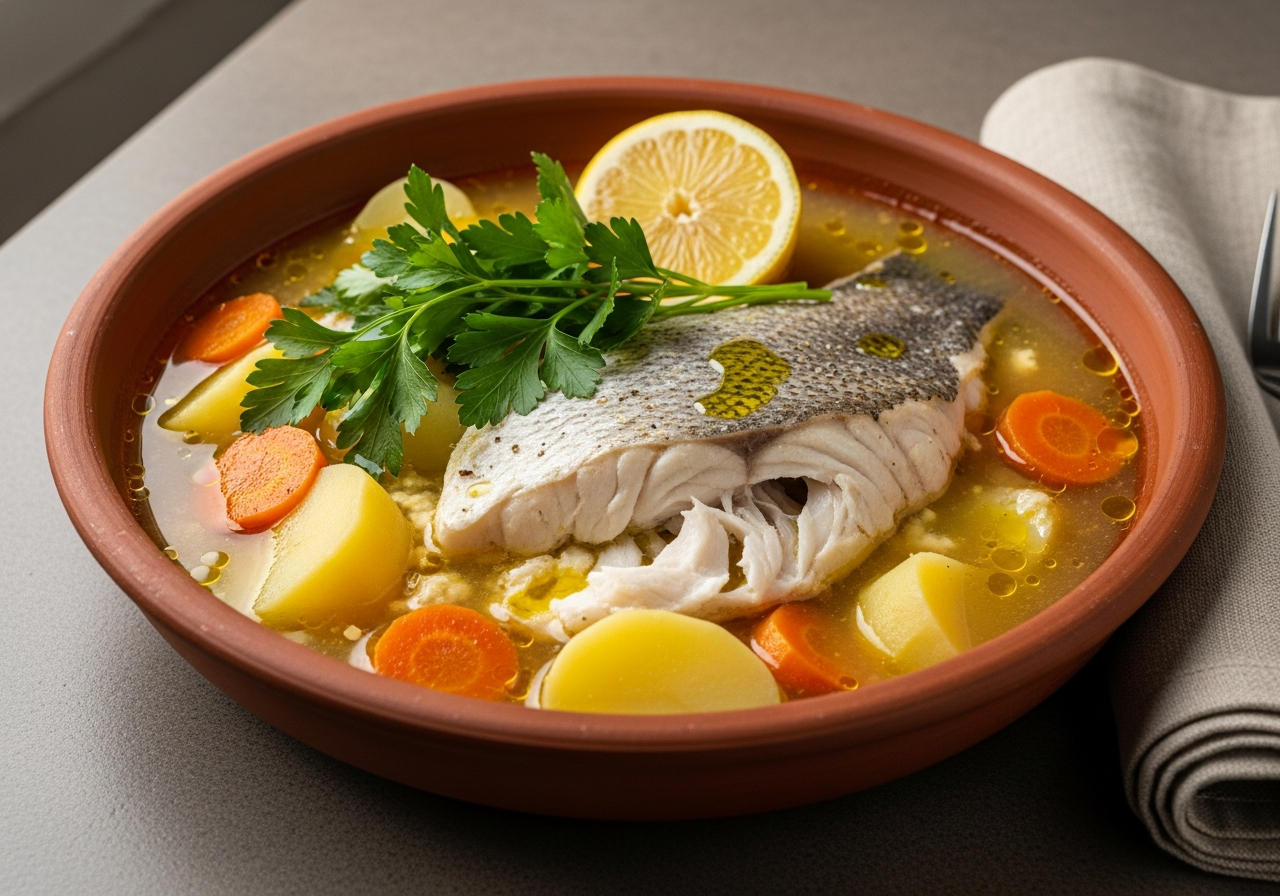
Chef’s tip: The traditional way to serve kakavia is in two courses. Lift the fish out with a slotted spoon and serve it on a separate platter, then ladle the vegetable-laden broth into bowls as a first course. It is a small gesture that makes the meal feel ceremonial, the way it was served on the harbor at Kos.
Step 4 — The Avgolemono Finish
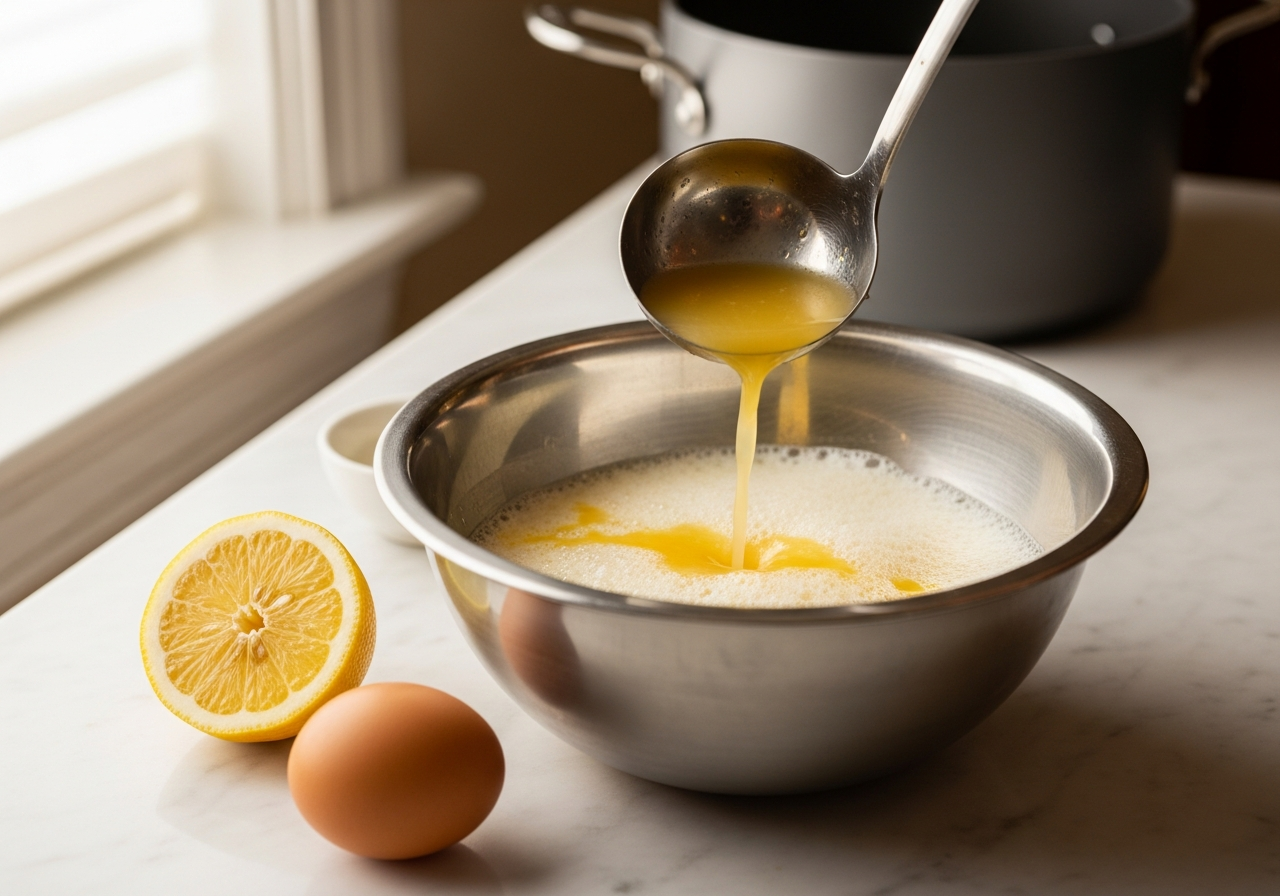
If finishing with avgolemono: in a bowl, whisk the eggs and the remaining lemon juice together until pale and frothy. Slowly ladle about ½ cup of hot broth into the egg mixture, whisking constantly — this tempers the eggs so they don’t scramble. Pour the tempered mixture back into the pot with the heat off, stirring gently.
Do not return the pot to the heat after adding avgolemono. The eggs will curdle.
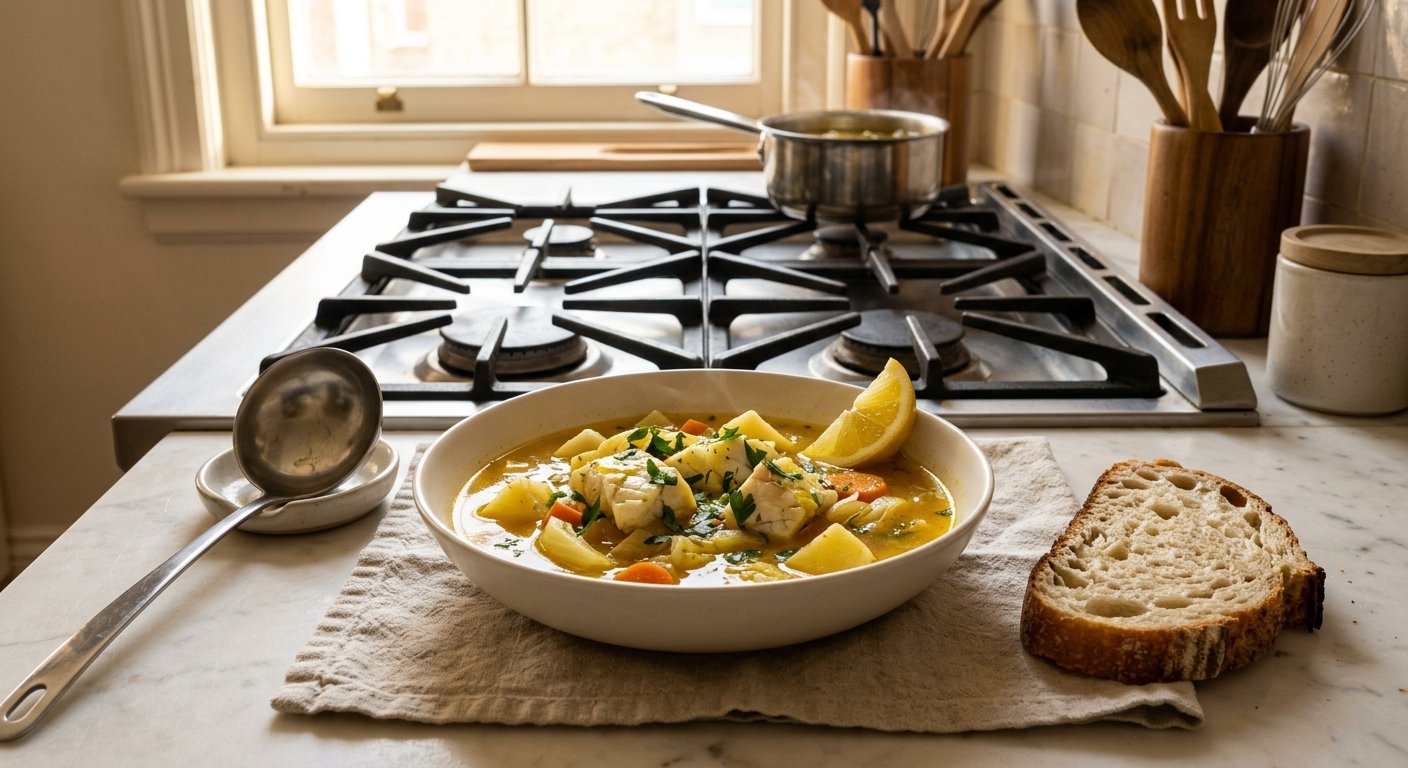
The broth will thicken slightly and turn a silky, pale gold. Taste once more, adjust seasoning, scatter the parsley over the top, and serve immediately with crusty bread. If you enjoy making Greek soups from scratch, the technique here is the same foundation used in my Avgolemono Soup: The Classic Greek Egg-Lemon Chicken Soup — the avgolemono step is worth learning well.
Recipe Card
Kakavia (Greek Fisherman’s Soup)
Chef’s Notes
On choosing your fish. Use whatever is freshest at your market. Whole fish — not fillets — are essential; the bones build the broth. Good choices for kakavia: sea bass, sea bream, red snapper, grouper, grey mullet, rockfish, or any firm-fleshed white fish. Ask your fishmonger to clean and scale the fish but leave them whole. If they are too large to fit in your pot, have them cut into sections.
On the avgolemono finish. This step is optional but worth trying at least once. It transforms a light broth into something with body and silk. The technique is the same principle behind Greek Lentil Soup (Fakes Soupa) — a bright acid hit at the finish changes the character of a simple broth entirely.
On serving. The traditional method is to serve kakavia in two courses: first the broth and vegetables in a bowl, then the fish on a platter at the center of the table with olives, bread, and lemon. This is how fishermen ate it — the broth first to warm the stomach, the fish after as the meal.
On storage. Store the broth and fish separately. The broth keeps well for 3 days in the refrigerator and 2 months in the freezer. Cooked fish does not freeze well — use it within 2 days. Do not freeze the avgolemono version; it will separate when reheated. Reheat the broth gently over low heat; return the fish to the pot for the last 2 minutes just to warm through.
On variations. Some island cooks add a small dried chile for warmth. Others add white wine to the pot. Clams or mussels can go in the last 5 minutes of cooking. All of these are variations, not improvements — the foundation stays the same.
FAQ
What does kakavia mean in Greek?
Kakavia (κακαβιά) comes from kakavi, the three-legged copper or clay cooking pot that Greek fishermen used for centuries on their boats. The dish takes its name from the vessel, not the ingredients — a reminder that the cooking method is as important as what goes into the pot.
What fish should I use for kakavia?
Traditionally, whatever is freshest. On the Greek islands, that means rockfish, scorpionfish, sea bream, or mullet. In most markets, sea bass, red snapper, or grouper work well and are easy to find whole. Use at least two varieties for the most complex broth — different fish contribute different gelatin and flavor profiles.
What is the difference between kakavia and bouillabaisse?
Both are Mediterranean fisherman’s soups built from a similar philosophy — coastal catch, olive oil, aromatics, and water. The key differences: bouillabaisse is a Provençal dish that has evolved to include saffron, fennel, rouille, and multiple steps; kakavia has no such additions and remains deliberately simple. Historians believe kakavia is the older dish, with bouillabaisse descending from it as Greek traders carried the tradition to what is now Marseille.
Can I make kakavia ahead of time?
The broth improves overnight. Cook the vegetable and broth base ahead and store it in the refrigerator for up to 3 days. Add the fish when you are ready to eat — they need only 12–15 minutes in the warm broth. Do not pre-cook the fish and store it in the broth, or it will become dry and the broth will turn cloudy.
Is kakavia the same as psarosoupa?
Related but distinct. Psarosoupa (ψαρόσουπα) is the general Greek term for fish soup, encompassing many regional variations. Kakavia is a specific style of psarosoupa — the fisherman’s version cooked in the kakavi pot, traditionally on the boat. Think of psarosoupa as the category and kakavia as one of its oldest and most elemental expressions.