
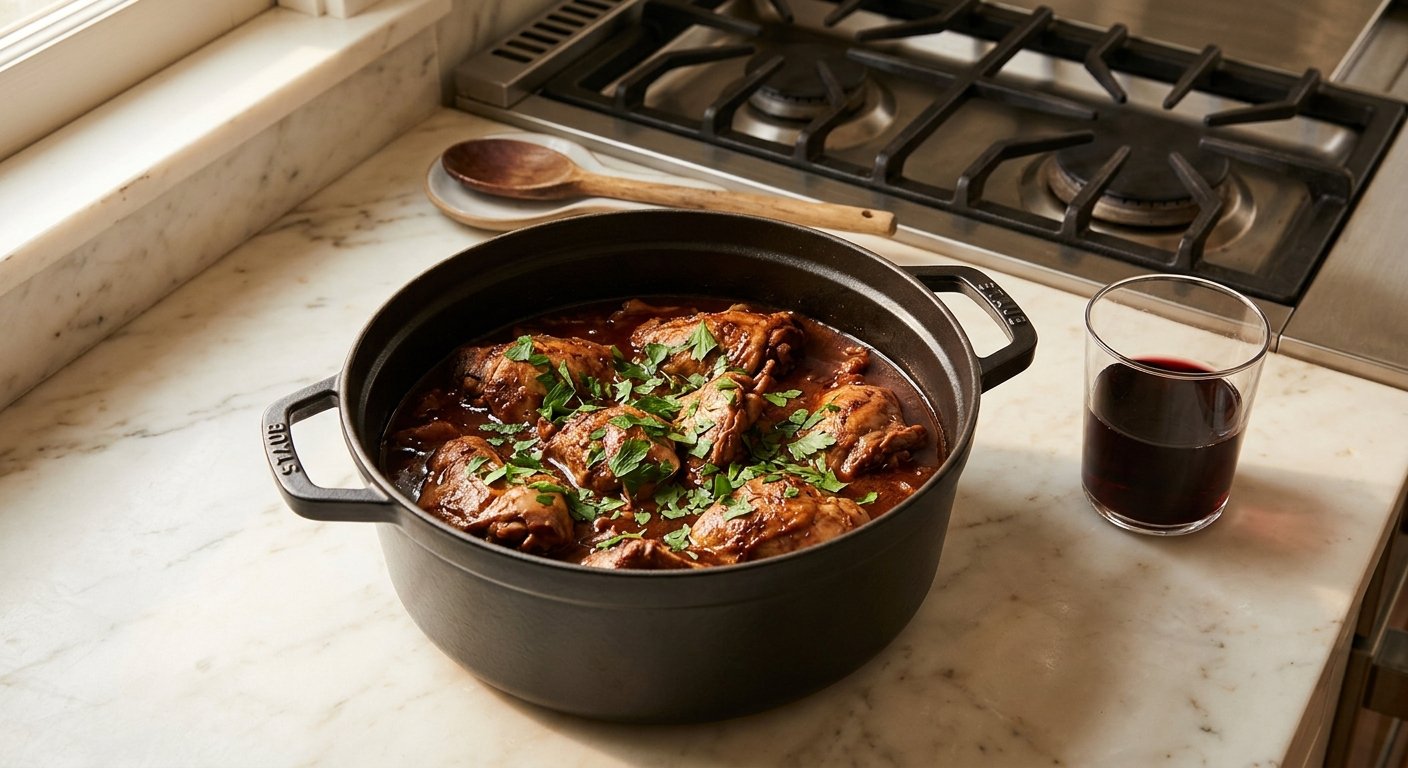
Sunday on Kos smelled like red wine and allspice.
I can still see my mother’s hands — roughened from the garden, dusted with flour from the morning’s bread — lifting the lid of her wide pot and releasing that cloud of steam into the kitchen. Dark, perfumed, unmistakable. She made this lagoto recipe every Sunday without fail, from the time I was old enough to sit on the counter and watch until the day I left home for culinary school. Lagoto was not a special occasion dish. It was Sunday. That was reason enough.
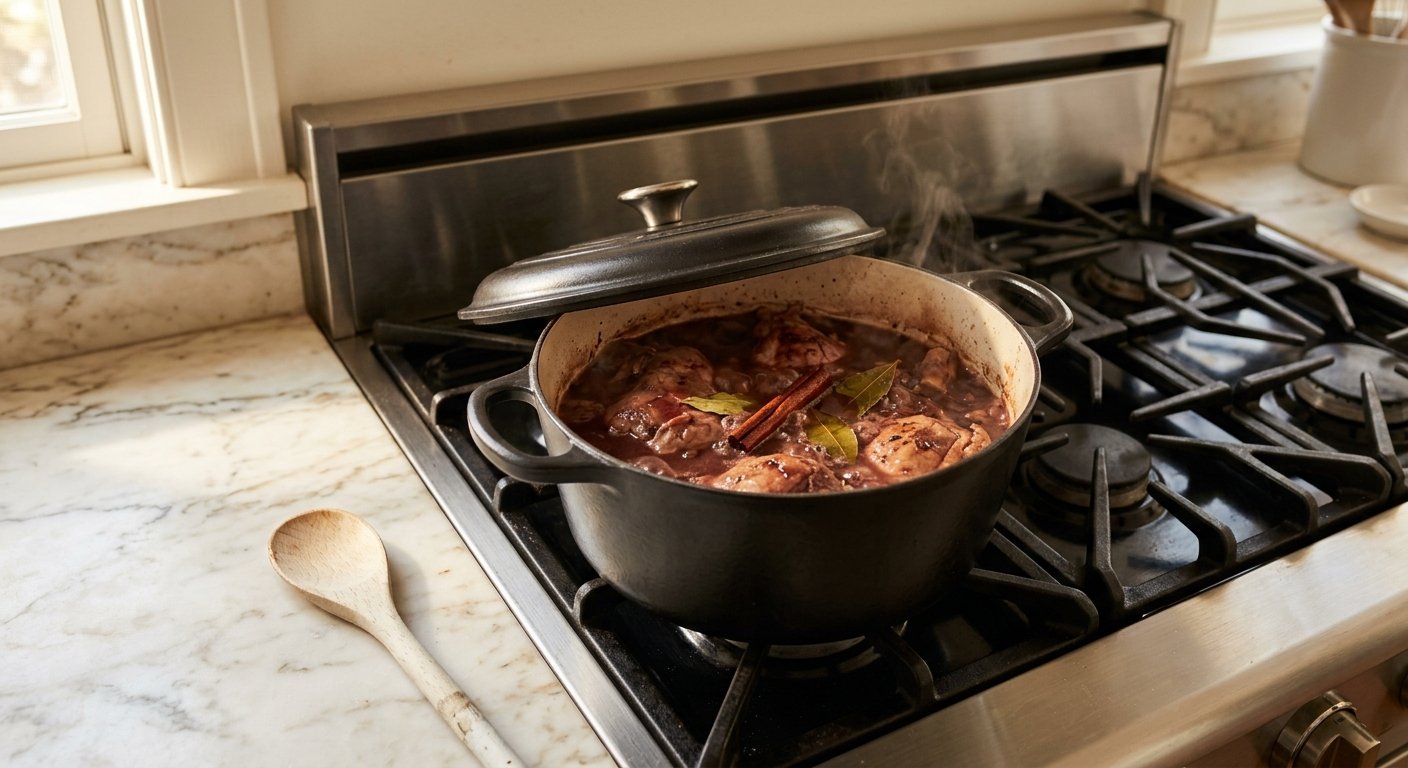
Lagoto is rabbit stew — specifically the rabbit stew of the Dodecanese, the island chain in the southeastern Aegean where I grew up. On Kos, every family made it differently. Kyria Eleni down the lane used more cinnamon and less wine. My uncle Stavros, who kept rabbits behind his house, added a pinch of nutmeg. My mother’s version was the one I believed in: a long, slow braise with dry red wine, crushed tomatoes, allspice berries, and a bay leaf or two, simmered over the lowest heat until the sauce turned dark and glossy and the rabbit fell willingly from the bone.
I have been making this lagoto recipe for over thirty years — in professional kitchens, at catering events, and every winter Sunday in my own home. The technique has sharpened, but the soul of it is still my mother’s kitchen on Kos. The same smells. The same patience. The same insistence that good things take time.
This is the recipe I make when I want to remember where I come from.
Table of Contents
What Is Lagoto?
Lagoto (λαγωτό in Greek — also spelled lagouto in older texts) is a slow-braised rabbit stew from the Dodecanese islands of Greece, most closely associated with Kos and Rhodes. The name comes from the Greek word lagos (λαγός), meaning hare or wild rabbit, and the dish has been a cornerstone of Kos island cooking for as far back as living memory reaches.
What distinguishes lagoto from other Mediterranean braised rabbit dishes is its spice profile. Where Italian coniglio alla cacciatora leans on white wine, rosemary, and olives, and French lapin à la moutarde goes toward cream and Dijon, lagoto is built around red wine and a warm spice combination — allspice (bahari), cinnamon, and bay leaf — that speaks directly to the culinary history of the Dodecanese. These islands spent centuries under Ottoman rule and later several decades under Italian administration. The cooking absorbed layers of influence while remaining, at its core, deeply and distinctly Greek.
The result is a stew with real character: a mahogany-colored sauce that is simultaneously winy, spiced, and deeply savory, built from the rendered fat and browned fond of properly seared rabbit. It is not a quick weeknight dish. Lagoto is Sunday cooking — the kind that fills a house with smell and rewards patience with a meal that no one wants to leave the table for.
Traditionally on Kos, lagoto is served over hilopites, the small square or diamond-shaped egg noodles that are a Dodecanese staple. The noodles soak up the braising sauce, and the whole thing becomes more than the sum of its parts. Some households serve it over orzo. Some with crusty bread. All of them are correct.
Why This Lagoto Recipe Works
- Browning the rabbit first is non-negotiable. The Maillard reaction that happens when you sear the rabbit pieces — properly, in a hot pan, in batches, without crowding — builds the foundational flavor of the entire dish. The braising liquid picks up those caramelized proteins from the pot bottom when you deglaze. Skip the sear and you get a pale, flat stew.
- Red wine, not white. A full-bodied dry red wine brings tannin structure, depth of color, and a richness that white wine simply cannot provide for this specific lagoto recipe. The wine’s character softens over the long braise but its backbone remains. A Xinomavro or Agiorgitiko is ideal; a Côtes du Rhône works beautifully.
- The warm spices are not optional. Allspice and cinnamon might feel unusual in a meat braise to cooks accustomed to French or Italian technique, but they are precisely what makes this a Greek rabbit stew from the Dodecanese rather than a generic braise. They integrate into the sauce over ninety minutes and become something subtle and complex — not sweet, not overbearing, just present in a way that makes you keep reaching for the bread.
- Low heat and a long braise transforms tough into tender. Rabbit is lean and dense, particularly the legs and shoulders. Rushing the braise over high heat toughens the proteins and drives out moisture. A ninety-minute simmer at the lowest possible heat allows the collagen in the joints to melt into the sauce, creating body and giving the meat a yielding, pull-from-the-bone texture.
Ingredients
For the Rabbit
- 1 whole rabbit (approximately 1.5 kg / 3.3 lbs), cut into 8 pieces
- 1½ tsp fine sea salt
- ½ tsp freshly ground black pepper
- 2 tbsp olive oil, for browning
For the Braise
- 3 tbsp extra-virgin olive oil
- 1 large yellow onion, finely diced
- 5 garlic cloves, minced
- 240 ml (1 cup) dry red wine
- 400 g (14 oz) crushed canned tomatoes
- 2 tbsp tomato paste
- 480 ml (2 cups) warm water or light chicken stock
- 4 whole allspice berries (or ½ tsp ground allspice)
- 2 bay leaves
- 1 cinnamon stick
- 1 tsp dried rigani (Greek oregano) or thyme
- Salt and freshly ground black pepper, to taste
For Serving
- Fresh flat-leaf parsley, roughly chopped
- Hilopites (Greek egg noodles), or orzo pasta, or crusty country bread
- A drizzle of extra-virgin olive oil
Step-by-Step Instructions
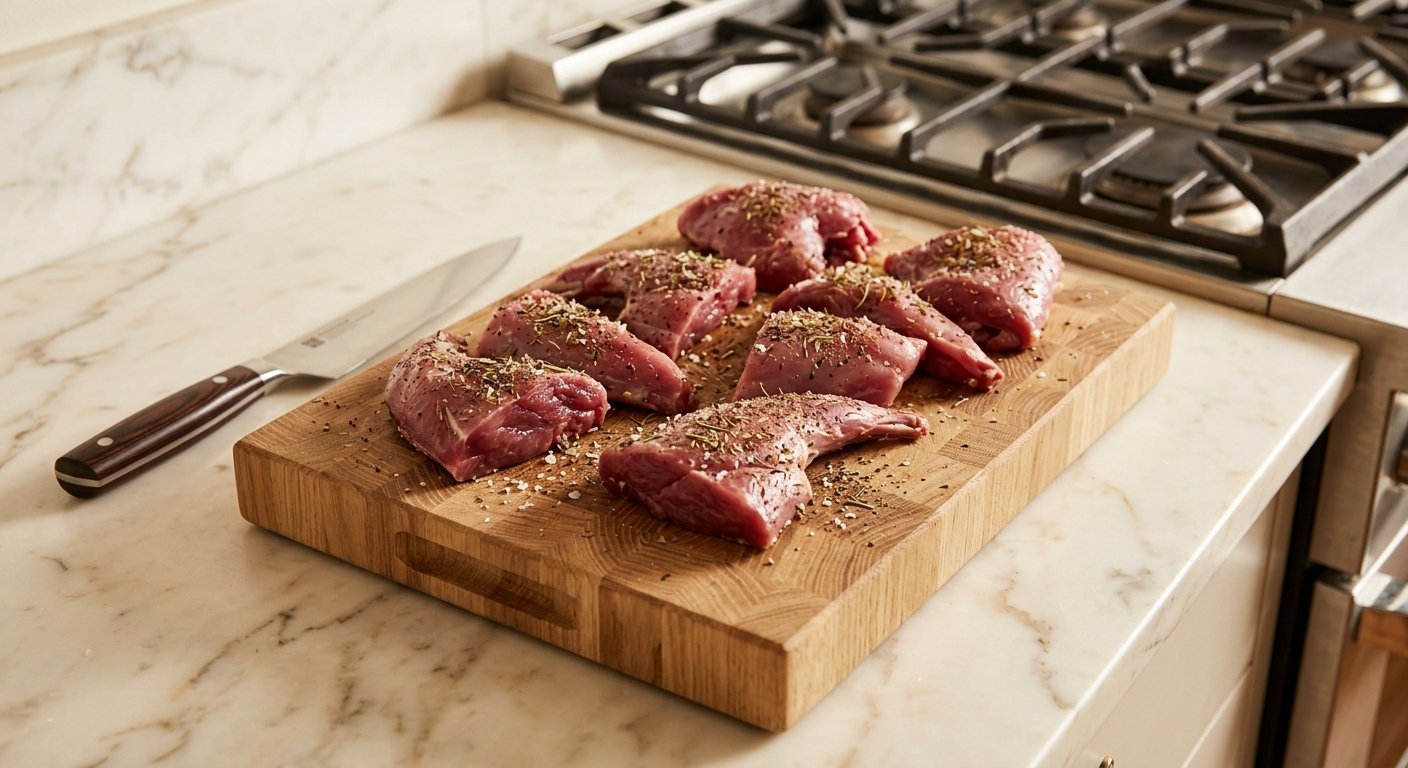
Step 1: Season and Brown the Rabbit
Begin by patting every rabbit piece completely dry with kitchen paper. Moisture on the surface of the meat creates steam in the pan rather than a sear, and a proper sear is the foundation of this entire lagoto recipe. Season generously with sea salt and black pepper on all sides.
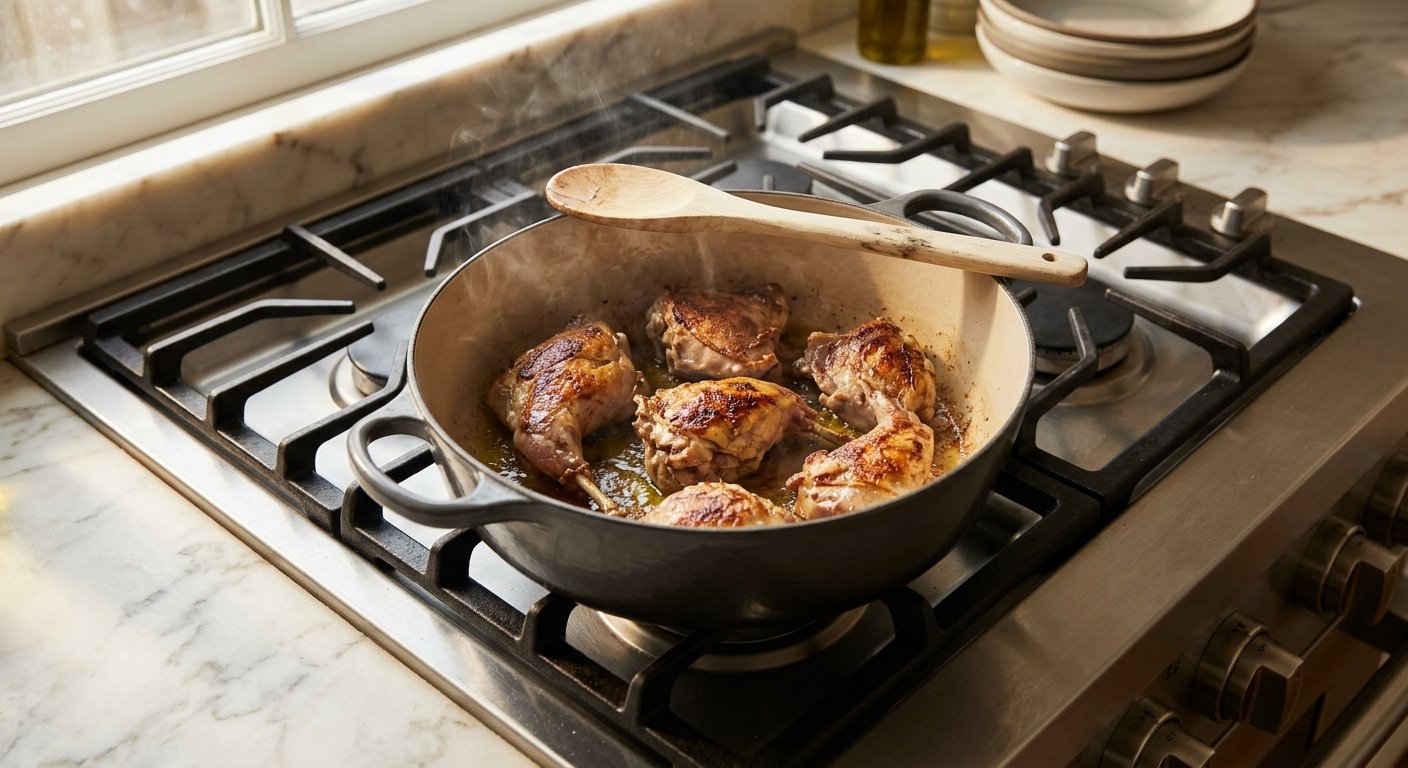
Heat 2 tablespoons of olive oil in a wide, heavy-bottomed pot or Dutch oven over medium-high heat until the oil shimmers and begins to move like water. Working in two or three batches — never crowding the pot — lay the rabbit pieces in the hot oil and leave them alone. Do not move them, press them, or nudge them for a full 4 to 5 minutes. A good sear releases on its own when it is ready. Turn each piece and brown the other side for another 3 to 4 minutes.
Transfer the browned rabbit to a plate and set aside. Pour away most of the excess fat from the pot, but do not wipe it. The dark, browned fond stuck to the bottom is concentrated flavor.
Step 2: Build the Braising Base
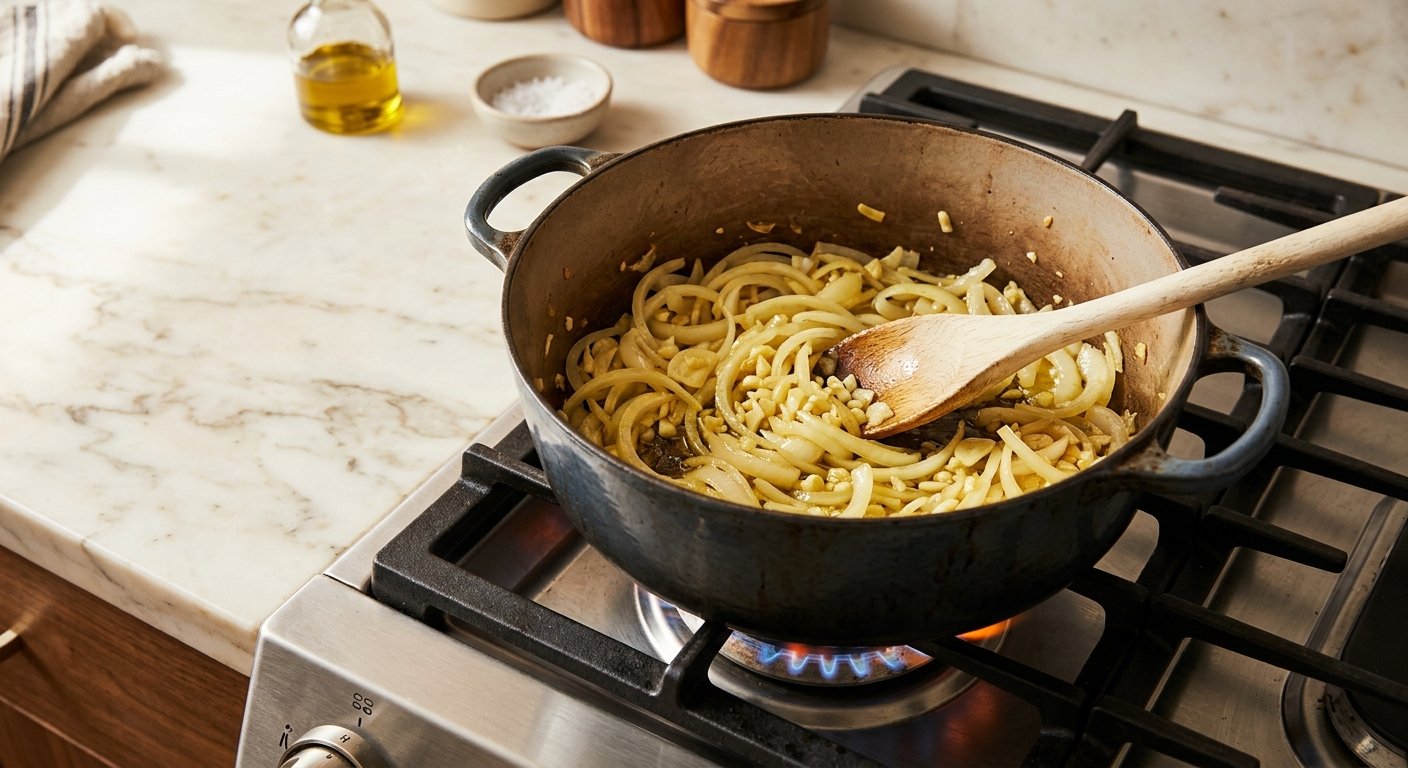
Reduce the heat to medium. Add 3 tablespoons of extra-virgin olive oil to the same pot. Add the diced onion and cook, stirring occasionally, for 8 to 10 minutes until completely soft and translucent. Do not rush this — a properly softened onion sweetens and dissolves into the sauce. Add the garlic and cook for another 2 minutes until fragrant but not coloured.
Pour in the red wine, using a wooden spoon to scrape up every bit of browned fond from the pot bottom as the wine bubbles. Let the wine reduce for 3 to 4 minutes, stirring occasionally, until the sharp raw alcohol smell softens into something richer. Add the tomato paste and stir it directly into the base, letting it cook against the pot bottom for a full minute until it darkens slightly.
Step 3: Braise the Lagoto
Add the crushed tomatoes, warm water or stock, allspice, bay leaves, cinnamon stick, and rigani. Stir to combine, taste the liquid for salt, and adjust. Nestle the browned rabbit pieces back into the pot in a single layer, ensuring they are mostly submerged in the braising liquid.
Bring the pot to a gentle boil, then immediately reduce to the lowest possible simmer. You want the surface to barely move — just an occasional bubble breaking through.
Cover with a lid left slightly ajar to allow some steam to escape and the sauce to reduce. Braise for 75 to 90 minutes, turning the rabbit pieces once at the halfway point. The lagoto is ready when the meat pulls easily from the bone and the sauce has reduced to a rich, glossy, coat-a-spoon consistency.
Remove the cinnamon stick, bay leaves, and whole allspice berries. Taste once more for seasoning.
Step 4: Serve
Serve the lagoto recipe directly over a bowl of freshly cooked hilopites or orzo, spooning the sauce generously over everything so the pasta soaks it up. Finish with chopped flat-leaf parsley and a thin drizzle of your best extra-virgin olive oil.
This lagoto pairs beautifully alongside a crisp Greek village salad (horiatiki) — the acidity of the tomatoes and olives cuts through the richness of the braise and resets the palate between bites. For a more elaborate Sunday spread, Greek lemon roasted potatoes (patates lemonates) would not be out of place beside this stew, though on Kos we rarely needed more than the noodles and some good bread.
Lagoto (Kos-Style Rabbit Stew)
Ingredients
- 1 whole rabbit approximately 1.5 kg / 3.3 lbs, cut into 8 pieces
- 1 1/2 tsp fine sea salt
- 1/2 tsp freshly ground black pepper
- 2 tbsp olive oil for browning
- 3 tbsp extra-virgin olive oil
- 1 large yellow onion finely diced
- 5 garlic cloves minced
- 240 ml 1 cup dry red wine
- 400 g 14 oz crushed canned tomatoes
- 2 tbsp tomato paste
- 480 ml 2 cups warm water or light chicken stock
- 4 whole allspice berries or 1/2 tsp ground allspice
- 2 bay leaves
- 1 cinnamon stick
- 1 tsp dried rigani Greek oregano or thyme
- Salt and freshly ground black pepper to taste
- Fresh flat-leaf parsley roughly chopped, to serve
- Hilopites Greek egg noodles, orzo pasta, or crusty country bread, to serve
- A drizzle of extra-virgin olive oil to serve
Instructions
- Pat every rabbit piece completely dry with kitchen paper and season generously with sea salt and black pepper on all sides. Heat 2 tablespoons of olive oil in a wide, heavy-bottomed pot over medium-high heat until it shimmers. Working in two or three batches, never crowding the pot, brown the rabbit for 4-5 minutes without moving it, then turn and brown the other side for 3-4 minutes. Transfer to a plate. Pour away most of the excess fat but do not wipe the pot – the browned fond is concentrated flavour.
- Reduce the heat to medium and add 3 tablespoons of extra-virgin olive oil. Add the diced onion and cook, stirring occasionally, for 8-10 minutes until completely soft and translucent. Add the garlic and cook a further 2 minutes until fragrant but not coloured.
- Pour in the red wine, scraping up every bit of fond from the pot bottom with a wooden spoon. Let it reduce for 3-4 minutes until the raw alcohol smell softens. Add the tomato paste and cook it against the pot bottom for a full minute until it darkens slightly.
- Add the crushed tomatoes, warm water or stock, allspice, bay leaves, cinnamon stick and rigani. Stir, taste for salt and adjust. Nestle the browned rabbit back into the pot in a single layer, mostly submerged.
- Bring to a gentle boil, then reduce to the lowest possible simmer so the surface barely moves. Cover with the lid slightly ajar and braise for 75-90 minutes, turning the rabbit once at the halfway point. It is ready when the meat pulls easily from the bone and the sauce coats a spoon.
- Remove the cinnamon stick, bay leaves and allspice berries. Taste once more for seasoning.
- Serve over freshly cooked hilopites or orzo, spooning the sauce generously over so the pasta soaks it up. Finish with chopped flat-leaf parsley and a thin drizzle of your best extra-virgin olive oil.
Nutrition
Chef’s Notes
On sourcing rabbit. Farm-raised rabbit (kouneli) is the right choice for this lagoto recipe. It has a mild, clean flavor that absorbs the braising sauce well and cooks predictably. Wild hare (lagos) — which is what my uncle brought home in a cloth bag after a morning in the hills above Kos town — has a deeper, more gamey flavor and requires closer to two hours of braising. Rabbit is a lean, nutrient-dense protein: the USDA’s FoodData Central database records approximately 20 grams of protein per 100 grams with very low saturated fat, which makes this lagoto a genuinely nourishing dish alongside its considerable flavor.
On the wine. Use what you would willingly drink a glass of while you cook. On Kos, the wine came straight from the barrel of whoever was nearest. In a modern kitchen, a dry, full-bodied Greek red is the right call — Xinomavro from Naoussa, Agiorgitiko from Nemea, or a Mavrodaphne used sparingly for richness. If you cannot find Greek wine, a Côtes du Rhône, a Montepulciano d’Abruzzo, or a straightforward Merlot will do well. The most important rule is to avoid anything labeled “cooking wine” — those products are salted, sweetened, and designed to avoid the shelf tax on actual wine. They produce a flat sauce with an artificial edge that no amount of spice can correct.
On the warm spices. The combination of allspice, cinnamon, and bay is what marks this as a Dodecanese Greek rabbit stew rather than a generic Mediterranean braise. Do not skip it. If you are sensitive to cinnamon, use a smaller piece of stick or remove it after 45 minutes of braising rather than leaving it for the full duration. Some older recipes from Kos include a pinch of ground cloves, and occasionally a small piece of dried orange peel. Both are legitimate additions. I stay with my mother’s version, which used neither.
On hilopites. The traditional pasta for lagoto on Kos is hilopites — small, thin, square-cut egg noodles made from flour, eggs, and a little milk, dried on clean cloth in the sun. They are sold in bags at Greek and Middle Eastern grocery stores and increasingly in specialty food shops. If you cannot find them, orzo (kritharaki) is the closest substitute in texture and sauce-absorption. Farfalle or small rigatoni also work. For a simpler, more rustic presentation, serve the lagoto alongside homemade pita bread torn roughly and used to mop the sauce directly from the bowl.
On making it ahead. If you have time, make the lagoto the day before you plan to serve it. Refrigerate overnight, then skim any solidified fat from the surface and reheat gently over low heat with a splash of stock or water. The flavors deepen substantially overnight as the spices continue to marry with the braising liquid. This is not a shortcut — it is how you get the best possible result from this recipe.
FAQ
What is lagoto?
Lagoto (λαγωτό) is a traditional slow-braised rabbit stew from the Dodecanese islands of Greece, particularly Kos and Rhodes. The name derives from lagos, the Greek word for hare. Rabbit pieces are browned and then braised slowly in red wine, crushed tomatoes, and warm spices — allspice, cinnamon, and bay — until the sauce is thick and glossy and the meat is fully tender. It is one of the defining dishes of Kos island cuisine.
What does lagoto taste like?
Lagoto has a rich, deeply savory flavor with a warm spice undertone that distinguishes it from other Mediterranean braises. The red wine gives the sauce a slight tannic backbone; the tomatoes provide acidity and body; the allspice and cinnamon create a warmth that is present but not sweet. The rabbit, after ninety minutes at a low simmer, is yielding and mild, absorbing the braising liquid completely. The overall effect is robust and comforting without being heavy.
Can I make this Greek rabbit stew with chicken instead?
Yes. Bone-in chicken thighs and drumsticks are a practical substitute that captures the same flavor profile. Use the same technique — season well, brown thoroughly, build the base, braise in the same sauce — but reduce the cooking time to 45 to 55 minutes. Check for doneness by ensuring the meat registers 74°C (165°F) and separates easily from the bone. The result is not lagoto in the traditional sense, but it is a very good Greek braised chicken with Dodecanese spices.
What wine should I use for a lagoto recipe?
A dry, full-bodied red wine is correct. Greek varieties — Xinomavro, Agiorgitiko, or Mavrodaphne — are the traditional choices and worth seeking out. French and Italian alternatives such as Côtes du Rhône or Montepulciano d’Abruzzo work well. The key requirement is a wine you would drink: the sauce concentrates as it reduces, and the wine’s character remains present in the finished dish. Avoid sweet wines and anything labeled “cooking wine.”
Where can I buy rabbit for this recipe?
Specialty butchers are the most reliable source for fresh rabbit. Many international food markets — particularly Greek, Italian, Portuguese, and Eastern European grocers — stock fresh or frozen rabbit. Online butchers also ship vacuum-packed frozen rabbit widely. If you are buying a whole rabbit rather than pre-cut pieces, ask the butcher to cut it into 8 portions: 2 front legs, 2 back legs, and the saddle/loin cut into 4 sections. This can also be done at home with a heavy cleaver and kitchen shears.