
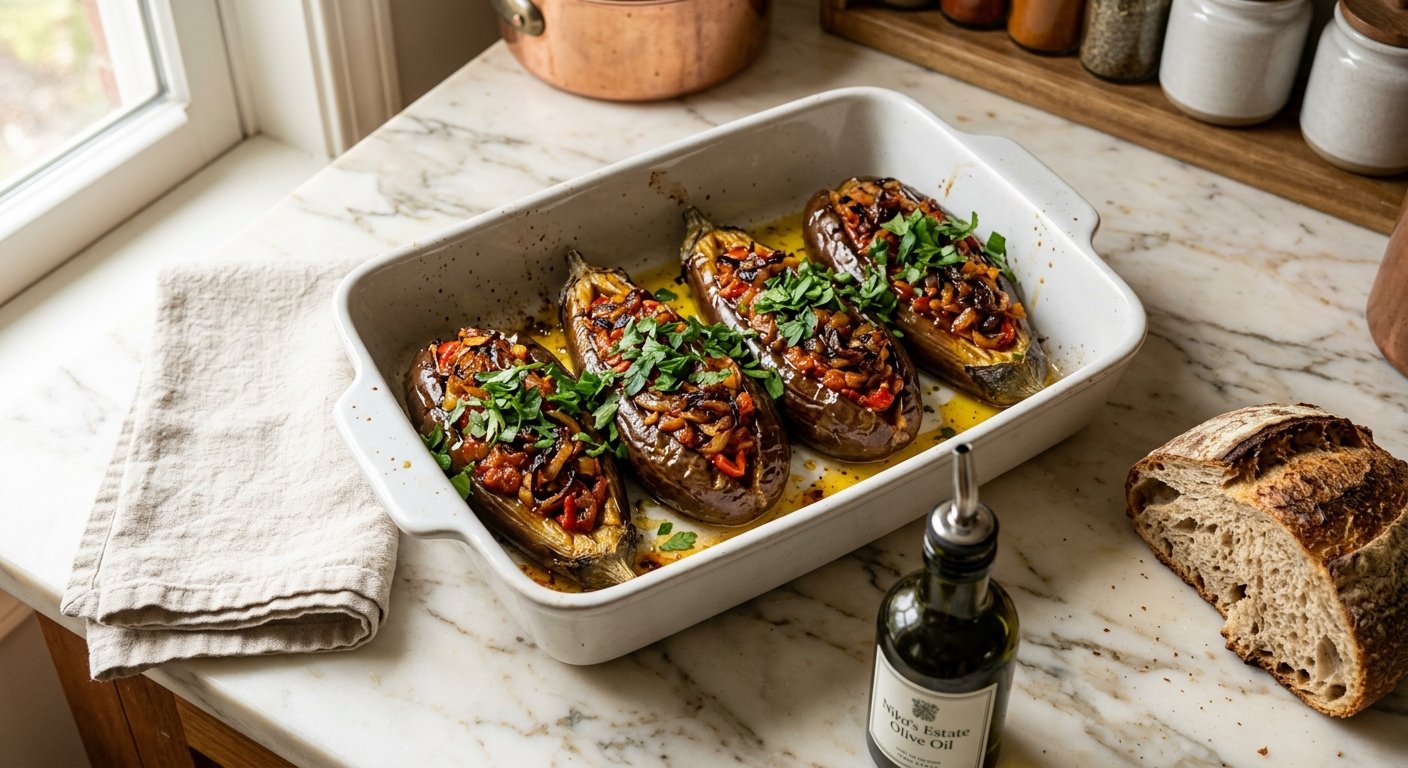
Some dishes belong to a specific place and season. Imam bayildi recipe — whole eggplants stuffed with caramelized onion, garlic, ripe tomatoes, and parsley, then braised in a pool of olive oil — belongs to the Greek island summer table.
My grandmother on Kos made this imam bayildi recipe every July without fail. The eggplants would arrive swollen and deep purple from the summer heat, bought from the same vendor at the harbor market every Saturday morning. By afternoon, the kitchen would carry the smell of onions slowly collapsing in olive oil, the tomatoes breaking down into something close to a sauce, the parsley still bright from being chopped just before. By dinner — or more accurately, by the following morning — the dish would be waiting at room temperature on the table, with bread to soak up the oil.
The name means “the imam fainted” in Turkish — a religious leader so overcome by the pleasure of this dish that he lost consciousness. There is another version of the story: he fainted from shock at the quantity of olive oil his wife had used. Having cooked and eaten this dish many times, I find both explanations equally plausible.
Imam bayildi sits comfortably in the overlap between the Greek and Ottoman kitchen — a dish both cultures claim and both prepare with slight variations. On Kos, as throughout the Dodecanese, that Ottoman influence on daily cooking is real and uncontested. We do not apologize for it. We make the dish and eat it well.
This recipe uses whole eggplants, slit open and stuffed with slow-cooked onion, garlic, ripe tomatoes, and parsley, then braised in a generous pool of olive oil and a little water until completely tender. It is vegan, deeply satisfying, and fully deliberate about the olive oil. Do not reduce it. The oil is the point.
What Is Imam Bayildi?
Imam bayildi is a dish from the Eastern Mediterranean kitchen, made by stuffing whole eggplants with a filling of caramelized onions, garlic, ripe tomatoes, and parsley, then braising everything in olive oil. The name comes from Turkish — “imam” (a Muslim prayer leader) and “bayildi” (he fainted). It belongs to the family of Ottoman vegetable dishes known as zeytinyağlı, meaning dishes cooked in olive oil and served cold or at room temperature.
The dish appears across Greek, Turkish, and Levantine cuisines, each with minor regional differences. In Greek cooking, it is a staple of the summer table — served as a vegetable main course or as part of a mezze spread. According to food historians, imam bayildi is one of the most recognized dishes in the Ottoman culinary canon, representing a category of cooking where patient technique and good olive oil transform a single vegetable into something worth writing about.
On the Greek islands of the Dodecanese — Kos, Rhodes, Symi — Ottoman culinary influences are woven into the everyday kitchen. Imam bayildi is not a special-occasion dish. It is what you make in July when the eggplants are right.
Why This Recipe Works
- Unhurried onion cooking. The onions go into the pan with olive oil and cook for 15–20 minutes before anything else is added. They need to be completely soft, sweet, and beginning to color at the edges. This jammy base is what makes the filling worth eating.
- Salting the eggplants first. Cutting the slit and salting the flesh for 30 minutes draws out bitterness and firms the texture. The eggplants hold their shape better during the long braise and absorb the oil more evenly.
- Enough olive oil. This recipe calls for 150ml of olive oil for four eggplants. That is not a typo. The oil is both the cooking medium and a primary flavor component. A reduced quantity produces a noticeably thinner, flatter dish.
- Cooling before serving. Imam bayildi is always served at room temperature. The flavors settle and deepen as the dish cools; the filling firms up and the eggplants absorb more of the braising liquid. Serving it hot is serving it before it is ready.
Ingredients
For the filling
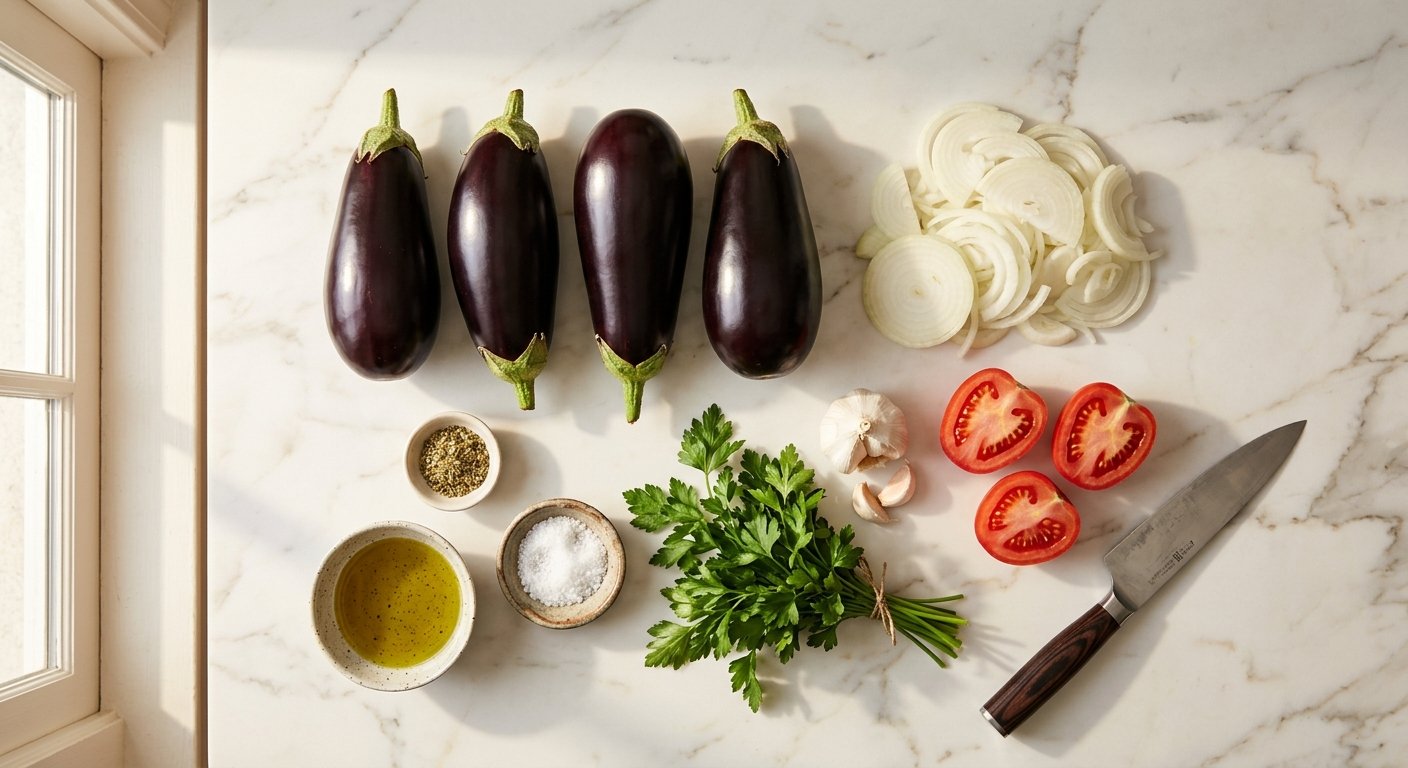
- 3 medium onions, halved and thinly sliced
- 5 garlic cloves, thinly sliced
- 400g (14 oz) ripe tomatoes, peeled and diced — or 1 can (400g) crushed tomatoes, drained
- 1 cup flat-leaf parsley (about 25g), roughly chopped
- 1 teaspoon sugar
- 1 teaspoon salt
- ½ teaspoon black pepper
For the eggplants and braising
- 4 medium eggplants (about 350–400g each)
- 150ml (⅔ cup) extra-virgin olive oil, divided
- 100ml (⅓ cup) water
- 1 teaspoon salt, for initial salting
- Optional: 2 ripe tomatoes, sliced, for topping
Step-by-Step Instructions
1. Prepare the eggplants
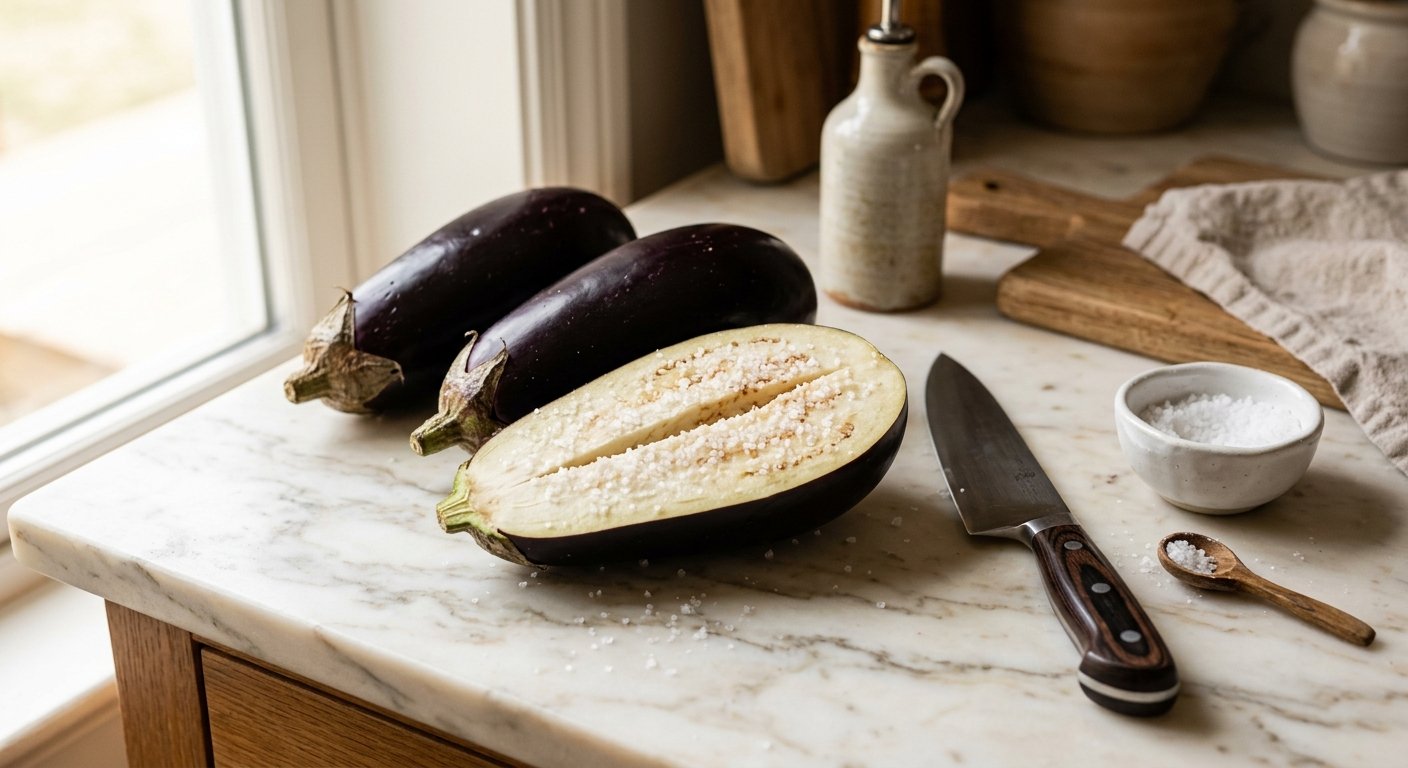
Trim the very tip of each eggplant’s stem end, but leave the cap attached — it helps the eggplant hold together and makes for a cleaner presentation. Using a sharp knife, cut a deep slit lengthwise through each eggplant, stopping about 2cm from each end. You are creating a pocket, not splitting the eggplant in half.
Open the slit slightly and rub the interior flesh generously with salt. Stand the salted eggplants upright in a colander for 30 minutes. Rinse thoroughly under cold water and pat dry with paper towels.
2. Cook the filling
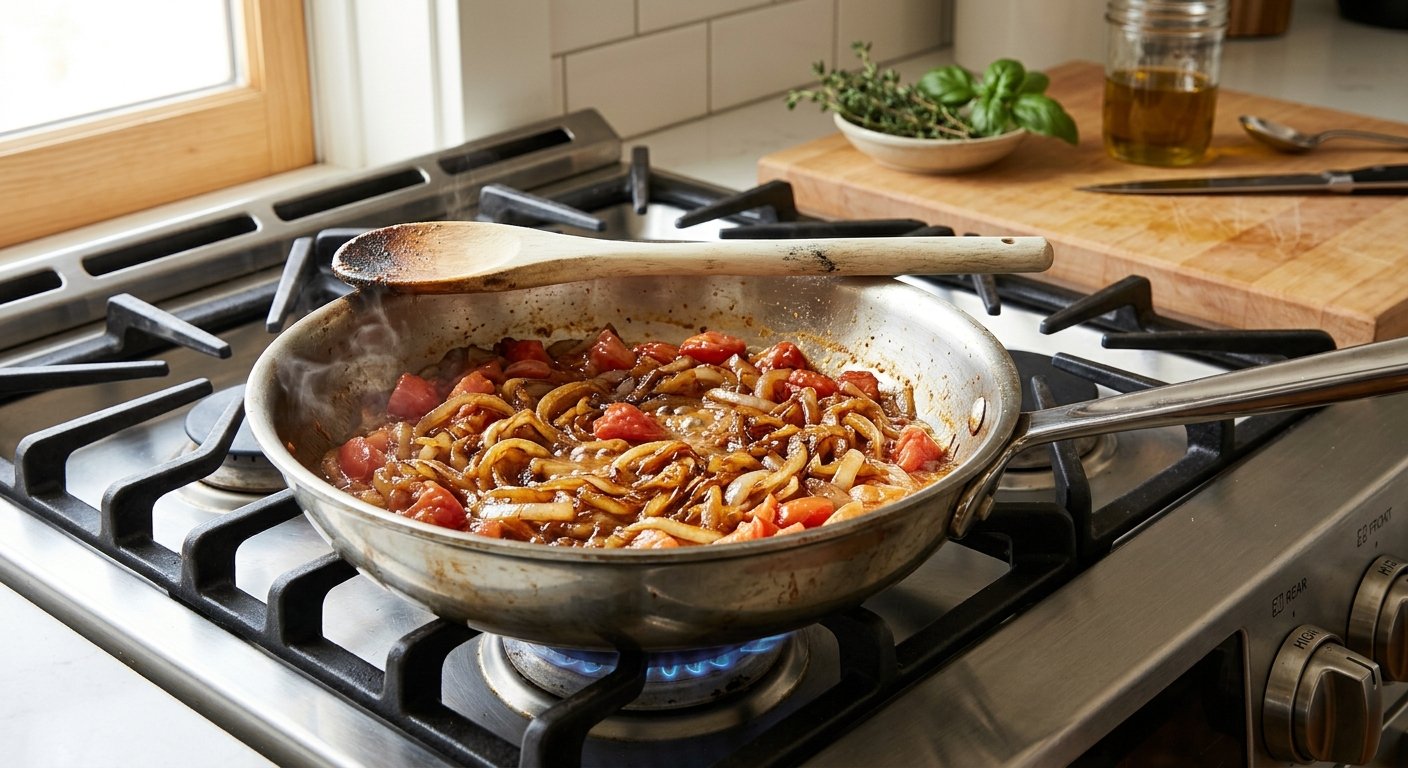
Heat 3 tablespoons of the olive oil in a wide, heavy pan over medium heat. Add the onions and cook, stirring occasionally, for 15–20 minutes until deeply softened, translucent, and beginning to color at the edges. They should be sweet and jammy, not just soft.
Add the garlic and cook for 2 minutes more. Add the diced tomatoes, sugar, salt, and pepper. Stir and cook for another 8–10 minutes until the mixture thickens and the tomatoes break down. Remove the pan from the heat and stir in the parsley. Taste and adjust the seasoning — it should be savory with a distinct sweetness from the onions.
3. Stuff the eggplants
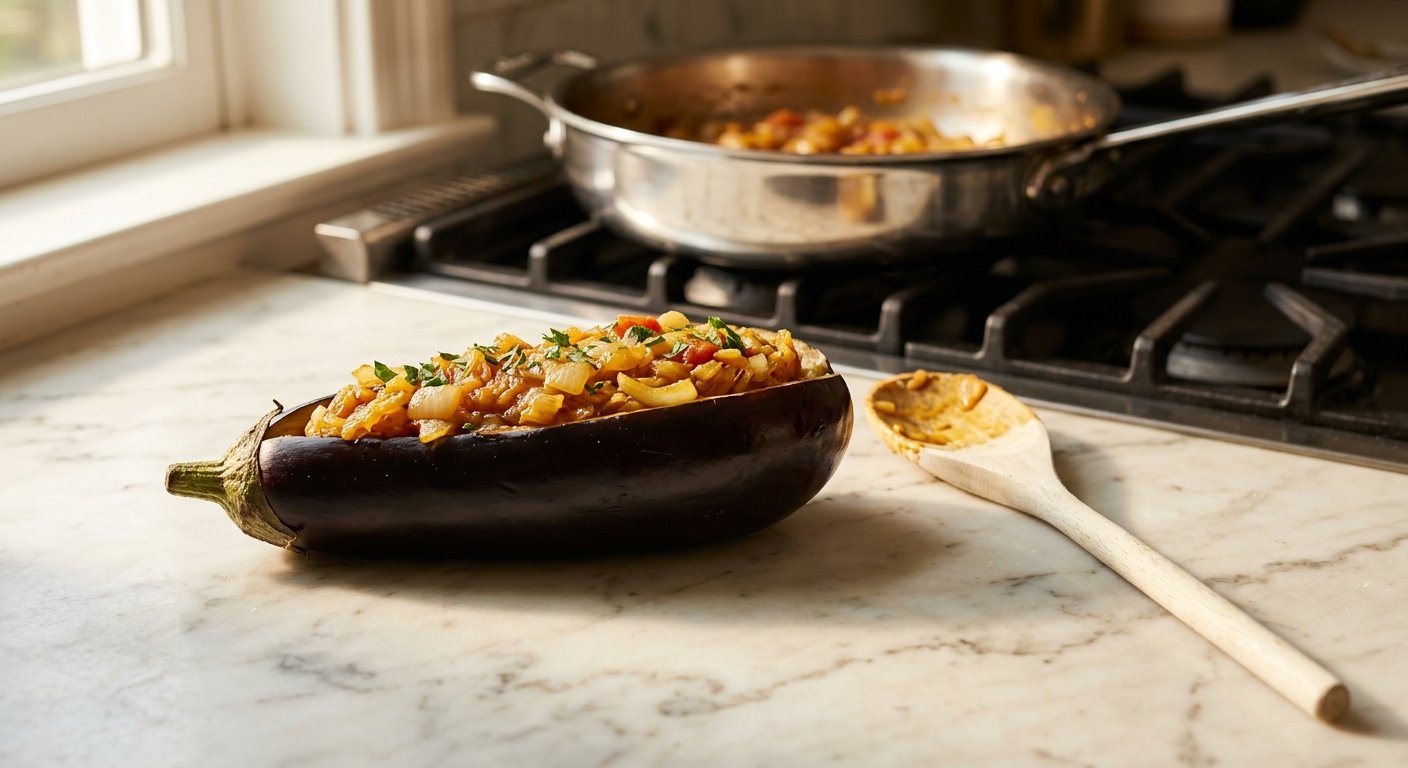
Gently open each slit with your fingers. Pack the filling into the pocket, pressing it deep into the cavity. Fill each eggplant generously — the stuffing should be visible and slightly overflowing. If you have extra filling, scatter it in the bottom of the baking dish.
4. Braise
Preheat your oven to 180°C (350°F).
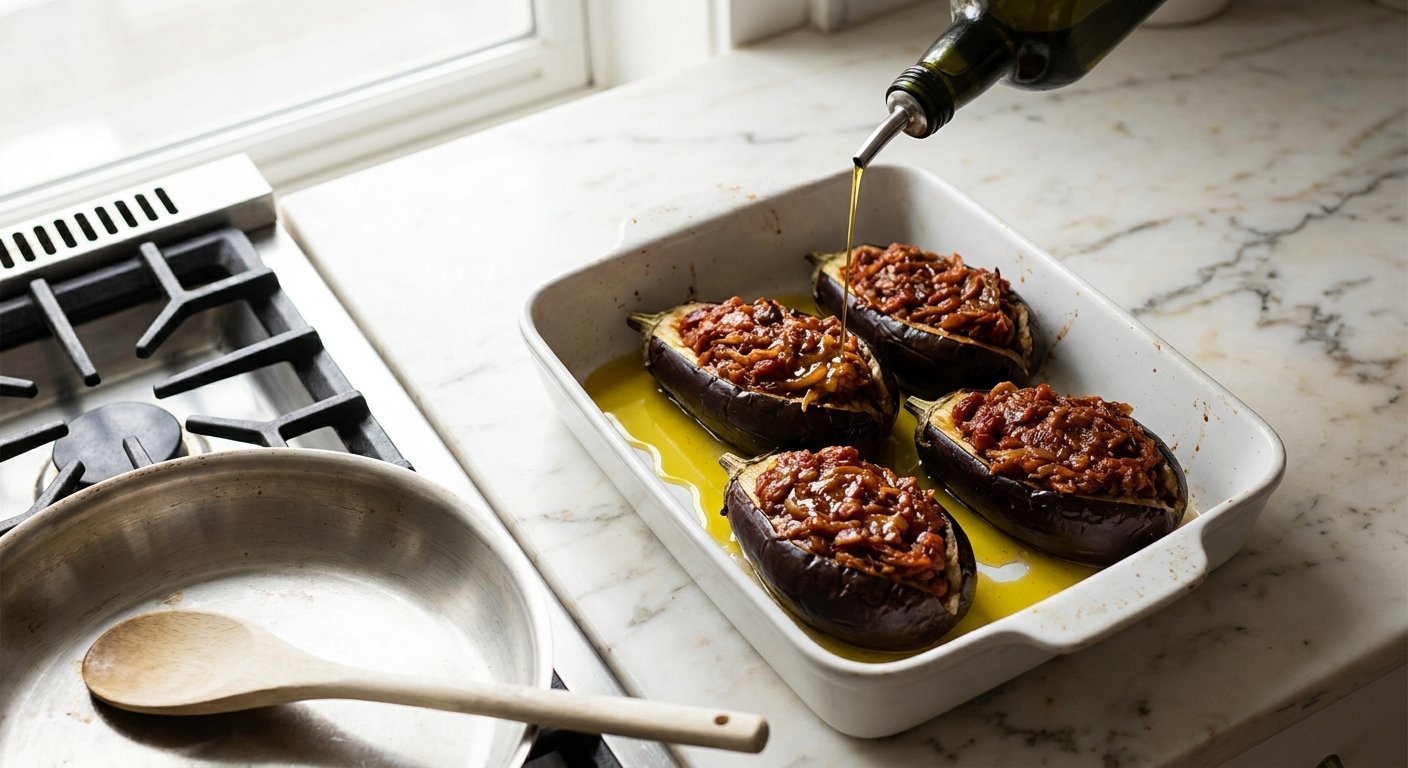
Arrange the stuffed eggplants slit-side up in a baking dish or deep oven-safe pan wide enough that they sit in a single layer without crowding. Pour the remaining olive oil over and around the eggplants — every surface should have oil. Add the water to the bottom of the pan. If you are using tomato slices, lay them over the open slits now.
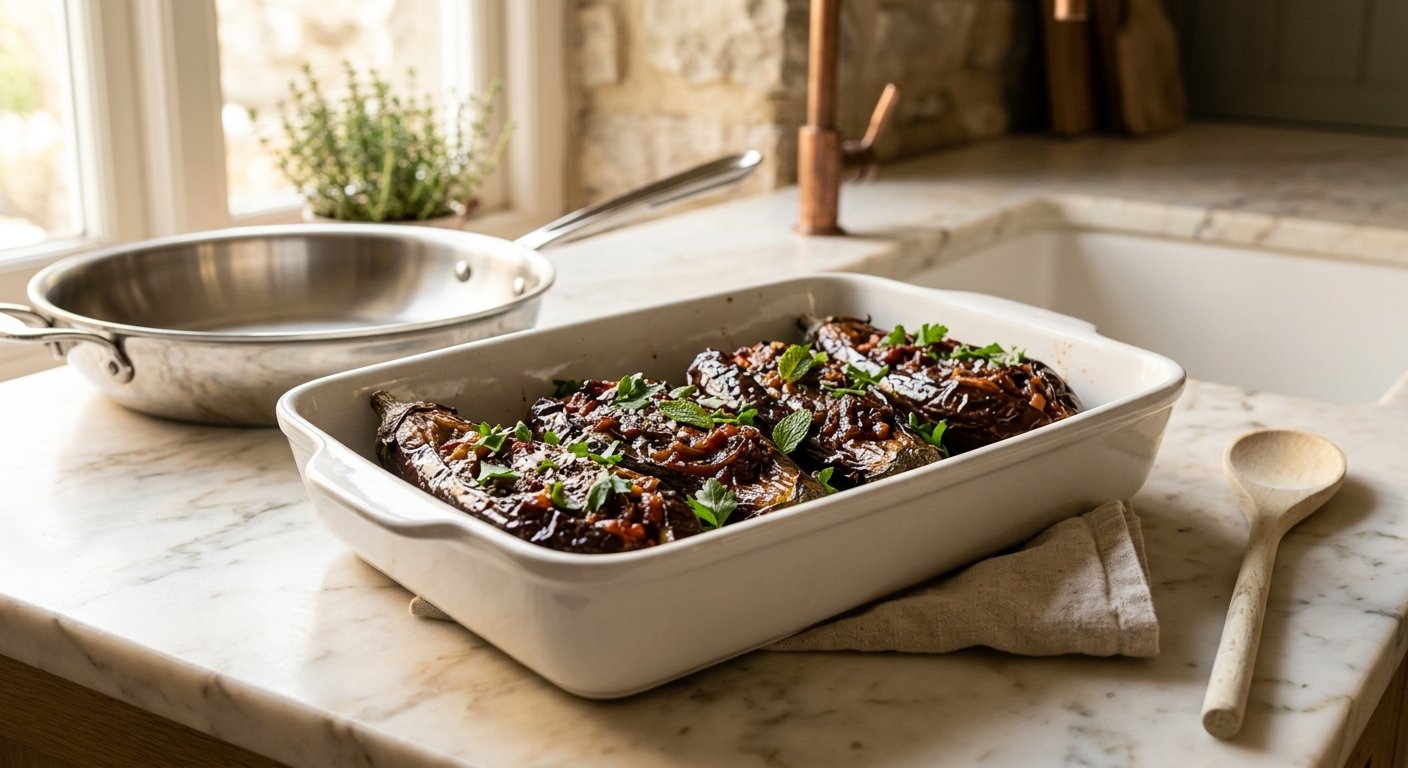
Cover the dish tightly with aluminium foil or a lid. Bake for 45 minutes, then uncover and bake for another 20–25 minutes until the eggplants are completely tender when pierced, slightly caramelized on top, and the braising liquid has reduced and concentrated.
5. Cool and serve
Remove the dish from the oven and let the eggplants cool completely in the pan — at minimum 1–2 hours, or overnight. As they cool, they continue absorbing the braising liquid. Serve at room temperature with crusty bread.
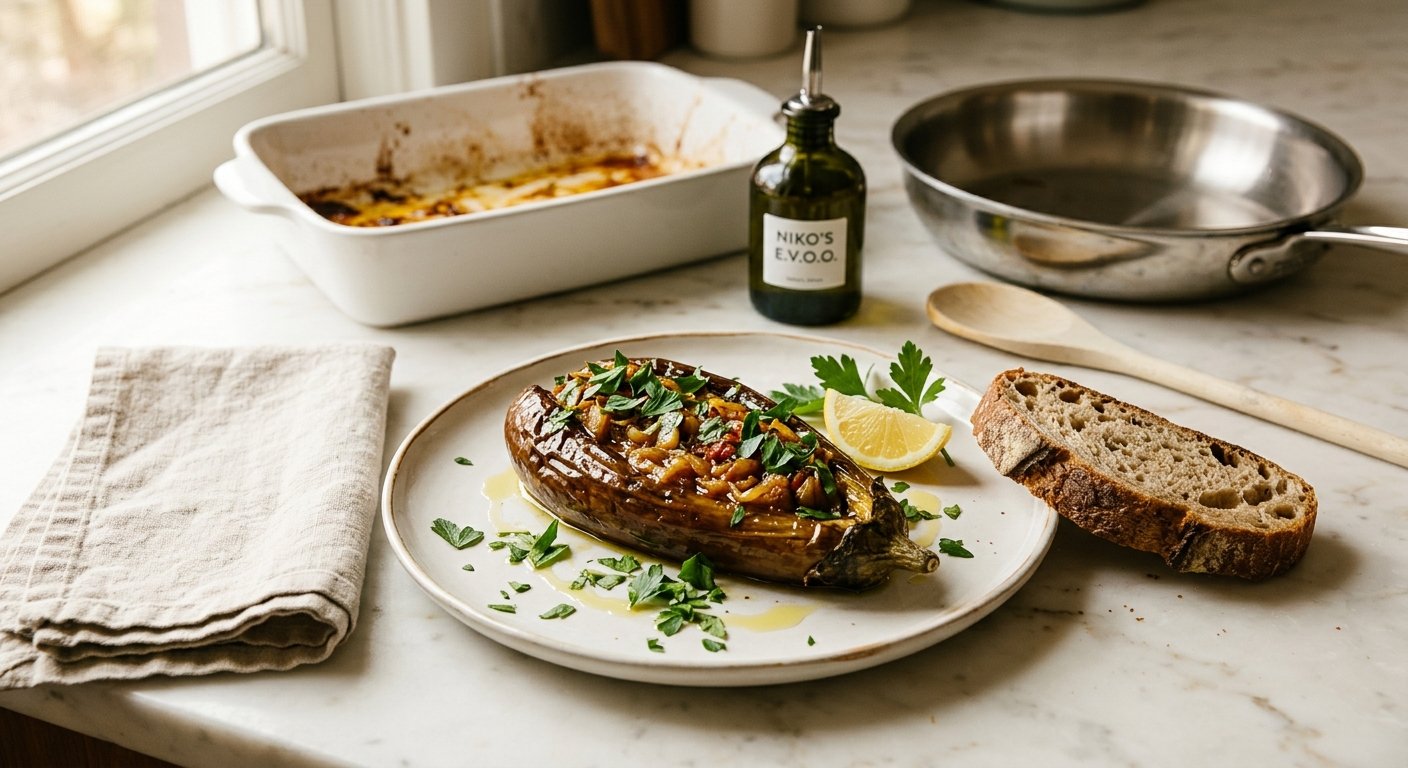
Imam Bayildi (Greek Braised Stuffed Eggplant)
Chef’s Notes
On the olive oil. Use a good Greek extra-virgin olive oil — something with a little character, a slight pepper finish. The oil in this dish is not background. It is the sauce, the braising liquid, and the reason bread belongs at the table alongside it. Do not substitute or reduce.
On eggplant choice. Medium eggplants work best. Very large ones take longer to cook through and can become waterlogged; very small ones are difficult to slit and stuff cleanly. Look for eggplants that feel firm and heavy for their size.
On the cinnamon variation. A quarter teaspoon of ground cinnamon added to the filling with the tomatoes is traditional in some regional versions and one I use occasionally. It adds depth without dominating. If you are already familiar with the dish, it is worth trying once.
Serving context. Imam bayildi belongs naturally to a summer mezze table. It pairs well with a Greek Village Salad (Horiatiki) — the acidity of the tomatoes and vinegar cuts through the richness of the olive oil. If you want a fuller vegetable spread, Fasolakia (Greek Braised Green Beans) are a natural companion — same technique, different vegetable. For those drawn to eggplant, my Classic Greek Moussaka uses the same vegetable in a very different layered preparation — worth knowing both.
Storage. Refrigerate in a covered container for up to 4 days. Remove from the refrigerator at least 30 minutes before serving so it returns to room temperature.
FAQ
What does “imam bayildi” mean?
“Imam bayildi” is Turkish for “the imam fainted.” The most common explanation is that a Muslim religious leader fainted from pleasure the first time he tasted the dish. A competing version holds that he fainted at the quantity of olive oil his wife had used to prepare it. The dish has roots in the Ottoman kitchen and appears across Greek, Turkish, and broader Eastern Mediterranean cuisines.
Can I make imam bayildi ahead of time?
Yes — and it is often better made the day before serving. As the eggplants cool and sit overnight, they absorb more of the braising liquid and the filling firms slightly. Refrigerate, bring to room temperature before serving, and you have a dish that has only improved with time.
Is imam bayildi served hot or cold?
At room temperature — never hot, and not fully cold. Serving it hot means the dish has not finished setting; the flavors are still diffuse and the texture is different. Give it 1–2 hours after coming out of the oven. Room temperature is the intended state.
Can I use canned tomatoes?
Yes. A good quality canned crushed tomato, drained of excess liquid, works well outside of peak summer. In season, ripe fresh tomatoes — peeled and chopped — are noticeably sweeter and brighter. When they are available, use them.
What do I serve with imam bayildi?
Crusty bread is essential for the olive oil — this is not optional. A Greek Village Salad (Horiatiki) alongside provides acidity and freshness that balances the dish well. For a larger vegetable table, add Fasolakia (Braised Greek Green Beans) and the meal is complete.