
Growing up on the island of Kos, Chef Niko watched his mother make melitzanosalata every summer. She would lay whole eggplants directly over the gas flame, turning them with tongs until the skin was completely charred and the flesh collapsed. The kitchen filled with wood-fire smoke — the kind you cannot fake with an oven. That memory is baked into every batch he makes today.
Melitzanosalata (μελιτζανοσαλάτα) is Greece’s answer to eggplant dip — no tahini, no cumin, just charred eggplant, good olive oil, raw garlic, lemon juice, and salt. It is sharper and cleaner than baba ganoush, designed to let the smoke and the olive oil do the talking. This guide covers four techniques for getting maximum smoky depth, whether you have a gas burner, a charcoal grill, a broiler, or a wood fire.
Why This Recipe Works
- True charring, not roasting. The eggplant skin must blister and blacken directly over flame or under a screaming-hot broiler. A moderate oven produces steamed eggplant — soft but smokeless.
- Long draining time. After charring, the collapsed flesh releases a dark, bitter liquid. Draining it in a colander for at least 30 minutes — or overnight in the fridge — is the single most important step for texture and flavor.
- No tahini. Greek melitzanosalata is intentionally tahini-free. Adding sesame paste shifts the flavor profile toward baba ganoush and mutes the smoke. Keep it out.
- Aggressive seasoning. Eggplant is bland at its core. The dip needs more salt, more lemon, and more garlic than you think. Taste as you go and season boldly at the end.
Ingredients
For the dip
- 2 large globe eggplants (about 2 lbs / 900 g total)
- 3 tablespoons extra-virgin olive oil, plus more for drizzling
- 2 cloves garlic, finely minced or grated
- 2 tablespoons fresh lemon juice (about 1 lemon)
- 2 tablespoons flat-leaf parsley, finely chopped
- 1 teaspoon red wine vinegar (optional — brightens the finish)
- Kosher salt and freshly ground black pepper to taste
For serving
- Warm pita bread or crusty bread
- Raw vegetables: cucumber slices, bell pepper strips, celery
- Kalamata olives and a drizzle of extra-virgin olive oil to finish
Step-by-Step Instructions
Step 1: Char the eggplants
Gas stovetop (preferred): Set two burners to medium-high. Place one eggplant directly on each grate over the flame. Char for 12–15 minutes total, turning every 3–4 minutes with tongs, until the skin is completely blackened all over and the eggplant feels very soft and collapsed when pressed. Broiler method: Prick eggplants all over with a fork. Place on a foil-lined baking sheet under a broiler set to high, as close to the element as possible. Broil 40–50 minutes, turning every 10–12 minutes, until skin is charred and flesh is tender. Charcoal grill: Place directly on hot coals or over the hottest part of the grill. Turn every 5 minutes for 20–25 minutes. Wood fire: Nestle directly in the embers. Turn occasionally for 20–30 minutes.
Step 2: Steam and drain
Transfer the charred eggplants to a large bowl and cover tightly with plastic wrap or a plate. Let steam for 10 minutes — this loosens the skin. Then cut each eggplant in half lengthwise and let drain cut-side down in a colander set over the sink or a bowl for at least 30 minutes. For the best texture, drain overnight in the refrigerator uncovered. Discard all liquid.
Step 3: Peel and chop
Using a spoon, scoop the flesh away from the charred skin. Discard all skin — even small charred bits will turn the dip bitter. Place the flesh on a cutting board and chop it roughly with a knife. Do not use a food processor; it will turn the dip to paste. You want some texture — small, irregular chunks. Transfer to a bowl.
Step 4: Season and dress
Add the minced garlic, lemon juice, olive oil, parsley, and red wine vinegar (if using) to the chopped eggplant. Stir vigorously to combine — the olive oil should emulsify slightly into the flesh. Season generously with salt and black pepper. Taste. Adjust lemon and salt. The dip should taste bright, smoky, and assertive. If the smoke flavor is faint, add ½ teaspoon of smoked paprika as a workaround.
Step 5: Rest and serve
Cover and refrigerate for at least 1 hour before serving. The flavors meld and deepen significantly as the dip rests. To serve, spread on a shallow plate, drizzle generously with olive oil, scatter with parsley and a few olives, and serve with warm pita and raw vegetables.
Recipe Card
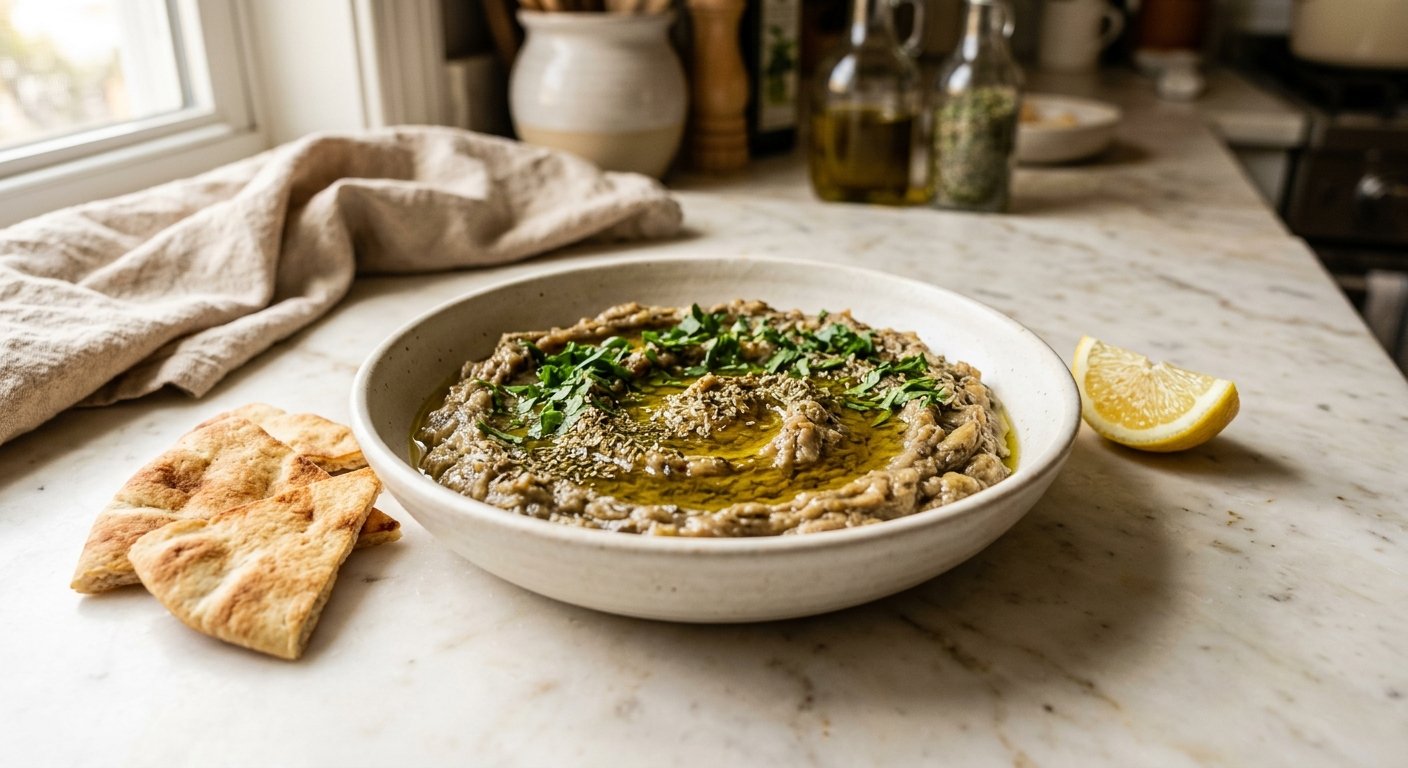
Melitzanosalata (Greek Roasted Eggplant Dip)
Ingredients
For the dip
- 2 large eggplants about 1.2 kg / 2.5 lbs total
- 3 clove garlic finely minced or grated
- 3 tablespoons freshly squeezed lemon juice about 1 large lemon
- 80 ml extra-virgin Greek olive oil 1/3 cup, plus extra for drizzling
- 1 tablespoon red wine vinegar optional, but recommended
- 2 tablespoons flat-leaf parsley finely chopped
- 1 teaspoon fine sea salt plus more to taste
- freshly ground black pepper
For serving
- extra-virgin olive oil for drizzling
- smoked paprika or Aleppo pepper optional
- warm pita bread or crusty bread
Instructions
- Place eggplants directly over a gas burner on medium-high flame. Turn every 2-3 minutes with long tongs until all sides are completely black and the eggplant collapses when pressed. About 12-15 minutes. (Alternatively, broil on highest rack, turning every 5 minutes, for 20-25 minutes.)
- Transfer charred eggplants to a bowl, cover tightly, and let steam for 10 minutes. Allow to cool 10 minutes more.
- Peel away all charred skin over a colander. Pull flesh apart into strands with two forks. Let drain in colander for 15-20 minutes, pressing gently to expel excess liquid.
- Transfer drained flesh to a cutting board and chop roughly - aim for texture, not a smooth paste.
- Move chopped flesh to a bowl. Add garlic, lemon juice, and red wine vinegar. Add olive oil in a thin stream while stirring with a fork. Fold in parsley.
- Add salt and pepper. Taste and adjust - it should be assertive. Add lemon or salt if needed.
- Cover and rest at room temperature for 20 minutes before serving.
- Drizzle with olive oil, scatter parsley, add a pinch of smoked paprika if desired. Serve at room temperature with pita bread.
Notes
Nutrition
Chef’s Notes
The quality of the olive oil matters more here than in almost any other recipe. Because the dip has so few ingredients, each one is exposed. Chef Niko uses a International Olive Council-certified extra-virgin oil from the Peloponnese — fruity, peppery, and assertive enough to hold its own against the smoke and garlic.
Melitzanosalata is sometimes confused with baba ganoush, the Levantine eggplant dip. The two share charred eggplant as a base but diverge sharply after that: baba ganoush includes tahini and often cumin or other spices, giving it a richer, more complex flavor. Melitzanosalata is the purer, more austere version — the smoke, the oil, the garlic, and nothing else to hide behind.
If you are making this for a meze spread, prepare it the day before. It keeps well in the refrigerator for up to 4 days and tastes better on day two than day one.
FAQ
What is melitzanosalata?
Melitzanosalata (μελιτζανοσαλάτα) is a traditional Greek eggplant dip or spread made from fire-charred eggplant mixed with olive oil, garlic, lemon juice, and parsley. The name literally translates to “eggplant salad” in Greek. It is a staple of Greek meze tables, served as an appetizer alongside bread, olives, and other dips like tzatziki and taramosalata.
What is the difference between melitzanosalata and baba ganoush?
Both are charred eggplant dips, but they come from different culinary traditions and taste quite different. Baba ganoush is a Levantine dish that includes tahini (sesame paste) and often cumin or other Middle Eastern spices, making it richer and more complex. Melitzanosalata is Greek, contains no tahini, and relies entirely on olive oil, lemon, and garlic for flavor — it is cleaner, sharper, and lets the smoke flavor come through more clearly.
How do I get a deep smoky flavor?
The only way to get authentic smoke is to char the eggplant directly over an open flame — gas burner, charcoal grill, or wood fire. An oven, even at high heat, produces roasted eggplant, not charred eggplant; the flavor is noticeably different. If you must use a broiler, get the eggplant as close to the broiler element as possible and char until the skin is genuinely blackened, not just browned.
Can I make melitzanosalata without a gas stovetop?
Yes. A charcoal or wood-fire grill is actually better than a gas stovetop — it produces more complex smoke. A broiler set to high is an acceptable alternative, though the smoke flavor will be lighter. Place the eggplants as close to the broiler element as possible, turn them every 10–12 minutes, and broil until the skin is charred all over, about 40–50 minutes total. You can also use a kitchen blowtorch to add extra char to the skin after broiling.
Why is my melitzanosalata watery?
Eggplant contains a lot of water, and charring concentrates but does not eliminate it. After charring, the flesh must drain in a colander for at least 30 minutes — longer is better. Skipping or rushing this step leaves excess liquid in the dip, which dilutes the flavor and makes the texture loose. For the best results, drain the halved eggplant overnight in the refrigerator before mixing.
How long does melitzanosalata keep?
Stored in an airtight container in the refrigerator, melitzanosalata keeps well for up to 4 days. The flavor actually improves on day two as the garlic and lemon mellow and integrate. Do not freeze it — the texture becomes grainy and watery after thawing. Always drizzle with fresh olive oil just before serving, even if it was dressed when first made.