
Introduction
There is a dish my mother made nearly every week in summer, and it was never a side dish. It was dinner. A wide, shallow pot of green beans braised slowly in tomato sauce, swimming in good olive oil, served warm with a thick slab of feta and crusty bread. That dish is fasolakia — and if you have never eaten it this way, you have never really tasted green beans.
This fasolakia recipe is what Greeks call ladera — one of the olive oil-based vegetable dishes that form the backbone of Greek home cooking. The word itself comes from ladi, meaning oil, and the name tells you everything about the philosophy: generous olive oil, seasonal vegetables, patient cooking. No butter, no cream, no meat required. Just time, good ingredients, and a willingness to let the pot do the work.
In Greek homes, fasolakia is not what you serve next to a steak. It is the meal. A big plate of these tender, sauce-soaked beans with bread and cheese is one of the most satisfying dinners I know. And yet, outside of Greece, most people have never heard of it. That is something I want to change.
After years of making this dish — first watching my mother, then cooking it myself through decades in professional kitchens and at home — I have learned exactly what makes fasolakia sing. The technique is simple, but the details matter. Let me walk you through them.
Why This Fasolakia Recipe Works
- Slow braising transforms texture. Unlike steamed or sautéed green beans that stay snappy, fasolakia beans are braised until meltingly tender. The long, gentle simmer allows them to absorb the tomato sauce and olive oil completely, creating a silky, rich texture you cannot achieve any other way.
- Generous olive oil is not optional. This is a ladera dish. The olive oil is not a cooking fat — it is a primary ingredient. It enriches the sauce, carries flavor into every bean, and gives the dish its characteristic body. Skimping here changes the entire character of the dish.
- Ripe tomatoes make the difference. Whether you use fresh summer tomatoes or quality canned whole tomatoes in winter, the sweetness and acidity of your tomatoes will define the sauce. Underripe or low-quality tomatoes produce a thin, sharp sauce. Good tomatoes give you depth.
- Potatoes add substance. The addition of potatoes turns fasolakia from a vegetable dish into a complete, hearty meal. They break down slightly during braising, thickening the sauce naturally.
The Fasolakia Recipe
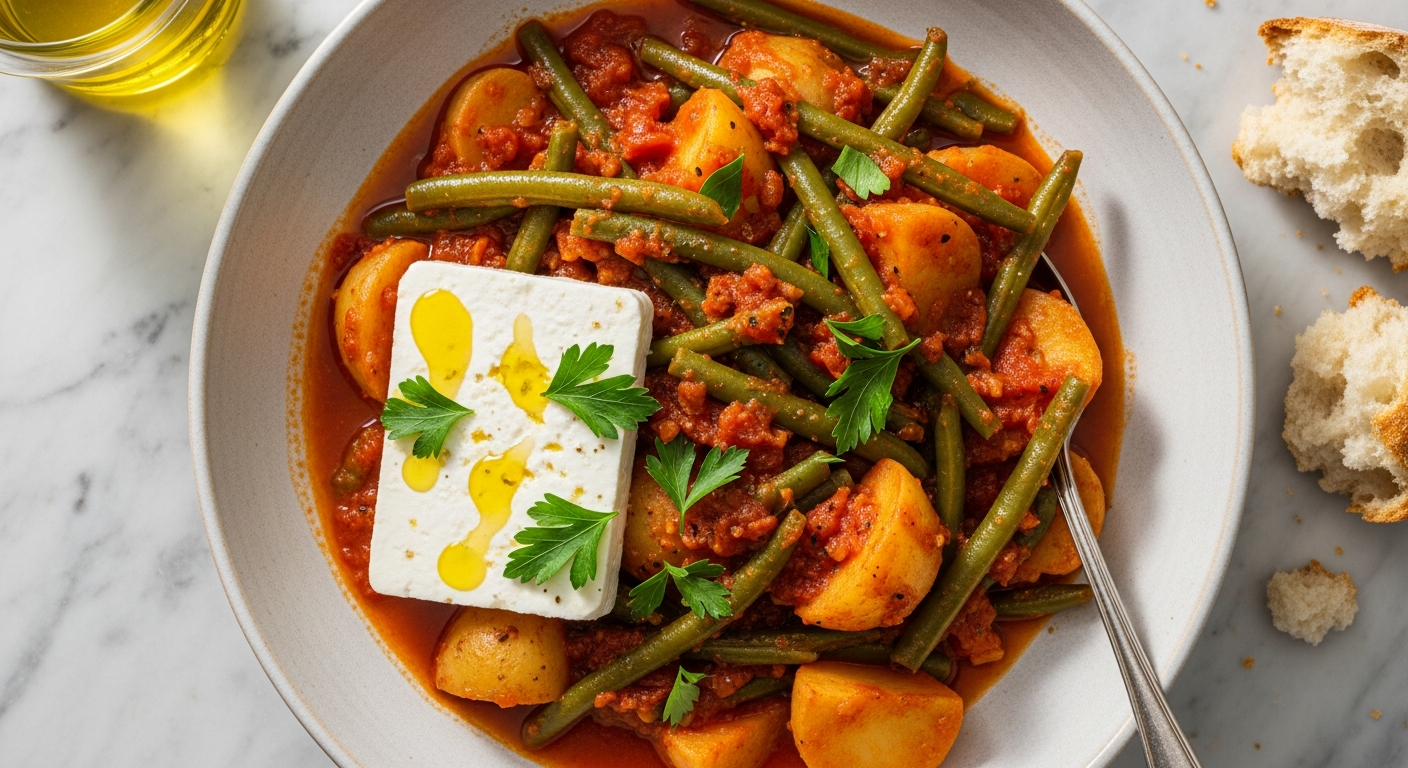
Fasolakia Recipe (Greek Green Beans Braised in Tomato Sauce)
Ingredients
- 1 kg fresh green beans trimmed (flat Romano beans or regular green beans)
- 3 medium potatoes peeled and quartered
- 1 large onion finely chopped
- 3 clove garlic minced
- 400 g ripe tomatoes grated, or 1 can (400g) whole peeled tomatoes, crushed by hand
- 2 tablespoons tomato paste
- 150 ml extra virgin olive oil plus more for drizzling
- 1 teaspoon sugar optional, to balance acidity
- Salt and freshly ground black pepper to taste
- 250 ml warm water approximately
- Fresh flat-leaf parsley roughly chopped, for garnish
Instructions
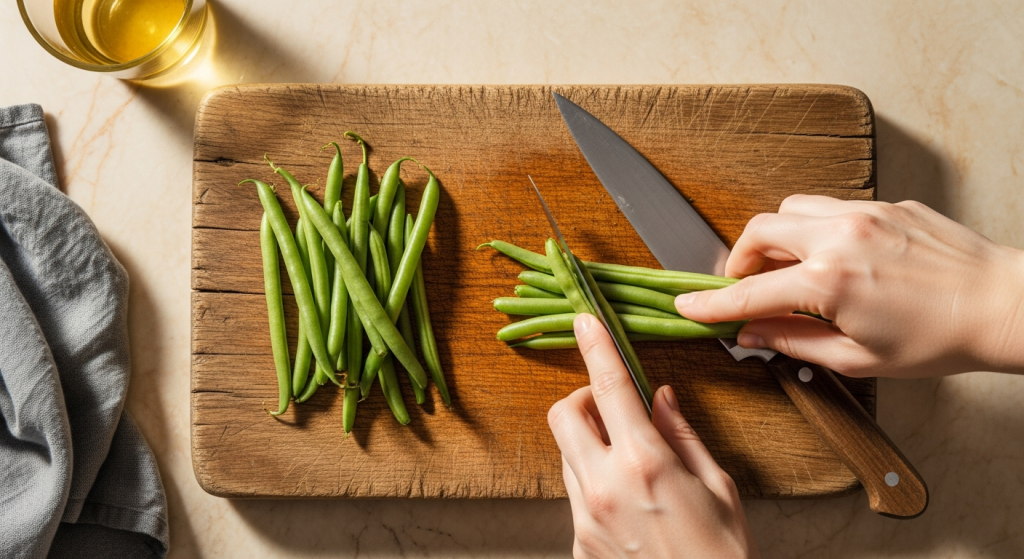
- Wash the green beans and trim both ends. If using flat Romano beans, leave them whole or snap in half if very long. For regular green beans, snap or cut into 5–6 cm (2-inch) pieces.
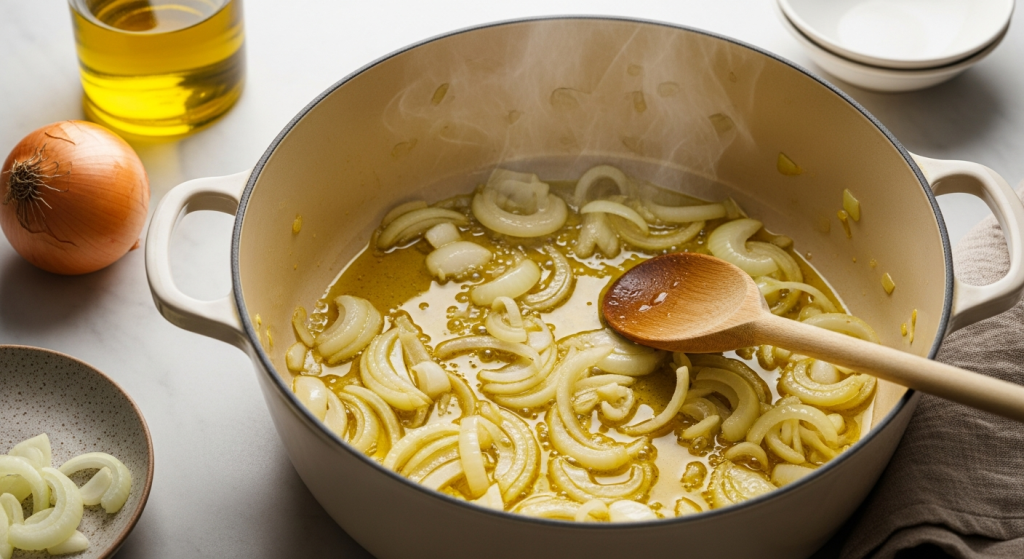
- In a wide, heavy-bottomed pot or Dutch oven, warm the olive oil over medium heat. Add the chopped onion and cook, stirring occasionally, for 6–7 minutes until soft and translucent — not browned. Add the garlic and cook for another minute until fragrant.
- Stir in the tomato paste and cook for 1–2 minutes until it darkens slightly and becomes fragrant. Add the grated fresh tomatoes or crushed canned tomatoes. Stir well, season with salt, pepper, and sugar if the tomatoes taste sharp. Let the sauce simmer for 5 minutes to concentrate.
- Add the green beans and potato quarters to the pot. Toss to coat everything in the sauce. Add enough warm water to almost cover the vegetables — about 250 ml (1 cup). The beans should be mostly submerged but not drowning.
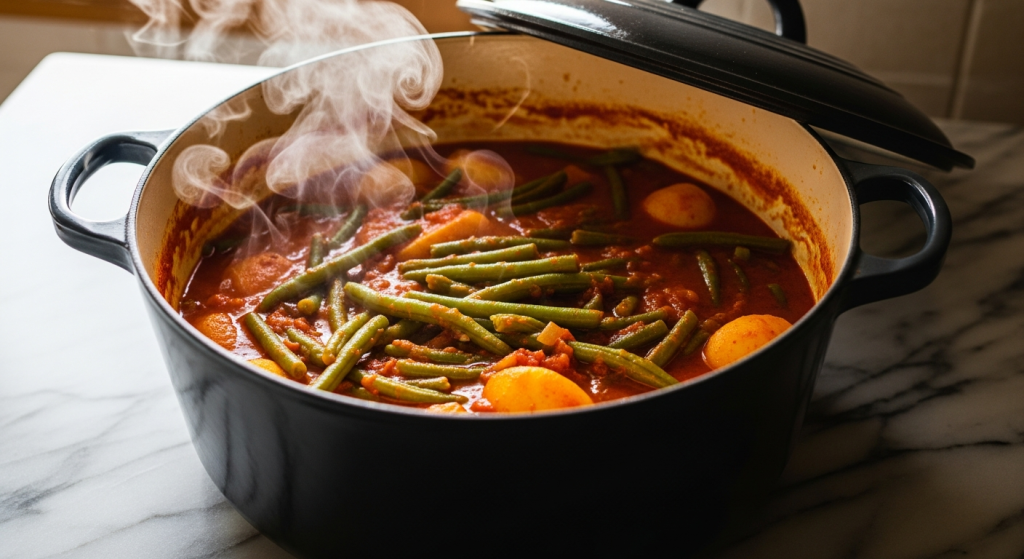
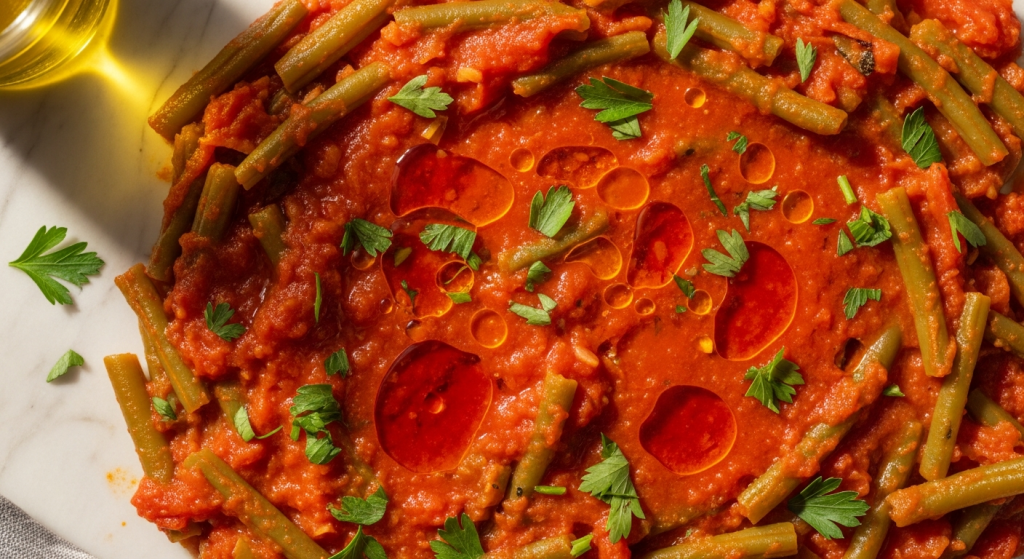
- Bring to a gentle boil, then reduce heat to low. Cover the pot with a lid slightly ajar and let the fasolakia simmer for 50–60 minutes, until the beans are very tender and the sauce has thickened and reduced. The oil will rise to the surface and turn a deep orange-red — this is exactly what you want.
- Remove from heat and let the fasolakia rest for at least 15–20 minutes. Serve warm in shallow bowls. Drizzle with fresh olive oil, scatter with parsley, and place a generous slab of feta alongside. Tear off some crusty bread and let it soak up the sauce.
Notes
Nutrition
Chef’s Notes
Tips for the Best Fasolakia
Choose your beans wisely. Flat Romano beans (sometimes labeled Italian flat beans) are the traditional choice and what most Greek grandmothers use. They have a meatier texture and hold their shape during long braising. Standard green beans work well too — just know they will be softer.
Do not rush the braise. The entire character of this dish depends on slow, gentle cooking. High heat will make the beans mushy on the outside while leaving them squeaky inside. Low and slow is the only way.
Let it rest. Fasolakia, like most braised dishes, is better after it has sat. Twenty minutes minimum. Many Greeks prefer it at room temperature, which is when the flavors truly come together.
Variations
- Without potatoes: Simply omit them for a lighter version. The sauce will be a bit thinner.
- With zucchini: Add 2 small zucchini, cut into chunks, during the last 20 minutes of cooking.
- With meat: Some regions add ground lamb or veal. Brown 200g of ground meat with the onions before adding tomatoes for a heartier version.
Storage
- Refrigerator: Store in an airtight container for up to 4 days. Fasolakia is one of those dishes that genuinely improves overnight.
- Freezer: Freezes well for up to 3 months. Thaw in the refrigerator and reheat gently on the stovetop.
- Reheating: Always reheat on the stove over low heat, adding a splash of water if the sauce has thickened too much.
Frequently Asked Questions
What does fasolakia mean?
Fasolakia is the Greek word for green beans. When Greeks say fasolakia, they almost always mean this braised dish specifically — green beans cooked in tomato sauce and olive oil. The full name is sometimes fasolakia lathera (green beans in oil) or fasolakia yiahni (green beans stew).
Is fasolakia a main dish or a side dish?
In Greek homes, fasolakia is a main dish. Ladera dishes — vegetable dishes braised in olive oil — are complete meals. Served with feta cheese and good bread, fasolakia is a fully satisfying dinner. It is also naturally vegan (without the feta), which makes it a staple during Greek Orthodox fasting periods.
Can I use canned green beans for fasolakia?
I would not recommend it. Canned green beans are already soft and will turn to mush during braising. Fresh green beans are essential — they need the long cooking time to develop the right texture. Frozen green beans are an acceptable substitute if fresh are not available, though the texture will be slightly different.
How do I know when fasolakia is done?
The beans should be very tender — not crunchy, not snappy. When you press one between your fingers, it should yield easily. The sauce should be thick and reduced, with the olive oil glistening on the surface in a deep orange-red color. If the sauce is still watery, remove the lid and simmer a few more minutes.
What is the difference between fasolakia and other Greek bean dishes?
Fasolakia refers specifically to green beans (string beans). Gigantes plaki uses large white butter beans baked in tomato sauce. Fassolada is a white bean soup, often called the national dish of Greece. All three are central to Greek cooking, but they are quite different dishes despite the similar-sounding names.