
When I think about weeknight dinners in my mother’s kitchen on Kos, I think of Greek pork chops — brizoles hirines — the simple, fragrant dish that appeared on our table at least twice a week. Not fancy food. Just good pork marinated in the things that grow on our island: lemon from the tree outside, oregano from the hillside, olive oil from the press down the road. My mother made these Greek pork chops with the quiet confidence of someone who has never once second-guessed the recipe. A handful of ingredients, a hot oven, forty minutes. That was the whole story.
But the simplicity of brizoles hirines is also what trips people up. Pork chops have a way of going dry and chalky in the oven if you rush them or skip the marinade. The acid from the lemon helps penetrate the meat; the fat from the olive oil protects the surface; and the oregano — which Greeks use in quantities that would surprise most cooks from elsewhere — does something to pork that is hard to explain until you taste it. It blooms in the heat. It turns fragrant and slightly earthy in a way that smells, to me, exactly like a summer evening on the Aegean.
This recipe gives you the full Kos experience of brizoles hirines: a proper marinade that takes fifteen minutes to assemble, a hot-oven technique that builds color on the outside without sacrificing juiciness inside, and a simple pan sauce made from whatever collects in the roasting tray. I also include a pan-fried variation — tigania-style — for nights when you want the same flavors in half the time. Four steps. Forty-five to fifty minutes from pan to plate. This is the recipe I have made more times than I can count, and it has never once disappointed.
Table of Contents
- What Are Brizoles Hirines?
- Why This Recipe Works
- Ingredients
- How to Make Greek Pork Chops: Step-by-Step Instructions
- Chef’s Notes
- Serving Suggestions
- FAQ
What Are Brizoles Hirines?
“Brizoles hirines” (βριζόλες χοιρινές) is the Greek name for pork chops. “Brizola” (βριζόλα) refers to a cutlet or chop — the word applies to both pork and beef cuts — and “hiriné” (χοιρινή) specifies pork. In everyday Greek cooking, brizoles hirines almost always means bone-in pork chops cooked either in the oven (sto fourno) or in a frying pan (sti tigania). The full name you might see on a taverna menu or in a Greek cookbook is brizoles hirines sto fourno — pork chops baked in the oven.
The dish exists across the whole of Greece, and every household has its own version. On Kos and throughout the Dodecanese, the seasoning leans toward lemon, garlic, and dried oregano — the essential trinity of Greek grilling and roasting. In northern Greece, you might encounter more black pepper and red wine; on Crete, some cooks add vinegar to the marinade. But the fundamental preparation is consistent everywhere: marinate the meat in oil and acid, cook over or in high heat to develop a golden crust, rest before serving.
Brizoles hirines is not primarily a restaurant dish in Greece. It is a home dish — something made on a Tuesday evening without ceremony, served alongside roast potatoes or a simple salad. That quiet, everyday quality is exactly the spirit I want you to bring to this recipe. Do not overthink it. Trust the marinade.
Why This Recipe Works
- The lemon-oil marinade does real work. Lemon juice gently breaks down the surface proteins, improving the texture of the finished chop, while olive oil carries fat-soluble aromatics — garlic, oregano, thyme — into the meat. Even thirty minutes produces a visible difference in flavor and tenderness.
- Bone-in chops stay juicier. The bone insulates the surrounding meat during cooking and adds depth to the pan drippings. I always use bone-in for oven brizoles hirines. If you can only find boneless, reduce the cooking time by roughly five minutes and watch the internal temperature closely.
- A hot start followed by a lower finish. Beginning at 220°C (425°F) for ten minutes builds the golden crust; dropping to 190°C (375°F) finishes the interior gently without driving out moisture. This two-stage approach is the difference between a juicy chop and a dry one.
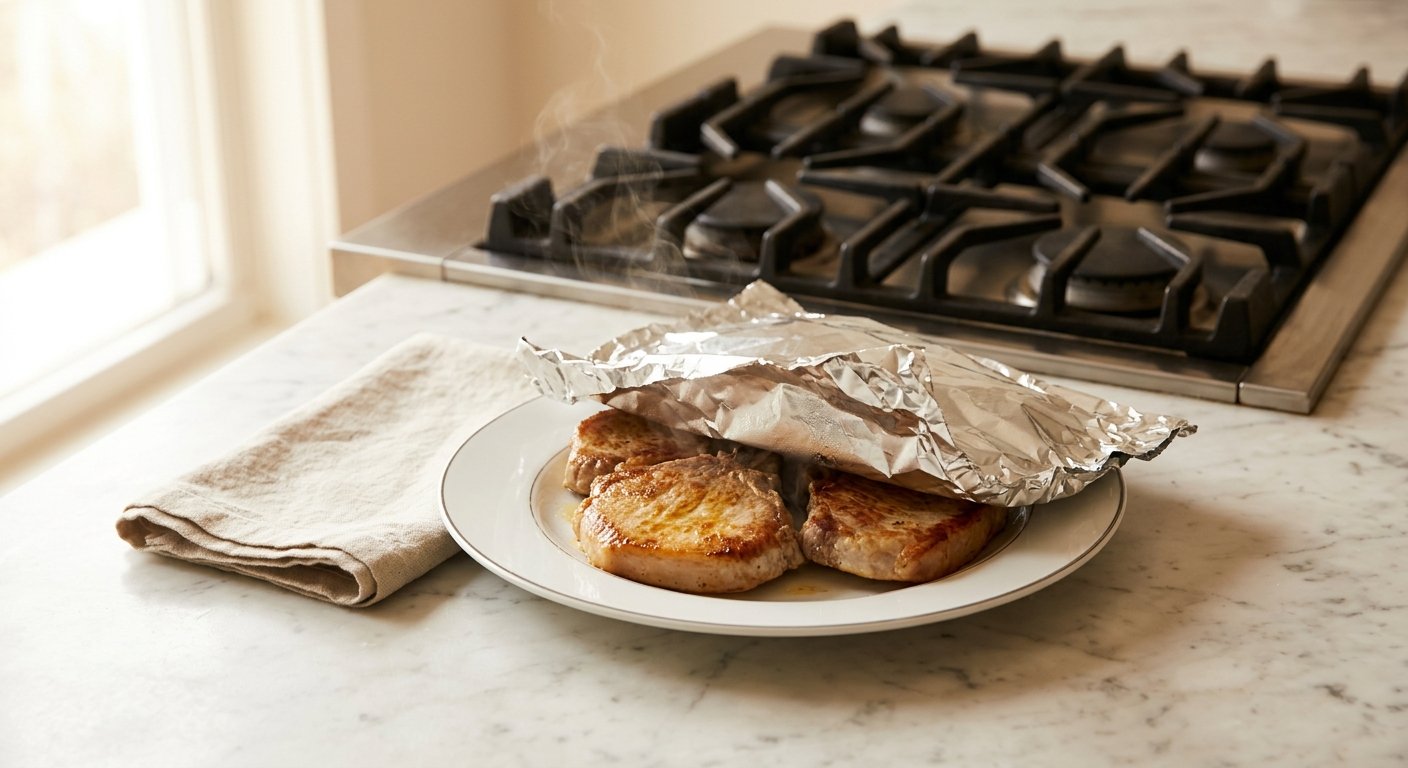
- Resting is non-negotiable. Five minutes under loose foil after the oven allows the juices to redistribute through the meat. Cut too soon and those juices pool on the cutting board instead of staying in the chop.
Ingredients
For the Pork Chops
- 4 bone-in pork chops, about 2.5 cm (1 inch) thick (approximately 220–280g / 8–10 oz each)
- 3 tablespoons extra-virgin olive oil
- 3 cloves garlic, finely minced
- 3 tablespoons fresh lemon juice (about 1 large lemon)
- 1 teaspoon dried Greek oregano
- ½ teaspoon dried thyme
- 1 teaspoon fine sea salt
- ½ teaspoon freshly ground black pepper
For the Pan Sauce (optional but highly recommended)
- ¼ cup dry white wine, or chicken stock as a substitute
- 1 tablespoon unsalted butter
- Extra squeeze of fresh lemon juice to finish
Optional Aromatics for the Roasting Pan
- 1 lemon, sliced into rounds
- 2–3 sprigs fresh thyme or rosemary
How to Make Greek Pork Chops: Step-by-Step Instructions
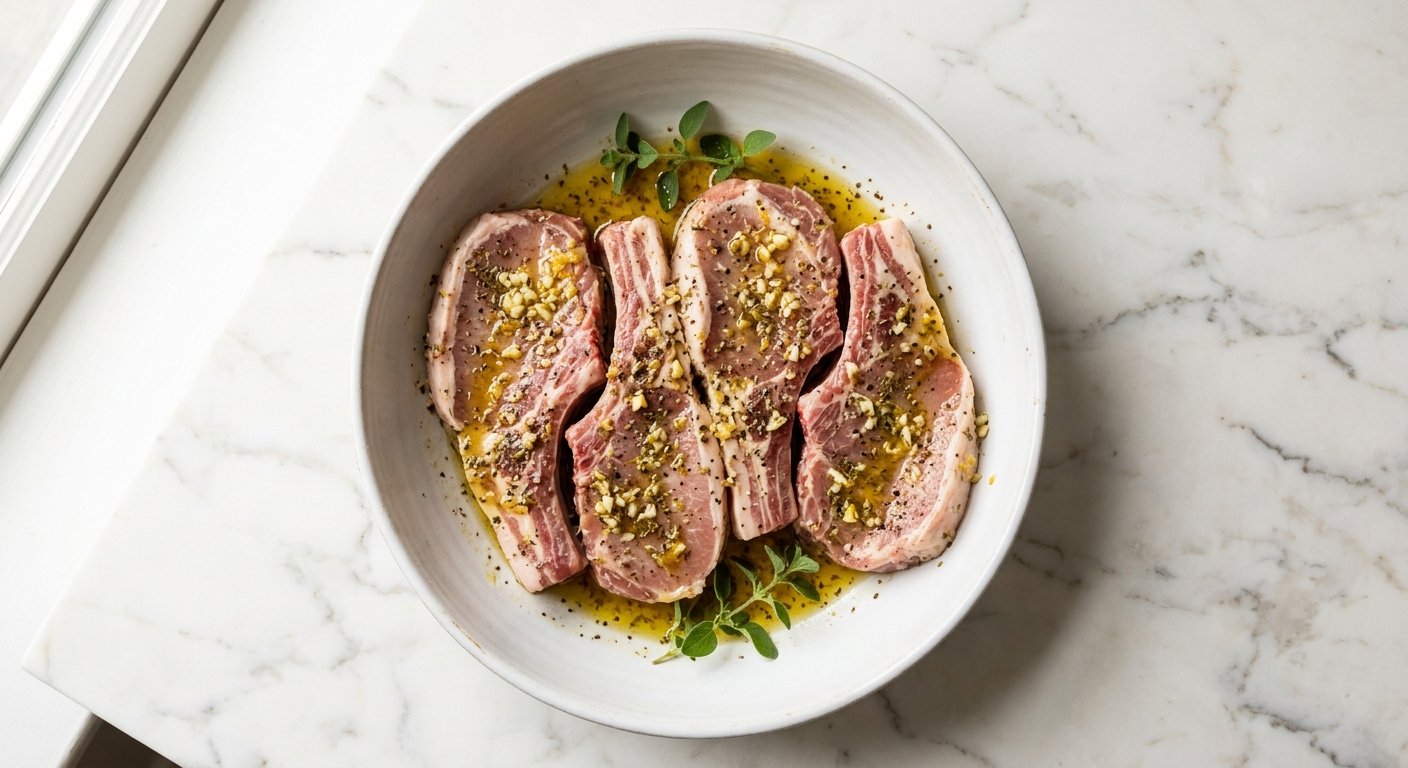
Step 1 — Make the Marinade and Coat the Chops
Combine the olive oil, minced garlic, lemon juice, dried oregano, thyme, salt, and pepper in a wide bowl or a zip-lock bag. Mix briefly to combine, then add the pork chops. Turn them several times to coat on all sides, pressing the marinade into the meat with your hands.
If you have time, let the chops marinate for at least 30 minutes at room temperature. If marinating for longer, cover and refrigerate for up to 4 hours — overnight in the refrigerator is ideal if you can plan ahead. When you’re ready to cook, remove the chops from the refrigerator 20–30 minutes before they go into the oven. Cold meat entering a hot oven cooks unevenly: the exterior overcooks before the center reaches temperature.
Chef’s tip: The lemon-olive oil combination works on two levels. The acid tenderizes and the oil seals moisture into the surface. Both effects strengthen with time, which is why overnight marinating produces a noticeably juicier result.
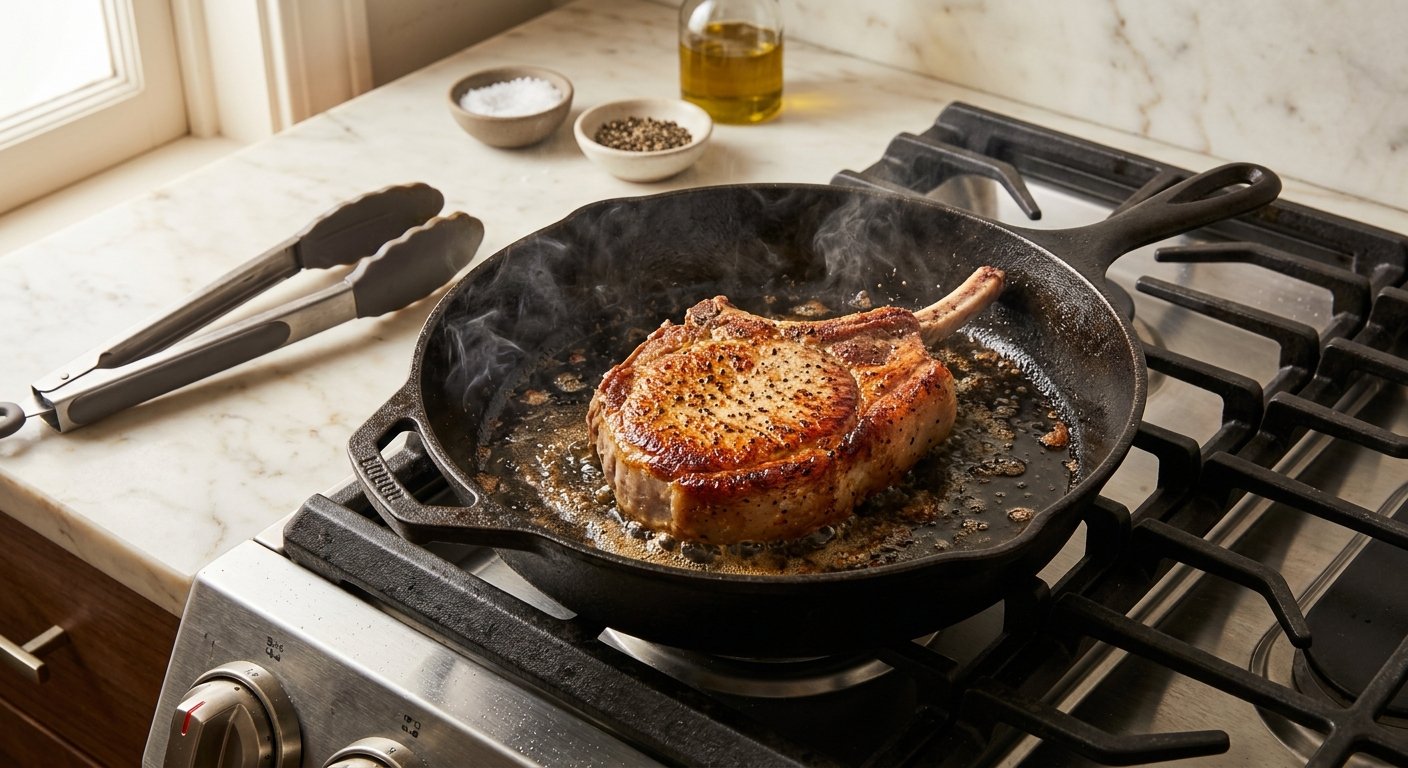
Step 2 — Preheat the Oven and Prepare the Pan
Set your oven to 220°C (425°F) and place an empty roasting pan or oven-safe skillet inside while the oven heats. A hot pan creates immediate contact with high heat the moment the chops land in it — this is how you build color quickly without prolonged time at high temperature.
If you want maximum color and a deeply browned crust, sear the chops in a cast-iron pan over high heat for 2 minutes per side before they go into the oven. Pat them dry with paper towels first — surface moisture creates steam and prevents browning. This step is optional, but I recommend it if you have the extra pan and a few extra minutes.
Chef’s tip: A very hot pan is more important than a very hot oven for surface color. The initial contact between a cold (or room-temperature) piece of meat and a screaming-hot surface is what builds the Maillard reaction browning.
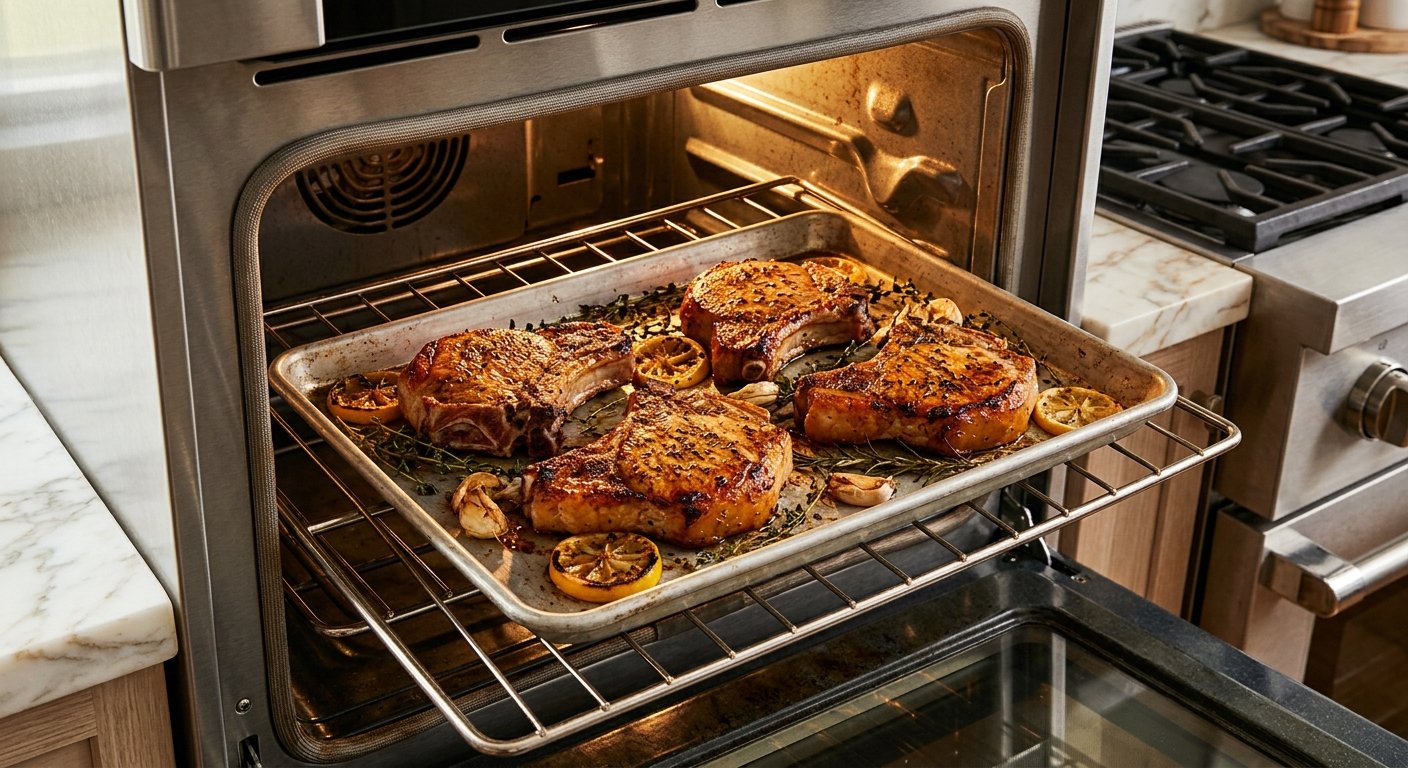
Step 3 — Roast to Temperature, Not Time
Transfer the chops to the preheated roasting pan. If using lemon slices or herb sprigs, scatter them around the meat now. Roast at 220°C (425°F) for 10 minutes, then reduce the oven temperature to 190°C (375°F) and continue roasting for another 20–25 minutes, until an instant-read thermometer inserted into the thickest part of a chop reads 63°C (145°F).
Total oven time depends on thickness. A chop at 2.5 cm (1 inch) typically needs 30–35 minutes total. A thinner chop at 1.5 cm (½ inch) will be done in 20–22 minutes. A thicker chop at 3–4 cm (1.5 inches) may need up to 40 minutes. Trust the thermometer over the clock.
Chef’s tip: Current food safety guidelines confirm that pork is safe to eat at 63°C (145°F) with a 3-minute rest. At this temperature, the meat is still pink in the center and completely juicy. Cooking to 75°C (165°F) — the old standard — results in a dry, overcooked chop.
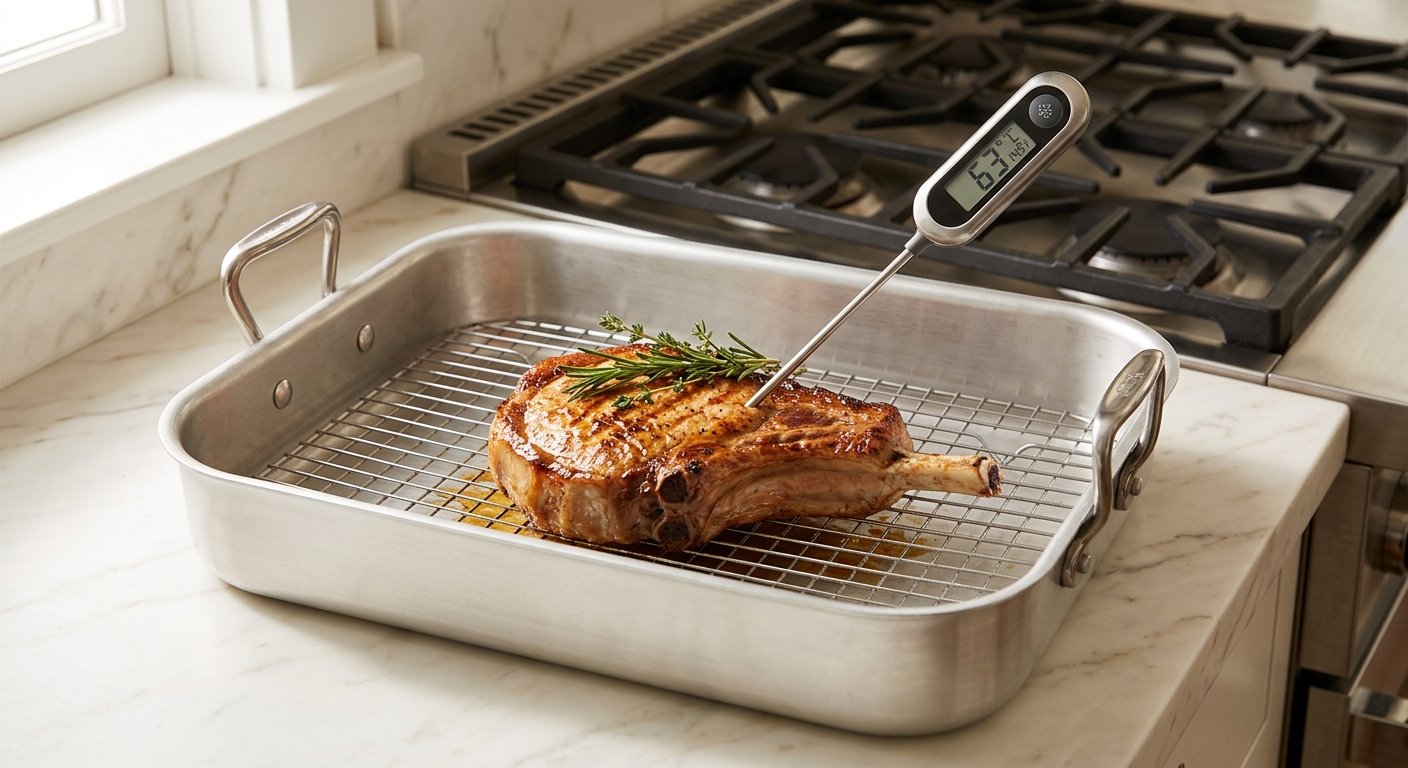
Step 4 — Rest and Make the Pan Sauce
Transfer the cooked chops to a warm plate and tent loosely with a sheet of aluminum foil. Rest for at least 5 minutes. Do not skip this.
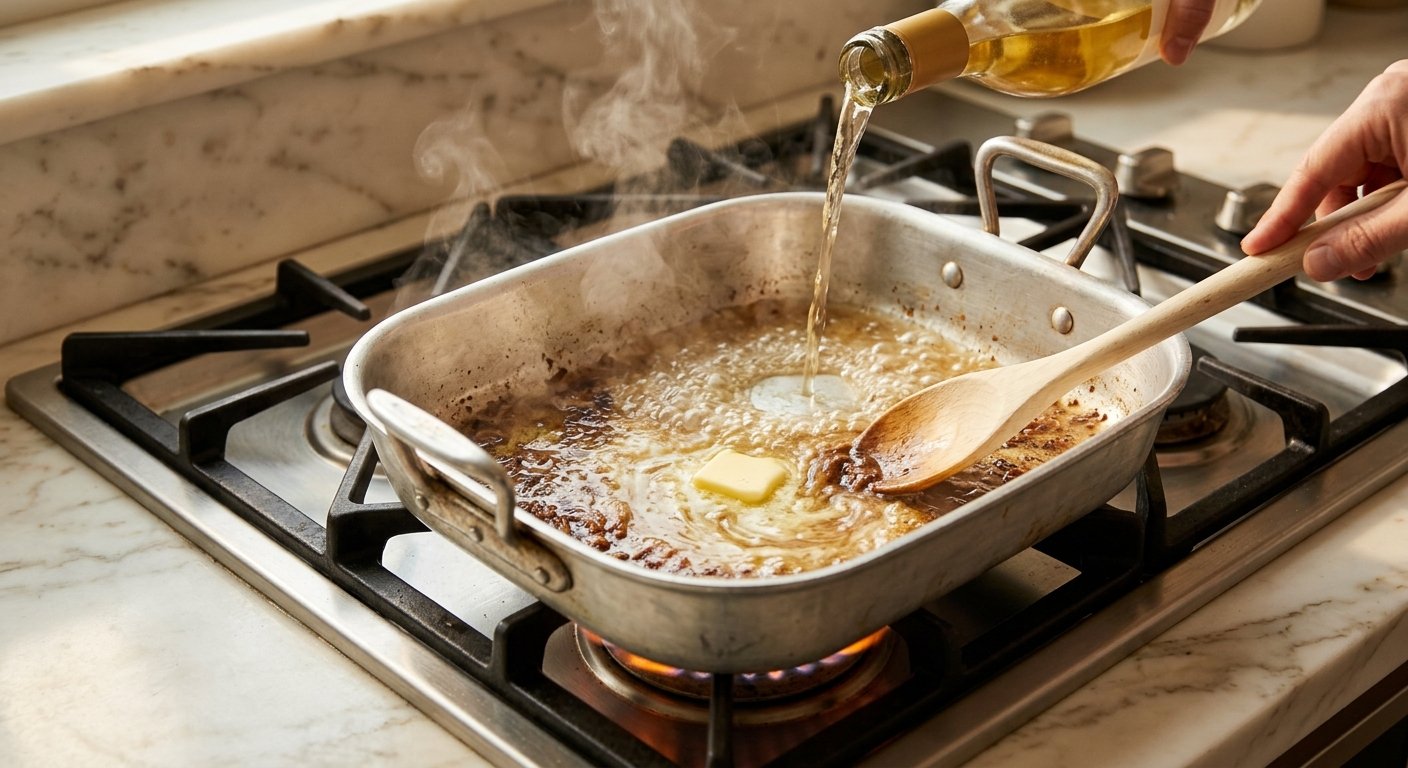
While the chops rest, prepare the pan sauce. Set the roasting pan directly on the stovetop over medium heat. Pour in the white wine (or chicken stock) and use a wooden spoon or heatproof spatula to scrape up all the browned bits from the bottom — those concentrated drippings are where most of the flavor lives. Let the liquid reduce for about 1 minute, then add the tablespoon of butter and swirl the pan until it melts into a glossy, lightly thickened sauce. Add a squeeze of fresh lemon juice, taste for salt, and spoon generously over the chops before serving.
Chef’s tip: The pan sauce takes approximately three minutes to make and transforms the dish. If you make brizoles hirines without it, you are leaving the best part of the recipe behind.
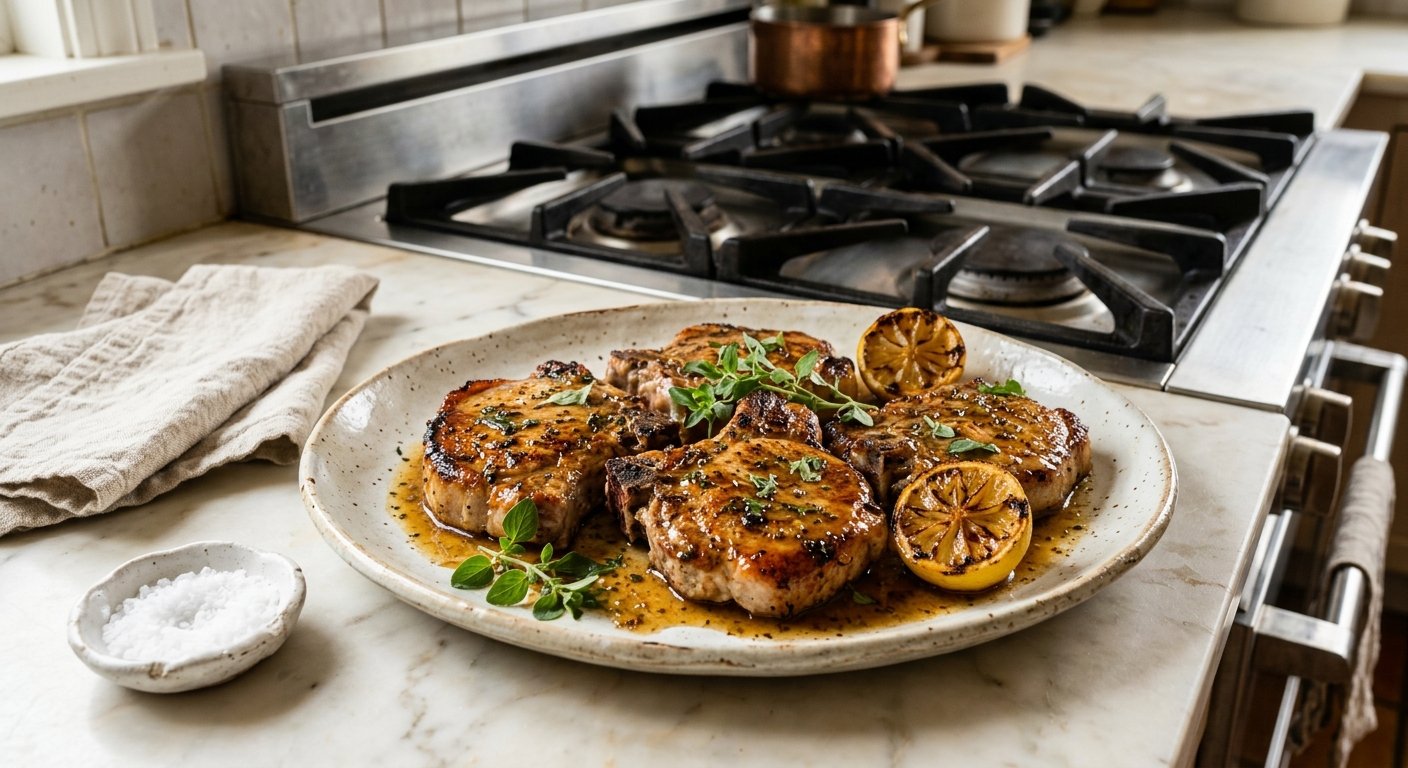
Greek Pork Chops (Brizoles Hirines)
Ingredients
For the Pork Chops
- 4 bone-in pork chops, about 2.5 cm (1 inch) thick 220–280g / 8–10 oz each
- 3 tablespoons extra-virgin olive oil
- 3 clove garlic finely minced
- 3 tablespoons fresh lemon juice about 1 large lemon
- 1 teaspoon dried Greek oregano
- ½ teaspoon dried thyme
- 1 teaspoon fine sea salt
- ½ teaspoon freshly ground black pepper
For the Pan Sauce
- ¼ cup dry white wine or chicken stock
- 1 tablespoon unsalted butter
- fresh lemon juice squeeze to finish
Instructions
- Combine olive oil, garlic, lemon juice, oregano, thyme, salt, and pepper in a wide bowl. Add pork chops and turn to coat. Marinate at room temperature 30 minutes, or refrigerate up to 4 hours (overnight is ideal). Bring to room temperature before cooking.
- Preheat oven to 220°C (425°F). Place an empty roasting pan or oven-safe skillet in the oven while preheating. Optional: pat chops dry and sear in a cast-iron pan over high heat, 2 minutes per side, for maximum surface color.
- Transfer chops to the preheated pan. Roast at 220°C (425°F) for 10 minutes. Reduce heat to 190°C (375°F) and continue roasting 20–25 minutes, until internal temperature reaches 63°C (145°F).
- Rest chops, loosely foil-tented, for 5 minutes. Meanwhile, set the roasting pan over medium stovetop heat, add white wine, scrape up browned bits, reduce 1 minute. Add butter and swirl to melt. Finish with lemon juice. Spoon pan sauce over chops and serve.
Notes
Nutrition
Chef’s Notes
On the oregano: The ingredient that makes or breaks brizoles hirines is one most people underestimate. Greek dried oregano (Origanum vulgare subsp. hirtum) is significantly more pungent than standard dried oregano sold in supermarkets in North America or northern Europe. It has been used in Mediterranean cooking since antiquity and recognized as a defining aromatic of the region. If you can find Greek or Cypriot oregano at a specialty shop — often sold on the stem in small paper bundles — use it. The difference in this recipe is substantial. A pinch of Greek oregano smells like the hillsides above the harbor in Kos; most supermarket oregano smells like dust by comparison.
On thickness: Please use chops at least 2.5 cm (1 inch) thick. The thin chops you sometimes find at the supermarket — cut to about 1 cm — are for the frying pan, not the oven. In the oven they will be overcooked and dry before they develop any meaningful crust. If your butcher cuts them thin, ask for chops from the rib or center-cut loin section and specify the thickness you need. Good butchers will accommodate.
On the marinade: My mother never had two hours to marinate anything. She made this on weeknights after coming home from work, and the pork went into the oven thirty minutes after she started. It was still excellent. But I have tested this recipe at thirty minutes, two hours, four hours, and overnight, and the overnight version is meaningfully better — the lemon and garlic penetrate further, and the texture of the meat is noticeably more tender. If you can plan one day ahead, do it. If not, thirty minutes is enough to proceed with confidence.
Pan-fried variation (tigania-style): Heat two tablespoons of olive oil in a heavy cast-iron pan over medium-high heat until the oil shimmers and just begins to smoke. Add the marinated chops and cook 4–5 minutes per side without moving them. You want aggressive sizzling; if you do not hear it, your pan is not hot enough. Squeeze a whole lemon directly into the pan when the second side is nearly done — it will spit and steam and smell extraordinary. This method is faster than the oven, produces more char on the surface, and is my preferred approach on busy weeknights.
Storage and reheating: Leftovers keep well in an airtight container in the refrigerator for up to 3 days. To reheat, place the chops in a baking dish, add a few tablespoons of water or chicken stock, cover tightly with foil, and warm at 160°C (325°F) for 12–15 minutes. Reheating uncovered in a dry oven at high heat will dry them out. The pan sauce, if you made it, should be stored separately in a small container and rewarmed gently over low heat.
Serving Suggestions
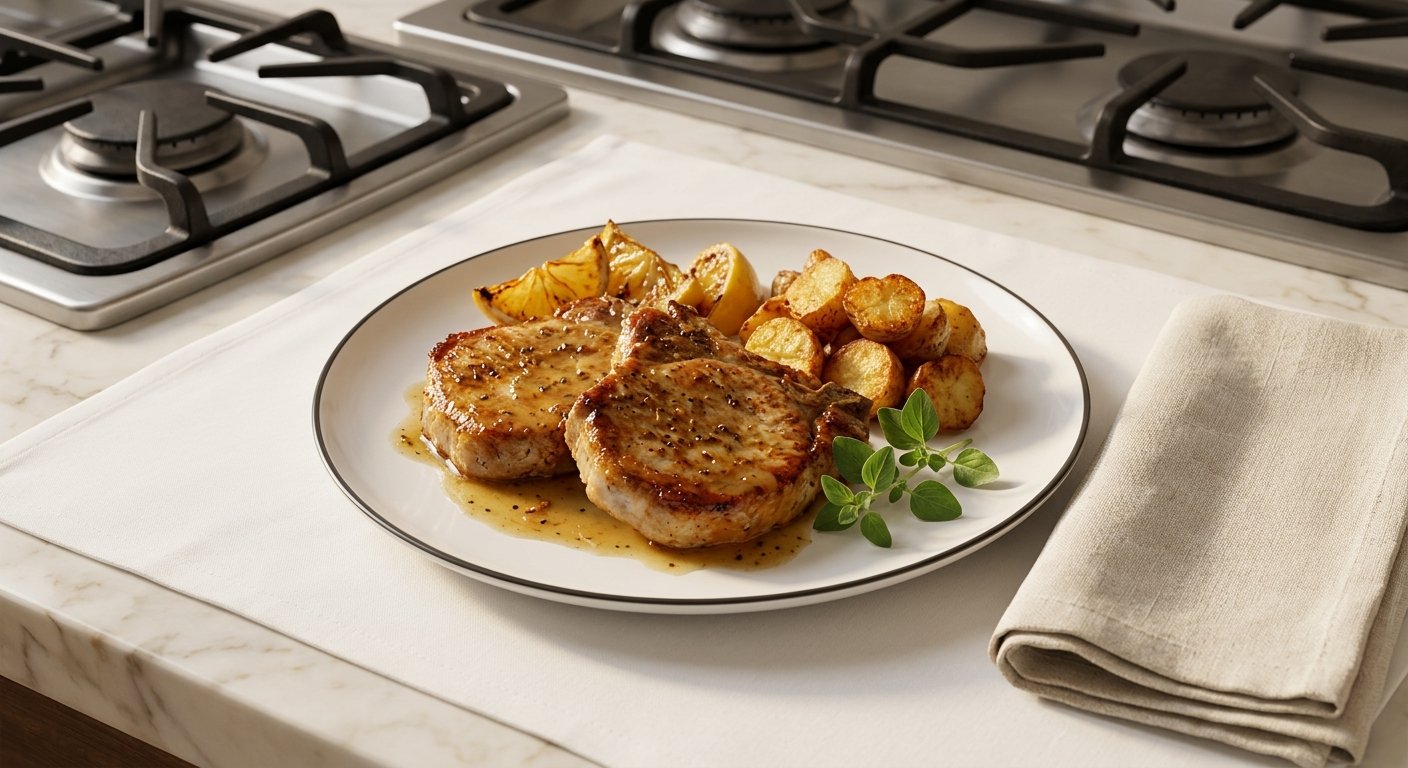
Brizoles hirines is a complete meal with very little effort. On Kos, the natural pairing is Greek lemon roasted potatoes (patates lemonates) — the same olive oil and lemon flavors, roasted until crispy on the outside and fluffy within. Because both dishes cook at the same oven temperature, you can roast the potatoes on a separate tray alongside the pork chops and have both ready at the same time. This is exactly what my mother did: one oven, two trays, dinner on the table in forty minutes.
A simple traditional Greek village salad (horiatiki) with ripe tomatoes, thick-sliced cucumber, kalamata olives, and good feta adds brightness and contrast. The acidity of the salad cuts through the richness of the pork and the butter in the pan sauce.
In cooler months, braised green beans in tomato sauce (fasolakia) makes a deeply satisfying partner. The sweet-acidic tomato sauce around the beans provides balance to the savory, herb-crusted chops. This is the kind of Greek table that shows up in homes, not restaurants: two or three simple things made well, each one enhancing the others.
For a lighter option, plain steamed or boiled rice absorbs the pan sauce beautifully. A glass of chilled Assyrtiko from Santorini or a lighter red like Xinomavro completes the picture.
FAQ
How long should I marinate brizoles hirines? A minimum of 30 minutes at room temperature will give you noticeably better flavor than no marinating at all. For best results, marinate in the refrigerator for 2–4 hours or overnight. The lemon juice helps tenderize the surface of the meat, and the olive oil carries the garlic and oregano deeper into the chop with time. Overnight is genuinely the sweet spot for this recipe.
What internal temperature should Greek pork chops reach? Cook to 63°C (145°F) internal temperature, then rest for 5 minutes. At this point the pork is completely safe, still slightly pink in the center, and juicy throughout. The outdated recommendation of 75°C (165°F) was designed for ground pork; for whole chops it produces dry, over-cooked meat. Use an instant-read thermometer and pull the chops at exactly 63°C.
Can I cook brizoles hirines on the grill? Yes. Grilled brizoles hirines are the summer standard at tavernas across the Dodecanese. Cook over medium-high heat for 5–6 minutes per side depending on thickness, turning once. The direct flame adds a smokiness the oven does not replicate. Brush with a little extra olive oil while grilling if the chops look dry, and finish with a squeeze of lemon and a pinch of fresh oregano straight off the grill.
What is the best cut of pork for this recipe? Bone-in pork rib chops or center-cut loin chops work best. The bone adds flavor to the drippings and helps retain moisture in the surrounding meat. If you must use boneless chops, reduce the total cooking time by approximately 5 minutes and monitor the internal temperature from the 20-minute mark. Boneless chops cook faster and have less margin for error.
How do I stop pork chops from drying out in the oven? Four factors: thickness (use at least 2.5 cm / 1 inch), temperature management (start hot, finish lower), the marinade (the olive oil creates a protective layer on the surface), and resting time (5 minutes minimum under foil after the oven). Using a meat thermometer removes all guesswork — pull the chops at exactly 63°C (145°F) and they will not be dry.