
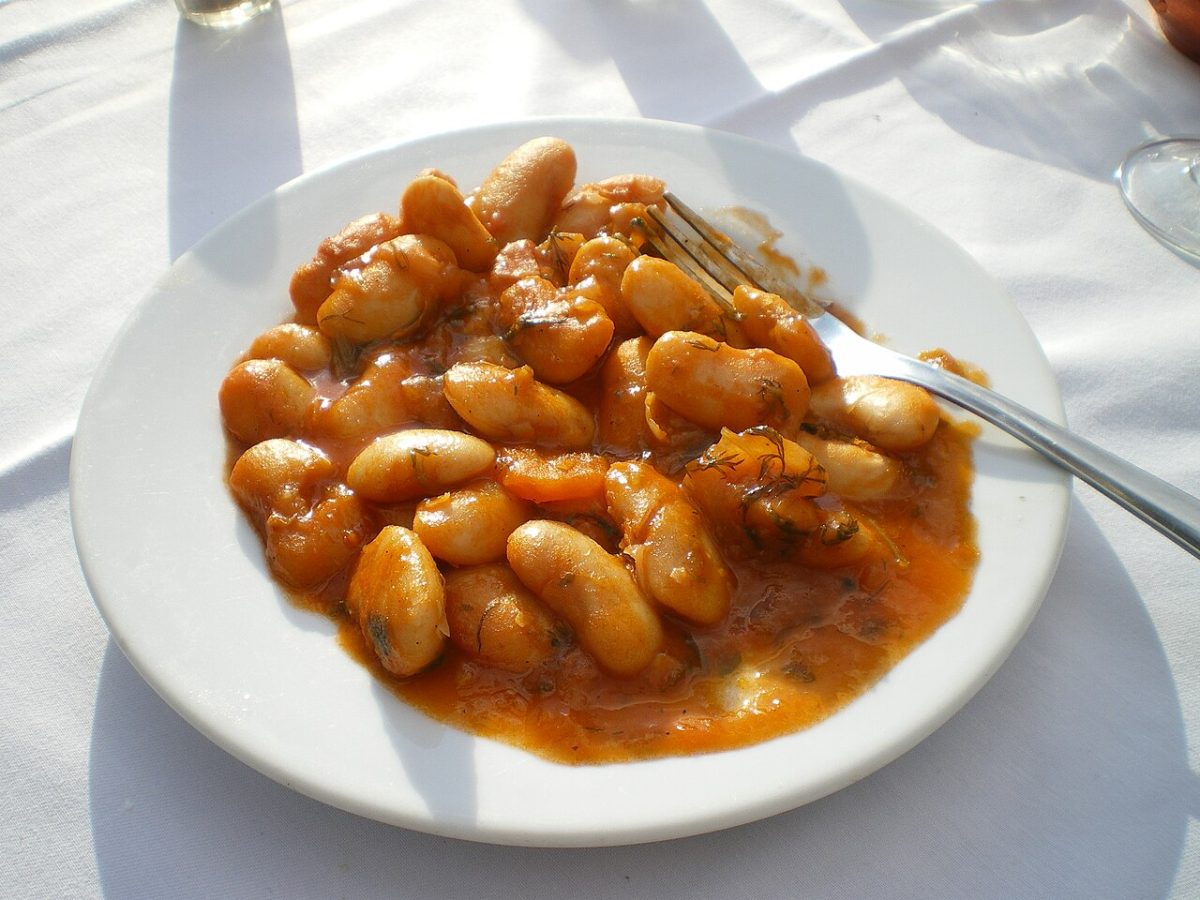
On Kos in winter, the bean pot came out when the sea was rough and the fish market was quiet. My mother soaked gigantes — those enormous, starchy white beans — overnight without ceremony, then cooked them, then baked them in a deep pan with tomatoes and olive oil and time. The dish came out of the oven thick and fragrant, the sauce reduced to something almost jammy at the edges of the pan, the beans impossibly creamy inside.
The word gigantes means giants in Greek, and if you have never cooked with these beans before, the size is the first thing that catches your attention — they are nearly the size of a small walnut when dried, and they swell further as they cook. What you are building with them is not a side dish. Gigantes plaki is a meal: fully vegan, built from pantry staples, requiring nothing but a dried bean, a can of good tomatoes, olive oil, and an afternoon of low heat.
This dish belongs to the ladera tradition — the category of Greek cooking where olive oil is not a flavoring but the cooking medium, the structural base of everything. The amount of olive oil in this recipe will look like a lot if you are not used to ladera cooking. It is not a lot. It is correct. Do not reduce it.
The other thing I want to tell you before you begin: gigantes plaki is better the next day. The beans absorb more sauce overnight. The flavors consolidate. What comes out of the oven hot is very good. What you eat cold from the refrigerator the following afternoon, with a piece of bread, is something else.
Why This Recipe Works
- Overnight soaking is required. Gigantes are large and dense — they need 8–12 hours of soaking to hydrate properly, and then a full pre-boil before they go into the oven. Beans that haven’t been properly soaked and pre-cooked will never soften completely in the oven, no matter how long you bake them.
- Tomato quality determines the sauce. The tomato sauce reduces significantly during the oven bake. A high-quality can of whole San Marzano tomatoes or good Greek crushed tomatoes will produce a deeply flavored, slightly sweet sauce. Cheap, watery tomatoes produce a flat, acidic result that no amount of olive oil will fix.
- Uncovered baking caramelizes the top while the beans stay creamy underneath. The oven works differently from a stovetop simmer — the exposed surface of the sauce concentrates and slightly chars at the edges of the pan, which adds depth and complexity. Cover the dish and you lose that.
- The olive oil quantity is not a mistake. Ladera dishes — see also Fakes Soupa (Greek Lentil Soup) and Fasolakia (Greek Green Bean Stew) — use olive oil as a cooking medium, not a condiment. In gigantes plaki, the oil emulsifies into the sauce as it bakes, making the beans silky and the broth rich.
Ingredients
For the Dish (serves 4–6)
- 1 lb (450g) dried gigantes beans (or large white butter beans)
- 6 tablespoons extra-virgin olive oil, divided
- 1 large onion, finely chopped
- 4 cloves garlic, thinly sliced
- 2 ribs celery, finely chopped
- 1 medium carrot, diced
- 1 can (800g / 28 oz) whole peeled tomatoes or crushed tomatoes
- 2 tablespoons tomato paste
- 1 teaspoon sweet paprika
- 1 teaspoon dried oregano
- 1 bay leaf
- ½ teaspoon sugar (balances acidity)
- 1½ teaspoons fine sea salt
- ½ teaspoon black pepper
- ½ cup (120ml) water
- Fresh flat-leaf parsley, for serving
- Lemon, for squeezing at the table
Step-by-Step Instructions
1. Soak the beans overnight (8–12 hours).
Place the dried gigantes in a large bowl and cover with at least 3 inches of cold water. They will absorb a significant amount and expand. After soaking, drain and rinse.
Chef’s note: If you forget to soak overnight, cover with boiling water and soak for 2 hours. This is an emergency shortcut, not a preferred method — the extended soak produces more evenly hydrated beans.
2. Pre-boil the beans.
Transfer the soaked beans to a large pot and cover generously with fresh cold water. Bring to a boil, skimming any foam that rises. Reduce heat and simmer for 35–45 minutes, until the beans are about 70% cooked — tender on the outside but still with a firm center. They will finish cooking in the oven. Drain and set aside.
Chef’s note: Under-cooked beans in the oven will never fully soften. Over-cooked beans will disintegrate in the oven. Aim for beans that give slightly when pressed but don’t smash.
3. Preheat oven to 375°F (190°C).
4. Build the tomato sauce.
Heat 4 tablespoons of the olive oil in a wide oven-safe pan or heavy skillet over medium heat. Add the onion, celery, and carrot and cook for 7–8 minutes until softened. Add the garlic and cook 1 minute more. Add the tomatoes (crush whole tomatoes by hand as you add them), tomato paste, paprika, oregano, bay leaf, sugar, salt, pepper, and water. Stir to combine and simmer for 10 minutes until slightly thickened.
5. Combine and bake.
Transfer the sauce and the pre-cooked beans to a large baking dish or keep them in the oven-safe pan if it’s large enough. Stir gently to distribute. Drizzle the remaining 2 tablespoons of olive oil over the top. The liquid should just barely cover the beans — add a splash more water if needed.
Bake uncovered at 375°F (190°C) for 45–55 minutes, until the sauce has thickened considerably, the top is caramelized at the edges, and the beans are fully tender and creamy. Check once or twice during baking — if the top is browning too fast before the beans are done, add a splash of water and continue.
6. Rest and serve.
Remove from the oven and let rest for at least 10–15 minutes before serving. The sauce will continue to thicken as it cools. Scatter fresh parsley over the top and squeeze a lemon over the dish at the table. Serve with thick slices of country bread.
Chef’s Notes
On the ladera tradition:
Gigantes plaki is a ladera dish, which means olive oil is its structural foundation. The Greek Orthodox fasting calendar calls for abstaining from meat and dairy on dozens of days throughout the year, and ladera — dishes built entirely on olive oil, legumes, and vegetables — are what feed Greek families through those periods. The olive oil is not optional and not excessive. It is the cooking medium and the source of richness in a dish that contains no meat or dairy. My Revithia (Greek Chickpea Soup) and Fasolakia (Greek Green Bean Stew) follow the same logic.
The next-day rule:
I said this in the introduction and I will say it again: gigantes plaki is better the next day. Serve it warm from the oven if you like, but set some aside. Eat it cold the following day with good bread. The beans absorb the sauce overnight and the dish becomes something richer and more cohesive than it was hot. This is one of the best reasons to make it ahead.
On bean varieties:
True gigantes are large white beans of Greek origin, widely available dried in Greek specialty stores and online. Large butter beans are an acceptable substitute. Cannellini beans will work but are smaller and cook faster — reduce the pre-boil and oven time accordingly. Do not use canned beans without adjustment (see FAQ).
Storage:
Gigantes plaki keeps in the refrigerator for up to 5 days and actually improves over the first 2 days. It can be frozen for up to 2 months, though the texture of the beans softens slightly on thawing. Reheat gently over low heat or in a low oven, adding a splash of water if the sauce has thickened too much.
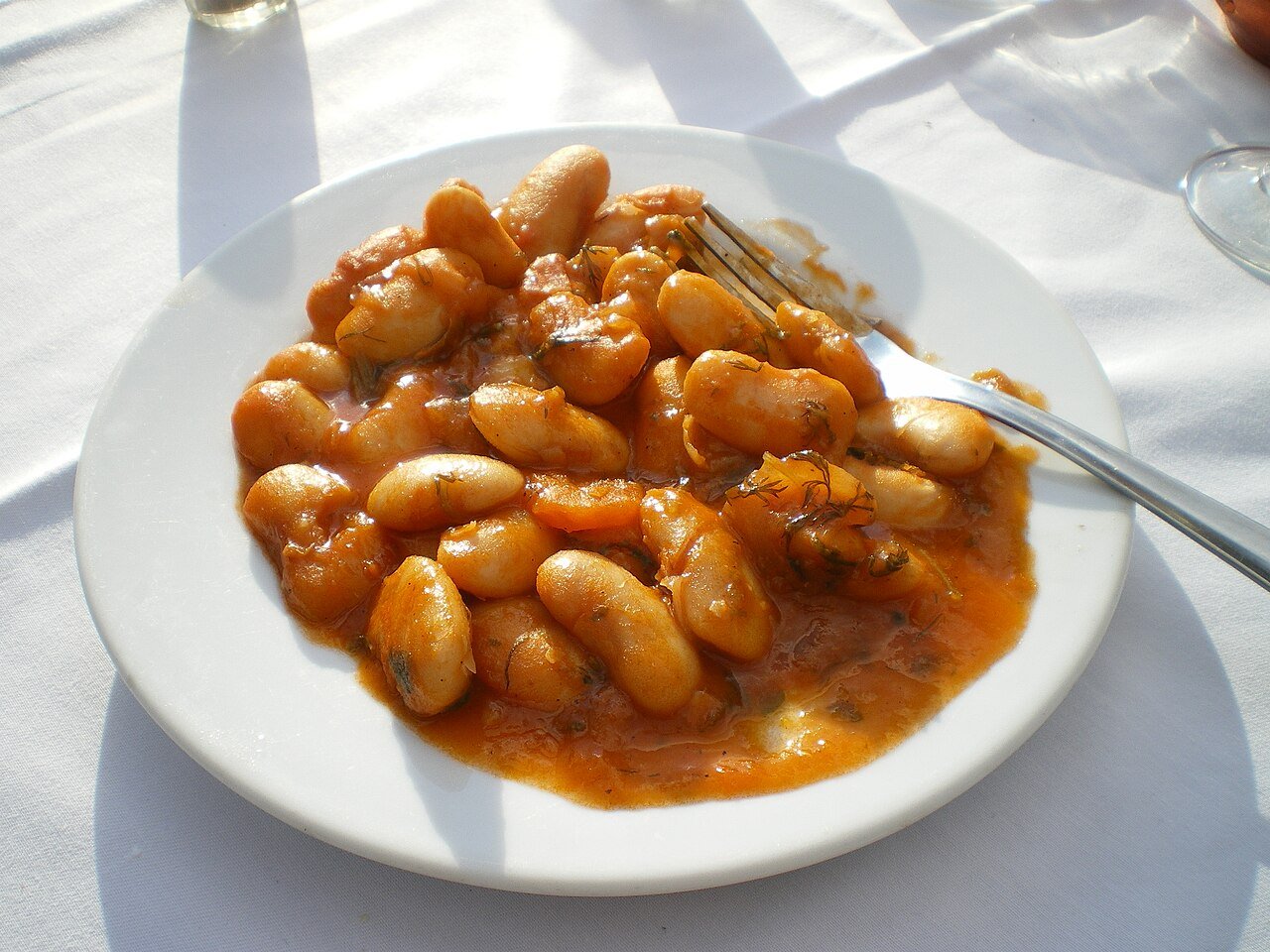
Gigantes Plaki (Greek Giant Beans in Tomato Sauce)
Ingredients
- 1 lb (450g) dried gigantes beans or large white butter beans
- 6 tablespoons extra-virgin olive oil divided
- 1 large onion finely chopped
- 4 clove garlic thinly sliced
- 2 ribs celery finely chopped
- 1 medium carrot diced
- 1 can (800g) whole peeled or crushed tomatoes
- 2 tablespoons tomato paste
- 1 teaspoon sweet paprika
- 1 teaspoon dried oregano
- 1 bay leaf
- 1/2 teaspoon sugar balances acidity
- 1.5 teaspoons fine sea salt
- 1/2 teaspoon black pepper
- 1/2 cup water 120ml
- fresh flat-leaf parsley for serving
- lemon for squeezing at table
Instructions
- Soak the beans overnight (8-12 hours). Place dried gigantes in a large bowl, cover with at least 3 inches of cold water. After soaking, drain and rinse.
- Pre-boil the beans. Cover soaked beans with fresh cold water. Bring to a boil, skim any foam. Simmer 35-45 minutes until 70% cooked - tender outside but still firm at center. Drain and set aside.
- Preheat oven to 375F (190C).
- Build the tomato sauce. Heat 4 tablespoons olive oil over medium heat. Saute onion, celery, and carrot 7-8 minutes. Add garlic and cook 1 more minute. Add tomatoes, tomato paste, paprika, oregano, bay leaf, sugar, salt, pepper, and water. Simmer 10 minutes until slightly thickened.
- Combine and bake. Transfer sauce and pre-cooked beans to a large baking dish. Stir gently. Drizzle remaining 2 tablespoons olive oil over top. Bake uncovered at 375F for 45-55 minutes until sauce is thick, edges are caramelized, and beans are fully creamy.
- Rest 10-15 minutes before serving. Scatter fresh parsley over top and squeeze lemon at table. Serve with thick slices of country bread.
Notes
Nutrition
FAQ
What are gigantes beans?
Gigantes (pronounced yee-GAN-tes) are large white beans native to Greece — the name simply means “giants” in Greek, referring to their size. They are related to butter beans and lima beans but have a creamier texture and more neutral flavor that absorbs surrounding sauces beautifully. They are the traditional bean for gigantes plaki and for the broader category of Greek legume dishes. Dried gigantes are available in Greek specialty stores, online, and in many well-stocked supermarkets. For more on their culinary history and place in Greek cuisine, the Wikipedia article on gigantes plaki offers useful background.
Do I have to soak the beans overnight?
Yes, and you also need to pre-boil them before baking. Gigantes are large and dense — without overnight soaking and a partial pre-cook, they will not fully soften in the oven no matter how long you bake them. If you forgot to soak overnight, cover with boiling water and soak for 2 hours as an emergency measure, then proceed with the pre-boil.
Can I use canned beans to save time?
Yes, with adjustments. Use 2 cans (800g total) of drained large white beans or butter beans. Skip the soak and pre-boil. Reduce the oven bake time to 25–30 minutes — the beans are already fully cooked and only need time to absorb the sauce. The result is good but slightly different in texture from scratch-cooked gigantes, which become creamier during their full cook in the sauce.
How is gigantes plaki different from other bean stews?
The defining characteristics are the oven bake (rather than a stovetop braise), the uncovered cooking method that caramelizes the sauce, the heavy olive oil content (a ladera signature), and the use of gigantes specifically. French cassoulet and Italian ribollita share some structural DNA but use different beans, different aromatics, and different cooking traditions. Gigantes plaki is quieter and more direct — tomatoes, olive oil, herbs, beans, oven.
How long does gigantes plaki keep, and does it improve over time?
Gigantes plaki keeps refrigerated for up to 5 days and genuinely improves over the first 48 hours. The beans continue absorbing the sauce as the dish rests, and the flavors consolidate in the cold. It is one of the best make-ahead dishes in the Greek kitchen. Freeze for up to 2 months.