
Introduction
There is something deeply meditative about making dolmades. It is not a dish you rush through — it is one you sit down with, hands moving in a quiet rhythm, rolling one small parcel after another until the pot is full and your kitchen smells of grape leaves and fresh dill. In my mother’s kitchen, dolmades were never made alone. My grandmother, my aunts, and my mother would gather around the table, a bowl of rice filling in the center, a stack of blanched grape leaves between them, and the afternoon would pass in conversation and careful rolling.
This dolmades recipe is the one I grew up with: grape leaves filled with short-grain rice, generous handfuls of fresh herbs, a good squeeze of lemon, and enough olive oil to make the filling rich and supple. They are braised slowly in a lemon-scented broth until the rice is tender and the grape leaves are silky and almost translucent.
Why This Dolmades Recipe Works
- Properly prepared grape leaves: Whether you use fresh or jarred, blanching and rinsing removes bitterness and achieves tender, silky texture.
- The right rice, the right ratio: Short-grain rice absorbs the braising liquid and swells just enough to fill the parcel without bursting it. The rice goes in raw.
- The plate trick: An inverted plate placed on top holds the dolmades snugly in place so they do not unravel during cooking.
- Generous herbs and lemon: Fresh dill, mint, and flat-leaf parsley give the filling a bright, aromatic quality that dried herbs cannot replicate.
The Dolmades Recipe
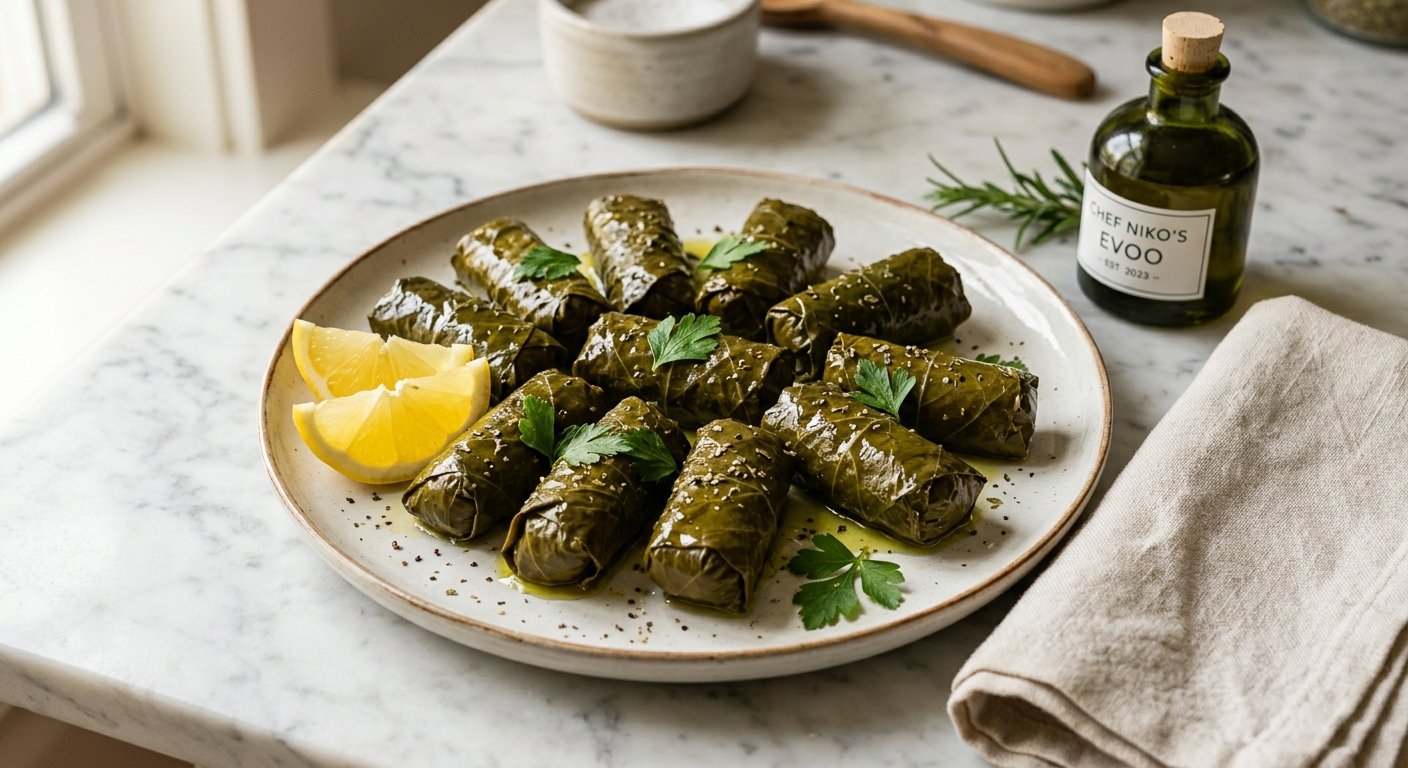
Dolmades (Greek Stuffed Grape Leaves)
Ingredients
For the Rice Filling
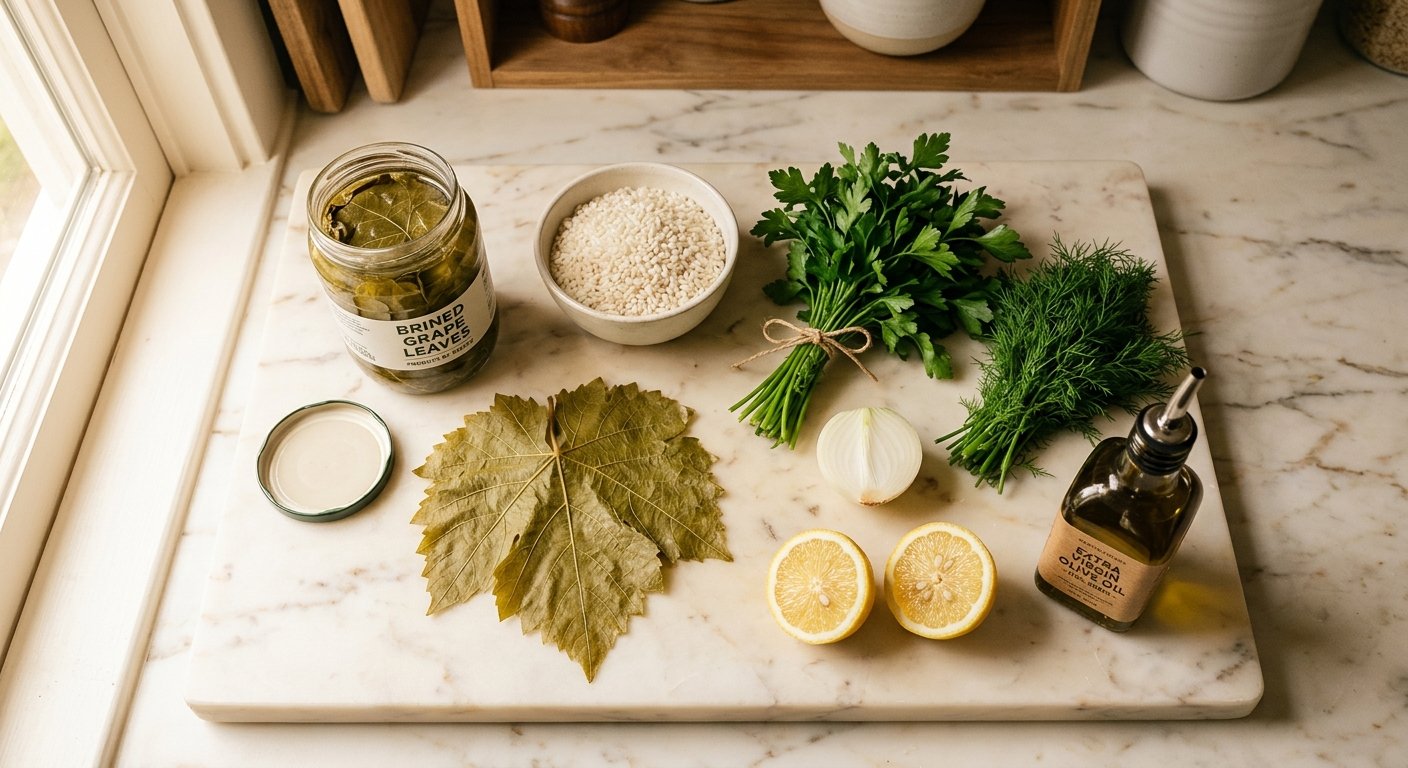
- 1 1/2 cups (300g) short-grain rice rinsed and drained
- 1 large yellow onion finely diced
- 1/3 cup (80ml) extra-virgin olive oil plus more for drizzling
- 1/4 cup fresh dill finely chopped
- 1/4 cup fresh flat-leaf parsley finely chopped
- 2 tablespoons fresh mint finely chopped
- 3 tablespoons fresh lemon juice about 1 large lemon
- 1 teaspoon fine sea salt
- 1/2 teaspoon freshly ground black pepper
- 1/4 teaspoon ground allspice optional, traditional in some regions
For the Grape Leaves
- 1 jar (16 oz) grape leaves in brine or about 50 fresh grape leaves
- 2-3 additional large grape leaves or lemon slices for lining the pot
For the Braising Liquid
- 1 1/2 cups (360ml) hot water
- 1/4 cup (60ml) fresh lemon juice
- 1/4 cup (60ml) extra-virgin olive oil
- 1/2 teaspoon fine sea salt
Instructions
- If using jarred grape leaves, remove from jar, place in a large bowl, and pour boiling water over them. Soak 10 minutes, drain, and rinse under cold water. If using fresh, blanch in batches in boiling water for 2-3 minutes until pliable. Trim stems off each leaf with kitchen scissors. Set aside any torn or small leaves for lining the pot.
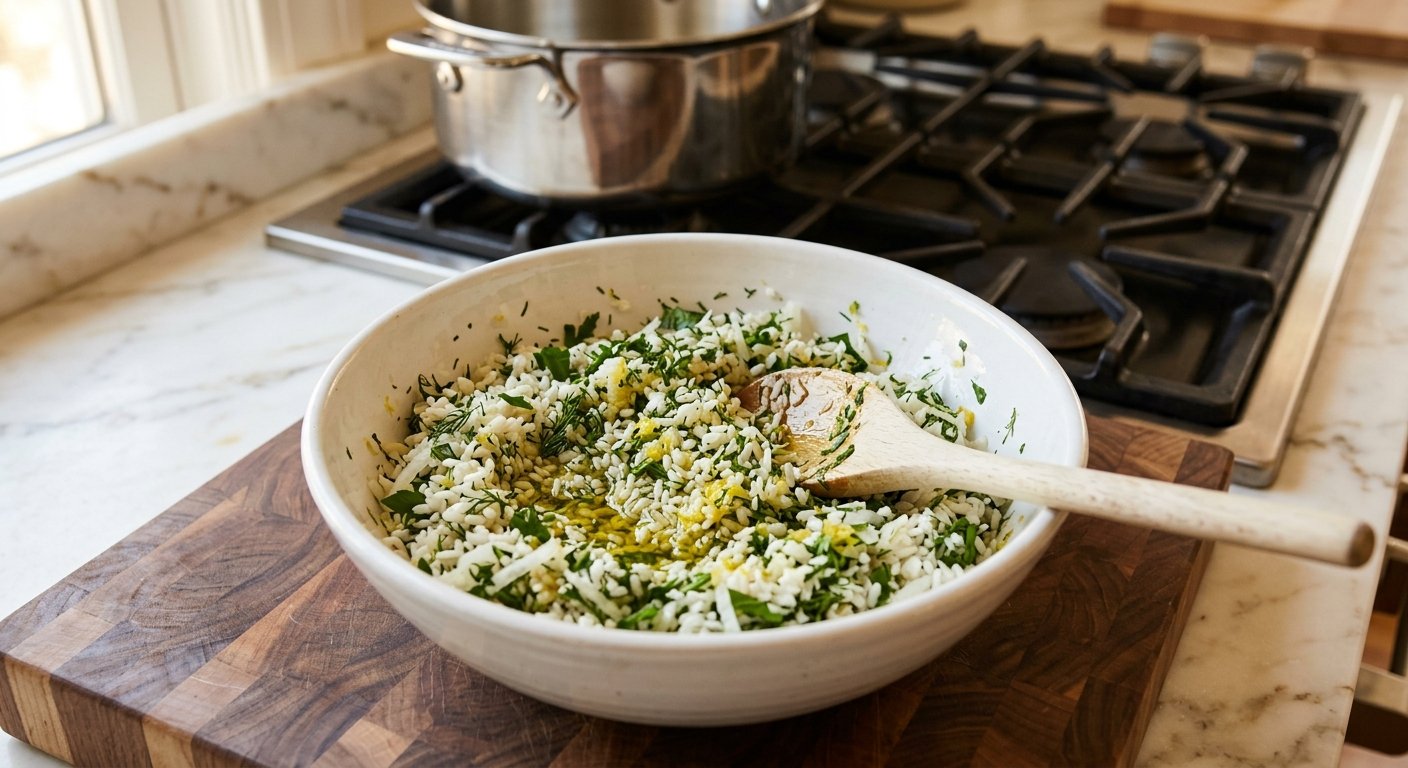
- Combine the rinsed raw rice, finely diced onion, olive oil, dill, parsley, mint, lemon juice, salt, pepper, and allspice (if using) in a large bowl. Mix thoroughly. The rice goes in raw — it will cook inside the grape leaf parcels as they braise.
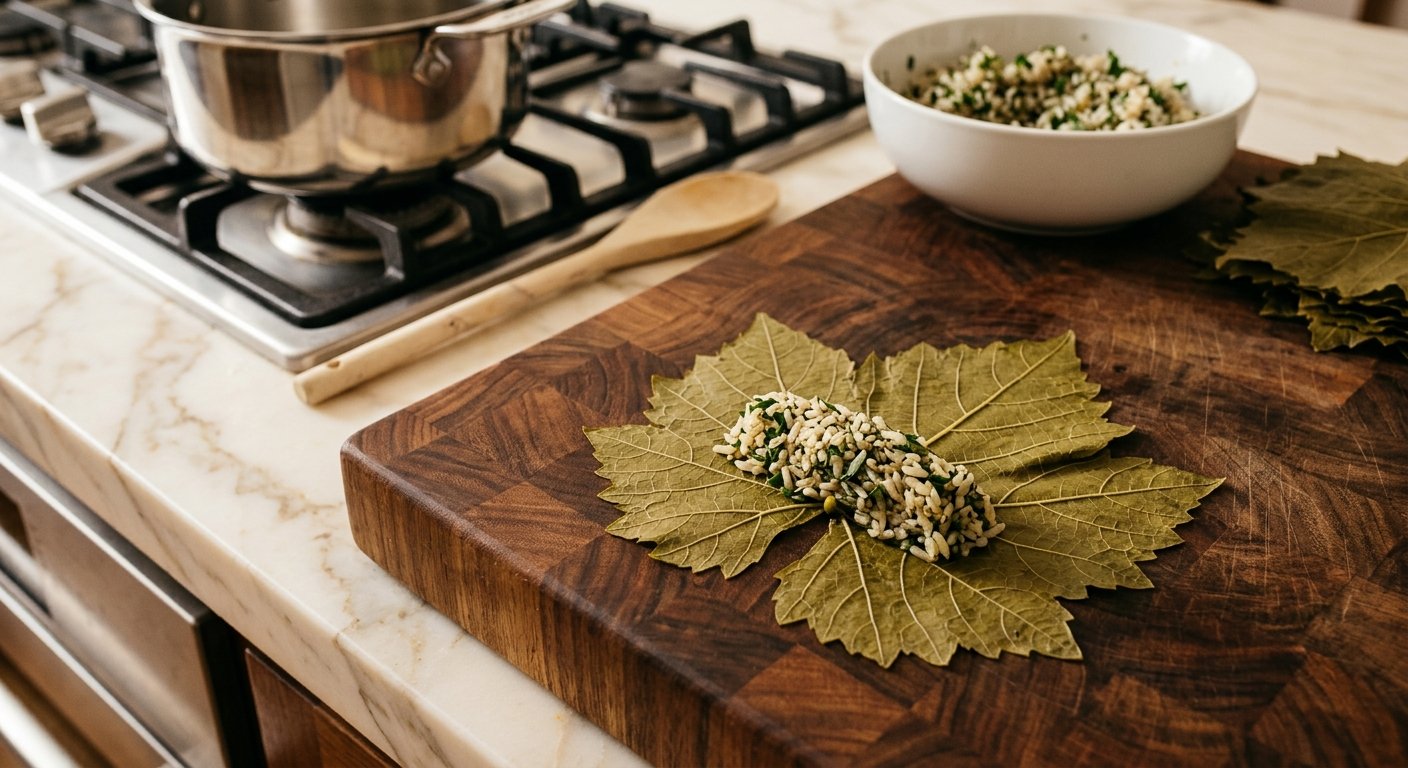
- Place a grape leaf flat on your work surface, vein-side up, stem end facing you. Place about 1 heaping teaspoon of filling near the stem end. Fold the bottom of the leaf up over the filling. Fold the two sides inward. Roll away from you, keeping the roll snug but not overly tight — the rice needs room to expand.
- Line the bottom of a wide, heavy-bottomed pot with torn or extra grape leaves (or lemon slices). Arrange rolled dolmades seam-side down in the pot, packing them snugly in concentric circles. Build a second layer if needed.
- Whisk together hot water, lemon juice, olive oil, and salt. Pour gently over the dolmades — liquid should come about three-quarters up the dolmades. Place an inverted heatproof plate directly on top of the dolmades. Cover pot with lid.
- Bring to a gentle simmer over medium heat. Reduce heat to low and cook 45-50 minutes until rice is tender and grape leaves are soft and silky. Check after 30 minutes — if liquid has been absorbed, add a few tablespoons of hot water.
- Remove pot from heat and let dolmades rest, covered, for 15-20 minutes. Carefully lift the plate and transfer dolmades to a serving platter. Drizzle with extra-virgin olive oil and a final squeeze of fresh lemon juice. Serve warm, at room temperature, or chilled.
Notes
Nutrition
How to Make Dolmades: Step by Step
Step 1: Gather Your Ingredients
Step 2: Make the Rice and Herb Filling
Step 3: Fill and Begin Rolling
Step 4: Roll All the Dolmades
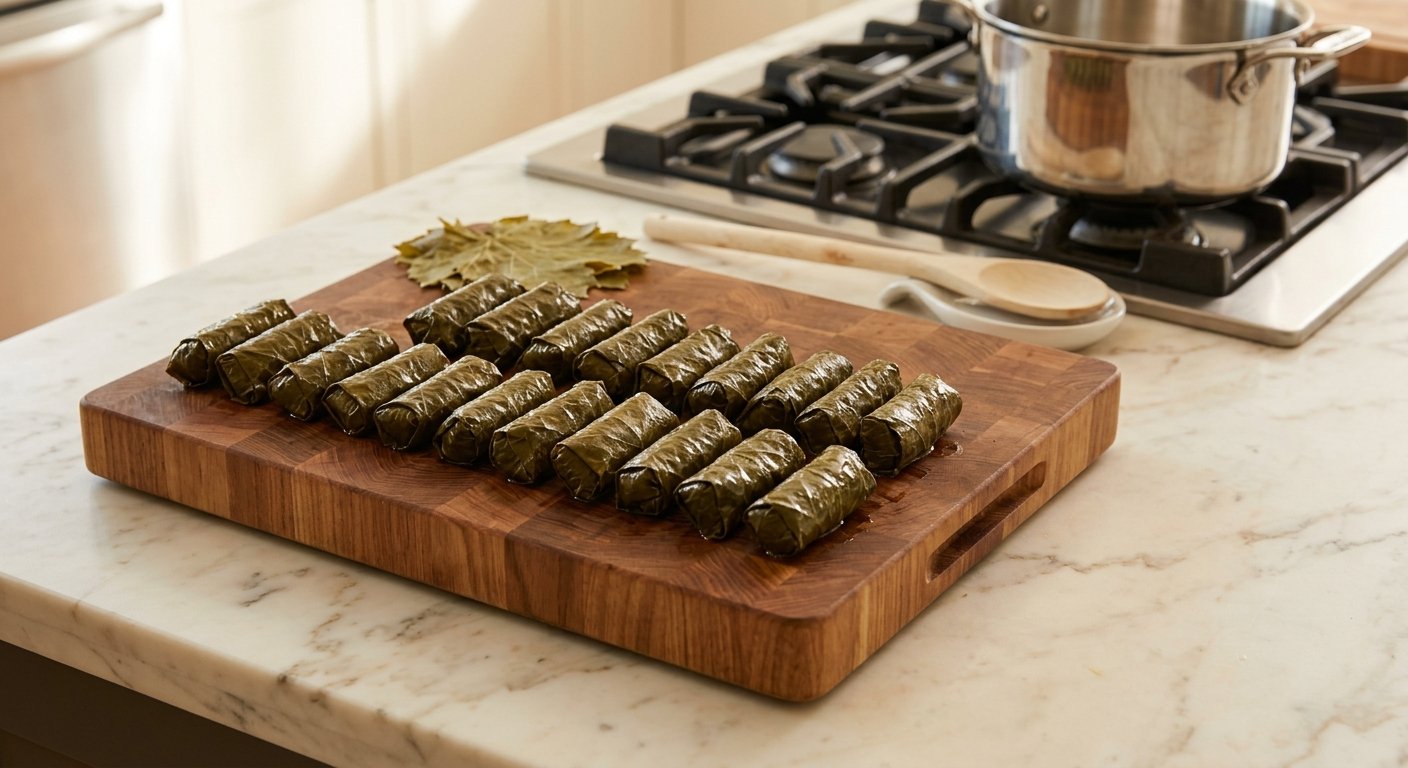
Step 5: Layer in the Pot
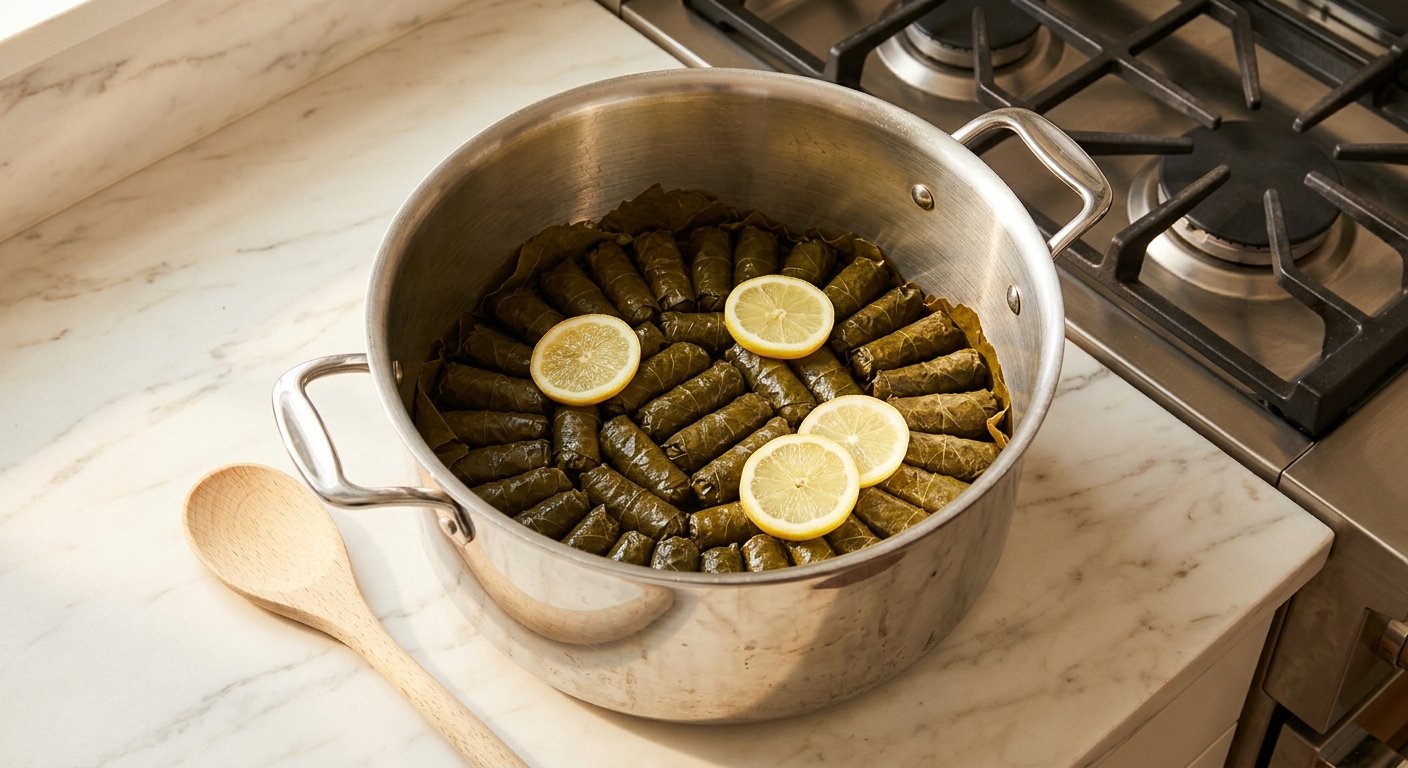
Step 6: Add Olive Oil and Liquid
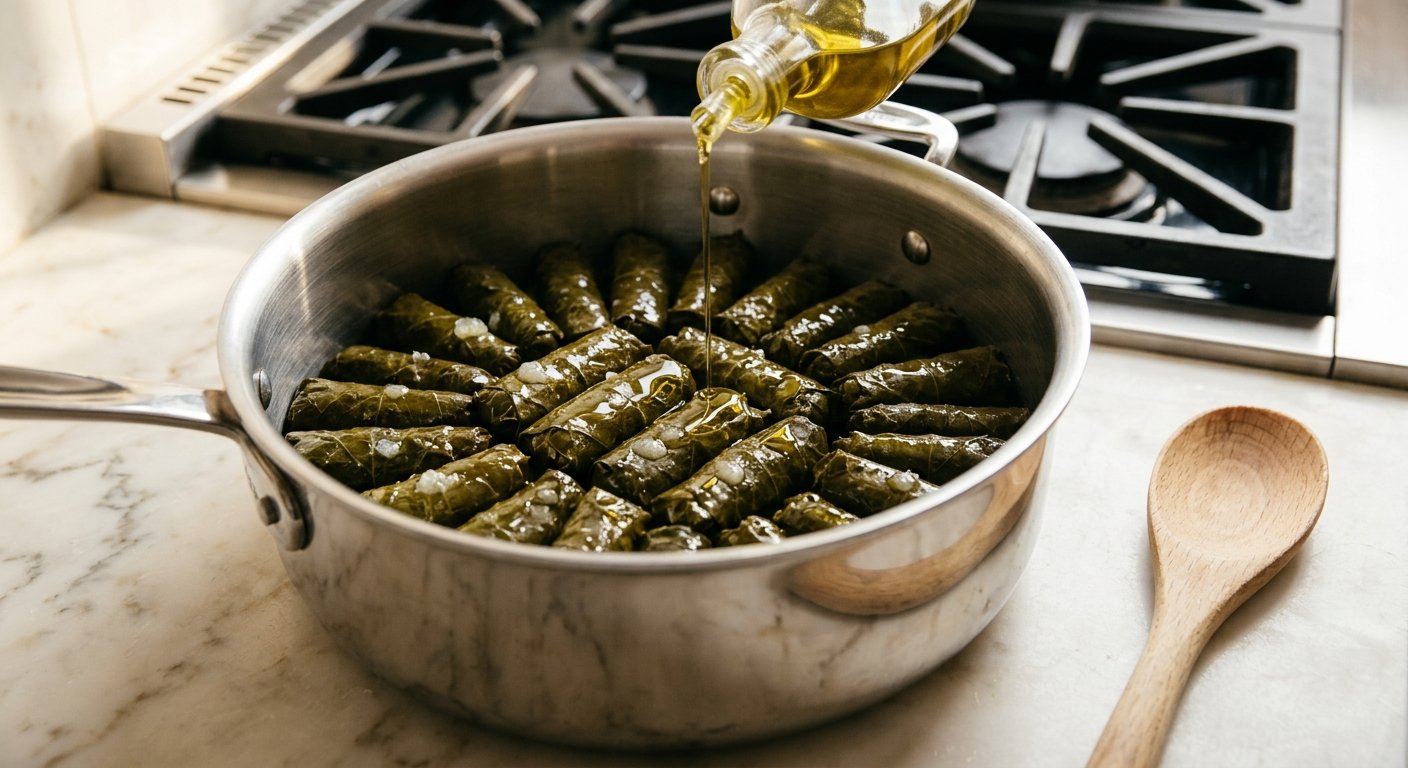
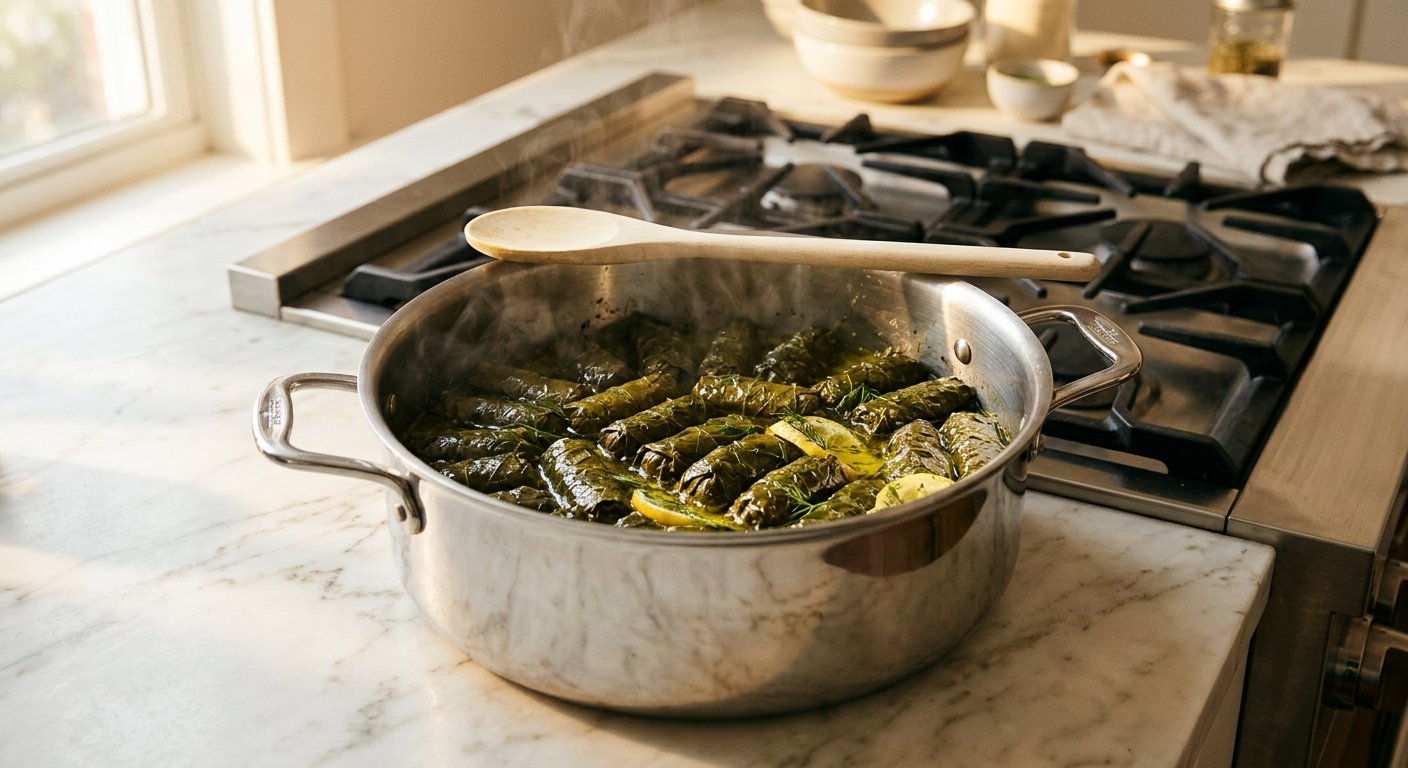
Step 7: Braise Until Tender
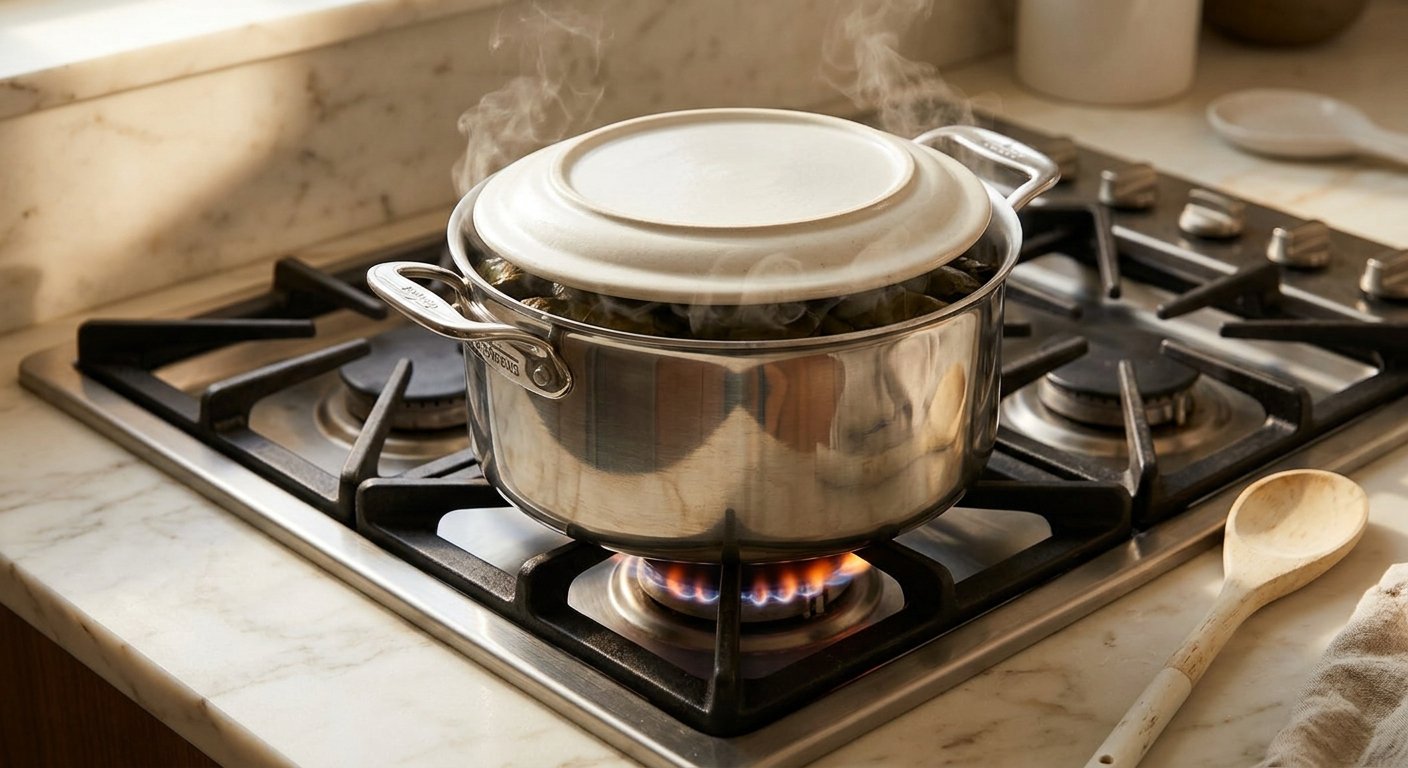
Step 8: Serve and Enjoy
Chef’s Notes
Variations
Meat dolmades: Add 250g of ground beef or lamb to the rice filling. These are heartier and traditionally served warm with avgolemono (egg-lemon sauce) poured over the top.
Yalantzi (Lenten dolmades): The rice-only version described in this recipe is already yalantzi — the meatless, vegan preparation traditionally made during Lent. Serve cold or at room temperature with olive oil and lemon.
Frequently Asked Questions About Dolmades
What does dolmades mean in Greek?
The word dolmades comes from the Turkish “dolma,” meaning “stuffed.” In Greek cooking, dolmades specifically refers to grape leaves stuffed with rice or a rice-and-meat mixture. They belong to the broader family of Greek stuffed dishes that includes gemista (stuffed tomatoes and peppers).
Can you use jarred grape leaves for dolmades?
Absolutely, and most Greek home cooks do. Jarred grape leaves are already preserved and tender. Simply soak them in boiling water for 10 minutes and rinse well to remove excess brine. The results are excellent.
What sauce goes with dolmades?
The most traditional sauce for warm dolmades — particularly the meat-filled version — is avgolemono, a silky egg-and-lemon sauce. For rice-only dolmades served cold, a simple drizzle of extra-virgin olive oil and a squeeze of fresh lemon juice is all you need.
Can you freeze dolmades?
Yes, dolmades freeze beautifully. Cook them fully, cool completely, then freeze in a single layer before transferring to freezer bags. They keep for up to 3 months. Thaw in the refrigerator overnight and reheat gently on the stovetop. Avoid the microwave — it toughens the grape leaves.
How do you keep dolmades from falling apart?
Three things prevent dolmades from unraveling: Roll them snugly but not too tight. Place them seam-side down in the pot, packed closely together. And most importantly, use the inverted plate trick — a heatproof plate placed directly on top before cooking holds them in place as the liquid simmers.