
There are dishes you eat, and then there are dishes that carry the weight of memory. For me, Greek moussaka is the latter. Every Sunday in my mother’s kitchen in Kos, the house would fill with the smell of eggplant browning in olive oil, cinnamon-scented meat sauce bubbling on the stove, and that unmistakable aroma of bechamel reaching its golden peak in the oven.
My mother’s Greek moussaka recipe was famous on our street — neighbors would find reasons to visit on Sundays, and she never turned anyone away. There was always enough. That is the nature of moussaka: it is generous. It feeds a crowd, it rewards patience, and it tastes even better the next day.
I have spent years refining this recipe, pulling from my mother’s technique while incorporating what I have learned in professional kitchens across Athens and the islands. What I want to share with you is not a shortcut version or a modern “twist.” This is the real thing — a proper Greek moussaka with silky layers of salted eggplant, a rich meat sauce fragrant with cinnamon and allspice, and a thick, golden bechamel that holds its shape when you cut a clean slice.
If you have never made moussaka from scratch, do not let the layers intimidate you. Each component is simple on its own. The magic happens when they come together in the oven.
Why This Recipe Works
- Properly salted and drained eggplant removes bitterness and excess moisture, so your moussaka holds together instead of turning into a soggy casserole. This is the step most recipes rush through, and it makes all the difference.
- A slow-built meat sauce with warm spices — cinnamon, allspice, and a bay leaf — gives this moussaka the deep, aromatic flavor that separates Greek home cooking from generic baked pasta dishes. The sauce needs time to reduce and concentrate.
- A thick, egg-enriched bechamel creates a top layer that puffs slightly in the oven and sets firm enough to slice cleanly. Thin bechamel is the number one cause of moussaka that falls apart on the plate.
- A proper resting period after baking allows the layers to set. This is not optional — cutting into moussaka straight from the oven guarantees a mess. Twenty minutes of patience gives you the clean, layered slices you see in Greek tavernas.
Step-by-Step Instructions
Step 1: Salt and Drain the Eggplant
Lay the eggplant slices on a large baking sheet or colander. Sprinkle both sides generously with coarse sea salt. Let them sit for at least 30 minutes, and up to one hour. You will see beads of moisture forming on the surface — that is exactly what you want.
After salting, rinse each slice briefly under cold water and pat very dry with clean kitchen towels or paper towels. Press firmly. Any moisture you leave behind will end up in your moussaka.
Chef’s tip: This step does double duty. It pulls out bitterness and collapses the eggplant’s spongy texture, so it absorbs less oil during cooking.
Step 2: Cook the Eggplant
Preheat your oven to 200°C (400°F). Arrange the eggplant slices on parchment-lined baking sheets in a single layer. Brush both sides lightly with olive oil.
Roast for 20-25 minutes, flipping once halfway through, until golden and tender. Set aside.
Chef’s tip: Roasting rather than frying is how I prepare eggplant for moussaka now. It uses far less oil and gives you better control. My mother fried hers — she would probably argue with me about this — but the result is lighter and the eggplant flavor comes through more clearly.
Step 3: Build the Meat Sauce
While the eggplant roasts, prepare the kimaa.
- Heat olive oil in a large, heavy-bottomed pan over medium-high heat. Add the diced onion and cook for 5-6 minutes, stirring occasionally, until softened and just beginning to turn golden.
- Add the garlic and cook for 30 seconds until fragrant.
- Add the ground lamb, breaking it up with a wooden spoon. Cook until browned, about 7-8 minutes. If there is excess fat, drain most of it, leaving a tablespoon or two for flavor.
- Pour in the red wine and let it bubble vigorously for 2 minutes, scraping up any browned bits from the bottom of the pan.
- Stir in the crushed tomatoes, tomato paste, cinnamon, allspice, oregano, and bay leaf. Season with salt, pepper, and a pinch of sugar if your tomatoes are acidic.
- Reduce the heat to low and simmer uncovered for 25-30 minutes, stirring occasionally, until the sauce is thick and most of the liquid has evaporated. You want a concentrated, rich sauce — not a watery ragu.
- Remove the bay leaf and taste for seasoning.
Chef’s tip: The sauce should be thick enough that when you drag a spoon through it, it holds a trail for a moment. If it is still loose, give it another five minutes. Excess liquid in the meat layer is the second most common cause of moussaka that will not hold its shape.
Step 4: Make the Bechamel
- In a medium saucepan, melt the butter over medium heat. Add the flour all at once and whisk continuously for 2 minutes to cook out the raw flour taste. The roux should be pale and bubbling.
- Gradually pour in the warm milk, whisking constantly to prevent lumps. Add it in three or four additions, fully incorporating each before adding the next.
- Continue whisking over medium heat for 5-7 minutes until the sauce thickens enough to coat the back of a spoon heavily. It should be noticeably thicker than a standard white sauce.
- Remove from heat. Let it cool for 2-3 minutes, then whisk in the egg yolks one at a time. Add the nutmeg, salt, white pepper, and half the grated cheese.
Chef’s tip: Warming the milk before adding it to the roux prevents lumps and speeds up thickening. And those egg yolks are essential — they give the bechamel structure so it sets properly in the oven rather than sliding off when you serve.
Step 5: Assemble the Moussaka
- Lightly oil a 23 x 33 cm (9 x 13 inch) baking dish.
- Arrange half the eggplant slices in an even layer on the bottom, overlapping slightly if needed.
- Spread all of the meat sauce over the eggplant in an even layer.
- Top with the remaining eggplant slices.
- Pour the bechamel over the top, spreading it gently with an offset spatula to cover everything evenly. The bechamel layer should be about 1.5 cm (1/2 inch) thick.
- Sprinkle the remaining grated cheese over the top.
Step 6: Bake
Reduce oven temperature to 180°C (350°F). Bake the moussaka for 45-50 minutes, until the top is deep golden brown and the edges are bubbling.
Step 7: Rest Before Cutting
This is the hardest part, and the most important. Remove the moussaka from the oven and let it rest for at least 20 minutes — 30 is better. The layers need time to set. If you cut too early, you will have a delicious but formless mess on your plate.
After resting, cut into squares and serve.
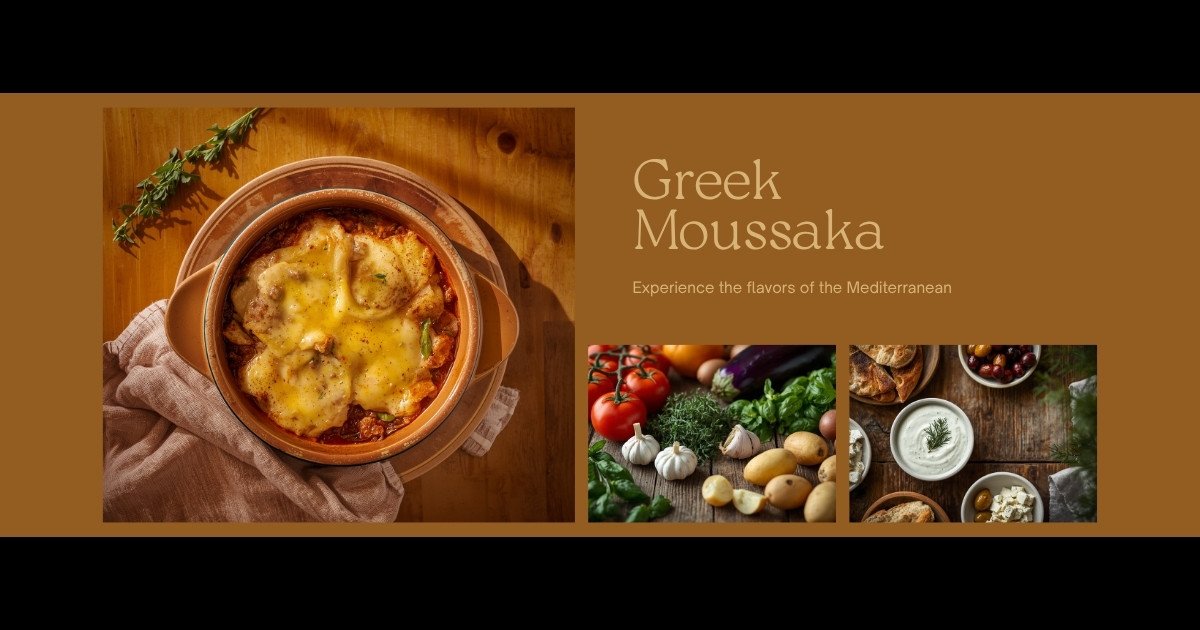
Classic Greek Moussaka
Ingredients
For the Eggplant Layers
- 3 large eggplants about 1.2 kg, sliced into 1 cm rounds
- 2 tablespoons coarse sea salt
- 3-4 tablespoons extra virgin olive oil for brushing
For the Meat Sauce
- 2 tablespoons extra virgin olive oil
- 1 large yellow onion finely diced
- 3 clove garlic minced
- 700 g ground lamb or a lamb-beef blend
- 400 g crushed tomatoes 1 can (14 oz)
- 2 tablespoons tomato paste
- 120 ml dry red wine 1/2 cup
- 1 teaspoon ground cinnamon
- 1/2 teaspoon ground allspice
- 1 bay leaf
- 1 teaspoon dried oregano
- salt and freshly ground black pepper to taste
- pinch sugar optional, to balance acidity
For the Bechamel
- 100 g unsalted butter 7 tablespoons
- 100 g all-purpose flour 3/4 cup
- 750 ml whole milk 3 cups, warmed
- 2 large egg yolks
- 1/4 teaspoon freshly grated nutmeg
- salt and white pepper to taste
- 50 g kefalotyri or Parmesan cheese finely grated
Instructions
- Slice eggplants into 1 cm rounds. Salt both sides generously and let drain for 30-60 minutes. Rinse and pat very dry.
- Preheat oven to 200C (400F). Brush eggplant slices with olive oil and arrange on parchment-lined baking sheets. Roast 20-25 minutes, flipping once, until golden and tender.
- Heat olive oil in a large pan over medium-high heat. Saute onion 5-6 minutes until softened, add garlic for 30 seconds. Add ground lamb and brown for 7-8 minutes. Drain excess fat.
- Deglaze with red wine for 2 minutes. Add crushed tomatoes, tomato paste, cinnamon, allspice, oregano, bay leaf, salt, pepper, and sugar. Simmer uncovered 25-30 minutes until thick. Remove bay leaf.
- Melt butter in a saucepan, whisk in flour for 2 minutes. Gradually add warm milk, whisking constantly. Cook 5-7 minutes until thick. Off heat, whisk in egg yolks, nutmeg, salt, white pepper, and half the grated cheese.
- Lightly oil a 9x13 inch (23x33 cm) baking dish. Layer: half the eggplant slices, all the meat sauce, remaining eggplant, then pour bechamel over the top. Sprinkle remaining cheese on top.
- Bake at 180C (350F) for 45-50 minutes until the top is deep golden brown and edges are bubbling.
- Rest for 20-30 minutes before slicing into squares. This resting time is essential for clean slices.
Notes
Nutrition
Chef’s Notes
Tips for the Best Moussaka
- Do not skip the salting. I know it adds time. It is worth every minute. Unsalted eggplant will release water during baking and turn your moussaka into soup.
- Use lamb for authenticity. A lamb-beef blend (50/50) works well if you prefer a milder flavor. Pure beef is fine but will give you a different dish.
- Make it a day ahead. Moussaka is one of those rare dishes that genuinely improves overnight in the refrigerator. Assemble fully, refrigerate, and bake the next day — add 10-15 minutes to the baking time if going straight from the fridge.
Variations
- Potato layer: In many parts of Greece, a layer of sliced potatoes goes under the first eggplant layer. Par-boil thin potato slices for 5 minutes, then layer them in. This makes the dish heartier and stretches it further.
- Vegetarian moussaka: Replace the lamb with a thick lentil and mushroom sauce. Use the same spices. The cinnamon and allspice work beautifully with lentils.
- Zucchini moussaka: Substitute half the eggplant with thick-sliced zucchini, roasted the same way. Common in summer when zucchini is abundant.
Storage
- Refrigerator: Keeps well for 4-5 days, covered. Reheat individual portions in a 180°C (350°F) oven for 15-20 minutes.
- Freezer: Freeze sliced portions wrapped in plastic and foil for up to 3 months. Thaw overnight in the refrigerator before reheating.
Frequently Asked Questions
Can I make Greek moussaka ahead of time?
Absolutely — in fact, I recommend it. You can assemble the moussaka completely, cover it, and refrigerate for up to 24 hours before baking. Add 10-15 extra minutes to the baking time. The flavors meld beautifully overnight. You can also bake it fully, let it cool, then refrigerate and reheat the next day.
What is the best eggplant for moussaka?
Use large globe eggplants (the common dark purple variety). They have a mild flavor and the right size for slicing into even rounds. Italian or Japanese eggplants are too narrow. Choose eggplants that feel heavy for their size with smooth, taut skin — wrinkled skin means they are past their prime and will have more seeds and bitterness.
Do I have to use lamb in moussaka?
Lamb is traditional and gives moussaka its characteristic flavor, especially when paired with cinnamon and allspice. If lamb is unavailable or you prefer a milder taste, a blend of lamb and beef works well. You can also use all beef. For a vegetarian version, a hearty lentil and mushroom sauce makes an excellent substitute.
Why does my moussaka fall apart when I cut it?
Three common causes: the meat sauce was too wet (it needs to be thick and reduced), the bechamel was too thin (it should coat a spoon heavily and include egg yolks for structure), or you did not let it rest long enough after baking. Give it a full 20-30 minutes out of the oven before cutting.
How do I get a golden brown top on my bechamel?
Make sure your bechamel layer is thick enough — about 1.5 cm (1/2 inch). The grated cheese on top helps it brown. If it is not coloring after 45 minutes of baking, switch to the broiler for 2-3 minutes, watching closely. The bechamel should be deep golden, not pale.