
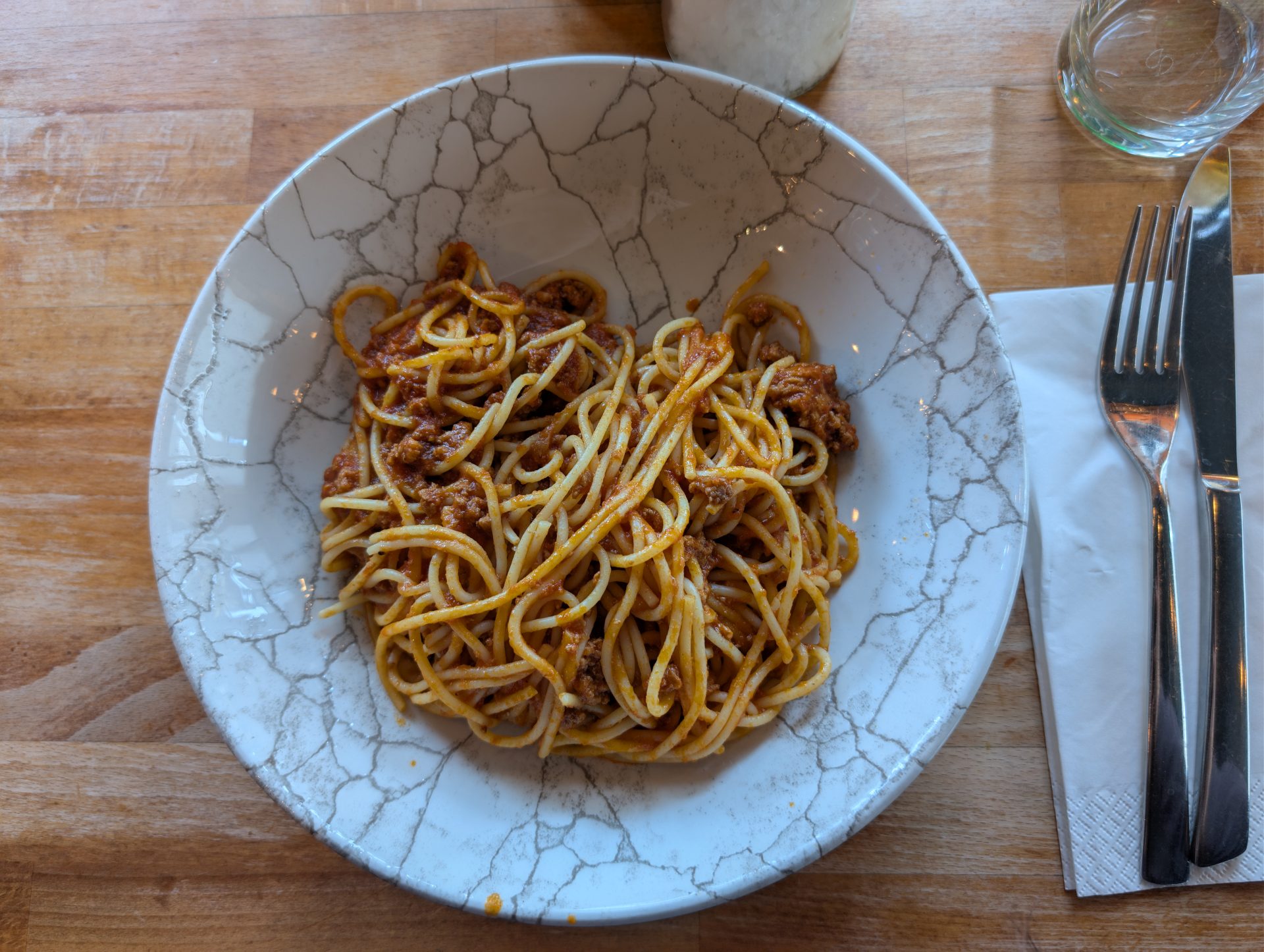
Every Greek child grows up with two versions of pasta in their memory. The first is pastitsio — the baked, layered celebration dish that takes an afternoon and serves a crowd. The second is makaronia me kima, and it is everything pastitsio is not: quick, weeknight, unfussy, and unmistakably Greek.
Makaronia me kima is ground meat cooked with tomato, cinnamon, allspice, and bay leaf, then served over spaghetti or thick pasta and finished with grated hard cheese. The cinnamon is not a subtle background note. It is present. It is the reason. When people taste this dish for the first time and ask what they are tasting, the answer is always the same: this is not Italian. This is Greek.
On Kos, my mother made makaronia me kima on nights when dinner had to happen fast. The meat sauce — kima — went into one pot while the pasta boiled in another. By the time the pasta was ready, the sauce had thickened and the kitchen smelled of warm spice and sweet tomato. We ate it with a heavy hand of grated mizithra or kefalotyri cheese, the hard, salty Greek sheep’s milk varieties that melt slightly into the hot pasta.
This is also the same kima you find inside pastitsio and papoutsakia — which means once you learn this sauce, you have the foundation for three different dishes. But today we’re keeping it simple: pasta, meat, spice, cheese. The weeknight version that has been feeding Greek families for generations.
Table of Contents
Why This Recipe Works
- Cinnamon and allspice are the signature, not the secret. This is not a hidden trick or a surprise ingredient — it is the defining character of Greek kima, and it should be unambiguous. Use a full teaspoon of cinnamon. Don’t be timid.
- The sauce should be dry, not wet. Greek kima clings to pasta rather than pooling around it. The cooking method — sautéing the meat until the liquid evaporates, then adding tomato and reducing — produces a sauce with concentrated flavor and the right consistency.
- Brown the meat properly. If you add tomato before the meat has fully browned and the moisture has cooked off, the meat will stew rather than caramelize. Take the time at this step — it’s the difference between a flat sauce and a deeply savory one.
- The cheese matters. Mizithra or kefalotyri — hard, salty, grated Greek sheep’s milk cheeses — are the traditional finish and cannot be substituted with Parmesan without losing the character of the dish. If you can’t find them, use a dry, aged Greek cheese, or Pecorino Romano as the closest available alternative.
Ingredients
For the Kima (Meat Sauce)
- 1 lb (450g) ground beef (or half beef, half lamb)
- 2 tablespoons extra-virgin olive oil
- 1 medium onion, finely chopped
- 3 cloves garlic, minced
- 1 can (400g / 14 oz) crushed tomatoes
- 2 tablespoons tomato paste
- 1 teaspoon ground cinnamon
- ½ teaspoon ground allspice
- 2 bay leaves
- Salt and black pepper to taste
- ¼ cup (60ml) dry red wine (optional)
For the Pasta
- 12 oz (340g) thick spaghetti, bucatini, or macaroni
- Salted water for boiling
For Serving
- 4 oz (115g) mizithra cheese, kefalotyri, or Pecorino Romano, finely grated
- Extra-virgin olive oil, for drizzling (optional)
Step-by-Step Instructions
1. Brown the meat
Heat the olive oil in a large sauté pan or wide pot over medium-high heat. Add the onion and cook for 4–5 minutes until softened. Add the garlic and cook 1 minute more. Add the ground meat, breaking it apart with a wooden spoon. Cook over medium-high heat, stirring frequently, until the meat is fully browned and all the liquid has evaporated — about 10–12 minutes. The meat should be sizzling and beginning to caramelize, not steaming in liquid.
Chef’s note: This step is where most people rush. If you add the tomato while there is still liquid in the pan, the meat never properly browns and the sauce will taste flat. Wait until the pan is dry and the meat begins to stick slightly.
2. Add the wine and spices
If using wine, add it now and let it bubble and evaporate for 1–2 minutes. Add the cinnamon, allspice, and bay leaves and stir to coat the meat in the spices. The cinnamon aroma should bloom immediately.
3. Build the sauce
Add the crushed tomatoes and tomato paste. Stir to combine. Reduce heat to medium-low and simmer, stirring occasionally, for 15–20 minutes until the sauce has thickened and the meat is no longer sitting in liquid. The kima is ready when a wooden spoon dragged across the bottom of the pan leaves a clean line that fills in slowly. Season well with salt and black pepper. Remove the bay leaves.
4. Cook the pasta
While the sauce simmers, bring a large pot of well-salted water to a boil. Cook the pasta according to package instructions until al dente. Reserve ½ cup of pasta cooking water before draining.
5. Combine and serve
Drain the pasta and plate immediately — makaronia me kima is not tossed together. Spoon a generous amount of kima over the pasta, grate the cheese heavily over the top, and serve. Each person mixes their own at the table.
Chef’s note: If the sauce has thickened too much during simmering, stir in a tablespoon or two of the pasta cooking water to loosen it slightly. This starchy water helps the sauce cling to the pasta without becoming dry.
Chef’s Notes
On the cinnamon
I want to be clear about this because recipes sometimes hedge on it. Use a full teaspoon of ground cinnamon for one pound of meat. It should be present in the finished dish. If you reduce it to a quarter teaspoon “because cinnamon in savory food makes you nervous,” you will have made a different dish. The cinnamon is the reason this is makaronia me kima and not a generic pasta sauce.
According to The Oxford Companion to Food, cinnamon has been used in savory meat preparations throughout the eastern Mediterranean since antiquity — this is not a fusion innovation but a continuation of one of the oldest flavor traditions in European cooking.
On the cheese
Mizithra is a hard, dried, salted Greek sheep’s milk cheese traditionally grated over pasta in Greece. It has a slightly tangy, nutty character quite different from Parmesan. Kefalotyri is similar — harder, saltier, and even more pungent. Both are available in Greek specialty stores and some supermarkets. If neither is available, Pecorino Romano is the closest widely-available substitute. Use it generously.
On the kima connection
This same meat sauce — with minor adjustments — is the foundation of two other dishes on this site. My Pastitsio (Greek Baked Pasta) uses this kima layered between pasta and bechamel. My Soutzoukakia (Greek Baked Meatballs in Tomato Sauce) uses the same spice profile — cinnamon, allspice, cumin — shaped into meatballs rather than loose sauce. If you master the kima, you have the flavor logic of all three.
Make-ahead
The kima sauce keeps well in the refrigerator for up to 4 days and freezes for up to 2 months. Make a double batch and freeze half — makaronia me kima is exactly the kind of dish that justifies having a frozen portion on hand for weeknights when there is no time to cook.
Recipe Card
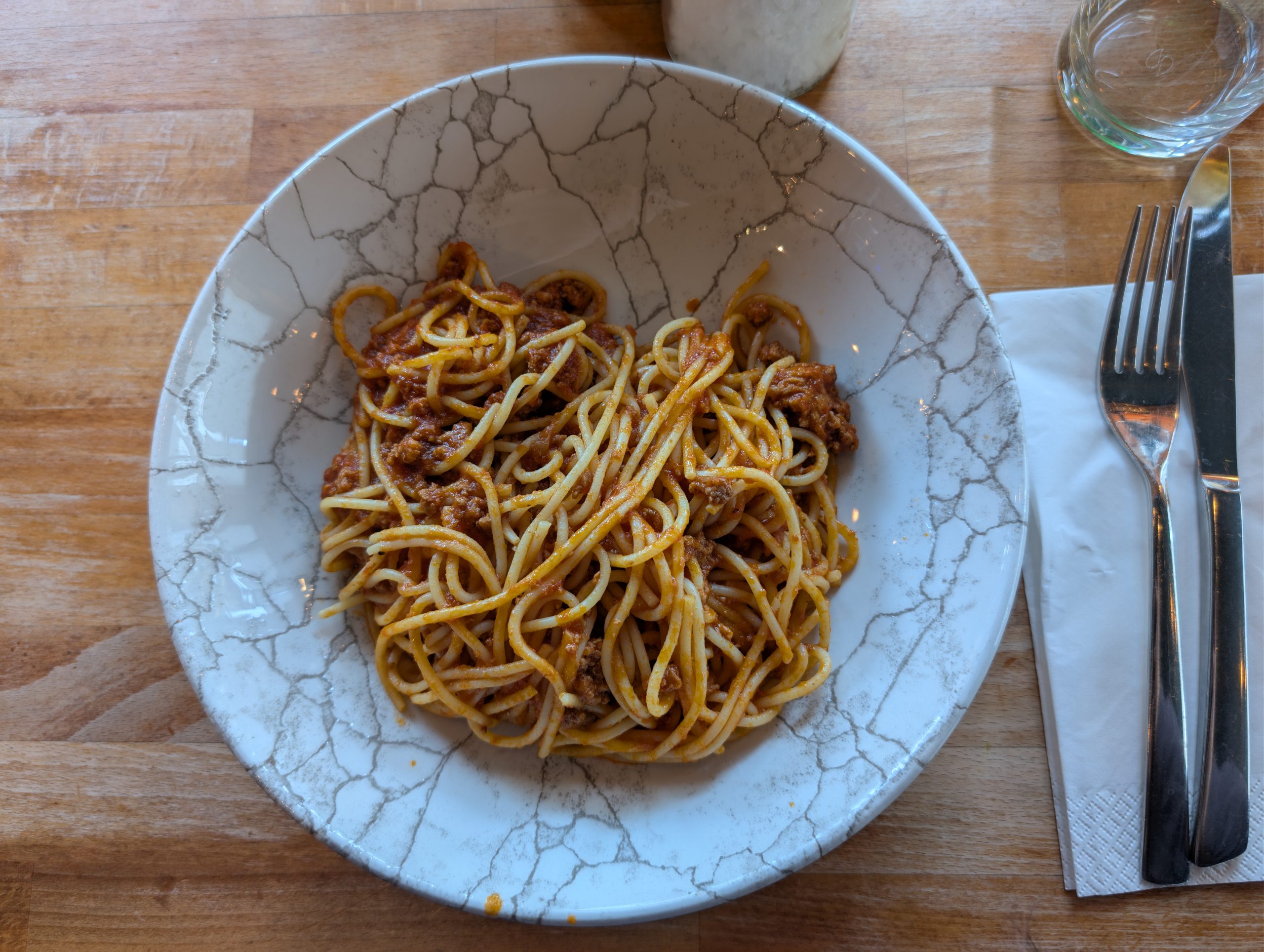
Makaronia me Kima (Greek Pasta with Meat Sauce)
Ingredients
For the Kima (Meat Sauce)
- 1 lb ground beef or half beef, half lamb; 450g
- 2 tablespoons extra-virgin olive oil
- 1 medium onion finely chopped
- 3 clove garlic minced
- 1 can (400g) crushed tomatoes
- 2 tablespoons tomato paste
- 1 teaspoon ground cinnamon
- 1/2 teaspoon ground allspice
- 2 bay leaves
- salt and black pepper to taste
- 1/4 cup dry red wine optional; 60ml
For the Pasta
- 12 oz thick spaghetti or bucatini 340g
- salted water for boiling
For Serving
- 4 oz mizithra, kefalotyri, or Pecorino Romano finely grated; 115g
Instructions
- Heat the olive oil in a large saute pan or wide pot over medium-high heat. Add the onion and cook for 4-5 minutes until softened. Add the garlic and cook 1 minute more. Add the ground meat, breaking it apart with a wooden spoon. Cook over medium-high heat, stirring frequently, until the meat is fully browned and all the liquid has evaporated, about 10-12 minutes. The meat should be sizzling and beginning to caramelize, not steaming in liquid.
- If using wine, add it now and let it bubble and evaporate for 1-2 minutes. Add the cinnamon, allspice, and bay leaves and stir to coat the meat in the spices. The cinnamon aroma should bloom immediately.
- Add the crushed tomatoes and tomato paste. Stir to combine. Reduce heat to medium-low and simmer, stirring occasionally, for 15-20 minutes until the sauce has thickened and the meat is no longer sitting in liquid. The kima is ready when a wooden spoon dragged across the bottom of the pan leaves a clean line that fills in slowly. Season well with salt and black pepper. Remove the bay leaves.
- While the sauce simmers, bring a large pot of well-salted water to a boil. Cook the pasta according to package instructions until al dente. Reserve 1/2 cup of pasta cooking water before draining.
- Drain the pasta and plate immediately. Spoon a generous amount of kima over the pasta, grate the cheese heavily over the top, and serve. Each person mixes their own at the table.
Notes
Nutrition
FAQ
What is makaronia me kima?
Makaronia me kima literally means “pasta with ground meat” in Greek — makaronia is pasta, and kima means ground or minced meat. It is the classic Greek weeknight pasta dish: ground meat cooked with cinnamon, allspice, and tomato, served over spaghetti or thick pasta with grated hard cheese. It is the same spiced meat sauce used in pastitsio, simplified for quick everyday cooking.
How is makaronia me kima different from Italian bolognese?
The fundamental difference is the spice profile. Bolognese uses wine, milk or cream, and a long slow cook to build sweetness and body. Makaronia me kima uses cinnamon and allspice as its defining flavors — warm, aromatic spices that produce a distinctly different character. Kima is also drier than bolognese; it clings rather than pools. And the cheese — mizithra or kefalotyri rather than Parmigiano-Reggiano — is a salty, sharper finish.
What cheese should I use for makaronia me kima?
Mizithra (dried, hard, salted Greek sheep’s milk cheese) is traditional. Kefalotyri is an excellent alternative — harder and sharper. If neither is available, Pecorino Romano is the closest substitute. Parmesan will work in a pinch but lacks the sharpness and character of the Greek cheeses. Avoid soft cheeses or mozzarella.
Can I make makaronia me kima ahead of time?
The kima sauce is excellent made ahead — it actually improves after a day in the refrigerator as the flavors develop. Store the sauce separately from the pasta and reheat gently over low heat with a splash of water if needed. Cook and drain the pasta fresh when ready to serve. Do not store cooked pasta and sauce combined or the pasta will absorb all the moisture and become gluey.
What pasta works best for makaronia me kima?
Thick spaghetti (spaghettoni) or bucatini are traditional — the hollow center of bucatini holds the sauce particularly well. Standard spaghetti works. Wide pasta shapes like pappardelle or rigatoni are not traditional for this dish. The sauce is designed to cling to long pasta strands, not to fill large pasta tubes.