
There is a moment that comes with every autumn on Kos — the day the island’s warmth finally yields to something softer, and the old women of the village reach for the jars they set aside in July. I remember watching my grandmother do exactly this: lifting the dried, crumbled pieces of trahanas from a cloth sack hanging in her cool pantry, measuring them into her palm the way she measured everything — by feel, by memory, by the hunger of the people sitting at her table.
Trahanas soup was not a special-occasion dish in our home on Kos. It was weeknight food, storm-weather food — what you made when a child came home from school with cold feet and a red nose, or when the autumn catch was thin and the pantry had to do the work. The beauty of trahanas soup is in what it does not require: a long shopping list, elaborate technique, or a great deal of time. What it asks for is a pantry ingredient your grandmother dried in August, a pot of good broth, and twenty minutes of patient simmering.
In Greece, trahanas soup has fed families through winters for centuries. It is one of those dishes that exists before the recipe was written down — passed from hand to hand, adjusted by region, by season, by what the goats gave that week. Some versions are thin as a consommé; others thick as porridge. Some carry the brightness of tomato; others rest on nothing but good broth and the tang of fermented grain.
The version I make today is my grandmother’s: sour trahanas, a little olive oil, a quiet simmer, and a handful of feta crumbled on top just before it reaches the table. Four servings. Thirty minutes. No shortcuts needed, because there are no shortcuts to take — it was already as simple as food gets.
If you have never cooked with trahanas before, this recipe will change what you keep in your pantry.
What Is Trahanas Soup?
Trahanas soup is a traditional Greek soup made from trahanas — a dried, fermented pantry ingredient produced by combining cracked wheat (or semolina) with sour milk or yogurt. The mixture is left to ferment, then spread in the sun to dry and crumbled into rough, irregular pieces. Those dried pieces keep for a full year without refrigeration, making trahanas one of the oldest preserved foods in the Greek pantry.
To make trahanas soup, you simmer the dried grains in broth or water. As they cook, they absorb the liquid and release their starch, thickening the soup into a texture somewhere between a cream soup and a light porridge — deeply savory, silky, with the faint, pleasant tang of fermented grain running through every spoonful.
Trahanas and related fermented grain products have been documented across the Eastern Mediterranean for centuries, serving as a functional winter food in cultures from Greece to Cyprus, Lebanon, and Turkey. The Greek version is distinctive for its use of yogurt or sour milk in the fermentation, which gives it a complexity and depth that plain grain soups simply do not have.
Today, trahanas soup remains a fixture of Greek home cooking in the cooler months. On Kos, my grandmother made it whenever the weather turned — which on a Dodecanese island meant November through February, those weeks when the Aegean was grey and the fishing boats stayed in the harbor. She kept a supply of dried trahanas from every summer, made in batches large enough to last all winter. The idea of buying it from a store would have been bewildering to her. Today, excellent store-bought Greek trahanas is available, and it is genuinely good — the tradition and technique are built into the product itself.
What makes trahanas soup so enduring is precisely its simplicity. There is no stock to make from scratch, no long braising, no layered technique. The trahanas itself is the flavor. Your job is only to coax it open with heat and good broth.
Greek Trahanas: Sweet vs. Sour
Not all Greek trahanas is the same, and understanding the distinction is important before you cook.
Sour trahanas (xinos trahanas) is made with yogurt or naturally soured milk. The fermentation gives it a tangy, complex flavor — robust enough to carry a simple broth without aromatics. Sour trahanas is the traditional trahanas of the Aegean islands, including Kos, and it is the variety I use in this recipe. When cooked, it produces a soup that is savory, slightly sharp, and intensely satisfying.
Sweet trahanas (glyko trahanas) is made with fresh whole milk rather than fermented dairy. The result is milder and slightly creamier, without the tang. Sweet Greek trahanas is more common in northern Greece and pairs naturally with the addition of tomato paste or a richer, meat-forward broth.
When shopping, look for trahanas at a Greek grocery store or an online Greek foods retailer. Packages will typically specify “xinos” (sour) or “glyko” (sweet). For this trahanas soup recipe, I use sour trahanas. If you can only find the sweet variety, it works well — add a tablespoon of tomato paste to compensate for the missing acidity.
A word on storage: dried Greek trahanas keeps for twelve months or longer in a sealed container in a cool, dry place. It is worth buying two bags at once. You will make this soup more than once.
Why This Recipe Works
- Sour trahanas carries its own flavor. Unlike many grain soups that depend heavily on the broth for character, sour Greek trahanas brings its own fermented tang and depth. You do not need a dozen aromatics to build a satisfying bowl — the ingredient itself does the work.
- Softening the onion in olive oil first. Briefly cooking the onion in olive oil before the trahanas and broth go in adds a quiet sweetness that rounds out the grain’s acidity. Skip this step and the soup tastes flatter.
- A low, patient simmer. Trahanas releases starch gradually. Pushing the heat too high causes it to stick and scorch on the bottom before it thickens properly. Medium-low heat and regular stirring produce a smooth, uniform result every time.
- Feta at the end, never during cooking. Crumbling feta into hot trahanas soup turns it rubbery and causes it to sink. Finishing each bowl with fresh crumbled feta gives you the salty, creamy contrast the soup needs — and it stays where you want it.
Ingredients
Serves 4
For the Soup
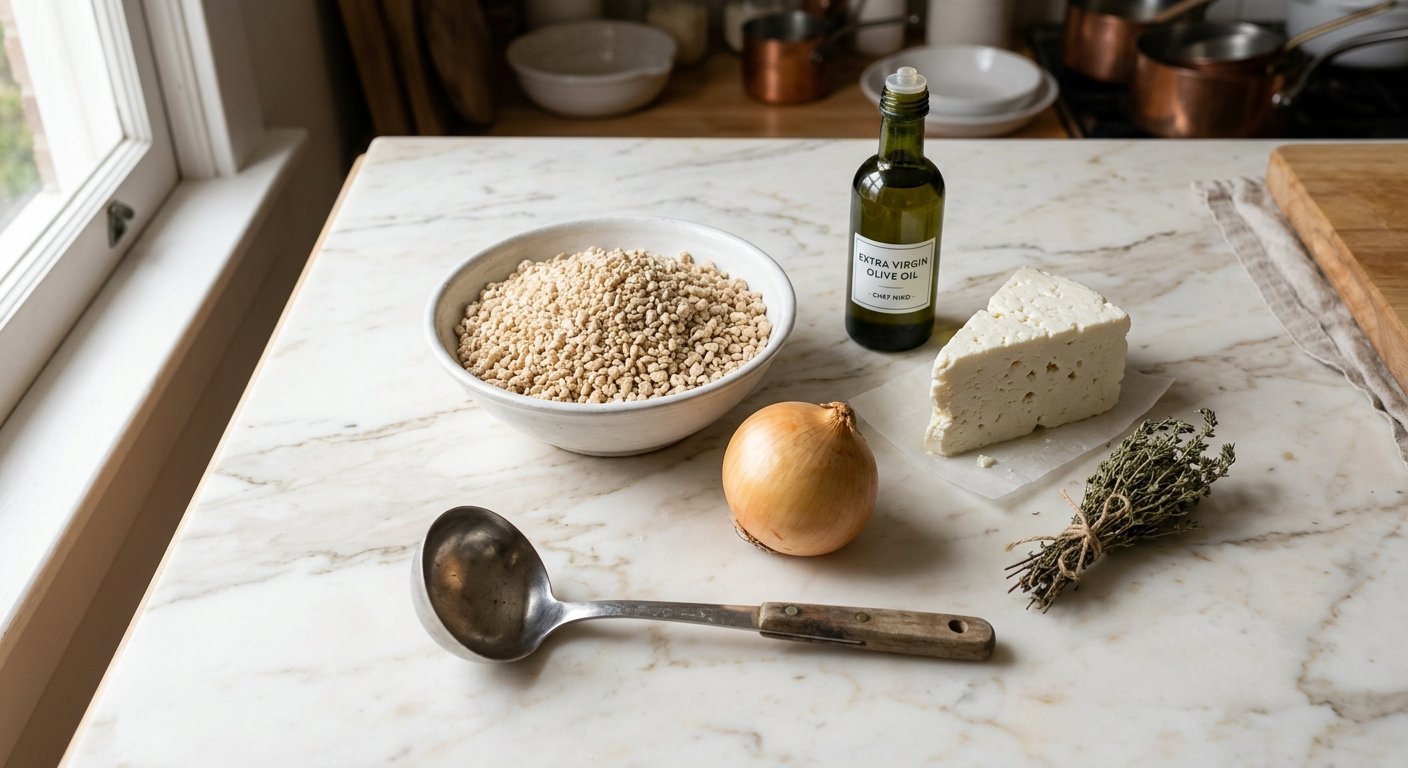
- 1 cup (150 g) sour trahanas (xinos trahanas)
- 2 tablespoons extra-virgin olive oil
- 1 small yellow onion, finely diced
- 4 cups (960 ml) good-quality chicken broth (or vegetable broth for a vegetarian version)
- 1 cup (240 ml) water
- ½ teaspoon fine sea salt, or to taste — broth saltiness varies widely, so adjust at the end
- Freshly ground black pepper, to taste
To Serve
- 100 g (3.5 oz) Greek feta cheese, crumbled
- Extra-virgin olive oil, for drizzling
- Dried Greek oregano or fresh thyme leaves (optional)
- Crusty bread
Step-by-Step Instructions
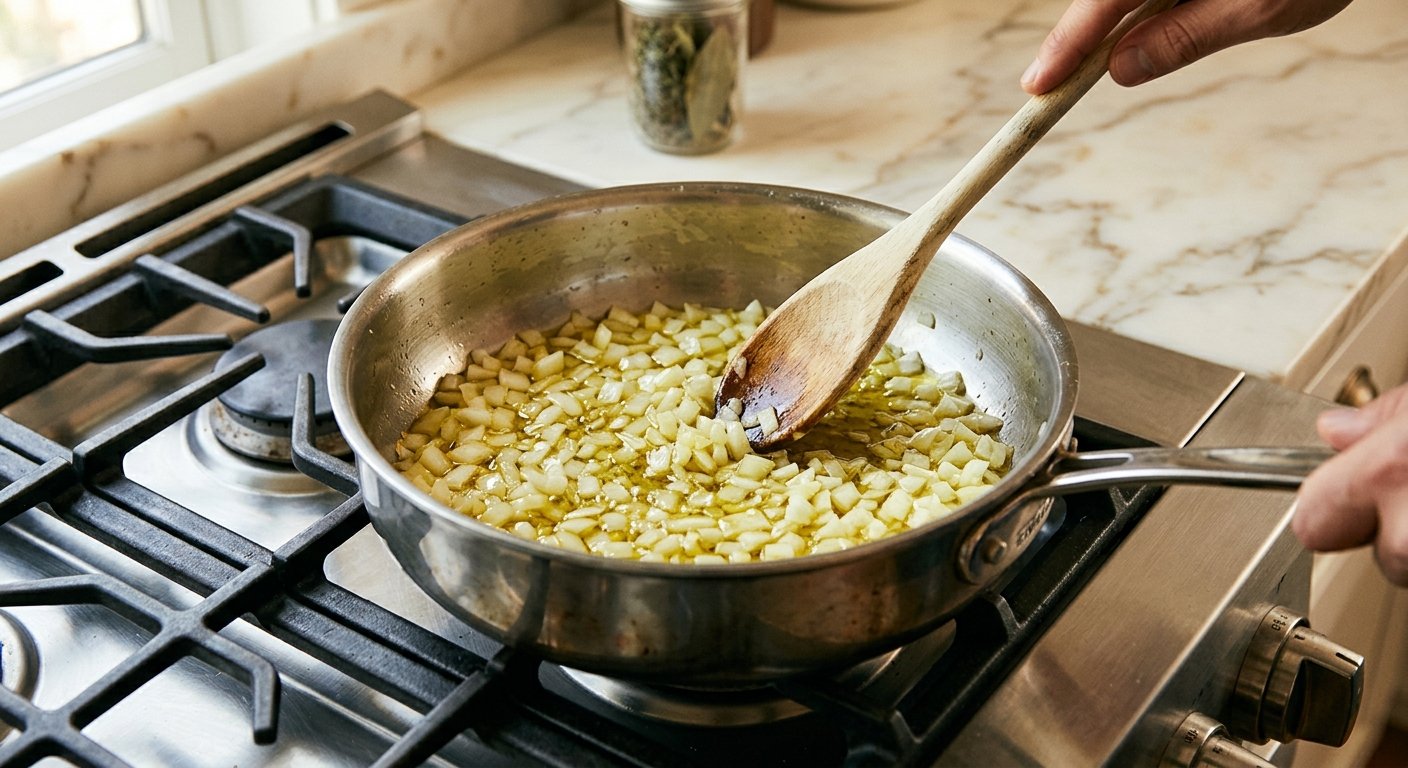
Step 1 — Soften the onion.
Warm the olive oil in a medium, heavy-bottomed saucepan over medium heat. Add the finely diced onion and cook, stirring occasionally, for 4–5 minutes until completely softened and translucent. You are not looking for color here — the goal is sweetness, not browning. If the onion begins to take on any color, lower the heat slightly.
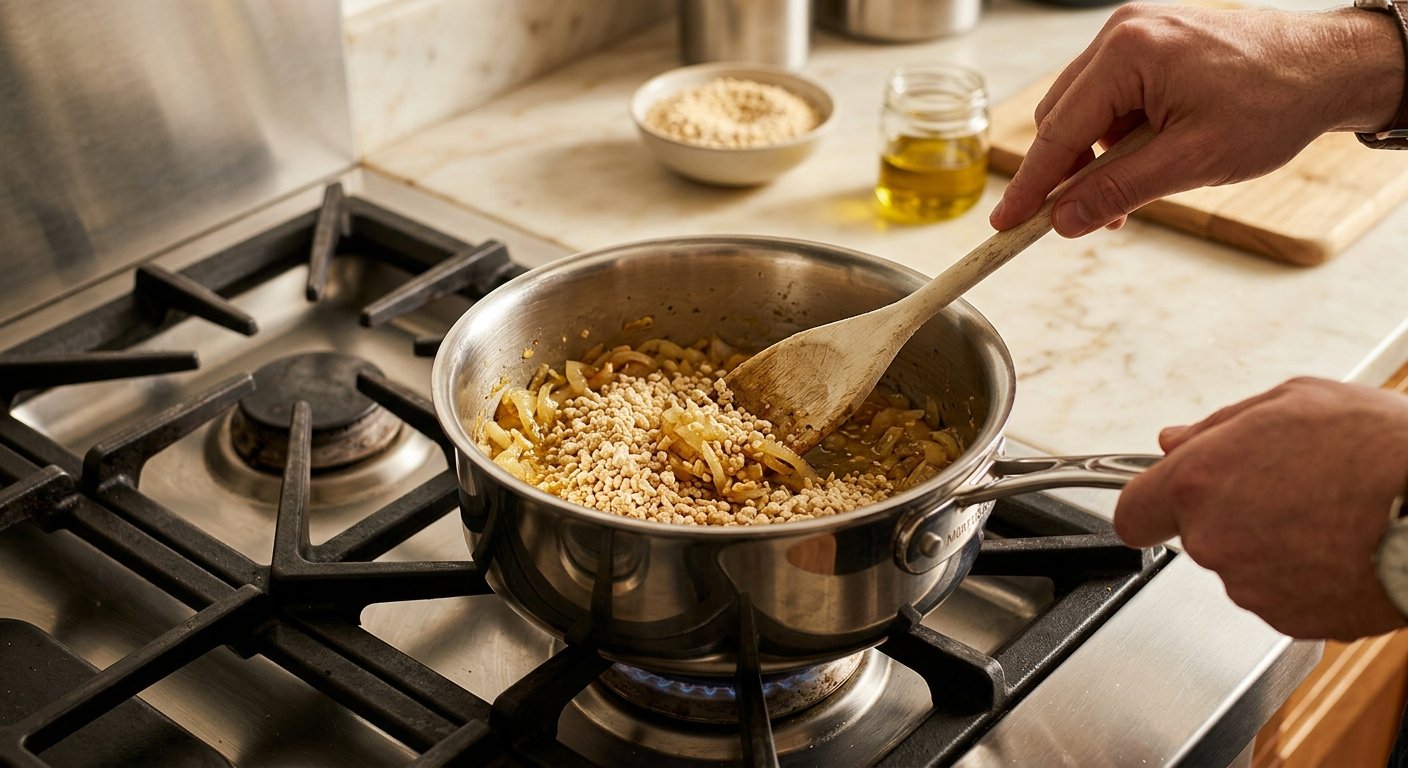
Step 2 — Toast the trahanas.
Add the dried trahanas directly to the pot with the softened onion. Stir everything together and cook for about 1 minute, turning the grains through the oil. This brief step is easy to skip, but worth doing: the gentle heat deepens the flavor of the grain and helps it absorb the broth more evenly once the liquid goes in.
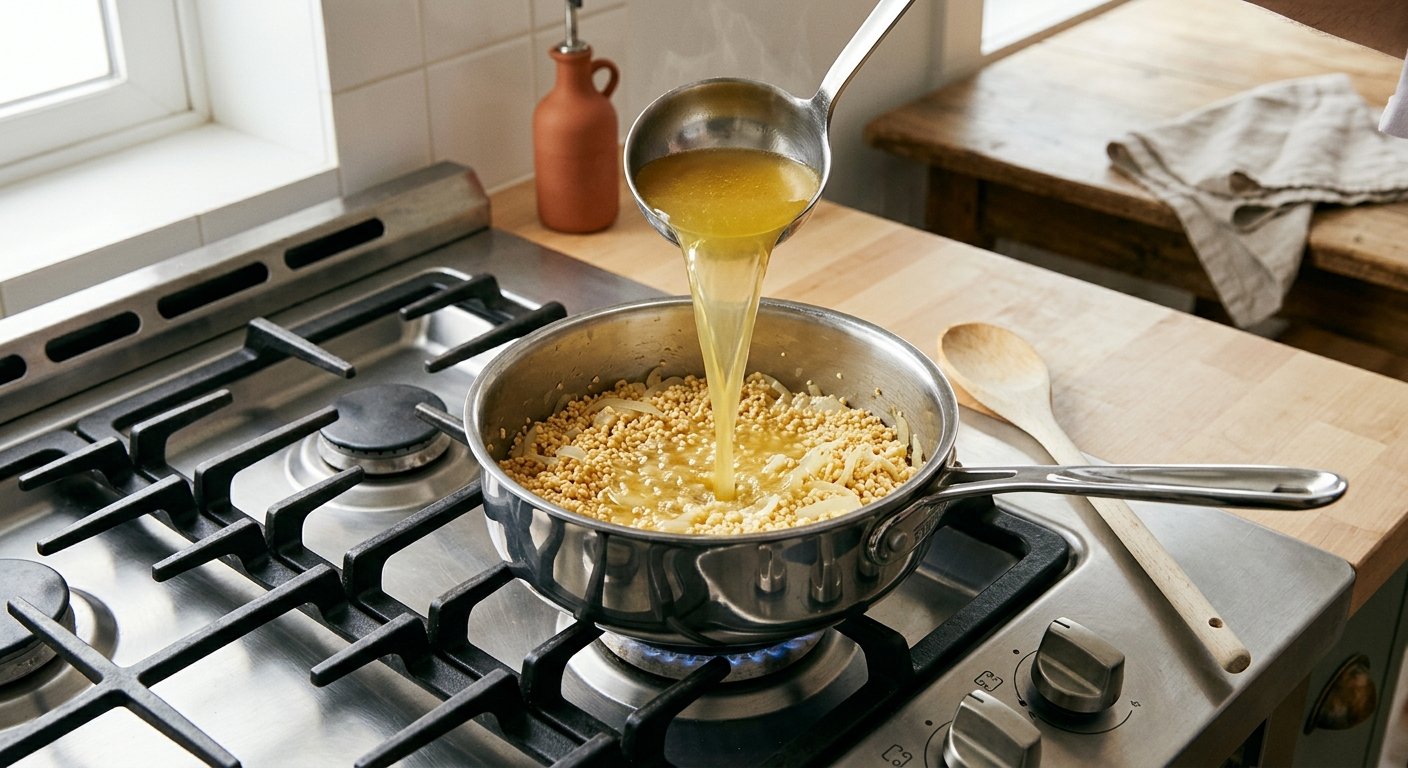
Step 3 — Add the broth and bring to a simmer.
Pour in the chicken broth and water. Stir well, making sure no trahanas is clinging to the bottom or sides of the pot. Increase the heat to medium and bring the liquid to a gentle simmer — you want small, steady bubbles at the surface, not a rolling boil.
Step 4 — Simmer until thick.
Reduce the heat to medium-low. Cook uncovered for 18–22 minutes, stirring every 3–4 minutes, until the trahanas soup has thickened to a consistency somewhere between a light porridge and a cream soup. It should coat the back of a spoon and hold a moment when you run your finger through it. If the soup becomes thicker than you like before the cooking time is up, add a splash of hot water and stir — the trahanas will keep absorbing, so it is easy to adjust.
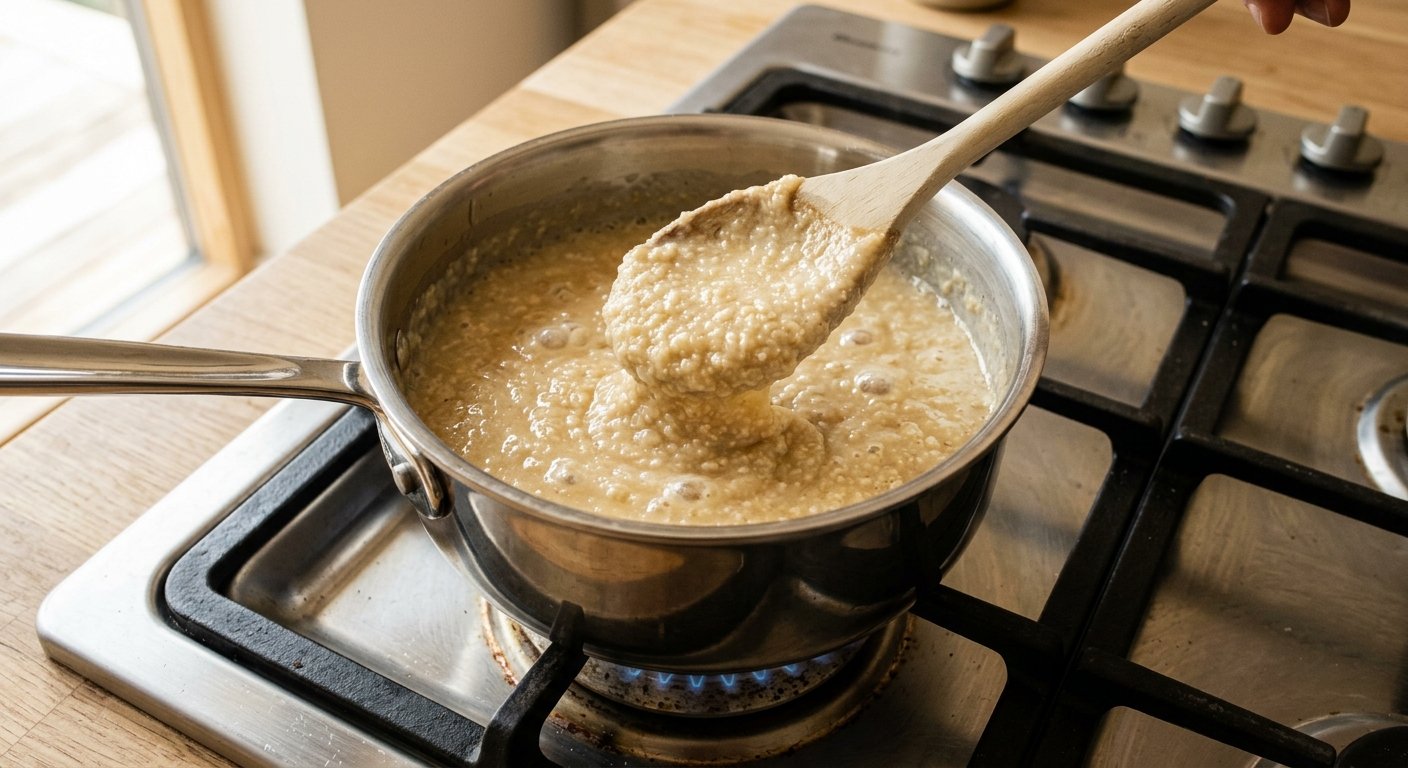
Step 5 — Season and serve.
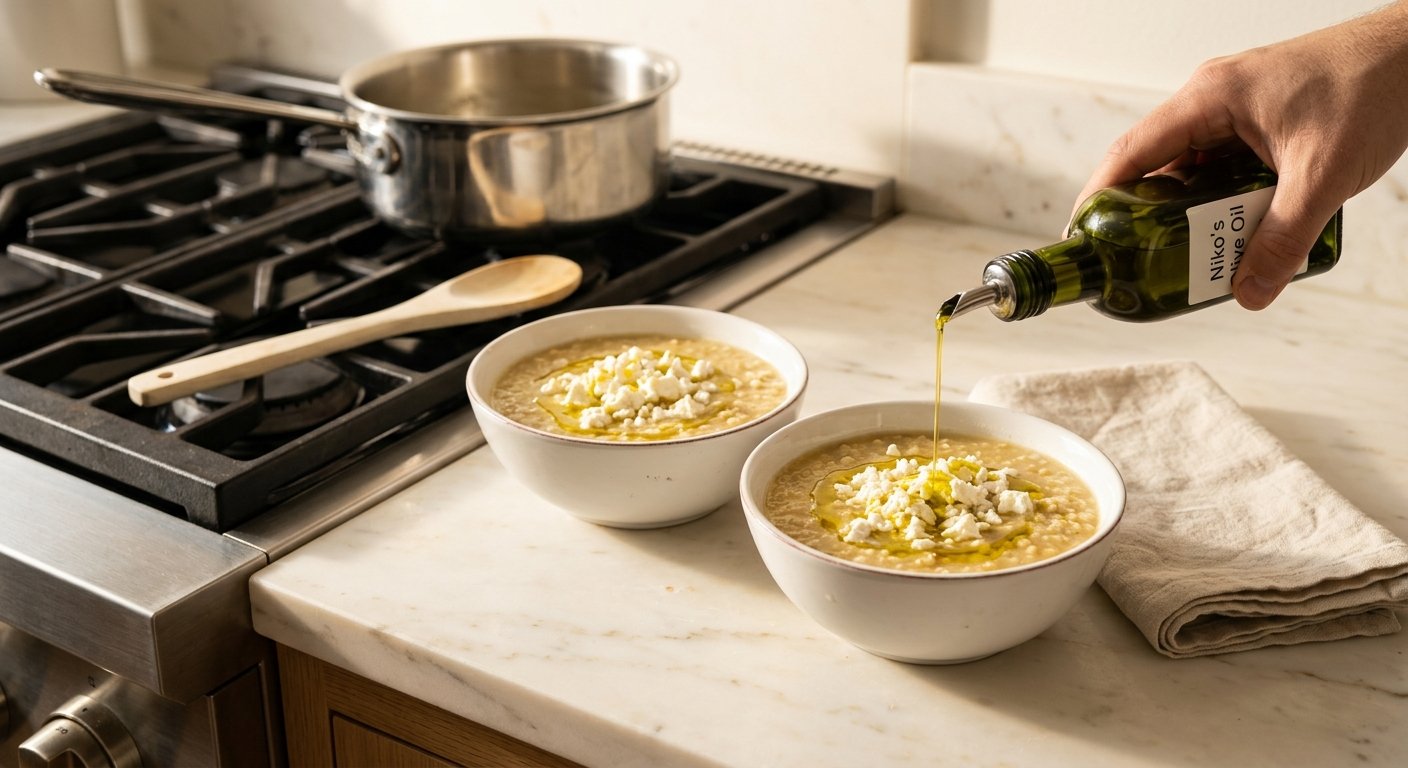
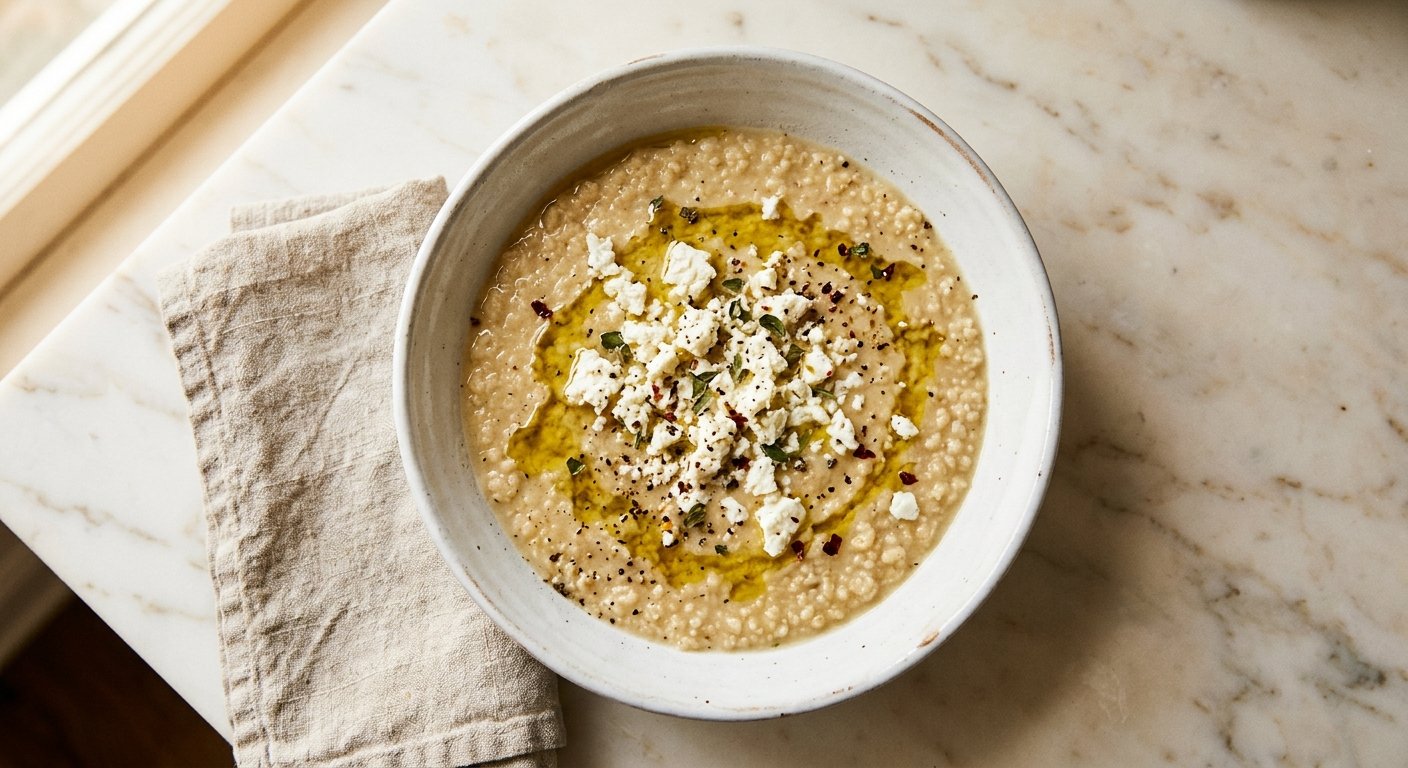
Taste the trahanas soup and season carefully with salt and pepper. Remember that the feta you add on top will also contribute saltiness, so season conservatively at this stage. Ladle into warmed bowls. Top each bowl generously with crumbled feta, a drizzle of good olive oil, and a pinch of dried oregano or a few thyme leaves if you like. Serve immediately, with crusty bread alongside.
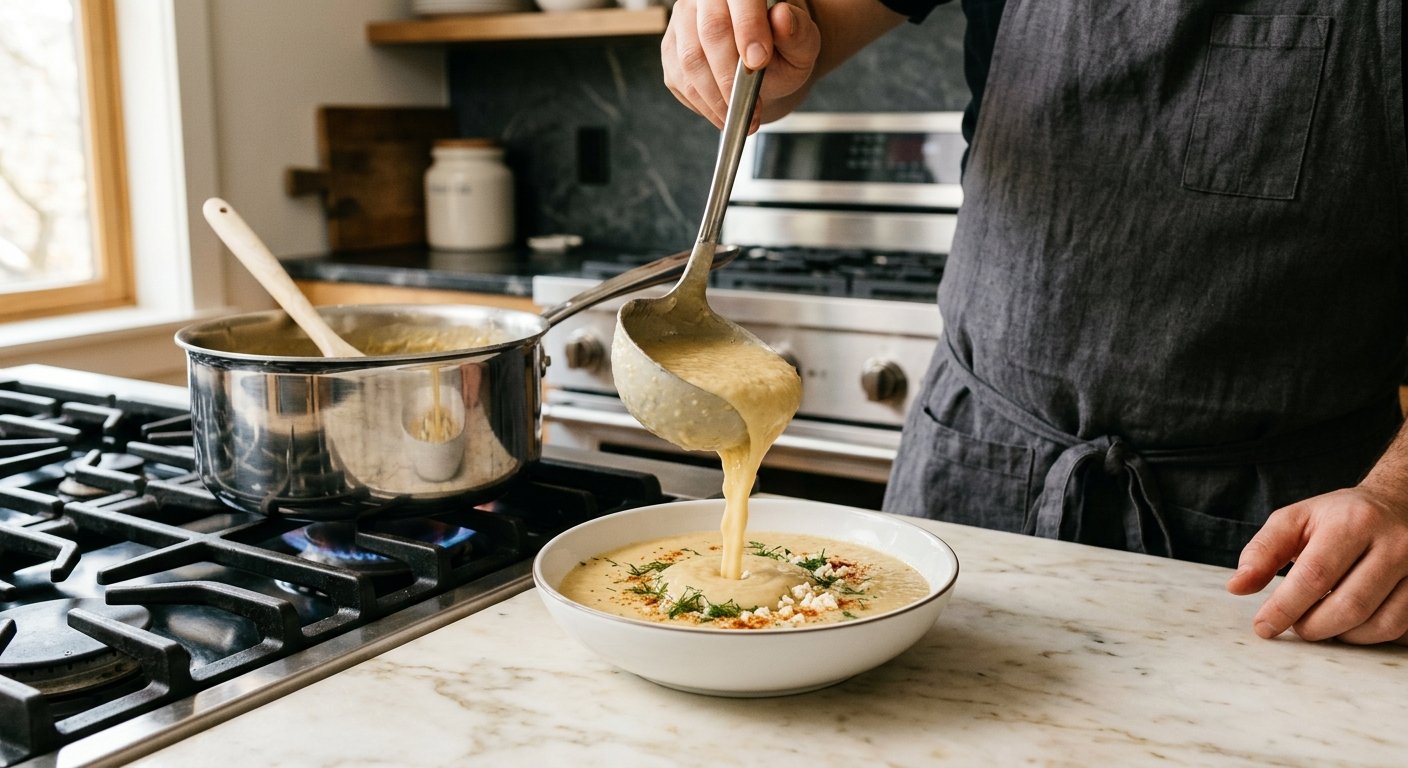
How to Serve Trahanas Soup
Trahanas soup is a complete meal in a bowl — the grain provides carbohydrates, the broth adds depth and warmth, and the feta gives protein and fat. That said, it pairs beautifully with a few simple accompaniments.
A thick slice of crusty village bread for dipping is essential, in my opinion. On Kos, bread was never optional at a meal; it was the meal’s foundation.
If you want something on the side, consider a wedge of warm tiropita from my Tiropita recipe — the crisp, salty pastry is a natural companion to the silky, tangy soup. Or keep it simple with a few olives and a piece of good cheese.
For a larger Greek meal, trahanas soup works well as a first course before something like my Avgolemono Soup — though the two soups share a similar warming comfort, they have very different characters: the avgolemono is bright and lemon-forward, the trahanas is earthy and tangy. If you are building a Greek winter dinner, start with trahanas, and you will understand why both have survived for centuries.
If you enjoy traditional Greek grain-based dishes, my Greek Semolina Halva is made on the same principle as this trahanas soup: simple pantry ingredients, a ratio you carry in your head, and a result that is far more than the sum of its parts.
Trahanas Soup (Greek Fermented Grain Comfort)
Ingredients
- 1 cup 150 g sour trahanas (xinos trahanas)
- 2 tablespoons extra-virgin olive oil
- 1 small yellow onion finely diced
- 4 cup 960 ml good-quality chicken broth (or vegetable broth for a vegetarian version)
- 1 cup 240 ml water
- 1/2 teaspoon fine sea salt or to taste
- Freshly ground black pepper to taste
- 100 g 3.5 oz Greek feta cheese, crumbled
- Extra-virgin olive oil for drizzling
- Dried Greek oregano or fresh thyme leaves optional
- Crusty bread to serve
Instructions
- Warm the olive oil in a medium, heavy-bottomed saucepan over medium heat. Add the finely diced onion and cook, stirring occasionally, for 4-5 minutes until completely softened and translucent. You are not looking for colour here – the goal is sweetness, not browning. If the onion begins to take on any colour, lower the heat slightly.
- Add the dried trahanas directly to the pot with the softened onion. Stir everything together and cook for about 1 minute, turning the grains through the oil. This brief step is easy to skip but worth doing: the gentle heat deepens the flavour of the grain and helps it absorb the broth more evenly once the liquid goes in.
- Pour in the chicken broth and water. Stir well, making sure no trahanas is clinging to the bottom or sides of the pot. Increase the heat to medium and bring the liquid to a gentle simmer – you want small, steady bubbles at the surface, not a rolling boil.
- Reduce the heat to medium-low. Cook uncovered for 18-22 minutes, stirring every 3-4 minutes, until the soup has thickened to a consistency somewhere between a light porridge and a cream soup. It should coat the back of a spoon and hold a moment when you run your finger through it. If it becomes thicker than you like before the time is up, add a splash of hot water and stir.
- Taste and season carefully with salt and pepper. Remember that the feta on top will also contribute saltiness, so season conservatively at this stage. Ladle into warmed bowls. Top each bowl generously with crumbled feta, a drizzle of good olive oil, and a pinch of dried oregano or a few thyme leaves. Serve immediately, with crusty bread alongside.
Chef’s Notes
Storage and reheating. Trahanas soup thickens considerably as it cools — more than almost any other soup I make. Store leftovers in a sealed container in the refrigerator for up to 3 days. When reheating, add a generous splash of water or broth, stir well, and warm over low heat until loosened and hot through. The flavor actually improves after a night in the refrigerator; the fermented grain notes deepen and round out.
Tomato variation. In parts of Greece where sweet trahanas is common, a tablespoon or two of tomato paste is added along with the broth. It gives the soup warmth and a gentle acidity that complements the milder grain. If you are using sour trahanas, skip the tomato — it adds nothing the fermentation has not already provided.
Making it richer. A homemade meat broth — chicken, lamb, or veal — makes a noticeable difference in this soup. If you have a good homemade broth in the freezer, this is the recipe to use it. A quality, low-sodium store-bought broth is a perfectly good alternative.
Vegetarian version. Substitute vegetable broth for the chicken broth. Use the sweet trahanas variety, as its milder flavor works better against the lighter vegetable base. Add a tablespoon of tomato paste for depth.
Freezing. I do not recommend freezing trahanas soup. The texture changes significantly on thawing, and the result is not worth the effort when the soup itself takes only 30 minutes to make from scratch.
Finding trahanas. Greek and Middle Eastern grocery stores reliably carry both varieties. Online Greek food retailers also stock it. Look for packages labeled "xinos trahanas" (sour) for this recipe, or simply "trahanas" — it will specify sweet or sour on the label. It keeps for a year at room temperature in a sealed container, so there is no reason not to buy two bags.
FAQ
What is trahanas soup made of?
Trahanas soup is made from dried trahanas — a fermented combination of cracked wheat and sour milk or yogurt — simmered in broth until thick. This recipe uses sour trahanas (xinos trahanas), chicken broth, olive oil, onion, and crumbled feta to finish. It comes together in one pot in about 30 minutes.
What does trahanas soup taste like?
Sour trahanas has a faintly tangy, earthy flavor from the fermentation. When cooked as a soup, the result is warming and deeply savory — with a silky texture similar to polenta or cream of wheat. The feta adds saltiness and creaminess. It is one of those flavors that is difficult to describe until you have eaten it; after that, you understand immediately why Greeks have been making it for centuries.
Where can I buy Greek trahanas?
Greek trahanas is available at Greek and Middle Eastern grocery stores and from online Greek food retailers. Look for packages marked "xinos" (sour) or "glyko" (sweet). Sour trahanas is the variety used in this recipe. It stores for up to a year in a cool, dry place in a sealed container.
Is trahanas soup healthy?
Yes. Greek trahanas is naturally rich in protein and complex carbohydrates from the fermented wheat and yogurt base. A serving of trahanas soup made with good broth and feta provides a balanced mix of macronutrients and is genuinely nutritious — not as a modern health claim, but in the way traditional foods are nourishing: simply, thoroughly, and without effort.
Can I make trahanas soup vegetarian or vegan?
Trahanas soup is easily made vegetarian by substituting vegetable broth for the chicken broth. Making it fully vegan is more difficult, as the trahanas itself contains dairy from the fermented milk or yogurt used in its production, and the feta topping is also dairy. A vegan version would require a different fermented grain product and a non-dairy topping.
Can I make trahanas soup ahead of time?
Yes — in fact, the flavor improves overnight. Make the soup up to two days ahead, refrigerate, and reheat with a splash of broth or water to restore the consistency. Add fresh crumbled feta when serving, not before storing.