
Every October, when the air finally turns and the summer crowds have long gone home, my kitchen on Kos begins to smell like stifado. This is not a conscious decision. It is simply what happens. The pearl onions are sitting in the bowl waiting to be peeled, the red wine is already open, and the cinnamon sticks and cloves are measured out on the counter beside the beef. The stifado recipe does not need to be planned — it arrives with the season.
My mother started it on Sunday mornings, early enough that the whole house was deep in the smell of caramelizing onions before anyone had finished their coffee. The harbor would be quiet by then, the summer fishing rush over, the island settling back into itself. That smell — sweet onion, warm spice, wine reducing in a hot pot — is what October means to me. It still does.
Stifado is a slow-braised beef stew with whole pearl onions and a spice profile unlike anything else in the Greek kitchen: cinnamon, cloves, allspice, bay leaves, a splash of red wine vinegar. It is warming and complex, deeply savory with a subtle sweetness that comes from the onions caramelizing in the sauce over hours. It is the kind of dish that tastes better the next day, and even better the day after that.
In this post I am sharing the stifado recipe I have settled on after years of refining it in professional kitchens and at home — and the six things that separate a great stifado from a merely decent one. Serves 6.
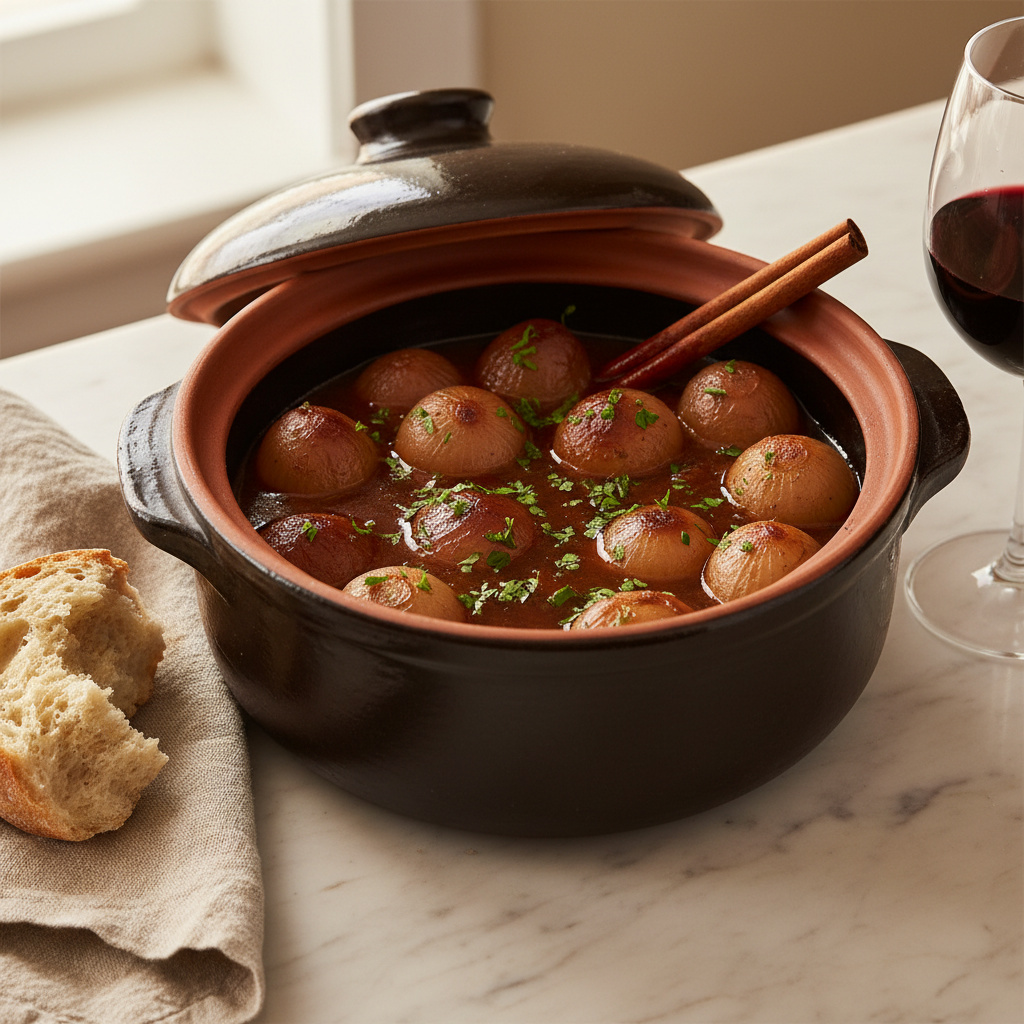
Table of Contents
What Is Stifado?
Stifado (στιφάδο) is a Greek braised meat dish made with whole small onions, red wine, tomatoes, and a warm spice blend of cinnamon, cloves, and allspice. The name derives from the Italian stufato (stew), a direct remnant of the centuries of Venetian rule over the Ionian islands — and it is in those islands, particularly Corfu, that stifado is considered a signature dish. You can read more about the dish’s documented history in the Wikipedia entry on stifado.
What makes stifado unmistakable — and distinct from other Greek braised meat dishes like Greek beef stew (kokkinisto) — is the sheer quantity of onions (often equal weight to the meat), the fact that those onions are cooked whole so they caramelize and hold their structure, and that spice profile that gives the stew a warmth that reads almost medieval. The meat is traditionally rabbit, though beef has become the standard across modern Greek homes. Either way, the braise is long, the result is deep, and the dish improves dramatically with a night in the refrigerator.
Why This Recipe Works
- Searing the beef hard and in batches — A proper sear develops flavor that no amount of simmering can recreate. Crowding the pot drops the temperature and steams the meat instead of browning it. Dry the beef thoroughly, work in batches, and take your time. The fond left in the pot is flavor.
- Pre-caramelizing the pearl onions separately — This is the step most home recipes skip, and it is the difference between onions that hold their shape and caramelize into something silky and sweet, and onions that dissolve into the sauce and disappear. A few minutes with butter, olive oil, and a pinch of sugar before the braise makes the whole dish.
- Using whole spices, not ground — Ground cinnamon, ground cloves, and ground allspice bloom fast and fade fast. Over a two-and-a-half-hour braise, they turn bitter and muddy. Whole spices — a cinnamon stick, whole cloves, whole allspice berries — infuse slowly and evenly and can be removed before serving.
- Braising undisturbed — Stifado is not stirred. The pot goes into the oven or onto the lowest burner and stays there. Stirring breaks the pearl onions apart. Trust the low, steady heat.
- Red wine vinegar in the braise — A small amount of red wine vinegar sharpens and lifts the sauce, keeping it from tasting heavy. It is not optional.
- Resting overnight — This is perhaps the most important of the six. The flavors integrate, the sauce thickens, the spices mellow. A freshly cooked stifado is good. The same pot the next day is great.
Ingredients
For the Beef
- 1.5 kg (3.3 lbs) beef chuck or shin, cut into 5 cm (2-inch) cubes
- Salt and freshly ground black pepper
- 3 tablespoons olive oil
For the Onions
- 800 g (1.75 lbs) pearl onions or small shallots, peeled
- 1 tablespoon unsalted butter
- 1 tablespoon olive oil
- 1 teaspoon sugar
For the Braise
- 1 large onion, finely diced
- 6 garlic cloves, lightly crushed
- 2 tablespoons tomato paste
- 250 ml (1 cup) dry red wine
- 1 can (400 g / 14 oz) whole peeled tomatoes, crushed by hand
- 150 ml (⅓ cup) beef stock or water
- 2 tablespoons red wine vinegar
- 1 cinnamon stick
- 5 whole cloves
- 6 allspice berries
- 2 bay leaves
- ½ teaspoon dried rosemary (optional)
Step-by-Step Instructions
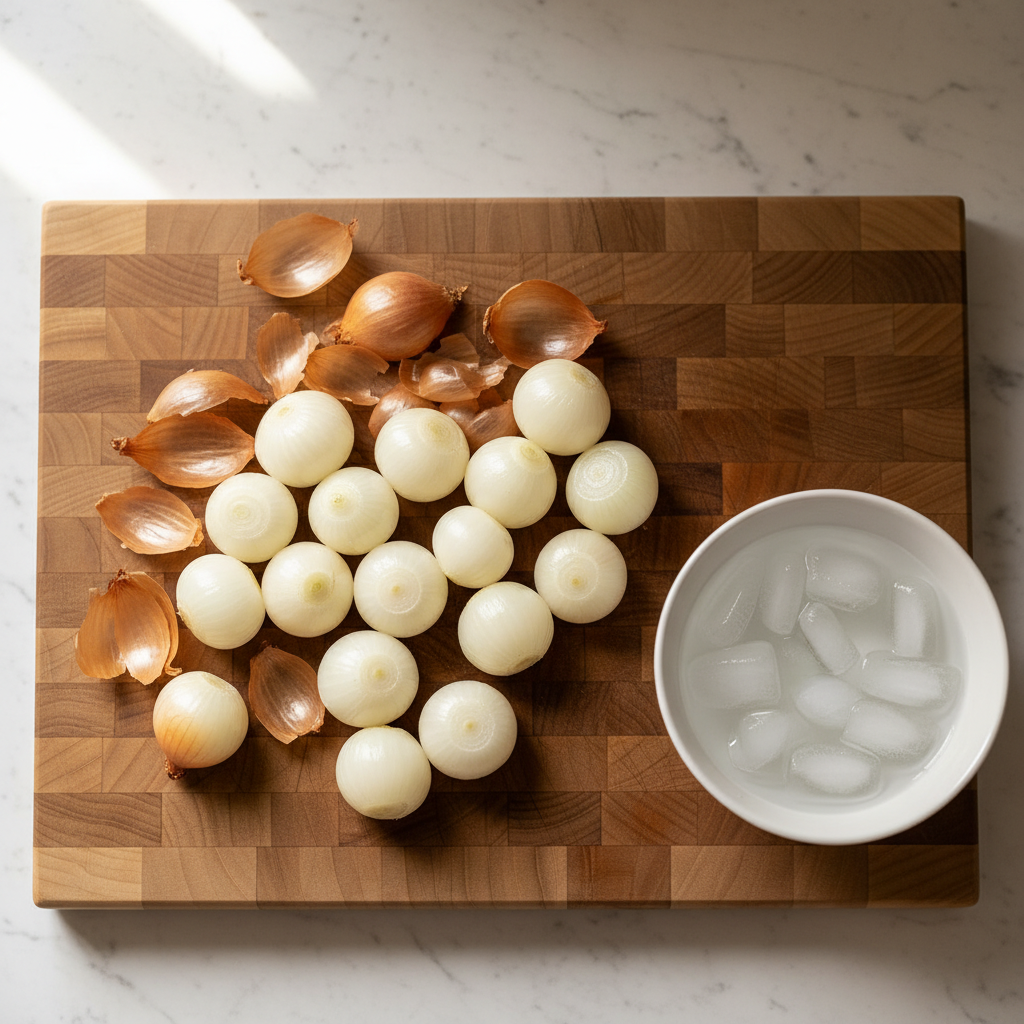
1. Peel the pearl onions. Score a shallow X on the root end of each onion. Drop them into boiling water for 60 seconds, then transfer immediately to a bowl of ice water. The skins will slip off cleanly. Pat the peeled onions completely dry — surface moisture prevents caramelization.
2. Season and sear the beef. Pat the beef cubes completely dry with paper towels. Season generously on all sides with salt and pepper. Heat 3 tablespoons of olive oil in a large Dutch oven or heavy-bottomed pot over high heat until the oil just begins to smoke. Sear the beef in batches — no more than a single layer at a time — for 3 to 4 minutes per side until deeply browned on all sides. Transfer to a plate and set aside. Do not rush this step; each batch should take 8 to 10 minutes total.
3. Caramelize the pearl onions. Wipe out any burnt bits from the pot. Over medium heat, melt the butter with 1 tablespoon olive oil. Add the pearl onions and the sugar. Cook, turning occasionally, for 8 to 10 minutes until golden brown on the outside. They should be colored but still firm. Remove and set aside on a separate plate.
4. Build the base. Add a little more olive oil to the pot if needed. Add the diced onion and cook over medium heat, stirring occasionally, for 5 minutes until softened and lightly golden. Add the crushed garlic and tomato paste; cook another 2 minutes, stirring constantly, until the tomato paste darkens a shade and smells fragrant.
5. Deglaze with wine. Pour in the red wine and use a wooden spoon to scrape up all the caramelized bits stuck to the bottom of the pot — that is concentrated flavor. Let the wine bubble and reduce by half, about 3 minutes.
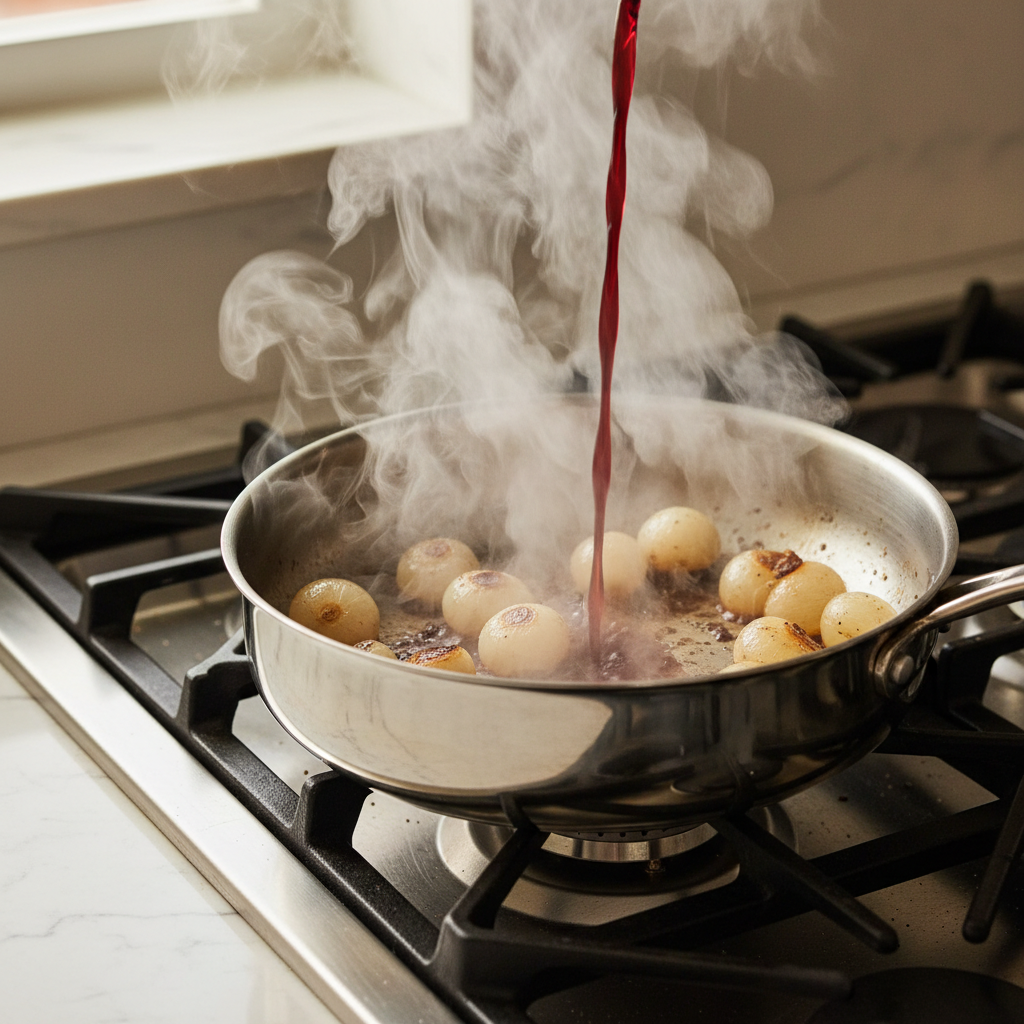
6. Add the braise ingredients. Add the crushed tomatoes, beef stock, red wine vinegar, cinnamon stick, whole cloves, allspice berries, and bay leaves. Stir to combine. Taste the liquid and add salt if needed — it should be well-seasoned now, before the long braise concentrates it.
7. Return the beef and begin braising. Nestle the seared beef into the pot. The liquid should come about halfway up the sides of the meat. Add a little more stock or water if needed. Bring to a gentle simmer over medium heat, then cover with a tight-fitting lid. Transfer to an oven preheated to 160°C (325°F), or reduce the stovetop to the absolute lowest setting.
8. Add the pearl onions. After 1 hour 30 minutes, gently nestle the caramelized pearl onions into the pot around the beef. Do not stir — just ease them in and return the pot to the oven. Braise for another 45 to 60 minutes until the beef yields easily to a fork and the sauce has thickened.
9. Rest and serve. Remove from the oven. Discard the cinnamon stick, bay leaves, and whole cloves (they are usually visible). Taste the sauce once more for seasoning. Allow to rest, uncovered, for at least 15 minutes before serving. For best results, cool completely, refrigerate overnight, skim the fat from the surface, and reheat gently.
Recipe Card
Stifado — Greek Beef and Onion Stew
Ingredients
For the Beef
- 1.5 kg beef chuck or shin, cut into 5 cm cubes 3.3 lbs
- salt and freshly ground black pepper
- 3 tablespoons olive oil
For the Onions
- 800 g pearl onions or small shallots, peeled 1.75 lbs
- 1 tablespoon unsalted butter
- 1 tablespoon olive oil
- 1 teaspoon sugar
For the Braise
- 1 large onion, finely diced
- 6 garlic cloves, lightly crushed
- 2 tablespoons tomato paste
- 250 ml dry red wine 1 cup
- 1 can whole peeled tomatoes, crushed by hand 400 g / 14 oz
- 150 ml beef stock or water ⅔ cup
- 2 tablespoons red wine vinegar
- 1 cinnamon stick
- 5 whole cloves
- 6 allspice berries
- 2 bay leaves
- ½ teaspoon dried rosemary optional
Instructions
- Score a shallow X on the root end of each pearl onion. Drop into boiling water for 60 seconds, then transfer to a bowl of ice water. The skins will slip off cleanly. Pat the peeled onions completely dry — surface moisture prevents caramelization.
- Pat the beef cubes completely dry with paper towels. Season generously on all sides with salt and pepper. Heat 3 tablespoons olive oil in a large Dutch oven over high heat until it just begins to smoke. Sear the beef in batches — no more than a single layer at a time — for 3–4 minutes per side until deeply browned. Transfer to a plate and set aside.
- Wipe out any burnt bits from the pot. Over medium heat, melt the butter with 1 tablespoon olive oil. Add the pearl onions and the sugar. Cook, turning occasionally, for 8–10 minutes until golden brown on the outside. They should be colored but still firm. Remove and set aside.
- Cook diced onion in the pot over medium heat for 5 minutes until softened and lightly golden. Add garlic and tomato paste; cook another 2 minutes until fragrant.
- Pour in the red wine and use a wooden spoon to scrape up all the caramelized bits stuck to the bottom of the pot. Let the wine bubble and reduce by half, about 3 minutes.
- Add crushed tomatoes, beef stock, red wine vinegar, cinnamon stick, whole cloves, allspice berries, and bay leaves. Return the seared beef to the pot. Bring to a gentle simmer.
- Cover and braise at 160°C (325°F) for 1 hour 30 minutes without disturbing.
- Gently nestle the caramelized pearl onions into the pot. Do not stir — ease them in and return to the oven. Braise another 45–60 minutes until the beef yields easily to a fork and the sauce has thickened.
- Remove whole spices. Rest at least 15 minutes before serving. Best made a day ahead: refrigerate overnight, skim fat from the surface, and reheat gently.
Notes
Nutrition
Chef’s Notes
The Rabbit Question
On Kos, and across the older generation of Greek cooks, there is a standing argument about which meat belongs in stifado. The traditionalists — and my grandmother was firmly among them — will tell you that proper stifado uses rabbit, not beef. They are not wrong about the history: the dish originated with rabbit, and the leaner, more delicate meat absorbs the wine and warm spices in a way that is lighter and more aromatic than beef.
But beef has become the standard in modern Greek homes because it is more forgiving, more widely available, and produces a richer, more substantial result. Chuck or shin — cuts with collagen content — are ideal; the collagen dissolves into the sauce over the long braise and gives it body and silk. Avoid lean cuts. They become dry and stringy without the fat and connective tissue that the braise needs.
If you can find good rabbit from a butcher, it is worth making the rabbit version at least once. Use the same recipe, substitute rabbit pieces cut at the joints, and reduce the total braising time by about 30 minutes.
Making It Ahead
I cannot emphasize this enough: make stifado the day before you intend to serve it. After a night in the refrigerator, the braising liquid, the spices, and the meat integrate completely. The cinnamon stops tasting like cinnamon and starts tasting like the dish itself. The sauce becomes darker and more cohesive. The pearl onions absorb the surrounding flavors.
Before reheating, skim the solidified fat from the surface of the cold stew. Some of it is flavor — the schmaltz-like layer rendered from the beef — but most of it can go. Reheat gently over low heat, adding a splash of stock if the sauce has thickened beyond what you want.
Serving Suggestions
The traditional accompaniment on the islands is nothing more than thick slices of crusty bread and a glass of the same red wine that went into the pot. That is the honest answer. For a more complete meal, Greek lemon potatoes are the ideal pairing — their brightness cuts through the richness of the sauce in exactly the right way. A Greek village salad (horiatiki) served before the stifado makes for a proper Sunday table.
Storage
- Refrigerator: 4 to 5 days in a covered container. The flavor continues to develop.
- Freezer: Up to 3 months. Portion before freezing for easier weeknight reheating.
FAQ
What cut of beef is best for stifado?
Chuck or shin (bone-in osso buco cuts work well too, removed from the bone) are ideal. Both have the collagen content needed to produce a rich, silky sauce over a long braise. Lean cuts — sirloin, round, tenderloin — become dry and stringy and are not suitable.
Can I make stifado in a slow cooker?
Yes. Sear the beef and caramelize the onions on the stovetop first — that step is not skippable. Then transfer everything to a slow cooker. Cook on low for 7 to 8 hours, adding the caramelized pearl onions in the last 2 hours. The sauce may be slightly thinner than the oven version; reduce it on the stovetop for 10 to 15 minutes before serving if needed.
What wine works best in stifado?
Any dry red wine you would drink. Greek wines are the ideal choice — Xinomavro from northern Greece or Agiorgitiko from the Peloponnese both work beautifully. Avoid sweet wines (they make the sauce cloying) and avoid heavily tannic wines (they can turn bitter after hours of braising). A medium-bodied dry red from anywhere in the Mediterranean is the right direction.
Is stifado the same as Greek beef stew (kokkinisto)?
They are related but distinct dishes. Kokkinisto is tomato-forward with a simpler spice profile — straightforward, savory, and red. Stifado’s defining character is its large quantity of whole onions and its warm spice blend of cinnamon, cloves, and allspice, which gives it a sweeter, more complex flavor that reads quite differently from kokkinisto, even when made with the same cut of beef.
Why do the pearl onions fall apart in my stifado?
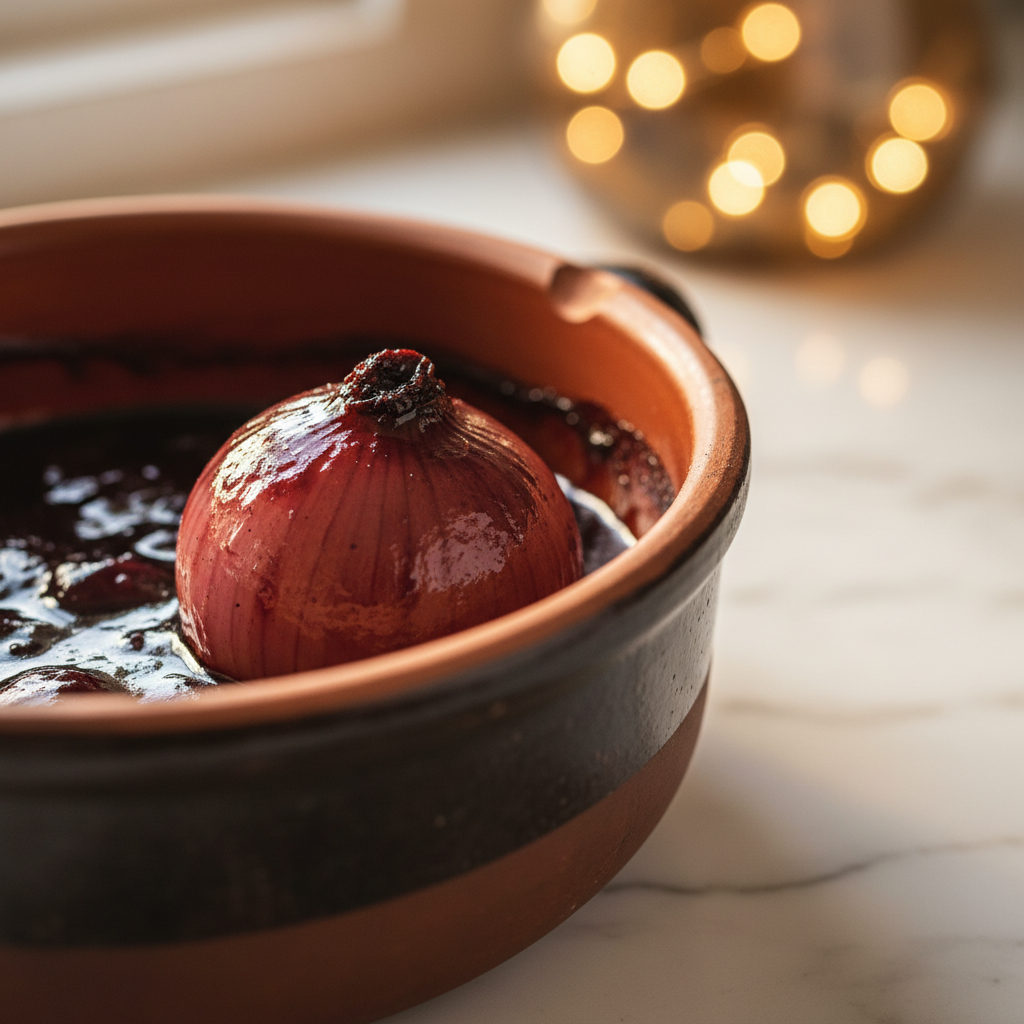
Two causes, usually working together: adding them raw at the beginning (they cannot survive the full braise intact) or stirring the pot during cooking. Pre-caramelize the onions separately as described in this recipe, add them only in the last 45 to 60 minutes, and do not stir once they are in the pot. They will hold their shape and caramelize all the way through.
Can stifado be made vegetarian?
The dish as traditionally understood is built around braised meat, and the long braise with meat drippings is central to its character. That said, a version using portobello mushrooms, large button mushrooms, or a combination of mushrooms and chestnuts in place of the meat, braised in vegetable stock and red wine with the same spice profile, produces something genuinely interesting — it is not stifado in the strict sense, but it borrows the technique and flavor direction well.