
The first time I ate pastitsada, I was not in Corfu. I was a young cook just off a ferry from Kos, passing through the Ionian islands for the first time, sitting in a small taverna near the Venetian Old Town walls. A plate arrived that I was not expecting: thick-cut beef, impossibly tender, in a dark sauce the color of old mahogany, poured over a pile of square-cut egg pasta. And the smell — cinnamon, clove, a warmth that was somehow both foreign and deeply familiar.
I ordered another plate before I had finished the first.
Pastitsada is the signature dish of Corfu (Kerkyra), and it tells the story of that island better than any guidebook. For nearly four hundred years, the Ionian islands were under Venetian rule — and that long occupation left marks on the food that are still visible today. The combination of slow-braised beef with whole warm spices, the tomato-enriched sauce, the pasta underneath: this is not mainland Greek cooking. This is Greek cooking refracted through centuries of Venetian influence. It wears its history openly, and that is part of what I love about it.
This recipe is not fast — the braise takes a full three hours — but almost all of that time is hands-off. The result is tender beef in a thick, aromatic pastitsada Corfu beef pasta sauce that fills the kitchen with a scent that is unlike anything else in the Greek kitchen.
Table of Contents
What Is Pastitsada?
Pastitsada (παστιτσάδα) is the traditional slow-braised beef dish of Corfu and the Ionian islands. Unlike mainland Greek stews, which tend toward cleaner, simpler flavors, pastitsada is defined by a generous blend of whole warm spices — cinnamon, allspice, cloves, and bay leaves — braised into a rich tomato-and-wine sauce over several hours. The beef becomes fork-tender in the process, and the dish is always served over pasta.
The name likely derives from the Italian “pastizzada,” a Venetian preparation of slow-cooked meat, and this etymology reflects the dish’s origins directly. During the four centuries of Venetian rule over the Ionian islands (1386–1797), Italian culinary techniques and ingredients merged with local Greek tradition. The spice combination, the pasta, the long braise in wine and tomato: these are all signatures of that Venetian-Ionian fusion. According to food historians, pastitsada is recognized as Corfu’s national dish, found on family tables from Easter through autumn.
Why This Recipe Works
- Browning the beef in batches, without crowding. Building deep color on the meat’s surface is the foundation of flavor in this dish. Crowded beef steams rather than browns, and a steamed crust is no crust at all.
- Reducing the wine before adding anything else. After deglazing, let the red wine reduce by at least half before adding tomatoes or stock. This step burns off the raw alcohol edge and concentrates the wine’s fruit and acidity into the sauce.
- Whole spices, not ground. A cinnamon stick, allspice berries, whole cloves, and bay leaves are braised in their whole form, then removed before serving. Whole spices release their flavors slowly and evenly over a long cook. Ground spice added at the start would turn bitter and harsh over three hours.
- Finishing the pasta directly in the sauce. Cooking the hilopites to just under al dente and then letting them absorb the braising liquid for one to two minutes transforms the dish. The pasta takes on the deep spiced character of the sauce.
Ingredients
For the beef braise:
- 1.5 kg (3.3 lbs) beef chuck or short ribs, cut into 5–6 cm chunks
- 3 tablespoons extra-virgin olive oil, divided
- 1 large onion, finely diced
- 4 garlic cloves, minced
- 1 cup (240 ml) dry red wine (Agiorgitiko, Xinomavro, or a good Merlot)
- 400g (14 oz / 1 can) crushed tomatoes
- 2 tablespoons tomato paste
- 1 cup (240 ml) beef stock or water
- 1 teaspoon fine salt
- ½ teaspoon black pepper, freshly ground
- Pinch of sugar (optional, to balance acidity)
Spice bundle (whole spices):
- 1 cinnamon stick
- 6 allspice berries
- 4 whole cloves
- 2 bay leaves
For the pasta:
- 400g (14 oz) hilopites (Greek egg pasta squares), or penne or rigatoni
- Generous pinch of salt for pasta water
To serve:
- 60–80g (2–3 oz) kefalotyri cheese, grated — or Parmesan as a substitute
Step-by-Step Instructions
Step 1 — Prepare the beef.
Remove the beef from the refrigerator 30 minutes before cooking. Pat every piece completely dry with paper towels — moisture on the surface causes it to steam in the pan rather than brown.
Step 2 — Brown in batches.
Heat a heavy-bottomed Dutch oven over high heat. Add 2 tablespoons of olive oil. Once shimmering, add the first batch of beef — no more than 4 to 5 pieces with clear space between them. Do not move the meat for 2 to 3 minutes. Let it release naturally. Turn and brown the other side, then transfer to a plate. Repeat with remaining beef. This step should take 15 to 20 minutes in total. Do not rush it.
Step 3 — Soften the aromatics.
Reduce heat to medium. Add the remaining tablespoon of olive oil to the same pot. Cook the diced onion for 8 to 10 minutes until softened and translucent. Add the minced garlic and stir for another minute until fragrant.
Step 4 — Caramelize the tomato paste and deglaze.
Stir in the tomato paste and press it into the base of the pot. Cook for 1 to 2 minutes until it darkens slightly. Pour in the red wine and scrape up every caramelized bit from the bottom with a wooden spoon. Raise heat to medium-high and reduce the wine by half — about 4 to 5 minutes.
Step 5 — Build the braise.
Add the crushed tomatoes, beef stock, salt, pepper, and the optional pinch of sugar. Stir to combine. Return the browned beef to the pot along with any juices collected on the plate. Add the spice bundle: cinnamon stick, allspice berries, cloves, and bay leaves. Nestle the spices into the liquid.
Step 6 — Braise, low and slow.
Bring the pot to a gentle simmer, then reduce heat to the lowest setting. Cover tightly with a lid. Braise for 2.5 to 3 hours, checking every 45 minutes and turning the beef gently. The braise is done when the beef yields completely to a fork and the sauce has thickened to a glossy, coat-the-spoon consistency. If the sauce is too thin when the beef is tender, transfer the beef, raise heat, and reduce uncovered for 10 to 15 minutes.
Step 7 — Remove the spice bundle.
Fish out and discard the cinnamon stick, allspice berries, cloves, and bay leaves. Taste the sauce and adjust the salt.
Step 8 — Cook the pasta.
Bring a large pot of generously salted water to a rolling boil. Cook the hilopites (or chosen pasta) for 2 minutes less than the package instruction — just under al dente. Drain, reserving a full ladle of the pasta water.
Step 9 — Finish and serve.
Add the drained pasta directly to the pot of braised beef and sauce. Toss gently over low heat for 1 to 2 minutes, allowing the pasta to absorb the sauce. Add reserved pasta water if the mixture seems too thick. Serve in wide, shallow bowls with a generous portion of pasta, two or three pieces of tender beef, the glossy sauce spooned over everything, and a cloud of grated kefalotyri.
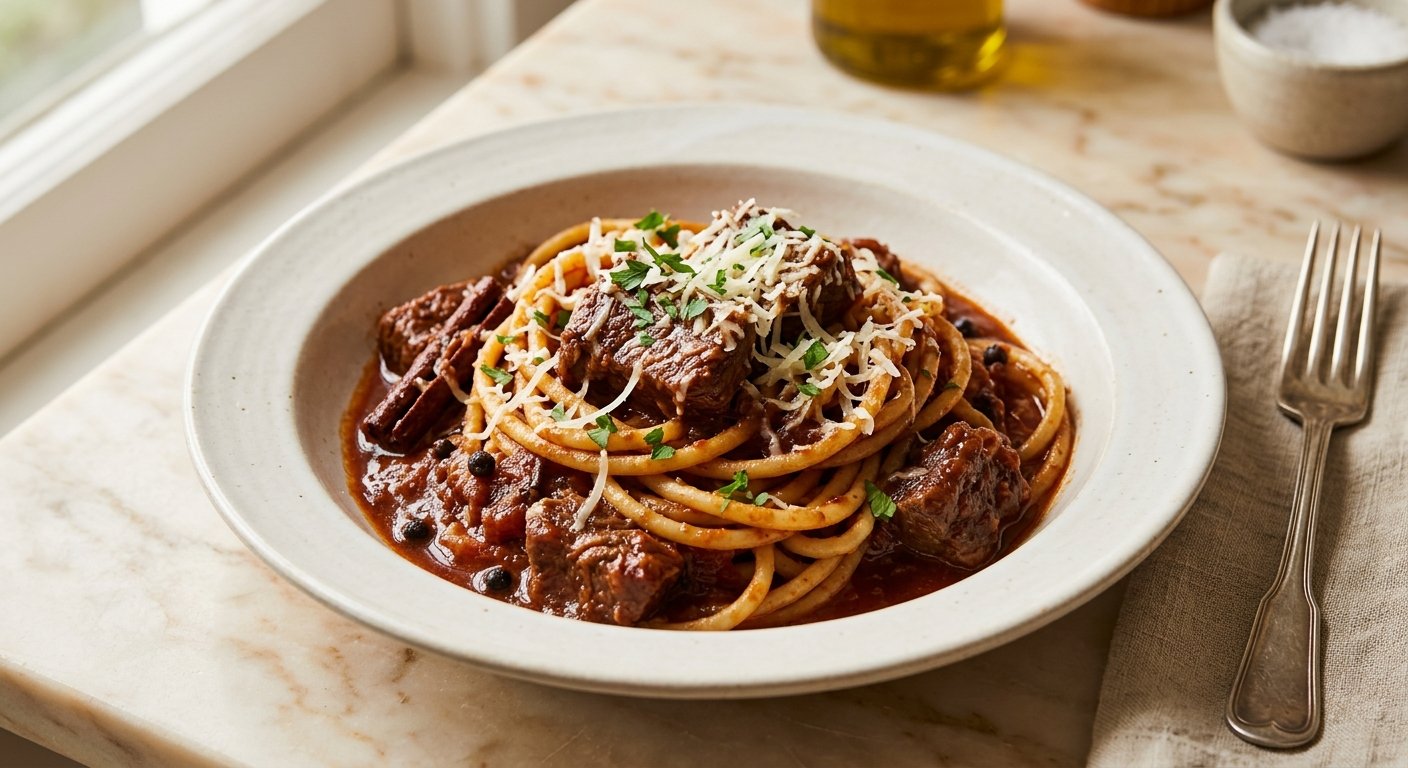
Pastitsada — Corfu Beef and Pasta Stew
Ingredients
For the beef braise
- 1.5 kg beef chuck or short ribs 3.3 lbs, cut into 5-6 cm / 2-2.5 inch chunks
- 3 tbsp extra-virgin olive oil divided
- 1 large onion finely diced
- 4 clove garlic minced
- 240 ml dry red wine 1 cup -- Agiorgitiko, Xinomavro, or a robust Merlot
- 400 g crushed tomatoes 14 oz / 1 can
- 2 tbsp tomato paste
- 240 ml beef stock or water 1 cup
- 1 tsp fine salt
- 0.5 tsp black pepper freshly ground
- pinch sugar optional, to balance acidity
Spice bundle (whole spices)
- 1 cinnamon stick
- 6 allspice berries whole
- 4 whole cloves
- 2 bay leaves
For the pasta
- 400 g hilopites 14 oz Greek egg pasta squares, or penne or rigatoni
- salt generous pinch for pasta water
To serve
- 60-80 g kefalotyri cheese 2-3 oz, grated -- or Parmesan as a substitute
Instructions
- Remove the beef from the refrigerator 30 minutes before cooking. Pat every piece completely dry with paper towels.
- Heat a Dutch oven over high heat. Add 2 tablespoons olive oil. Brown beef in batches of 4-5 pieces without crowding, 2-3 minutes per side until deeply colored. Transfer to a plate. Repeat with remaining beef. Total browning time: 15-20 minutes.
- Reduce heat to medium. Add remaining 1 tablespoon olive oil. Cook onion 8-10 minutes until soft and translucent. Add garlic and cook 1 minute.
- Stir in tomato paste and cook 2 minutes until slightly darkened. Pour in red wine, scraping up all browned bits. Raise heat and reduce wine by half, about 5 minutes.
- Add crushed tomatoes, stock, salt, pepper, and optional sugar. Return browned beef and collected juices to the pot. Add cinnamon stick, allspice berries, cloves, and bay leaves.
- Bring to a gentle simmer. Cover tightly and braise on lowest heat for 2.5 to 3 hours, until beef is fork-tender and sauce is thick and glossy. Check and turn beef every 45 minutes.
- Remove and discard all whole spices: cinnamon stick, allspice berries, cloves, and bay leaves. Taste sauce and adjust seasoning.
- Bring a large pot of generously salted water to a boil. Cook pasta 2 minutes less than package directions. Drain, reserving 1 ladle of pasta water.
- Add drained pasta to the pot of braised beef. Toss gently over low heat for 1-2 minutes. Add reserved pasta water as needed to loosen the sauce. Serve in wide bowls topped with grated kefalotyri or Parmesan.
Notes
Nutrition
Chef’s Notes
On browning the beef: Do not rush this step. Every piece needs contact with a hot, dry pan surface. If the meat steams — because the pan is too crowded, or the heat is too low — you will get a grey exterior rather than a crust, and the sauce will taste flat. Brown in batches. This is where the dish is won or lost.
On the spice bundle: The warmth in pastitsada is Venetian in origin — it echoes the Venetian pastizzada de caval — and the whole spice combination is what makes it unmistakably different from a mainland Greek slow-cooked beef dish. If you have made my Greek Beef Stew (Kokkinisto) before, you already know the Greek braised beef tradition; pastitsada is a close relative, but it is brasier, more aromatic, and always married to pasta.
On the pasta: Hilopites are the traditional pasta for this dish — small, flat, square-cut Greek egg pasta that absorbs sauce magnificently. Find them at Greek grocery stores or online. If you cannot locate hilopites, penne or rigatoni are the best substitutes. You need pasta with enough structure to hold the weight of the sauce.
On making it ahead: This is a dish that genuinely improves with an overnight rest. The spices continue to work into the meat, and the fat rises to the surface for easy skimming in the morning. Make the beef braise on Saturday, refrigerate it, and cook fresh pasta just before Sunday lunch.
Serving: Pastitsada needs very little alongside it. If you want to build a full Greek table, my Traditional Greek Village Salad (Horiatiki) is the natural companion — the fresh acidity cuts beautifully through the richness of the stew.
FAQ
What is pastitsada made of?
Pastitsada is made of beef slow-braised in a tomato-and-red wine sauce with a bundle of whole warm spices: cinnamon, allspice, cloves, and bay leaves. It is always served over pasta — traditionally hilopites (Greek egg pasta squares) or thick short pasta — and finished with grated hard cheese such as kefalotyri or Parmesan.
What is the difference between pastitsada and stifado?
Both are Greek braised beef dishes, but they differ significantly in character. Stifado uses pearl onions as the main vegetable and has a sweeter, more gently spiced profile. Pastitsada uses considerably more warm spice — cinnamon, allspice, cloves — producing a deeper, more aromatic sauce. Most importantly, pastitsada is always served with pasta; stifado is typically eaten with bread or on its own. Pastitsada is specific to the Ionian islands and reflects Venetian culinary influence; stifado is found throughout mainland Greece.
Can I use chicken instead of beef for pastitsada?
Yes. Rooster or chicken pastitsada (pastitsada me kotopoulo) is the traditional Sunday version in many Corfu households. Use bone-in chicken pieces, reduce the braise time to 1 to 1.5 hours, and follow the same spice mixture. The flavor will be lighter and faster, but equally aromatic.
What pasta goes in pastitsada?
The traditional pasta is hilopites — small, flat, square-cut Greek egg pasta available at Greek grocery stores. If unavailable, penne, rigatoni, or thick egg noodles work well. Avoid thin pasta; you need pasta with enough body to absorb the sauce and hold up against the beef.
Can pastitsada be made ahead?
Absolutely, and it should be when possible. The braised beef improves significantly after an overnight rest. The spices meld, the fat rises to the surface for easy skimming, and the flavors deepen. Refrigerate for up to 4 days or freeze for up to 3 months. Always cook the pasta fresh each time, just before serving.