
Chef’s note: Having the syrup ready and waiting hot is the key to this recipe. If the syrup cools while you toast the semolina, bring it back to a boil before adding — cold syrup into hot semolina creates lumps.
2. Toast the semolina
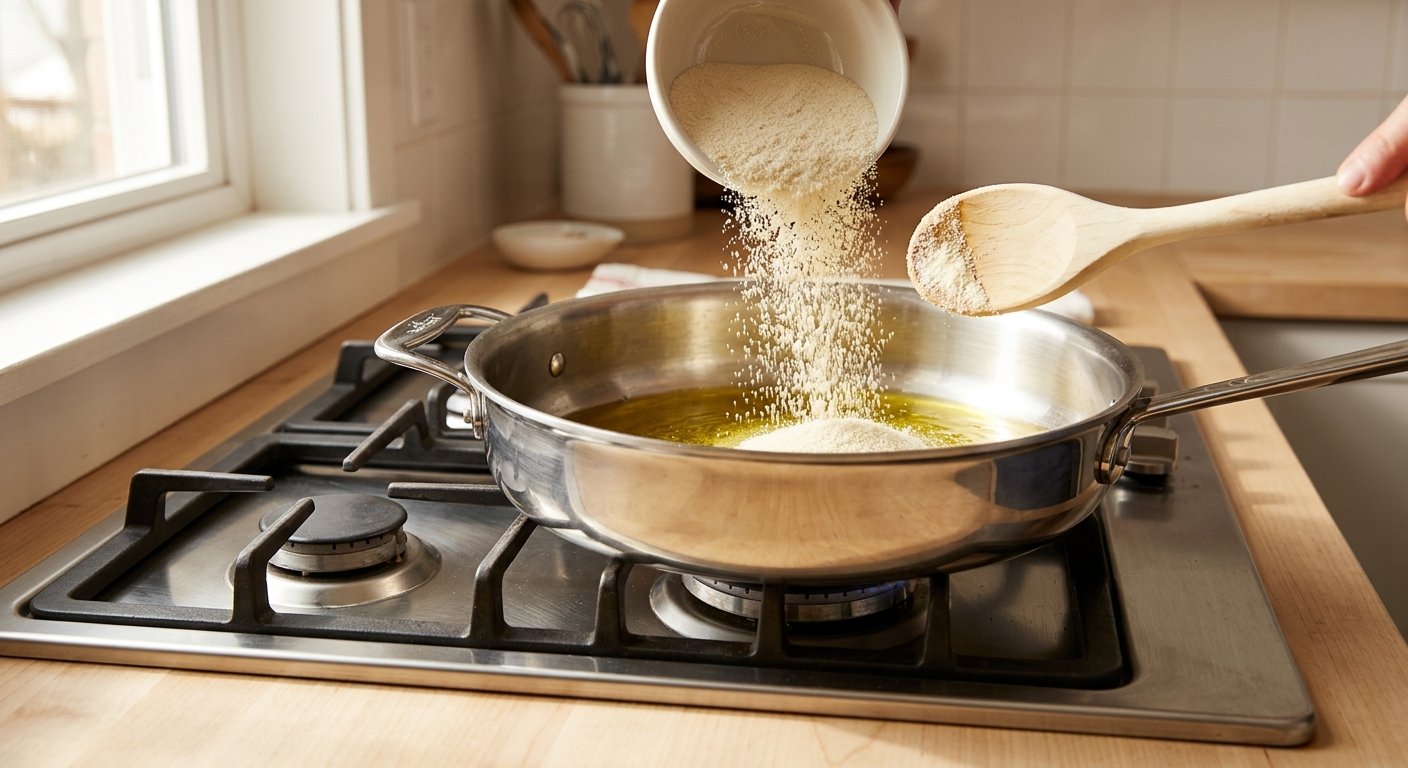
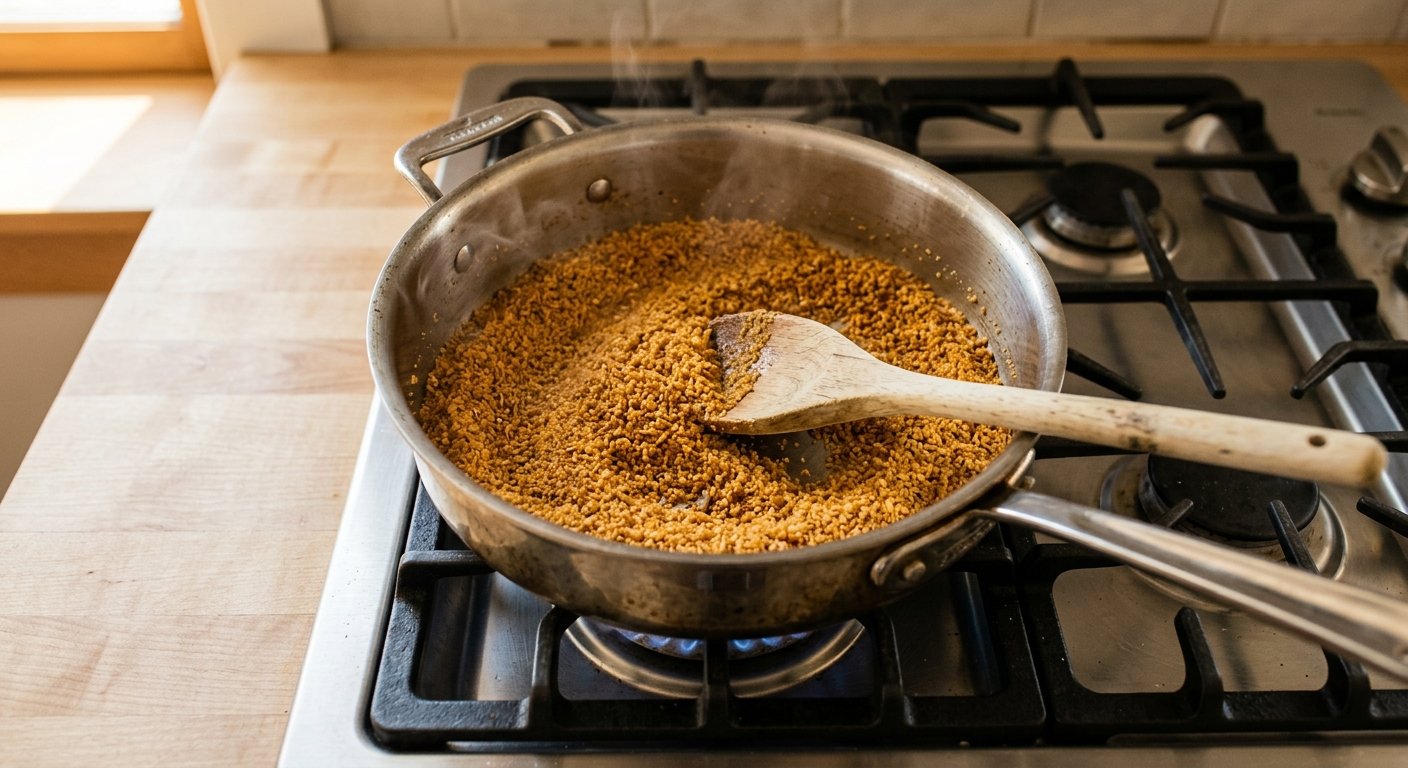
Heat the olive oil in a wide, heavy-bottomed pot or deep sauté pan over medium heat. Add the semolina all at once. Stir continuously with a wooden spoon, moving the semolina constantly so it toasts evenly without burning. Cook for 8–12 minutes, until the semolina is golden-brown and smells deeply nutty and toasted. The color should go from white to pale gold to a warm amber — stop before it reaches dark brown.
Chef’s note: Continuous stirring is not optional here. If you walk away, the semolina will burn in spots and taste bitter. Stay at the pot and keep the spoon moving. The toasting is where almost all of the halva’s flavor comes from.
3. Add the hot syrup
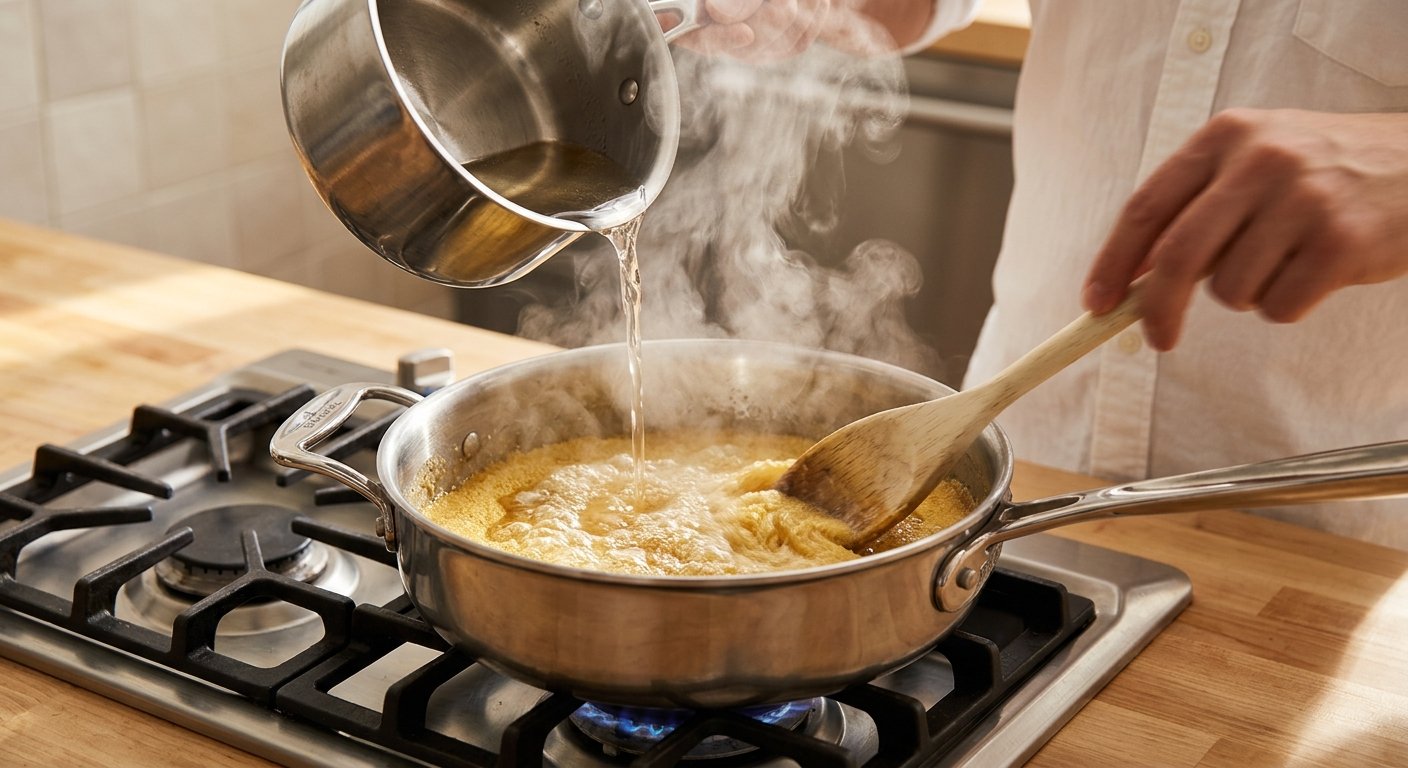
This step happens fast and requires both hands and confidence. Remove the cinnamon stick and cloves from the syrup. With one hand holding the pot of semolina off or at the edge of the heat, pour the hot syrup into the semolina in one steady stream while stirring vigorously with the other hand. The mixture will bubble violently — this is expected. Stir continuously as the halva absorbs the syrup and thickens, about 2–3 minutes, until the mixture pulls away from the sides of the pot.
4. Add walnuts or raisins (optional)
If using, fold them in at this stage while the halva is still soft enough to mix.
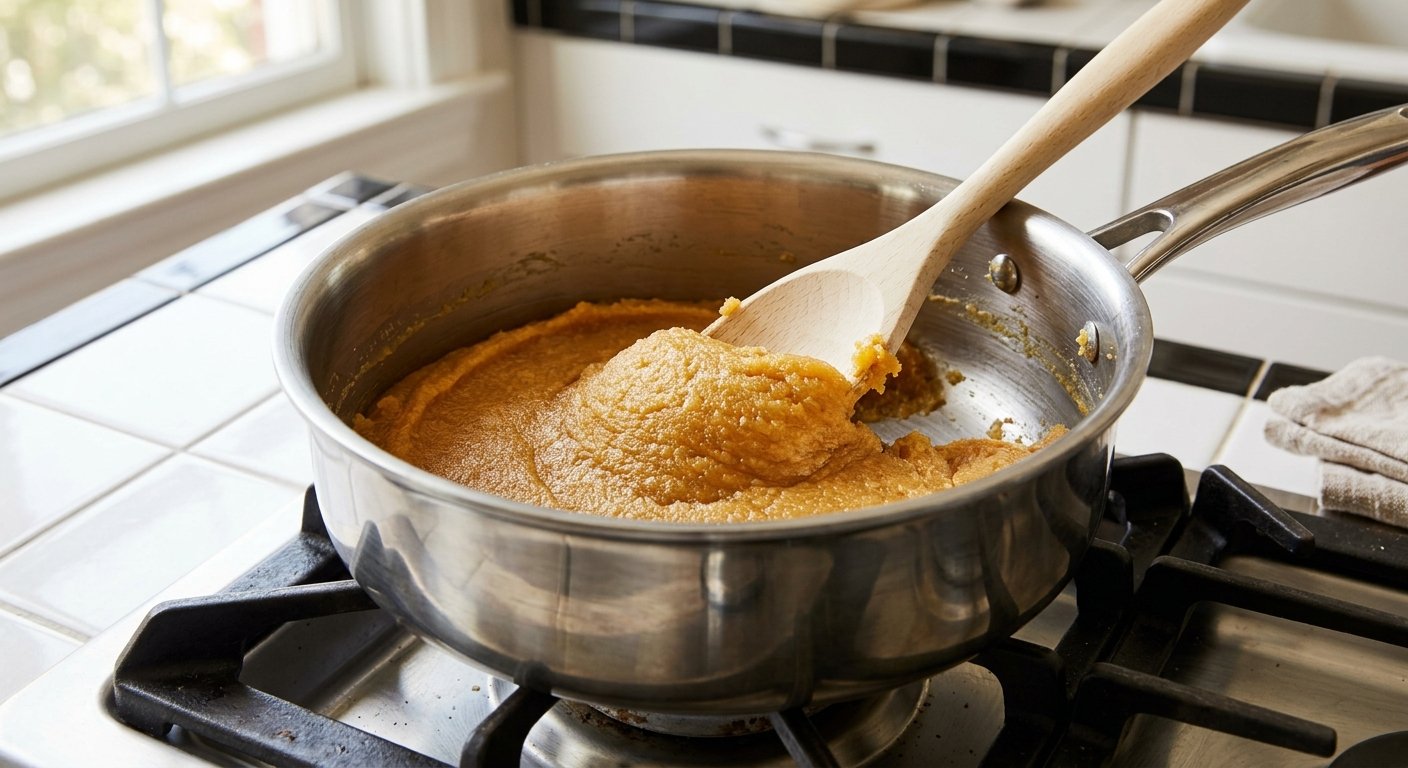
5. Mold and rest
Immediately pour or spoon the hot halva into a lightly oiled Bundt pan, individual ramekins, or a round cake pan. Smooth the top, then cover with a clean kitchen towel and let it rest for 15–20 minutes. The halva will firm up as it cools.
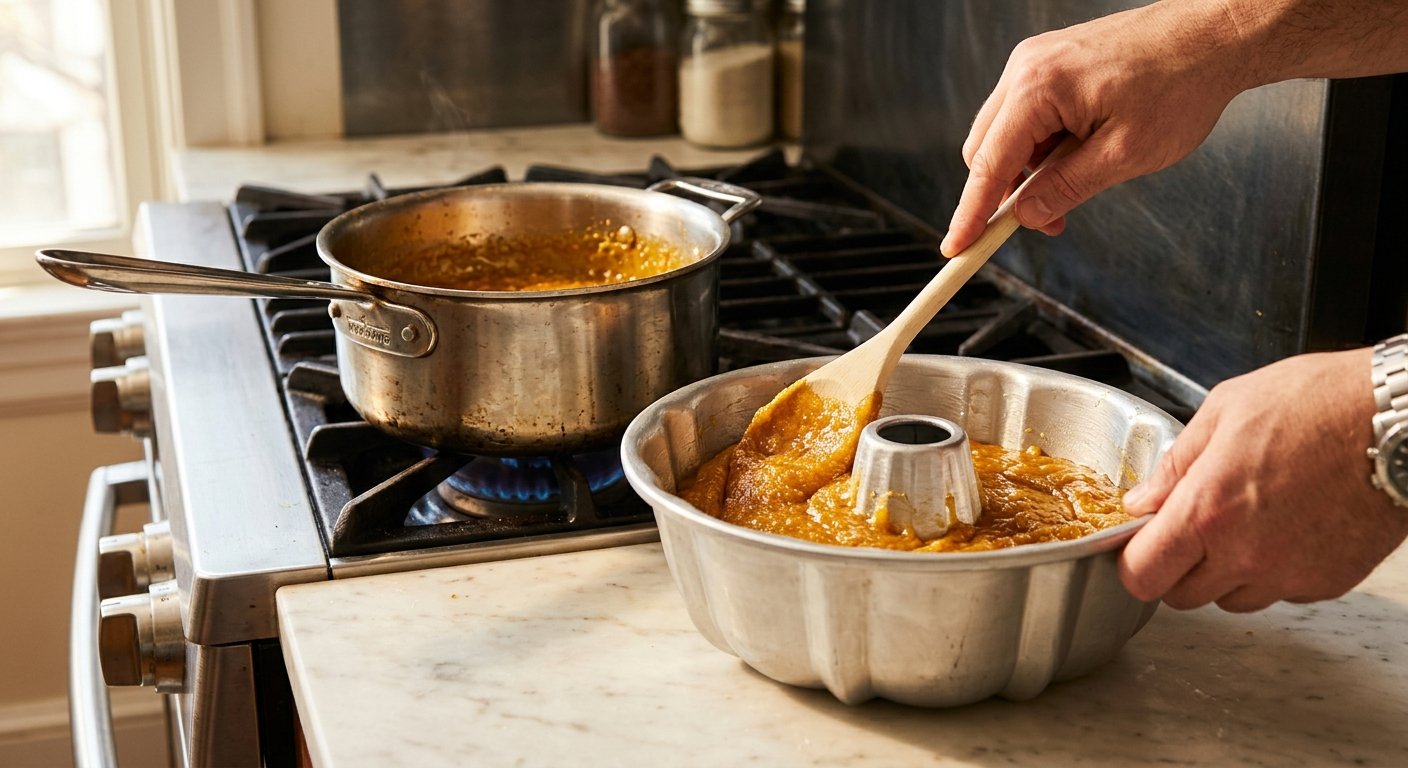
6. Unmold and serve
Invert the pan onto a serving plate. The halva should release cleanly. Dust generously with ground cinnamon. Serve warm or at room temperature.
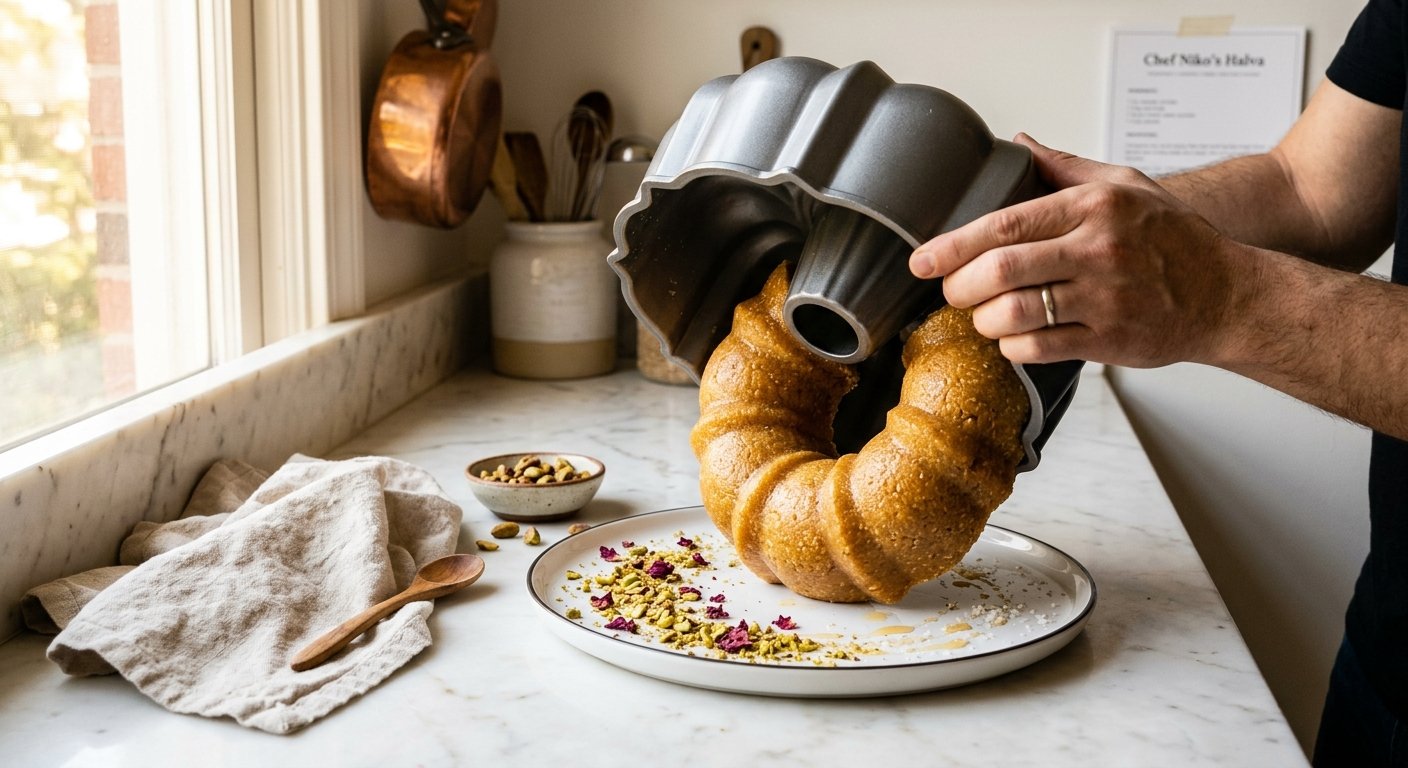
Chef’s Notes
On olive oil
Greek halva is traditionally made with olive oil, not butter — this is essential for the fasting table. It also gives the halva a distinctly savory undertone that balances the sweetness. A mild, fruity olive oil works best; a very peppery, aggressive olive oil can dominate the spice. Extra-virgin is preferred for flavor.
On semolina
Coarse semolina produces the characteristic crumbly, sandy texture. Fine semolina (durum wheat farina) produces a smoother, denser result. Both work; the coarse version is more authentically Greek. Semolina is a form of durum wheat — according to Britannica, it is the coarse, purified wheat middlings used across Mediterranean cooking from pasta to desserts.
On sweetness
Greek semolina halva is genuinely sweet — the 3:4 sugar-to-water ratio produces a syrup that fully saturates the semolina. If you prefer a less sweet version, reduce the sugar to 2½ cups. Do not reduce further or the halva will not set properly.
Connection to the Greek sweets tradition
Halva simigdalenio sits alongside Loukoumades (Greek Honey Doughnuts) and Baklava as part of the Greek sweets repertoire — but it occupies a different table. Where loukoumades and baklava are celebrations, halva is the everyday sweet of the fasting table, the Lenten kitchen, and the week when you want something honest and uncomplicated.
Storage
Halva keeps at room temperature, covered, for 2–3 days. It is best eaten the day it is made while still slightly warm. After the first day it firms up considerably and can be sliced cleanly. It does not need refrigeration unless your kitchen is very warm.
Recipe Card
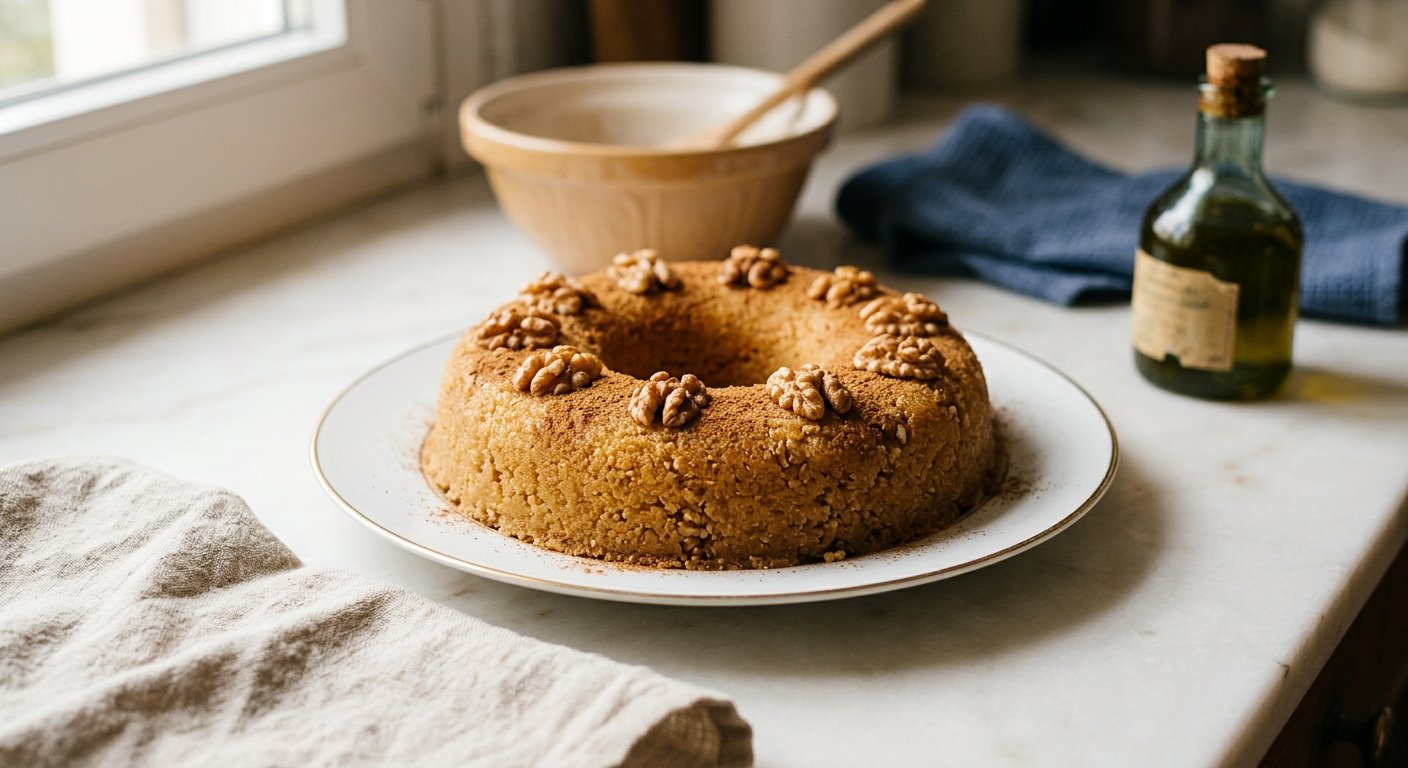
Greek Semolina Halva (Halva Simigdalenio)
Ingredients
The 1-2-3-4 Ratio
- 1 cup extra-virgin olive oil the “1”
- 2 cup coarse semolina the “2”
- 3 cup sugar the “3”
- 4 cup water the “4”
- 1 cinnamon stick
- 3-4 whole cloves
- 1/2 cup walnuts coarsely chopped; optional
- ground cinnamon for dusting
Instructions
- Combine the sugar, water, cinnamon stick, and cloves in a saucepan. Bring to a boil over medium-high heat, stirring until the sugar dissolves. Reduce heat and simmer for 5 minutes. Keep the syrup hot over low heat until needed.
- Heat the olive oil in a wide, heavy-bottomed pot over medium heat. Add the semolina all at once. Stir continuously with a wooden spoon for 8-12 minutes until the semolina turns golden-brown and smells nutty and fragrant. The color should deepen significantly from white to golden. Do not leave the pot or stop stirring.
- Remove the cinnamon stick and cloves from the syrup. With the semolina still on the heat, pour the hot syrup into the pot in one steady stream while stirring vigorously. The mixture will bubble dramatically and may spatter. Continue stirring until the halva thickens and begins to pull away from the sides of the pot, about 2-3 minutes.
- Fold in the walnuts if using. Working quickly, pour the halva into a lightly oiled Bundt pan, ring mold, or individual ramekins. Smooth the top. Cover loosely with a clean kitchen towel and let rest for 15-20 minutes.
- Place a serving plate over the mold and invert in one confident motion. The halva should release cleanly. Dust generously with ground cinnamon. Serve warm or at room temperature.
Notes
Nutrition
FAQ
What is Greek halva?
Greek halva (halva simigdalenio) is a warm dessert made from coarse semolina toasted in olive oil, then cooked with a hot sugar syrup seasoned with cinnamon and cloves. It is set in a mold, unmolded onto a plate, dusted with cinnamon, and served at room temperature or slightly warm. It is completely vegan and is one of the traditional foods of the Greek Orthodox fasting calendar. It should not be confused with tahini halva — they share a name and a history but are very different foods.
How is Greek semolina halva different from tahini halva?
Tahini halva is made from sesame paste, sugar, and sometimes nuts. It is dense, cold, and has a strong sesame flavor. Greek semolina halva is made from wheat semolina toasted in olive oil. It is warm, crumbly, sandy in texture, and flavored with cinnamon rather than sesame. They share a name (halva derives from the Arabic “halwa,” meaning sweet) but are entirely different preparations.
What is the 1-2-3-4 ratio?
The 1-2-3-4 ratio is the traditional memory device for Greek semolina halva: 1 part olive oil, 2 parts semolina, 3 parts sugar, 4 parts water. It can be scaled to any quantity — use tablespoons for a small batch, cups for a full one. The ratio is reliable and produces the correct texture every time without measuring precisely.
Can I add nuts or other mix-ins?
Yes. Walnuts (the most common addition), slivered almonds, pine nuts, and raisins are all traditional. Add them just before molding, while the halva is still soft enough to fold them in. If using large walnut pieces, press them into the bottom of the mold so they appear decoratively on top when unmolded.
How do I store Greek semolina halva?
Store at room temperature, covered with plastic wrap or a clean towel, for up to 2–3 days. The halva will firm up as it cools and can be sliced cleanly after the first day. It is best eaten warm the day it is made, but it remains good for several days. Refrigeration is not necessary unless your kitchen is very warm.
There is a category of Greek knowledge that is passed down not through writing but through ratios. The way the best spanakopita feta is always half the weight of the spinach. The way avgolemono broth always calls for more lemon than you think. And the way halva simigdalenio — Greek semolina halva — is always made in the ratio 1-2-3-4.
One part olive oil. Two parts semolina. Three parts sugar. Four parts water.
On Kos, I learned this from my mother, who learned it from her mother, who probably never thought of it as a recipe at all. It was just the ratio. You could multiply it by anything. You could make enough for the family or enough for the whole street. The ratio held.
Greek halva — specifically this semolina version — is one of the defining foods of the Greek Orthodox fasting calendar. It contains no meat, no dairy, no eggs. It is built from olive oil, semolina, sugar, water, and a handful of spices: cinnamon and cloves in the syrup, ground cinnamon over the top. During the many fasting periods in the Greek year — Lent above all — halva appears on every table as the dessert that requires no compromise.
What makes it different from the tahini-based halva sold in Middle Eastern markets is the texture and warmth. Tahini halva is dense, cold, and slightly bitter. Greek semolina halva is warm, lightly sweet, crumbly in a sandy way, and deeply fragrant with cinnamon. It is served the day it is made, usually still slightly warm from the pot.
The technique requires attention and both hands. But it takes twenty minutes and produces something that satisfies in a way few simple desserts can.
Table of Contents
Why This Recipe Works
- The 1-2-3-4 ratio is structurally sound. The proportions of fat (oil) to grain (semolina) to sugar to liquid (water) produce exactly the right consistency: set enough to unmold, crumbly enough to spoon, moist enough to feel like dessert. Adjusting any element significantly will affect the result.
- Toasting the semolina is where the flavor is built. The semolina must be stirred continuously in the olive oil over medium heat until it turns golden and smells nutty. This toasting step caramelizes the grain and produces the halva’s characteristic deep color and flavor. Rushing it produces pale, flat halva.
- Hot syrup into hot semolina — all at once. The syrup must be at a boil when it goes into the semolina. Adding cold syrup to hot semolina produces uneven cooking and lumps. The technique is fast and requires confidence — pour the syrup in one motion while stirring.
- Coarse semolina, not fine. Fine semolina produces a smoother, denser halva. Coarse semolina produces the traditional sandy, crumbly texture that is the hallmark of the Greek version.
Ingredients
The 1-2-3-4 Ratio (serves 8–10)
- 1 cup extra-virgin olive oil (the “1”)
- 2 cups coarse semolina (the “2”)
- 3 cups sugar (the “3”)
- 4 cups water (the “4”)
For the Syrup
- 3 cups sugar
- 4 cups water
- 1 cinnamon stick
- 3–4 whole cloves
Optional Add-ins
- ½ cup coarsely chopped walnuts or slivered almonds
- ¼ cup raisins
For Serving
- Ground cinnamon, for dusting
- Honey, for drizzling (optional)
Step-by-Step Instructions
1. Make the syrup first
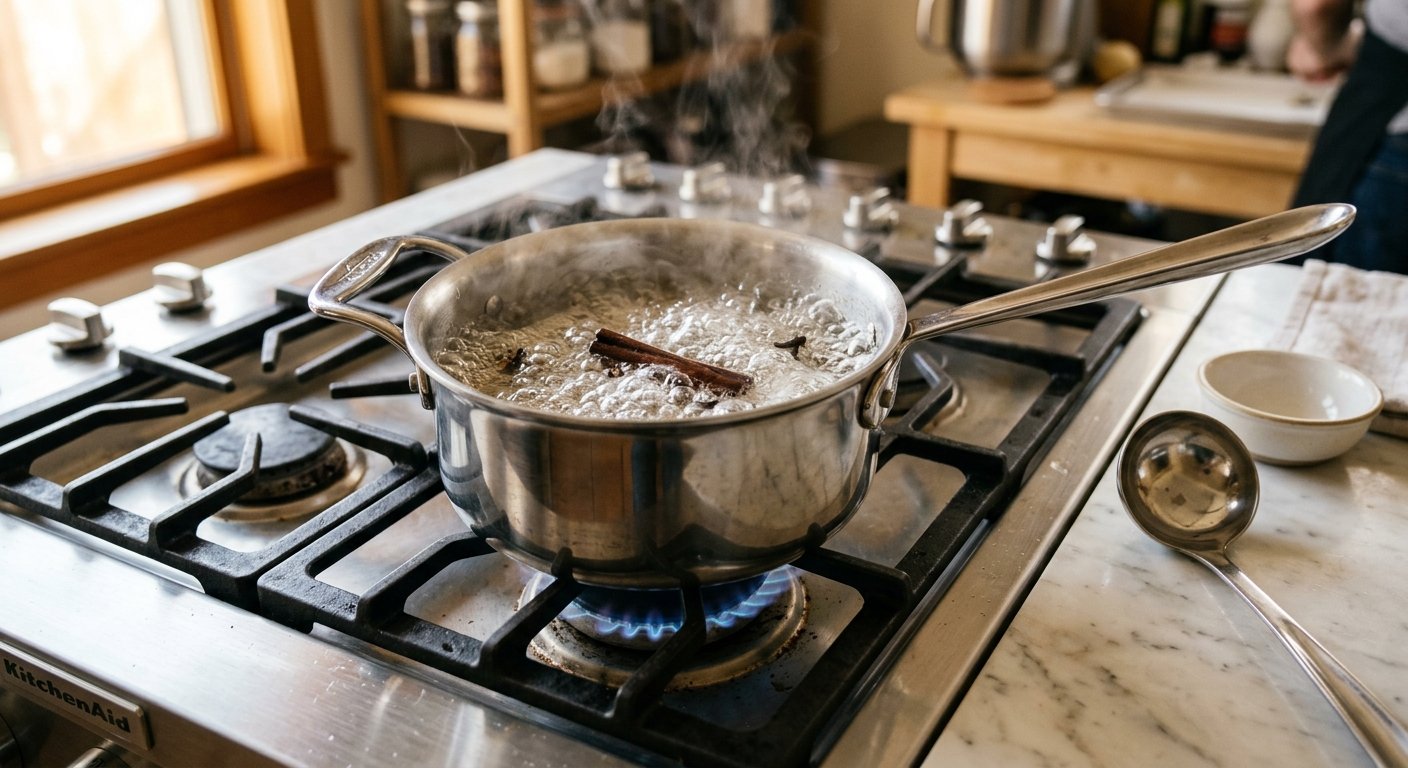
Combine the sugar, water, cinnamon stick, and cloves in a medium saucepan. Bring to a full boil over high heat, stirring until the sugar dissolves. Reduce heat and simmer for 5 minutes. Keep the syrup hot — at a bare simmer — while you toast the semolina. Both components must be hot when they meet.
Chef’s note: Having the syrup ready and waiting hot is the key to this recipe. If the syrup cools while you toast the semolina, bring it back to a boil before adding — cold syrup into hot semolina creates lumps.
2. Toast the semolina
Heat the olive oil in a wide, heavy-bottomed pot or deep sauté pan over medium heat. Add the semolina all at once. Stir continuously with a wooden spoon, moving the semolina constantly so it toasts evenly without burning. Cook for 8–12 minutes, until the semolina is golden-brown and smells deeply nutty and toasted. The color should go from white to pale gold to a warm amber — stop before it reaches dark brown.
Chef’s note: Continuous stirring is not optional here. If you walk away, the semolina will burn in spots and taste bitter. Stay at the pot and keep the spoon moving. The toasting is where almost all of the halva’s flavor comes from.
3. Add the hot syrup
This step happens fast and requires both hands and confidence. Remove the cinnamon stick and cloves from the syrup. With one hand holding the pot of semolina off or at the edge of the heat, pour the hot syrup into the semolina in one steady stream while stirring vigorously with the other hand. The mixture will bubble violently — this is expected. Stir continuously as the halva absorbs the syrup and thickens, about 2–3 minutes, until the mixture pulls away from the sides of the pot.
4. Add walnuts or raisins (optional)
If using, fold them in at this stage while the halva is still soft enough to mix.
5. Mold and rest
Immediately pour or spoon the hot halva into a lightly oiled Bundt pan, individual ramekins, or a round cake pan. Smooth the top, then cover with a clean kitchen towel and let it rest for 15–20 minutes. The halva will firm up as it cools.
6. Unmold and serve
Invert the pan onto a serving plate. The halva should release cleanly. Dust generously with ground cinnamon. Serve warm or at room temperature.
Chef’s Notes
On olive oil
Greek halva is traditionally made with olive oil, not butter — this is essential for the fasting table. It also gives the halva a distinctly savory undertone that balances the sweetness. A mild, fruity olive oil works best; a very peppery, aggressive olive oil can dominate the spice. Extra-virgin is preferred for flavor.
On semolina
Coarse semolina produces the characteristic crumbly, sandy texture. Fine semolina (durum wheat farina) produces a smoother, denser result. Both work; the coarse version is more authentically Greek. Semolina is a form of durum wheat — according to Britannica, it is the coarse, purified wheat middlings used across Mediterranean cooking from pasta to desserts.
On sweetness
Greek semolina halva is genuinely sweet — the 3:4 sugar-to-water ratio produces a syrup that fully saturates the semolina. If you prefer a less sweet version, reduce the sugar to 2½ cups. Do not reduce further or the halva will not set properly.
Connection to the Greek sweets tradition
Halva simigdalenio sits alongside Loukoumades (Greek Honey Doughnuts) and Baklava as part of the Greek sweets repertoire — but it occupies a different table. Where loukoumades and baklava are celebrations, halva is the everyday sweet of the fasting table, the Lenten kitchen, and the week when you want something honest and uncomplicated.
Storage
Halva keeps at room temperature, covered, for 2–3 days. It is best eaten the day it is made while still slightly warm. After the first day it firms up considerably and can be sliced cleanly. It does not need refrigeration unless your kitchen is very warm.
Recipe Card
Greek Semolina Halva (Halva Simigdalenio)
Ingredients
The 1-2-3-4 Ratio
- 1 cup extra-virgin olive oil the "1"
- 2 cup coarse semolina the "2"
- 3 cup sugar the "3"
- 4 cup water the "4"
- 1 cinnamon stick
- 3-4 whole cloves
- 1/2 cup walnuts coarsely chopped; optional
- ground cinnamon for dusting
Instructions
- Combine the sugar, water, cinnamon stick, and cloves in a saucepan. Bring to a boil over medium-high heat, stirring until the sugar dissolves. Reduce heat and simmer for 5 minutes. Keep the syrup hot over low heat until needed.
- Heat the olive oil in a wide, heavy-bottomed pot over medium heat. Add the semolina all at once. Stir continuously with a wooden spoon for 8-12 minutes until the semolina turns golden-brown and smells nutty and fragrant. The color should deepen significantly from white to golden. Do not leave the pot or stop stirring.
- Remove the cinnamon stick and cloves from the syrup. With the semolina still on the heat, pour the hot syrup into the pot in one steady stream while stirring vigorously. The mixture will bubble dramatically and may spatter. Continue stirring until the halva thickens and begins to pull away from the sides of the pot, about 2-3 minutes.
- Fold in the walnuts if using. Working quickly, pour the halva into a lightly oiled Bundt pan, ring mold, or individual ramekins. Smooth the top. Cover loosely with a clean kitchen towel and let rest for 15-20 minutes.
- Place a serving plate over the mold and invert in one confident motion. The halva should release cleanly. Dust generously with ground cinnamon. Serve warm or at room temperature.
Notes
Nutrition
FAQ
What is Greek halva?
Greek halva (halva simigdalenio) is a warm dessert made from coarse semolina toasted in olive oil, then cooked with a hot sugar syrup seasoned with cinnamon and cloves. It is set in a mold, unmolded onto a plate, dusted with cinnamon, and served at room temperature or slightly warm. It is completely vegan and is one of the traditional foods of the Greek Orthodox fasting calendar. It should not be confused with tahini halva — they share a name and a history but are very different foods.
How is Greek semolina halva different from tahini halva?
Tahini halva is made from sesame paste, sugar, and sometimes nuts. It is dense, cold, and has a strong sesame flavor. Greek semolina halva is made from wheat semolina toasted in olive oil. It is warm, crumbly, sandy in texture, and flavored with cinnamon rather than sesame. They share a name (halva derives from the Arabic “halwa,” meaning sweet) but are entirely different preparations.
What is the 1-2-3-4 ratio?
The 1-2-3-4 ratio is the traditional memory device for Greek semolina halva: 1 part olive oil, 2 parts semolina, 3 parts sugar, 4 parts water. It can be scaled to any quantity — use tablespoons for a small batch, cups for a full one. The ratio is reliable and produces the correct texture every time without measuring precisely.
Can I add nuts or other mix-ins?
Yes. Walnuts (the most common addition), slivered almonds, pine nuts, and raisins are all traditional. Add them just before molding, while the halva is still soft enough to fold them in. If using large walnut pieces, press them into the bottom of the mold so they appear decoratively on top when unmolded.
How do I store Greek semolina halva?
Store at room temperature, covered with plastic wrap or a clean towel, for up to 2–3 days. The halva will firm up as it cools and can be sliced cleanly after the first day. It is best eaten warm the day it is made, but it remains good for several days. Refrigeration is not necessary unless your kitchen is very warm.