
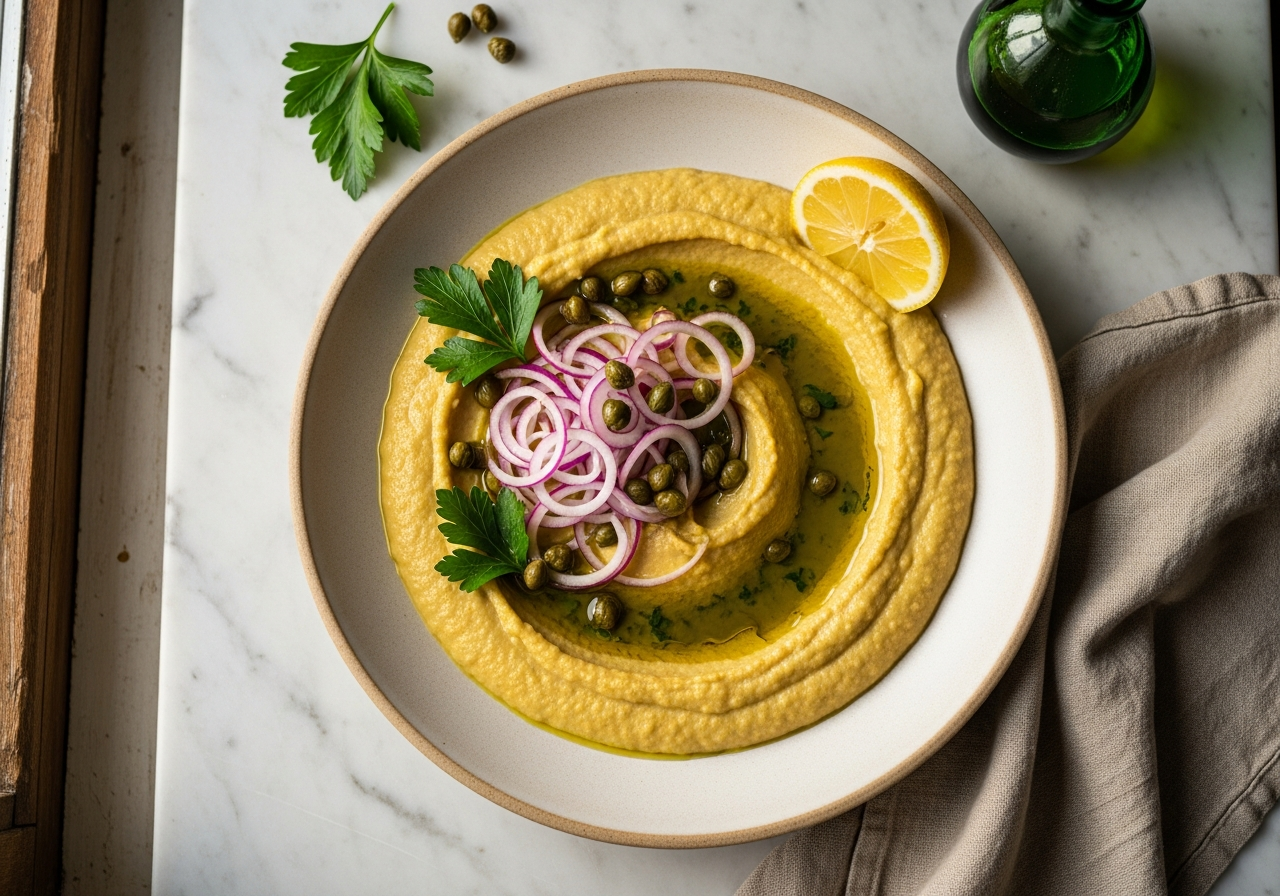
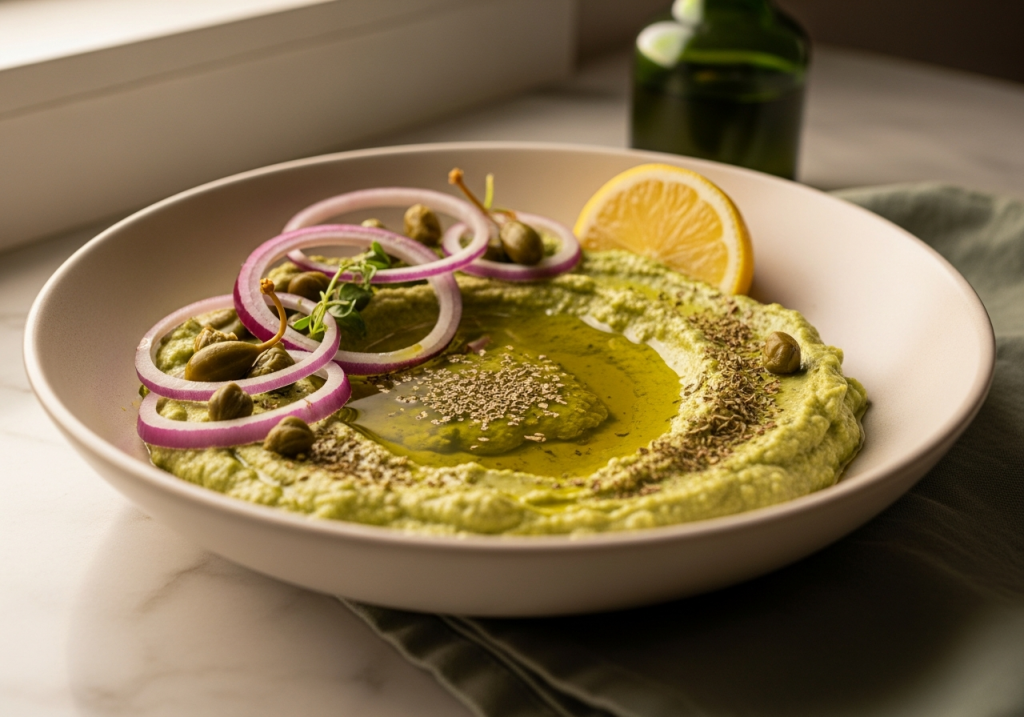
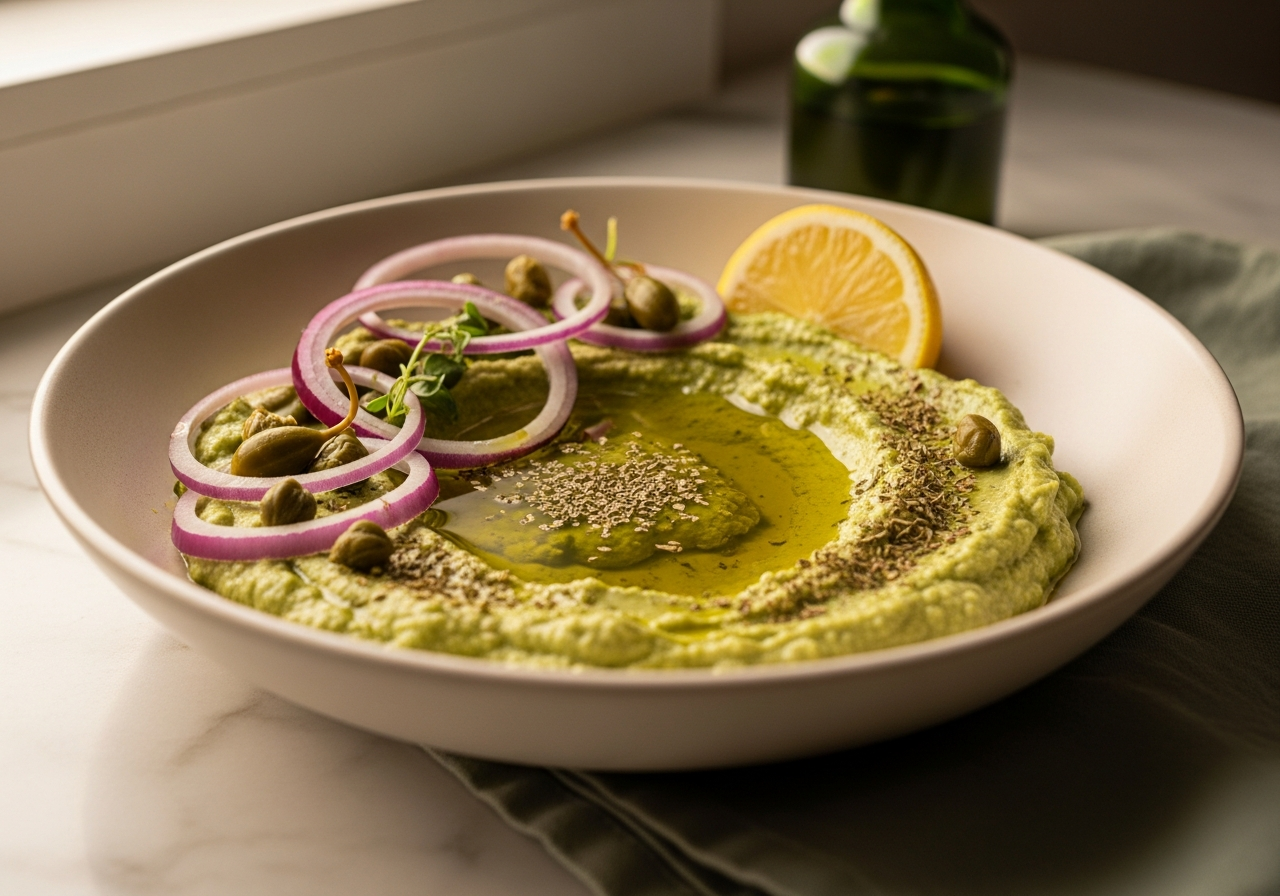
There is a moment I always look forward to when the ferry from Kos pulls into Santorini’s caldera. Before anything else — before the sunsets, before the wine — I find the nearest taverna and order fava. A shallow bowl arrives, pale gold and impossibly smooth, ringed with thinly sliced red onion, briny capers, and enough olive oil to make you wonder if the cook has made an error. One bite confirms: they have not.
Fava is one of the oldest dishes in the Greek kitchen, and it is still misunderstood outside of Greece. The name trips people up. This is not a fava bean dish — it is made from Lathyrus clymenum, a small yellow split pea cultivated in the volcanic soil of Santorini. That mineral-rich earth gives Santorini’s fava a distinctive sweetness and depth that you simply cannot replicate elsewhere. The variety carries PDO status — Protected Designation of Origin — the same certification that protects Champagne and Parmigiano-Reggiano. It matters.
Back on Kos, we had our own style of puréed legumes — hearty, dressed in olive oil, served at room temperature alongside whatever else was on the meze table. But visiting Santorini over the years, I came to understand that Santorini fava has its own character entirely. It is not something you replicate; it is something you try to honor.
This fava recipe Greek home cooks have passed down for generations asks very little of you: good peas, patience while they simmer, and enough restraint to let the olive oil do its work. Get those three things right, and the dish takes care of itself.
Table of Contents
What Is Fava?
Despite what the name might suggest in other languages, Greek fava is not made from fava beans (Vicia faba). It is made from Lathyrus clymenum, a species of grass pea — also called Santorini split peas or bitter vetch — that has been cultivated on the island of Santorini for centuries. The confusion is understandable; the word “fava” is used across the Mediterranean to mean different legumes. But in the Greek kitchen, fava means this specific yellow split pea, cooked down and puréed into a smooth, golden dip.
The Santorini variety is extraordinary for a specific reason: the island’s volcanic soil, almost completely lacking in irrigation and rainfall, forces the plants to develop deep root systems drawing minerals from below. The result is a pea with a particular earthiness and natural sweetness. In 2011, Santorini fava received PDO designation from the European Union, recognizing it as a product inseparable from its place of origin. You can read more about Lathyrus clymenum and its cultivation history at Wikipedia.
Outside of Santorini, the dish is made throughout Greece with regular yellow split peas (Pisum sativum), and the result is still excellent — slightly less complex, but just as satisfying as a meze. If you cannot source Santorini PDO fava, do not let that stop you.
Fava is traditionally served warm or at room temperature as a meze, part of a spread alongside other small dishes. It pairs naturally with my Authentic Tzatziki — contrasting textures, both built on the idea that a dip should earn its place on the table.
Why This Recipe Works
- Slow cooking, not rushing. Yellow split peas need 45–55 minutes of gentle simmering to fully dissolve. High heat causes uneven cooking and a grainy final texture. Keep the simmer steady and unhurried.
- Onion cooked into the peas from the start. The onion is not a garnish — it goes in with the peas from the beginning and becomes part of the purée. This builds a rounded, mellow sweetness into the base without any raw onion sharpness.
- Olive oil emulsified in, not poured on top. A generous stream of warm olive oil blended into the hot peas creates a silky, unified texture. The fat is worked into the body of the dip — this is what gives fava its characteristic gloss and richness.
- Toppings that are structural, not decorative. Capers bring salt and brine to cut through the sweetness of the peas. Red onion adds sharpness. Lemon juice brightens the whole dish. These components are not garnish — they complete the recipe.
Ingredients
For the fava
- 300g (about 1½ cups) Santorini yellow split peas, or regular yellow split peas
- 1 large yellow onion, roughly chopped
- 1 litre (4 cups) cold water, plus more if needed
- 80ml (⅓ cup) extra-virgin Greek olive oil, warmed slightly
- 1½ tsp fine sea salt, or to taste
- Freshly ground black pepper
For the toppings
- 3 tbsp capers, rinsed
- ½ small red onion, very thinly sliced into rings
- Juice of ½ lemon
- 4–5 tbsp extra-virgin Greek olive oil
- 1 tsp dried oregano
- Flaky sea salt, to finish
- Chopped fresh flat-leaf parsley (optional)
Step-by-Step Instructions
Step 1: Rinse the peas.
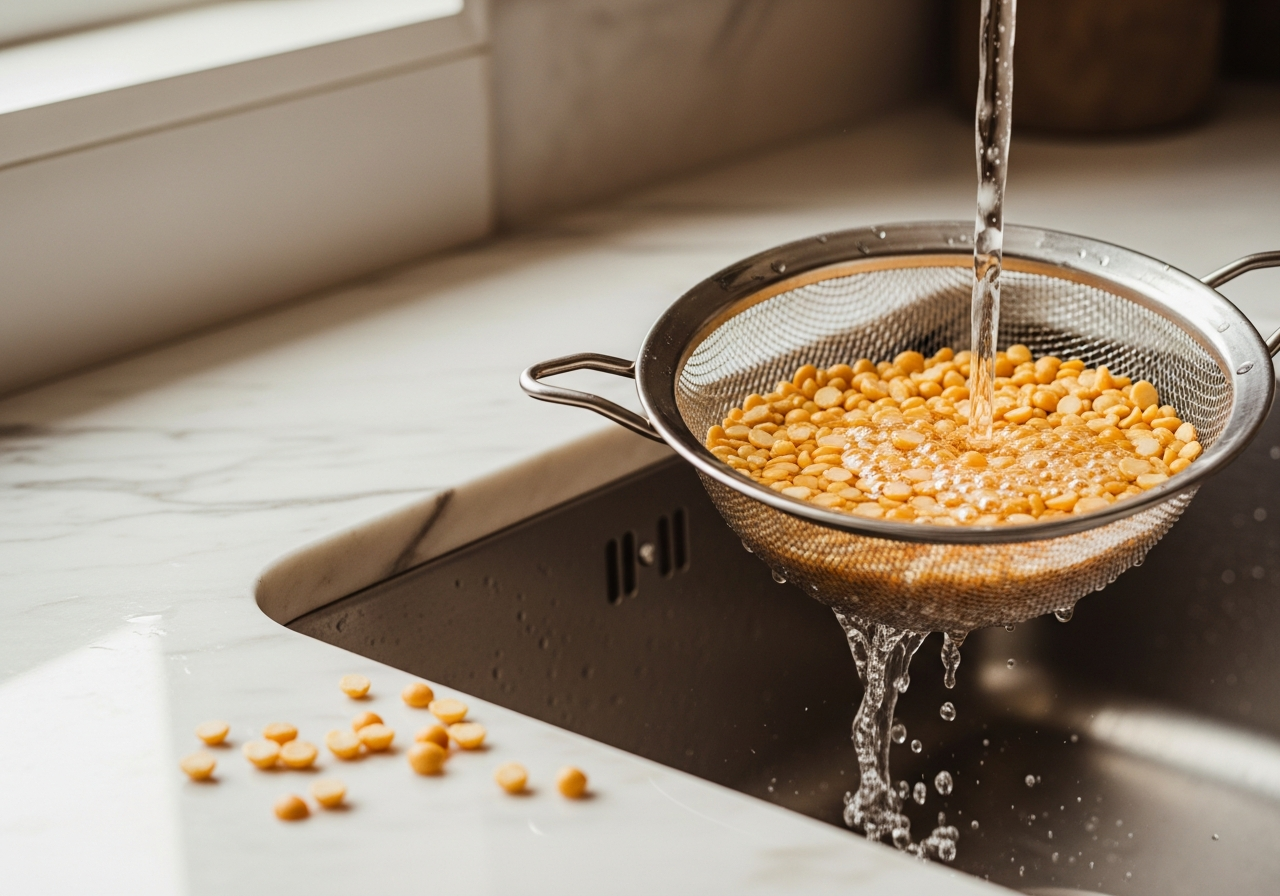
Place the split peas in a fine-mesh strainer and rinse under cold running water until the water runs clear. Pick out any discoloured peas or debris. No soaking is necessary — yellow split peas break down fully with dry cooking.
Step 2: Simmer with the onion.
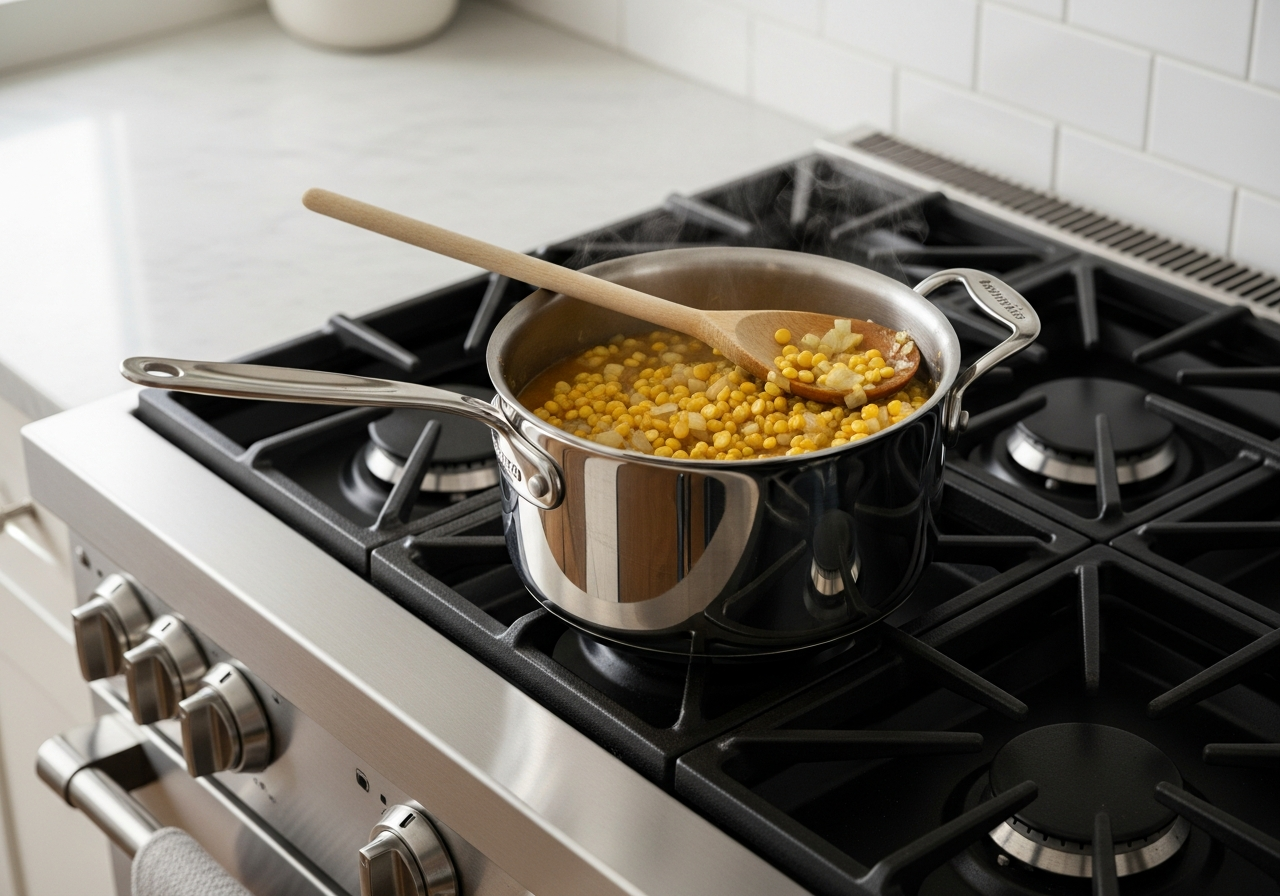
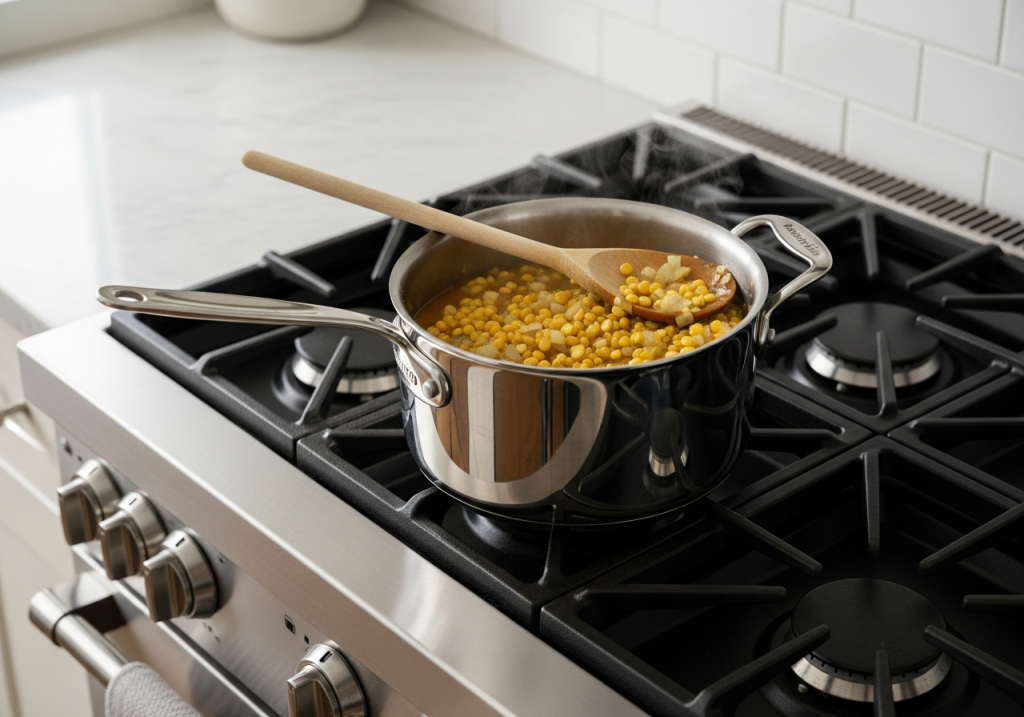
Combine the rinsed peas and the roughly chopped onion in a medium saucepan. Add 1 litre of cold water and bring to a boil over medium-high heat. As it comes to a boil, grey-white foam will rise to the surface. Skim this off carefully with a spoon — it contains bitter compounds that would muddy the flavour.
Once skimmed, reduce the heat to a gentle simmer. Cook uncovered, stirring occasionally, for 45–55 minutes. The peas should fully dissolve and the mixture should resemble a thick, porridge-like consistency. If the water evaporates too quickly before the peas are completely soft, add more hot water in small additions, 50ml at a time.
Step 3: Blend in the olive oil.
Remove the pan from the heat. Using an immersion blender — or working in batches with a regular blender — purée the mixture until completely smooth. With the motor running, stream in the warm olive oil in a thin, steady drizzle. This emulsifies the fat into the purée, making the fava silky and glossy rather than dense or grainy.
Taste and season with salt and black pepper. If the fava is stiffer than you like, blend in hot water one tablespoon at a time until you reach the texture you want. It will firm slightly as it cools.
Step 4: Prepare the toppings.
Thinly slice the red onion into rings. Place them in a small bowl with the lemon juice and a pinch of salt and set aside for 5 minutes — this softens the raw edge without losing the sharpness. Rinse the capers and pat dry.
Step 5: Plate and serve.
Spread the warm fava onto a shallow plate or wide bowl, using the back of a spoon to create a smooth surface with a slight hollow in the center. Arrange the capers and the marinated red onion on top. Drizzle generously with extra-virgin olive oil. Finish with dried oregano, a final squeeze of lemon juice, and parsley if using.
Fava is excellent served warm, and equally good at room temperature — which is how it appears on most Greek meze tables.
Fava Santorinis (Greek Yellow Split Pea Dip)
Ingredients
For the fava
- 300 g Santorini yellow split peas about 1½ cups; or regular yellow split peas
- 1 large yellow onion roughly chopped
- 1 litre cold water 4 cups, plus more if needed
- 80 ml extra-virgin Greek olive oil ⅓ cup, warmed slightly
- 1½ tsp fine sea salt or to taste
- freshly ground black pepper
For the toppings
- 3 tbsp capers rinsed
- ½ small red onion very thinly sliced into rings
- ½ lemon juiced
- 4-5 tbsp extra-virgin Greek olive oil
- 1 tsp dried oregano
- flaky sea salt to finish
- chopped fresh flat-leaf parsley optional
Instructions
- Rinse the peas. Place the split peas in a fine-mesh strainer and rinse under cold running water until the water runs clear. Pick out any discoloured peas or debris. No soaking is necessary — yellow split peas break down fully with dry cooking.

- Simmer with the onion. Combine the rinsed peas and the roughly chopped onion in a medium saucepan. Add 1 litre of cold water and bring to a boil over medium-high heat. As it comes to a boil, grey-white foam will rise to the surface — skim it off carefully with a spoon. Once skimmed, reduce the heat to a gentle simmer and cook uncovered, stirring occasionally, for 45–55 minutes, until the peas fully dissolve into a thick, porridge-like consistency. If the water evaporates too quickly before the peas are completely soft, add more hot water in small additions, 50ml at a time.
- Blend in the olive oil. Remove the pan from the heat. Using an immersion blender — or working in batches with a regular blender — purée the mixture until completely smooth. With the motor running, stream in the warm olive oil in a thin, steady drizzle to emulsify it into the purée. Taste and season with salt and black pepper. If the fava is stiffer than you like, blend in hot water one tablespoon at a time; it will firm slightly as it cools.
- Prepare the toppings. Thinly slice the red onion into rings, place in a small bowl with the lemon juice and a pinch of salt, and set aside for 5 minutes. Rinse the capers and pat dry.
- Plate and serve. Spread the warm fava onto a shallow plate or wide bowl, smoothing the surface with the back of a spoon. Arrange the capers and marinated red onion on top, drizzle generously with extra-virgin olive oil, and finish with dried oregano, a final squeeze of lemon juice, and parsley if using. Serve warm or at room temperature.
Chef’s Notes
On sourcing the peas: Santorini PDO fava is available online through Greek food importers and some specialty stores. It is worth sourcing for the full experience. That said, the technique here matters as much as the variety — a well-made fava from ordinary yellow split peas will still be far superior to a careless one made from Santorini peas.
On the olive oil: Do not use a light or neutral oil here. The olive oil is structural — it is emulsified into the body of the dip, not just drizzled on top. Use a Greek extra-virgin olive oil with character. I prefer an oil from the Peloponnese or Crete for this, something with a slightly peppery finish that holds its own against the sweetness of the peas.
On the toppings: The capers should be brined, not salted, and rinsed well. Salted capers can overwhelm the dish if not soaked and rinsed thoroughly. For the red onion, the brief rest in lemon juice is not optional — it removes just enough of the harsh edge to make the onion a complement rather than a distraction.
Variations: Some versions add a splash of white wine to the cooking water, or finish with a drizzle of good balsamic. In the Dodecanese, you sometimes see fava served alongside grilled octopus — an outstanding combination. If you are building a meze spread, this dish pairs beautifully with my Tiropita (Greek Cheese Pie) and Fasolakia (Greek Braised Green Beans) for a full vegetarian Greek table.
Storage: Refrigerate in an airtight container for up to 4 days. Store without the toppings. To reheat, warm gently over low heat with a splash of water, stirring to restore the smooth texture. Fava does not freeze well — the texture becomes grainy after thawing.
FAQ
What is Greek fava made of?
Greek fava is made from yellow split peas — specifically Lathyrus clymenum, a variety grown on the island of Santorini. Despite what the name suggests in other languages, Greek fava does not contain fava beans (Vicia faba). The peas are simmered with onion until they dissolve completely, then puréed with olive oil into a smooth, golden dip.
Is Greek fava the same as fava beans?
No. In Greece, the word “fava” refers to a specific yellow split pea (Lathyrus clymenum), not the broad fava bean (Vicia faba). The Santorini variety is the most prized, holding PDO status from the European Union. The confusion arises because “fava” is used differently across Mediterranean countries — in Italy, for instance, a fava purée is typically made from dried broad beans.
Can I make Greek fava with regular yellow split peas?
Yes. If you cannot find Santorini PDO fava, regular yellow split peas (Pisum sativum) available at any grocery store will work well in this recipe. The flavour is slightly less complex — a bit milder and earthier — but the texture and overall dish are still excellent. The technique remains exactly the same.
How do you eat fava in Greece?
Fava is eaten as a meze — a small dish shared at the table alongside other plates. It is typically served warm or at room temperature in a shallow bowl or plate, topped with capers, thinly sliced raw red onion, lemon juice, and olive oil. Bread is always nearby. In a traditional setting, fava arrives at the table as part of a spread of cold mezedes before the main course.
How long does fava keep in the fridge?
Stored in an airtight container without the toppings, fava keeps well in the refrigerator for up to 4 days. Reheat gently over low heat with a splash of water, stirring until smooth. Avoid freezing — the texture becomes grainy after thawing and does not recover properly.