
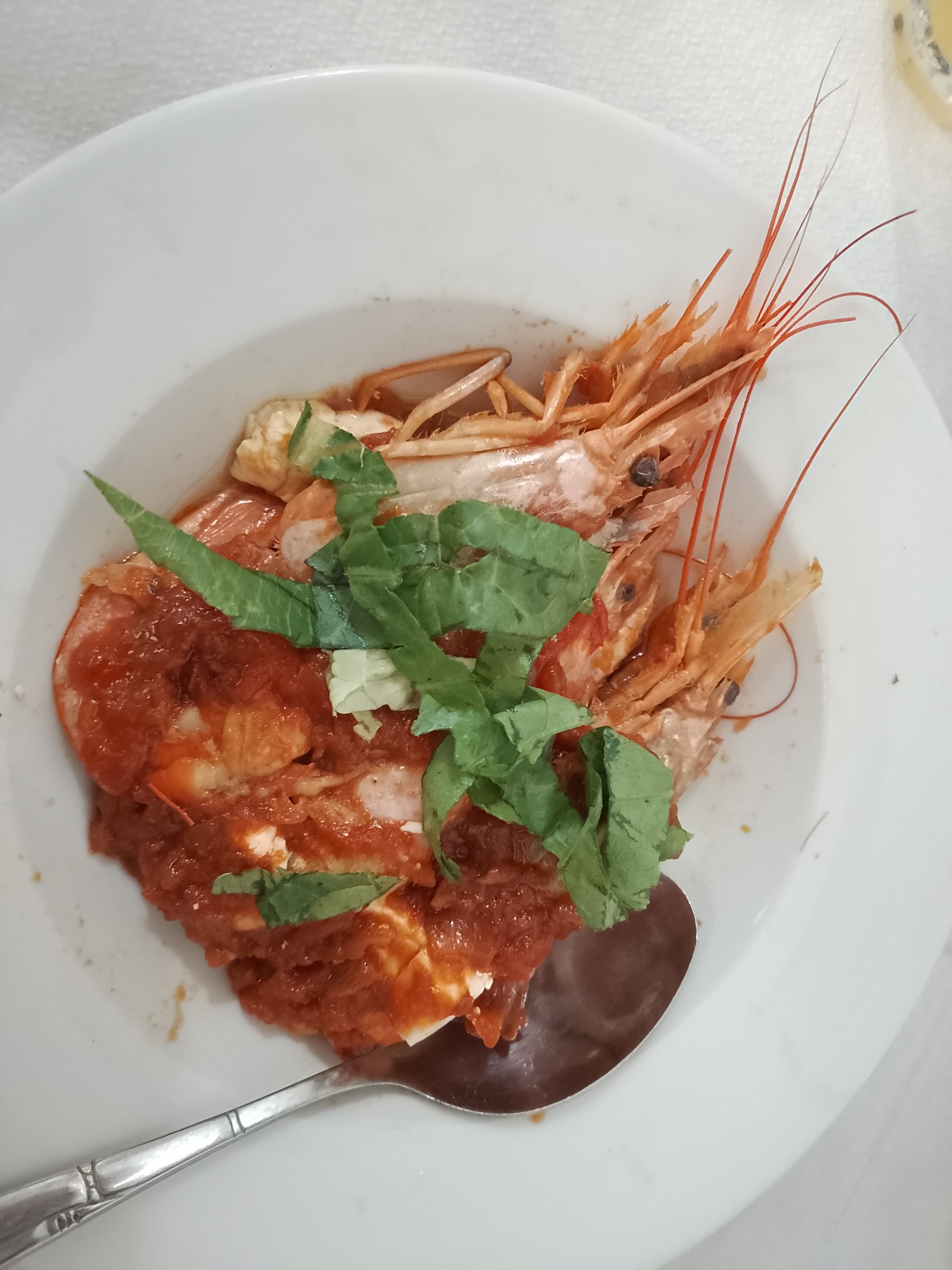
There is a moment in every Greek taverna meal that announces itself before you see it. You hear it first — the quick sizzle of a pan being carried from the kitchen — and then the saganaki pan lands on the table and you understand immediately what the evening is going to be.
Garides saganaki is one of those dishes. Fresh prawns, a briefly cooked tomato sauce, crumbled feta that hasn’t quite melted — all of it brought together in the small, individual saganaki pan the dish is named for. On Kos, where I grew up, you could order this at any taverna on the waterfront and it would arrive while the harbor was still catching the last light. The shrimp were from that morning. The feta was local. The tomatoes were in season and nobody thought to write down a recipe because it was so obvious.
What makes garides saganaki different from a generic shrimp tomato dish is the restraint. The sauce is barely cooked — just enough to concentrate the tomatoes and lay a foundation for the shrimp. The feta doesn’t dissolve; it softens and melts into pockets of salty richness throughout. And the shrimp cook fast — two or three minutes — which means the whole dish, from cold pan to table, takes about twenty minutes.
I will also show you the ouzo variation, which is optional but theatrical, and which my father insisted upon whenever we had guests.
Table of Contents
Why This Recipe Works
- The sauce is cooked briefly, not long. A short simmer keeps the tomato flavor bright and fresh — this is not a slow-cooked pasta sauce. The shrimp only need a few minutes and the tomato should still taste like tomatoes.
- Feta goes in last and stays crumbled. Adding the feta in the final two minutes means it softens and partially melts without fully dissolving into the sauce. You want visible pockets of cheese, not a homogeneous sauce.
- High heat at the start. Whether you finish on the stovetop or in the oven (both are traditional), the saganaki pan must be hot. The slight char at the edges of the sauce is part of the dish, not a mistake.
- Shrimp size matters. Large prawns (16/20 count or bigger) stay juicy and hold their own against the bold tomato and feta. Small shrimp disappear into the sauce and overcook easily.
Ingredients
For the Dish (serves 4 as meze)
- 1 lb (450g) large raw shrimp or prawns, peeled and deveined (tails on or off)
- 3 tablespoons extra-virgin olive oil
- 4 cloves garlic, thinly sliced
- 1 can (400g / 14 oz) crushed tomatoes, or 3 medium ripe tomatoes, grated
- ½ teaspoon dried oregano
- ½ teaspoon sweet paprika
- ¼ teaspoon red pepper flakes (optional)
- Salt and black pepper to taste
- 4 oz (115g) Greek feta cheese, crumbled into large pieces
- Fresh flat-leaf parsley, for serving
- Crusty bread, for serving
Optional
- 2 tablespoons ouzo (added after the garlic, before the tomatoes — creates a brief flame and adds anise depth)
Step-by-Step Instructions
1. Cook the garlic
Heat the olive oil in a saganaki pan, small skillet, or oven-safe sauté pan over medium heat. Add the sliced garlic and cook, stirring, for about 1 minute until fragrant and just beginning to turn golden. Do not let it brown — bitter garlic will ruin the sauce.
2. Add ouzo (optional)
If using ouzo, add it now. The alcohol will briefly ignite if your pan is hot enough and you have an open flame — this is the theatrical moment. Let it cook off for 30 seconds before adding the tomatoes.
Chef’s note: The ouzo adds a subtle anise backbone and a slight sweetness that works beautifully with the shrimp. If you don’t have ouzo or prefer to skip it, a tablespoon of dry white wine works too, or skip it entirely.
3. Build the tomato sauce
Add the crushed tomatoes (or grated fresh tomatoes), oregano, paprika, and red pepper flakes if using. Season with salt and pepper. Cook over medium-high heat, stirring occasionally, for 8–10 minutes until the sauce has thickened slightly and smells concentrated.
4. Add the shrimp
Nestle the shrimp into the sauce in a single layer. Cook over medium heat for 2–3 minutes until the shrimp are pink and just cooked through. Do not overcook — they will tighten and become rubbery.
5. Add the feta and finish
Scatter the crumbled feta over the top. You can finish the dish in two ways:
- Stovetop: Cover the pan and cook for 1–2 more minutes until the feta has softened and the sauce is bubbling.
- Oven (traditional): Transfer the pan to a 400°F (200°C) oven for 5 minutes until the feta has softened and the edges of the sauce are slightly charred.
6. Serve immediately
Scatter fresh parsley over the top and bring the pan directly to the table. Serve with plenty of crusty bread for mopping up the sauce.
Chef’s note: The traditional way to serve garides saganaki is in the pan it was cooked in. If you don’t have individual saganaki pans, a small cast iron skillet works perfectly — one per two people, brought to the table on a small wooden board.
Chef’s Notes
On shrimp
Fresh shrimp from a good fishmonger are ideal, but high-quality frozen shrimp work well too. If using frozen, thaw them fully and pat them dry before cooking — excess moisture will thin the sauce and prevent the shrimp from searing properly. Avoid pre-cooked shrimp: they will be rubbery and tasteless after two minutes in a hot sauce.
On feta
Use a block of Greek feta in brine, not pre-crumbled feta in a container. Pre-crumbled feta is too dry and won’t soften correctly. The feta from brine has the right moisture content to partially melt into the sauce while retaining texture.
On the pan
A small cast iron skillet, a copper saganaki pan, or any oven-safe sauté pan will work. The key is that the pan retains heat — you want the dish to arrive at the table still sizzling. If you’re cooking for 4 as a meze, two smaller pans (each serving 2) is more theatrical and keeps things hot.
Serving suggestion
Garides saganaki is a meze dish — it belongs at the center of a table with other small plates. It pairs naturally alongside my Traditional Greek Village Salad (Horiatiki) and my Saganaki (Pan-Fried Greek Cheese) for a complete meze spread. If you want a heartier meal, serve with rice or crusty country bread.
For more Aegean seafood from my kitchen, see my Greek Grilled Octopus — another dish that came off the boats at Kos harbor.
Recipe Card
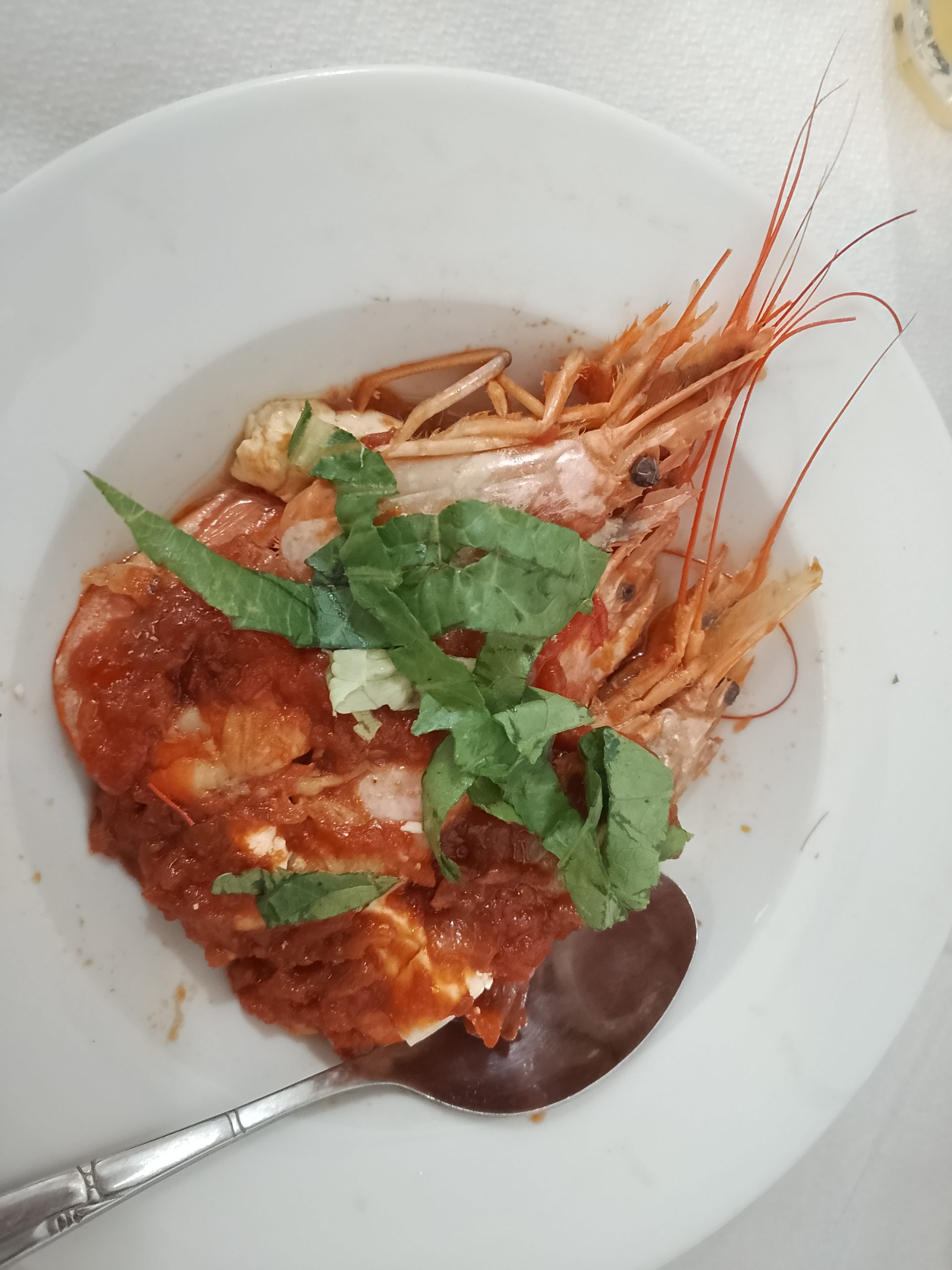
Garides Saganaki (Greek Shrimp in Tomato and Feta)
Ingredients
- 1 lb large raw shrimp or prawns peeled and deveined; 450g
- 3 tablespoons extra-virgin olive oil
- 4 clove garlic thinly sliced
- 1 can (400g) crushed tomatoes or 3 medium ripe tomatoes, grated
- 1/2 teaspoon dried oregano
- 1/2 teaspoon sweet paprika
- 1/4 teaspoon red pepper flakes optional
- salt and black pepper to taste
- 4 oz Greek feta cheese crumbled into large pieces; 115g
- fresh flat-leaf parsley for serving
- crusty bread for serving
- 2 tablespoons ouzo optional
Instructions
- Heat the olive oil in a saganaki pan, small skillet, or oven-safe saute pan over medium heat. Add the sliced garlic and cook, stirring, for about 1 minute until fragrant and just beginning to turn golden. Do not let it brown.
- If using ouzo, add it now. The alcohol will briefly ignite if your pan is hot enough and you have an open flame. Let it cook off for 30 seconds before adding the tomatoes.
- Add the crushed tomatoes, oregano, paprika, red pepper flakes, salt, and pepper. Cook over medium-high heat, stirring occasionally, for 8-10 minutes until the sauce thickens and reduces slightly.
- Nestle the shrimp into the sauce in a single layer. Cook for 2-3 minutes, turning once, until the shrimp are pink and just cooked through. Do not overcook.
- Crumble the feta over the top in large pieces. Finish on stovetop (cover the pan, cook 1-2 more minutes until feta softens) or place the pan in a 400F (200C) oven for 5 minutes until feta softens and the edges of the sauce char slightly.
- Scatter fresh parsley over the top. Serve immediately in the pan with crusty bread alongside.
Notes
Nutrition
FAQ
What is garides saganaki?
Garides saganaki is a Greek meze dish of shrimp cooked in a spiced tomato sauce with crumbled feta cheese, served in the small saganaki pan it was cooked in. “Garides” means shrimp in Greek; “sakanaki” refers to both the small two-handled pan and the category of dishes prepared in it. The dish is a taverna staple throughout Greece, especially in coastal regions where fresh seafood is available.
Can I use frozen shrimp?
Yes. High-quality frozen shrimp (thawed completely and patted dry) work well in this recipe. The key is to remove all excess moisture before cooking — wet shrimp will steam rather than sear in the tomato sauce. Avoid pre-cooked frozen shrimp; they will become rubbery when cooked a second time.
Do I need ouzo?
No. Ouzo is optional — it adds a subtle anise note and, when the pan is hot enough, creates a brief flame that is as much theater as flavor. If you don’t have ouzo, a tablespoon of dry white wine adds a little acidity, or you can omit it entirely without significantly affecting the dish.
What pan should I use?
A small cast iron skillet (8–10 inches) is the most practical choice for home cooking. Traditional saganaki pans are small, two-handled copper or aluminum pans. The important thing is that the pan is oven-safe if you want to finish the dish in the oven, and that it retains heat well enough to stay hot on the table.
How do you serve garides saganaki?
Garides saganaki is a meze — a shared small plate meant to be eaten with bread and other small dishes. It should be served directly in the pan while still bubbling. Crusty bread is essential for mopping up the sauce. It works as a starter for 4, or as part of a larger meze spread.