
There is a smell that takes me back to Kos every single time — the deep, wine-dark scent of octopus simmering low and slow in a pot with tomatoes, red wine, and a cinnamon stick. It was the smell of my mother’s kitchen in late summer, when the local fishermen had brought in a fresh catch and she would beat the octopus against the stone steps of our house the way her mother had taught her. By the time we sat down to eat, the kitchen smelled like the whole Aegean had come inside.
Greek octopus pasta — htapodi me makaronia — is one of those dishes that does not need an occasion. On the island of Kos, it was simply what you made when octopus was fresh and the pantry had pasta, good olive oil, and a bottle of red wine you were not saving for anything particular. The octopus braised slowly until it was tender all the way through, and then the pasta went in to drink up every drop of that extraordinary sauce. The result was something deeply satisfying — not complicated, not precious, just very good food.
This version of htapodi me makaronia is the one I have refined over years of cooking the dish for family and guests. The principles are the ones I grew up with on Kos: fresh or properly prepared octopus, a patient braise, and a sauce built on nothing but time and good ingredients. Greek octopus pasta does not need shortcuts, because the process is already simple enough. What it needs is your attention and about ninety minutes on the stovetop.
Serves 4. One pot. No fuss.
Table of Contents
- What Is Htapodi me Makaronia?
- Why This Greek Octopus Pasta Recipe Works
- Ingredients for Greek Octopus Pasta
- Step-by-Step Instructions
- WPRM Recipe Card
- Chef’s Notes
- FAQ
What Is Htapodi me Makaronia?
Htapodi me makaronia translates directly as “octopus with pasta,” and it is exactly that — no more, no less. It is a traditional Greek pasta dish with roots in the Aegean islands and coastal regions of Greece, where octopus has been a staple ingredient for thousands of years. The dish is built around a technique central to Greek island cooking: braising octopus low and slow in its own released juices along with red wine and tomato until the collagen in the tentacles breaks down into a rich, slightly sticky sauce.
The pasta — typically spaghetti, linguine, or the thicker bucatini — finishes cooking in that sauce or is tossed with it at the end, absorbing the deep flavors of wine, tomato, and the sea.
Greek octopus pasta appears across the Dodecanese, the Cyclades, and coastal mainland Greece, but the versions vary by family and by island. Some cooks add a cinnamon stick for warmth; some use allspice; some leave the sauce very spare. On Kos, we always used cinnamon — a Dodecanese tradition that comes from centuries of spice trade and Ottoman influence in the region. I still add it, and I would not have htapodi me makaronia without it.
Why This Greek Octopus Pasta Recipe Works
- The octopus braises in its own liquid first. Before any wine or tomato goes into the pot, the octopus releases a significant amount of natural juice as it cooks in olive oil. This creates an intensely flavored base that no store-bought broth can replicate. Most recipes skip this step and go straight to adding liquid — that is a missed opportunity.
- Red wine goes in before the tomato. Adding the wine while the heat is still high lets the alcohol cook off properly and gives the wine time to reduce slightly and concentrate before the tomato moderates everything. The result is a sauce with genuine depth rather than a thin tomato broth.
- The cinnamon stick is non-negotiable. One cinnamon stick simmered throughout the braise gives Greek octopus pasta a warmth that is subtle but unmistakable — the signature of Dodecanese island cooking. It does not make the dish taste sweet. It makes it taste complete.
- The pasta is served sauced, not soupy. The finished sauce should be thick enough to coat each strand of pasta, not pool at the bottom of the bowl. Allowing the octopus to braise uncovered for the final fifteen minutes concentrates the sauce to exactly the right consistency.
Ingredients for Greek Octopus Pasta
For the Octopus Braise
- 1 kg (2.2 lbs) fresh or frozen octopus, cleaned
- 3 tablespoons extra-virgin olive oil
- 1 medium yellow onion, finely diced
- 3 garlic cloves, minced
- 120 ml (½ cup) dry red wine
- 400g (14 oz) canned crushed tomatoes
- 2 bay leaves
- 1 cinnamon stick
- ½ teaspoon dried Greek oregano
- ½ teaspoon freshly ground black pepper
- Salt to taste (add at the end — octopus releases salty liquid)
For the Pasta
- 350g (12 oz) spaghetti or linguine
- Generous amount of salt for the pasta water
- 2 tablespoons extra-virgin olive oil (to finish)
To Serve
- Small handful of fresh flat-leaf parsley, roughly chopped
- Extra olive oil for drizzling
Step-by-Step Instructions
1. Prepare the octopus.
If using fresh octopus, the best thing you can do is freeze it first. Freezing breaks down the muscle fibers and produces a more tender result without any beating required. Thaw overnight in the refrigerator, then rinse thoroughly under cold water. Cut the body sac away from the tentacles and slice the tentacles into 5–6 cm pieces. If using pre-cleaned frozen octopus, thaw fully and proceed directly to rinsing and cutting.
2. Start the braise without any added liquid.
Place the olive oil in a large, heavy-bottomed pot or Dutch oven over medium heat. Add the diced onion and cook until softened and translucent, about 6 minutes. Add the garlic and cook for 1 minute more. Add the octopus pieces and increase the heat to medium-high. Cook, stirring occasionally, for 5–6 minutes. The octopus will turn pink and release a significant amount of purple-tinted liquid. Do not panic and do not drain it — this is the foundation of your sauce for the Greek octopus pasta.
3. Add the red wine.
Pour the red wine into the pot and stir well. Let it bubble actively for 2–3 minutes, stirring to lift anything from the bottom of the pot. The alcohol will cook off quickly and the wine will begin to reduce.
4. Add the tomatoes and aromatics.
Add the crushed tomatoes, bay leaves, cinnamon stick, oregano, and black pepper. Stir to combine. Bring everything to a gentle boil, then reduce the heat to low. Cover the pot and simmer for 55–60 minutes, checking occasionally, until the octopus is very tender when pierced with a fork.
5. Uncover and reduce.
After 60 minutes, remove the lid and increase the heat slightly to medium-low. Simmer uncovered for another 15 minutes, stirring occasionally, until the sauce has thickened noticeably. Taste at this point and add salt if needed — you may find the octopus has provided enough salinity on its own.
6. Remove the aromatics.
Fish out and discard the bay leaves and cinnamon stick. Taste one more time and adjust pepper.
7. Cook the pasta.
While the sauce is reducing, bring a large pot of generously salted water to a boil. Cook the spaghetti or linguine according to package directions, stopping 1 minute short of the recommended time. The pasta will finish cooking in the sauce. Before draining, reserve a ladleful of pasta water.
8. Combine and finish.
Drain the pasta and add it directly to the pot with the octopus sauce. Toss over medium heat for 1–2 minutes, letting the pasta absorb the sauce. If the mixture looks too thick, add a splash of the reserved pasta water. Drizzle with a little fresh olive oil and toss once more.
9. Serve immediately.
Divide the Greek octopus pasta between four warm bowls. Scatter fresh parsley over the top and add a final drizzle of good olive oil. Serve at the table, directly from the pot if you prefer — that is how it arrives on Kos.
WPRM Recipe Card
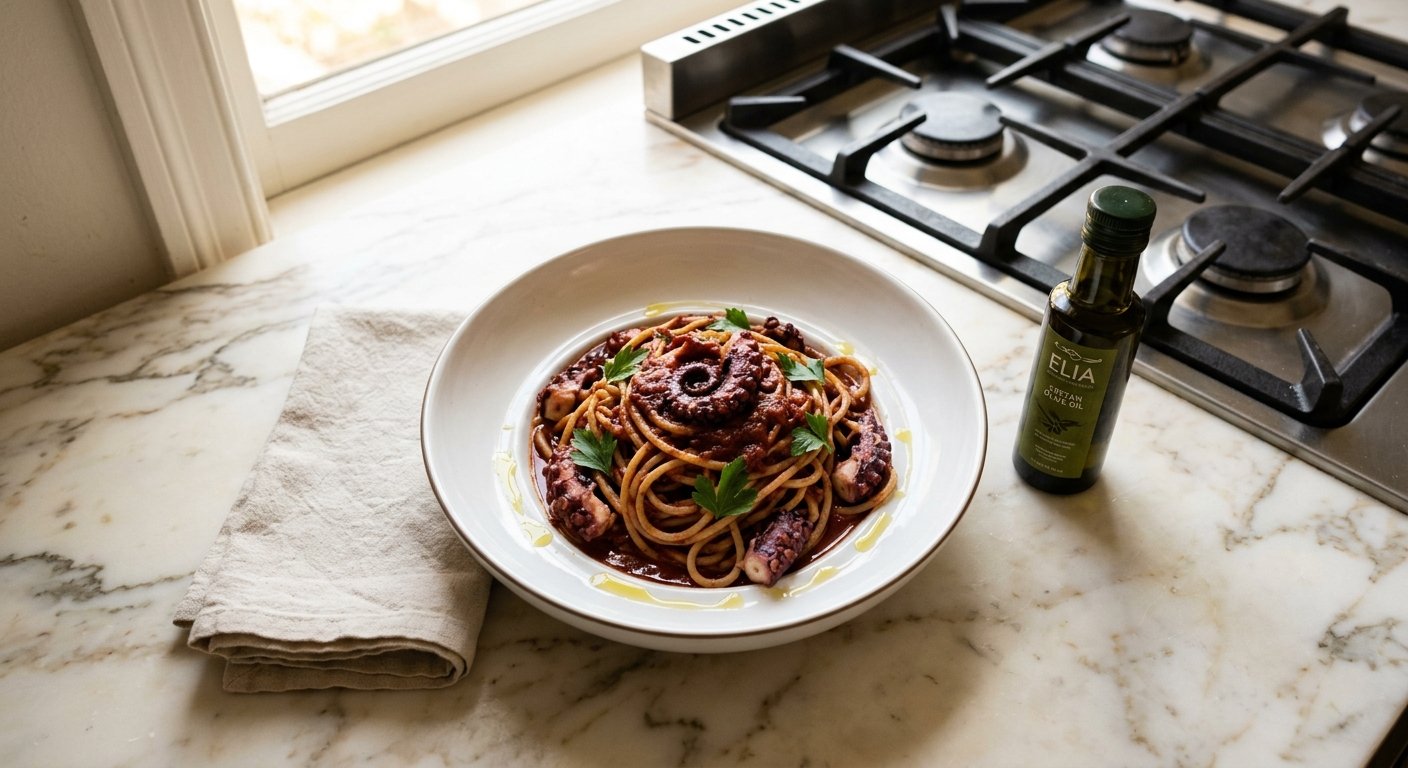
Greek Octopus Pasta (Htapodi me Makaronia)
Ingredients
For the Octopus Braise
- 1 kg octopus 2.2 lbs, cleaned, fresh or frozen and thawed
- 3 tablespoons extra-virgin olive oil
- 1 medium yellow onion finely diced
- 3 garlic cloves minced
- 120 ml dry red wine ½ cup
- 400 g canned crushed tomatoes 14 oz
- 2 bay leaves
- 1 cinnamon stick
- ½ teaspoon dried Greek oregano
- ½ teaspoon freshly ground black pepper
- salt to taste — add at end; octopus releases salty liquid
For the Pasta
- 350 g spaghetti or linguine 12 oz
- salt generously for pasta water
- 2 tablespoons extra-virgin olive oil to finish
To Serve
- small handful fresh flat-leaf parsley roughly chopped
- extra-virgin olive oil for drizzling
Instructions
- Rinse the octopus thoroughly under cold water. Cut the body sac away from the tentacles and slice the tentacles into 5–6 cm pieces. If using pre-cleaned frozen octopus, thaw fully in the refrigerator overnight, then rinse and cut.
- Place the olive oil in a large, heavy-bottomed pot or Dutch oven over medium heat. Add the diced onion and cook until softened and translucent, about 6 minutes. Add the garlic and cook for 1 minute more.
- Add the octopus pieces and increase the heat to medium-high. Cook, stirring occasionally, for 5–6 minutes. The octopus will turn pink and release a significant amount of purple-tinted liquid. Do not drain it — this is the foundation of your sauce.
- Pour the red wine into the pot and stir well. Let it bubble actively for 2–3 minutes, stirring to lift anything from the bottom of the pot. The alcohol will cook off and the wine will begin to reduce.
- Add the crushed tomatoes, bay leaves, cinnamon stick, oregano, and black pepper. Stir to combine. Bring to a gentle boil, then reduce the heat to low. Cover and simmer for 55–60 minutes, until the octopus is very tender when pierced with a fork.
- Remove the lid and increase heat slightly to medium-low. Simmer uncovered for 15 minutes, stirring occasionally, until the sauce has thickened noticeably. Taste and add salt if needed. Fish out and discard the bay leaves and cinnamon stick.
- While the sauce reduces, bring a large pot of generously salted water to a boil. Cook the spaghetti or linguine per package directions, stopping 1 minute short of the recommended time. Before draining, reserve a ladleful of pasta water.
- Drain the pasta and add it directly to the pot with the octopus sauce. Toss over medium heat for 1–2 minutes, letting the pasta absorb the sauce. If too thick, add a splash of the reserved pasta water. Drizzle with fresh olive oil and toss once more.
- Divide between four warm bowls. Scatter fresh parsley over the top and add a final drizzle of good olive oil. Serve immediately.
Notes
Nutrition
Chef’s Notes
On Tenderizing Octopus
The old method on Kos was to beat fresh octopus rhythmically against rocks at the water’s edge — you could hear it throughout the harbor on summer mornings. The modern equivalent is freezing: place the raw octopus in a zip-lock bag and freeze for at least 24 hours, then thaw overnight in the refrigerator. Freezing ruptures the muscle fibers and produces a consistently tender result without any physical effort. If you are working with octopus that has already been frozen (which is most supermarket octopus in many countries), thawing it slowly in the refrigerator is sufficient. Avoid the microwave.
The other indicator of properly tender octopus for Greek octopus pasta is what it looks like when you cut it: the flesh should be firm but not rubbery, and should cut cleanly with a chef’s knife without resistance. If your octopus still feels tough at the 60-minute mark, give it another 15 minutes before uncovering to reduce the sauce.
On Wine Selection
Use a wine you would drink. Dry Greek red wines such as Xinomavro or Agiorgitiko are excellent in htapodi me makaronia — they bring tannin structure and a certain earthiness that complements the octopus beautifully. A robust Italian red such as Montepulciano or a simple Côtes du Rhône will also work. The wine cooks down significantly, so the flavor concentrates — a harsh or thin wine will produce a harsh or thin sauce.
On Pasta Shape
Spaghetti and linguine are the most traditional choices for htapodi me makaronia, as their long strands wrap around the octopus pieces and hold the sauce well. Bucatini (thick spaghetti with a hollow center) is excellent if you can find it. Short pasta such as penne or rigatoni can work if that is what you have — the octopus pieces are similarly sized and the two will harmonize. I would avoid very fine pasta (angel hair, vermicelli) — they tend to clump and do not carry the weight of this sauce well.
If you enjoy Greek baked pasta dishes, my Giouvetsi — lamb braised with orzo in a clay pot — uses a similar principle of finishing the pasta in a rich braised meat sauce, and is well worth trying alongside this recipe.
Pairing Suggestions
Greek octopus pasta pairs naturally with other Aegean seafood dishes. For a full mezze spread, consider beginning the meal with my Garides Saganaki — Greek shrimp in a spiced tomato and feta sauce — which shares the same taverna spirit as htapodi me makaronia and can be served as a first course while the octopus braises.
A simple green salad dressed with lemon and olive oil is all you need alongside the pasta. A glass of the same red wine you used for cooking completes the picture.
Storage
Greek octopus pasta keeps well. Store leftovers in an airtight container in the refrigerator for up to 3 days. The pasta will absorb more sauce as it sits, so reheat gently in a pan with a splash of water to loosen. The octopus sauce on its own — before the pasta is added — freezes beautifully for up to 3 months. Make a double batch of the braise and freeze half; on a busy night you can boil fresh pasta and have htapodi me makaronia on the table in under fifteen minutes.
FAQ
Is Greek octopus pasta difficult to make?
Htapodi me makaronia is one of the more forgiving dishes in the Greek seafood repertoire. The technique is straightforward: you are braising the octopus low and slow, which is difficult to get wrong. The main thing to avoid is rushing the process. Given enough time over low heat, the octopus will become tender on its own. Greek octopus pasta is not a dish you can rush, but it is also not one that demands constant attention.
What type of octopus should I use?
Both fresh and previously-frozen octopus work well for Greek octopus pasta. In most markets outside of Greece, octopus is sold frozen and has usually been cleaned already — this is perfectly fine. If you find fresh octopus, freeze it yourself for at least 24 hours before using. Baby octopus (whole small octopus under 300g each) can also be used for htapodi me makaronia; they cook more quickly, usually in 35–40 minutes.
Can I make htapodi me makaronia without wine?
You can, though the depth of flavor will be noticeably different. The red wine in the sauce adds tannin structure and acidity that balances the natural sweetness of the tomatoes and the richness of the octopus. If you prefer to cook without alcohol, substitute with a mixture of 80ml good-quality beef or vegetable broth and 2 tablespoons of red wine vinegar. The vinegar provides the acidity the wine would have given. The result is still a good Greek octopus pasta, though it loses some of the complexity of the original.
Why does my octopus turn rubbery?
Rubbery octopus in htapodi me makaronia is almost always a result of undercooking or high heat. Octopus behaves like squid: brief high heat or very long slow cooking produces tenderness; anything in between produces rubber. The braising method in this recipe — low, covered heat for 55–60 minutes — is designed to take you well past the rubbery zone. If your octopus is still firm and chewy at the 60-minute mark, cover and continue cooking. It will get there. For more on octopus as a culinary ingredient and its role in Mediterranean coastal cooking, the Encyclopædia Britannica’s entry on octopus provides useful background on the animal’s biology and culinary significance across cultures.
What can I serve alongside Greek octopus pasta?
Htapodi me makaronia is a complete main course that needs very little on the side. A crisp green salad dressed simply with lemon and olive oil works well. If you want something more substantial to begin the meal, try my Greek Souvlaki as a starter (grilled skewers work beautifully as a lighter first course before a rich pasta), or keep the seafood theme going with a simple plate of olives and good bread to soak up any extra sauce.