
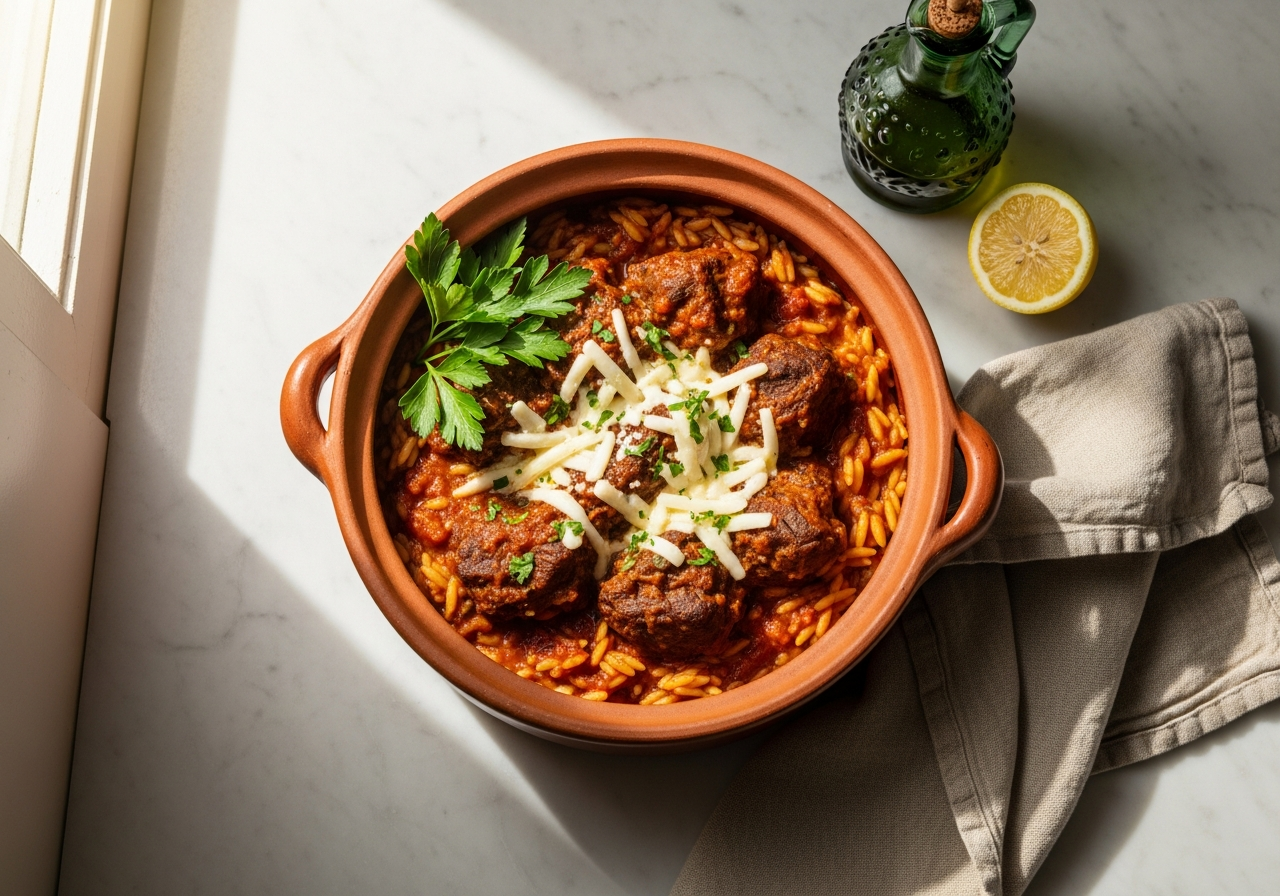
On Kos, Sunday smelled like cinnamon and lamb fat.
I must have been seven or eight years old the first time I understood what giouvetsi was actually doing — not just in the pot, but in the house. My mother would season the lamb on Saturday night, rubbing the pieces with coarse salt and cracked pepper, then leave them uncovered in the refrigerator so the surface would dry out and take the sear better. Sunday morning, the clay pot came out of the low shelf in her kitchen. She would do everything — the sear, the soffritto, the spices, the tomatoes — and then slide the whole thing into the oven before church. By the time we came home, the lamb had been cooking for over an hour, and the house was holding its breath with that deep, warm smell: cinnamon and allspice soaking into olive oil, and then, later, the sharp yeasty note of orzo absorbing the braising liquid as it swelled.
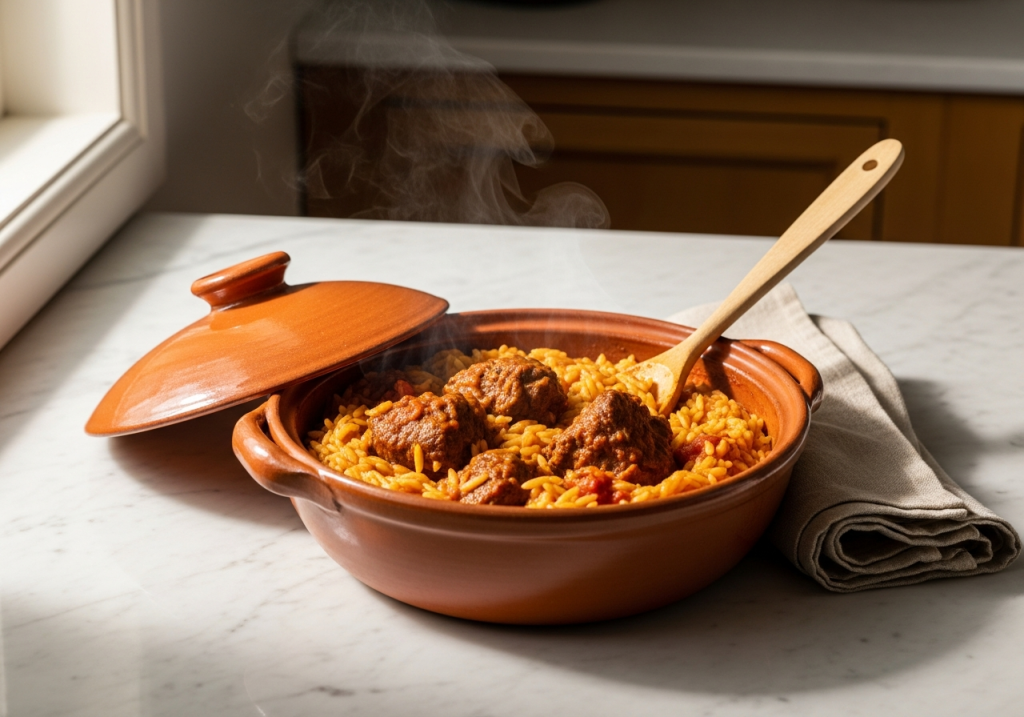
Giouvetsi is, at its core, a Greek Sunday roast. The lamb — or sometimes beef — is braised low and slow in a rich spiced tomato sauce, and then orzo, what Greeks call kritharaki, is added toward the end so it absorbs every drop of the cooking liquid as it finishes in the oven. The result is fork-tender meat, perfectly cooked pasta, and a sauce that has become something else entirely: deep, bronze-red, and layered with warmth you cannot get from any shortcut.
This giouvetsi recipe is the version I grew up eating on the island. I have not changed much about it over the years, because the dish does not need improvement — it needs patience. What I can give you are the techniques that make the difference between a giouvetsi that tastes like something from a harbor taverna on Kos and one that tastes like seasoned lamb and canned tomatoes over pasta.
Table of Contents
- What Is Giouvetsi?
- Why This Recipe Works
- Ingredients
- Step-by-Step Instructions
- Giouvetsi Recipe Card
- Chef’s Notes
- FAQ
What Is Giouvetsi?
Giouvetsi (γιουβέτσι) is a traditional Greek baked casserole made with meat — most commonly lamb or beef — slow-braised with orzo pasta in a spiced tomato sauce. The dish takes its name from the güveç, a type of earthenware pot used throughout the Balkans, Turkey, and the Levant for slow-baking stews and casseroles. The dish has deep roots in shared Ottoman-era cooking traditions and spread throughout Greece and the broader Eastern Mediterranean as a beloved Sunday meal.
What distinguishes Greek giouvetsi from similar Balkan preparations is the spice profile — cinnamon, allspice, and often a whole clove — and the use of orzo rather than rice or other grains. The orzo is not cooked separately and added at the end; it is stirred raw into the braising liquid and baked in the oven for its final 30 minutes of cooking, giving it a creamy, almost risotto-like texture that boiled pasta cannot replicate. The pasta swells as it absorbs lamb-scented, tomato-rich stock, releasing its own starch back into the sauce and thickening it naturally.
In Greece, giouvetsi is considered kyriakátiko fagító — Sunday food. It is the kind of meal that fills a house with smell and gathers a whole family around one pot.
Why This Recipe Works
- Bone-in lamb shoulder gives body and flavor. Bone-in cuts release collagen as they braise, enriching the sauce and giving it a silky texture that boneless meat cannot replicate. The marrow also contributes depth that seasonings alone cannot achieve.
- The spice bloom happens in fat, not liquid. Adding the cinnamon stick, allspice berries, and cloves to the olive oil with the soffritto — before the tomatoes go in — allows the spices to release their fat-soluble compounds into the cooking fat. This is the difference between a sauce that carries warm spice through every mouthful and one that merely contains it.
- The orzo goes in raw, partway through. Adding dry orzo to the braising liquid in the last 30–35 minutes means it absorbs lamb-scented, tomato-rich stock as it cooks. The starch it releases as it swells also thickens the sauce naturally.
- A 10-minute rest after the oven is not optional. The orzo continues to absorb liquid and firm up as it rests off the heat. Serve it too soon and the pasta will seem soupy and loose; rest it properly and it holds its shape in the pot and on the plate.
Ingredients
For the lamb
- 1.5 kg (3.3 lb) bone-in lamb shoulder, cut into 6–8 large pieces (ask your butcher)
- 2 tbsp extra virgin olive oil, for searing
- 1½ tsp fine salt
- ½ tsp freshly ground black pepper
For the sauce
- 60ml (¼ cup) extra virgin olive oil
- 1 medium onion, finely diced
- 4 cloves garlic, minced
- 1 cinnamon stick
- ½ tsp ground cinnamon
- 4 allspice berries
- ½ tsp ground allspice
- 2 whole cloves
- 2 bay leaves
- 2 × 400g (14 oz) cans crushed tomatoes
- 500ml (2 cups) lamb or chicken stock, warm (plus more as needed)
- 1 tsp sugar (optional — use it if your tomatoes taste sharp)
- Salt and freshly ground black pepper
For finishing
- 400g (14 oz) orzo (kritharaki)
- 60g (2 oz) kefalotyri or dried mizithra cheese, finely grated
- Fresh flat-leaf parsley, roughly chopped (optional)
Step-by-Step Instructions
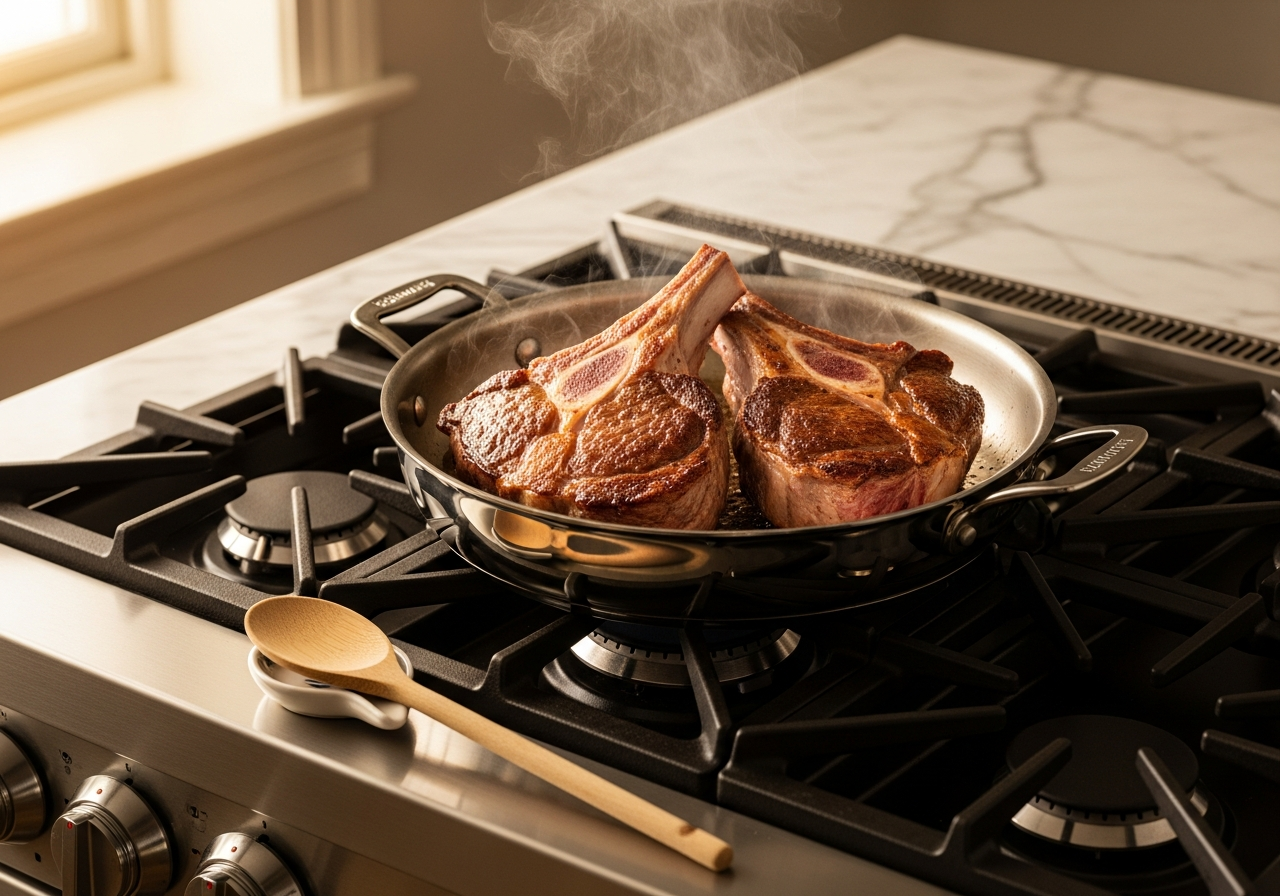
Step 1 — Season and dry the lamb.
Pat the lamb pieces completely dry with paper towels. Any surface moisture will prevent a proper sear and steam the meat instead. Season generously on all sides with salt and pepper. If time allows, season the lamb the evening before and leave it uncovered in the refrigerator overnight. The surface dries further, and the seasoning penetrates the meat more deeply.
Step 2 — Sear the lamb in batches.
Preheat your oven to 180°C (350°F / Gas Mark 4). In a large, heavy-bottomed Dutch oven or deep oven-safe pan, heat 2 tablespoons of olive oil over high heat until shimmering and just beginning to smoke. Place the lamb pieces in the pot in a single layer, without touching each other. Sear undisturbed for 3–4 minutes per side until a deep golden-brown crust forms. Resist the urge to move the meat before it releases naturally from the pan. Work in 2–3 batches. Transfer the seared lamb to a plate and set aside. Do not clean the pot — those browned bits on the bottom are flavor.
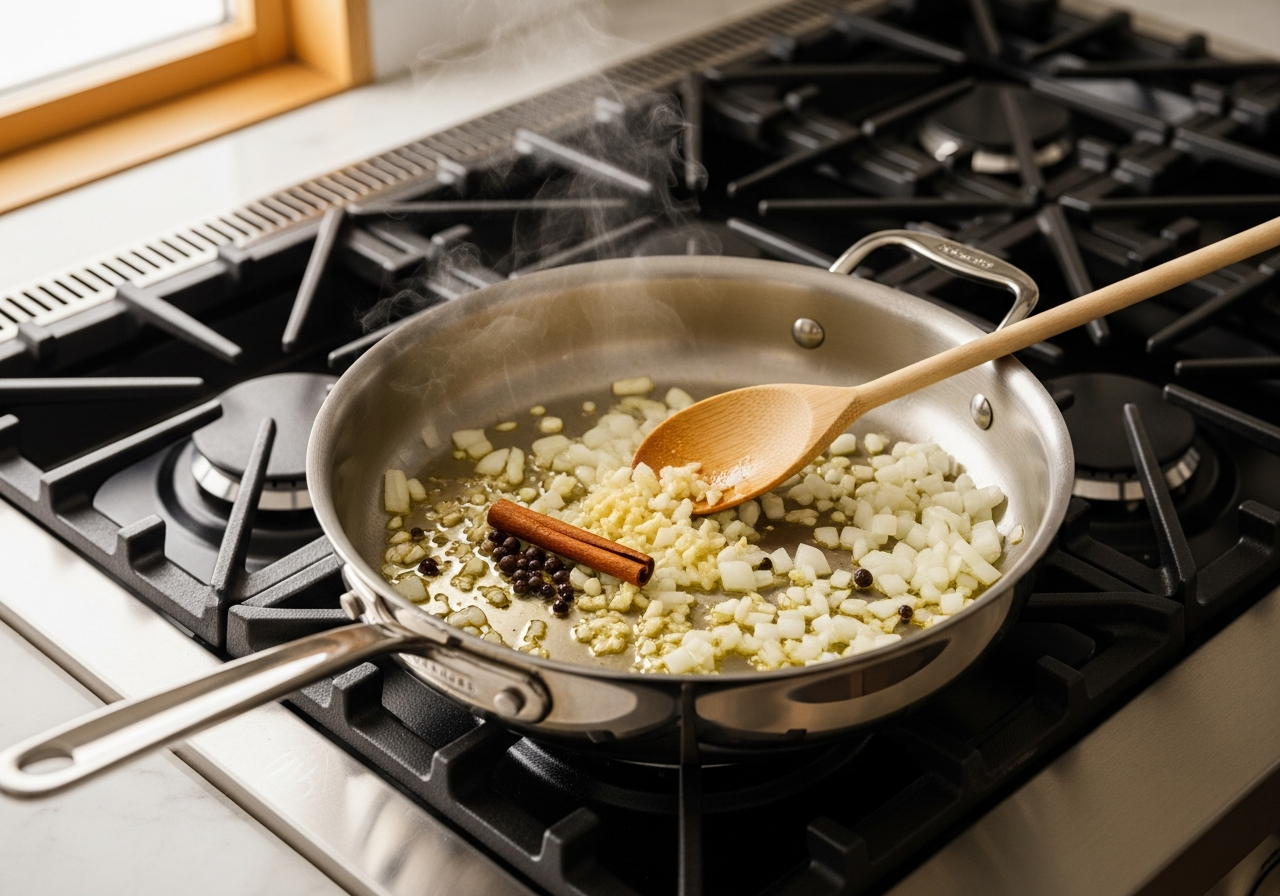
Step 3 — Build the soffritto and bloom the spices.
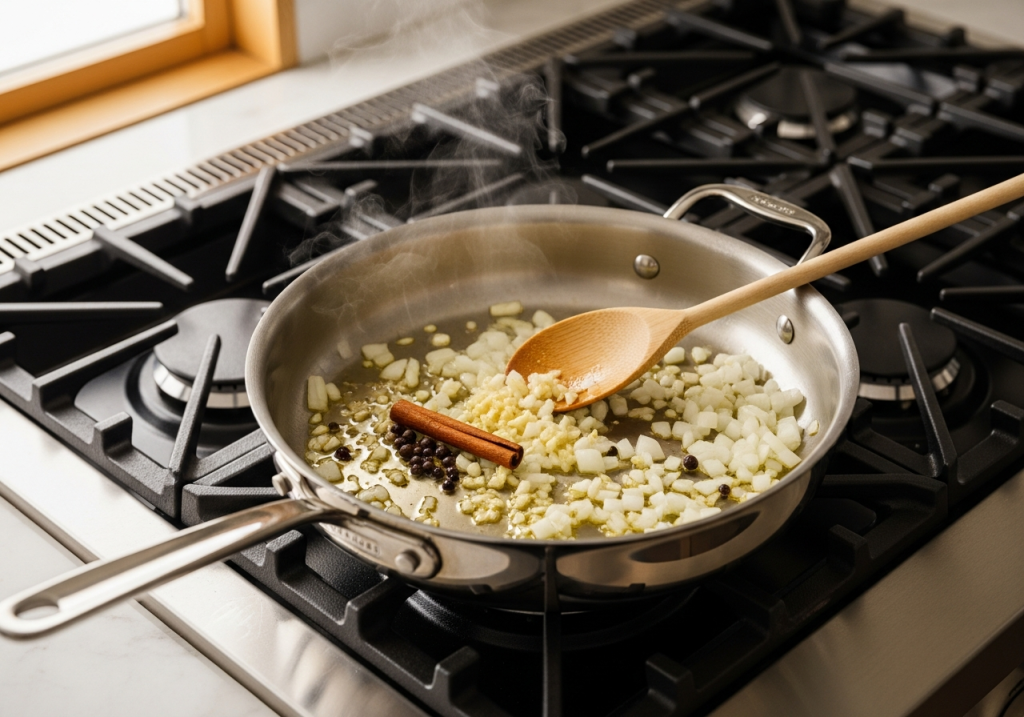
Reduce the heat to medium. Add the remaining ¼ cup olive oil to the same pot. Once warm, add the diced onion and cook, stirring occasionally, for 8–10 minutes until completely soft and translucent — not browned, just yielding. Add the garlic and cook for another minute until fragrant. Now add the whole spices: cinnamon stick, allspice berries, cloves, and bay leaves. Stir for 30 seconds so they sizzle gently in the oil. Then add the ground cinnamon and ground allspice, and stir for another 30 seconds. The kitchen should smell noticeably warmer at this point.
Step 4 — Add tomatoes and stock.
Pour in the crushed tomatoes and stir well, scraping up all the browned bits from the bottom of the pot. Add the warm stock and sugar if using. Season with salt and pepper. Bring to a gentle simmer over medium heat and let it bubble for 5 minutes to bring the sauce together and cook out some of the raw tomato edge.
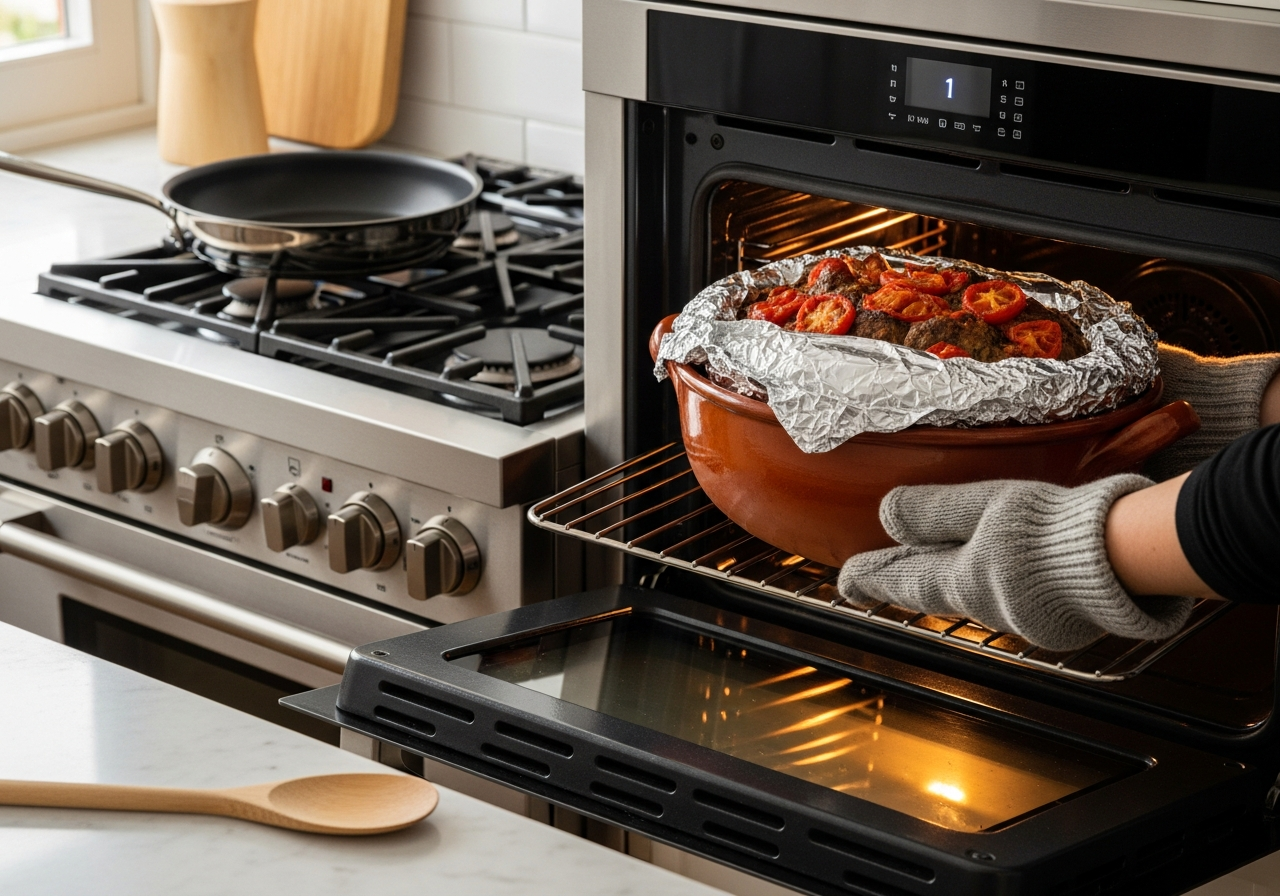
Step 5 — Braise the lamb in the oven.
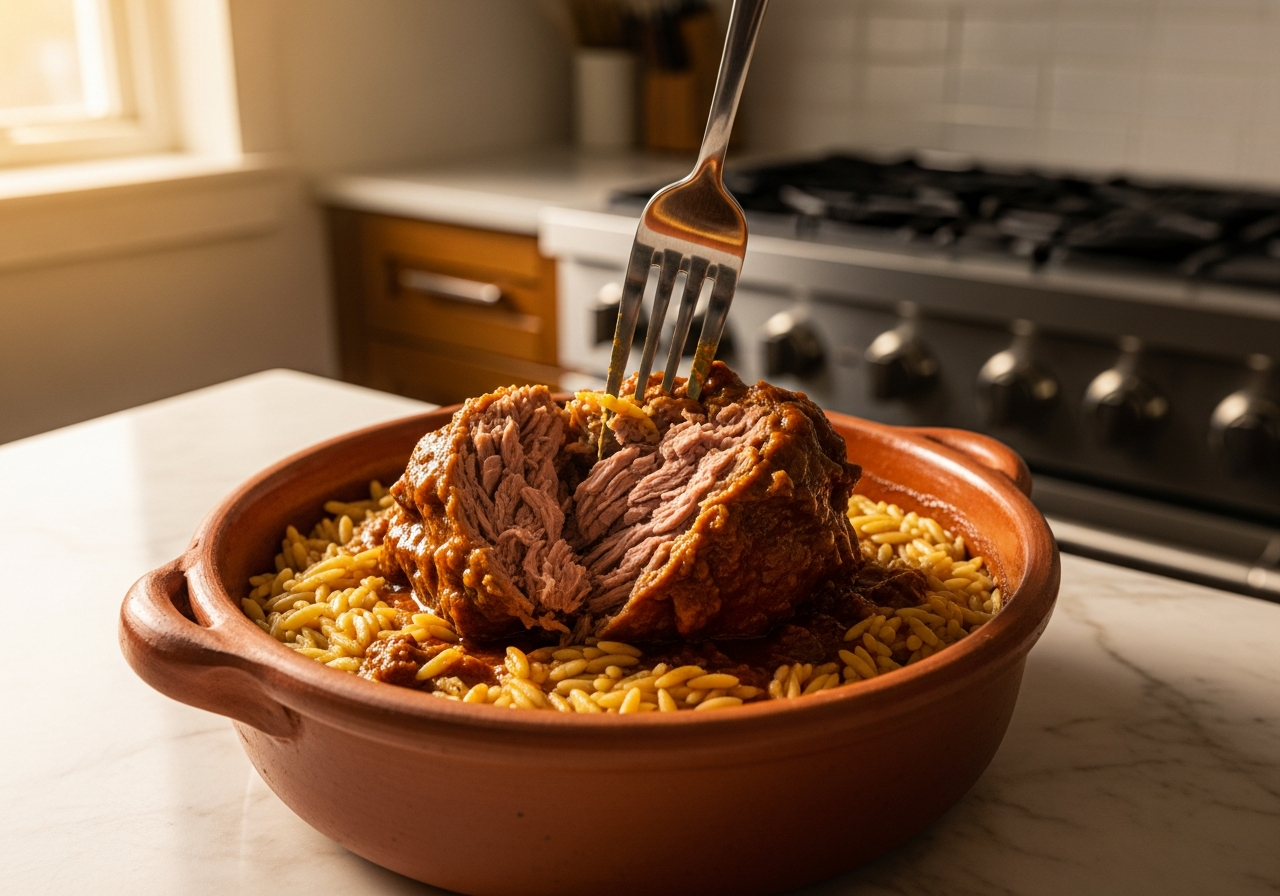
Return the seared lamb pieces to the pot, pushing them down into the sauce. Cover the pot tightly with a lid or with foil. Transfer to the preheated oven and braise for 1 hour 30 minutes. Check once around the 45-minute mark; the liquid should be at a slow, gentle bubble. If it is boiling aggressively, reduce the oven to 170°C (340°F). After 1 hour 30 minutes, the lamb should be very tender and beginning to pull away from the bone.
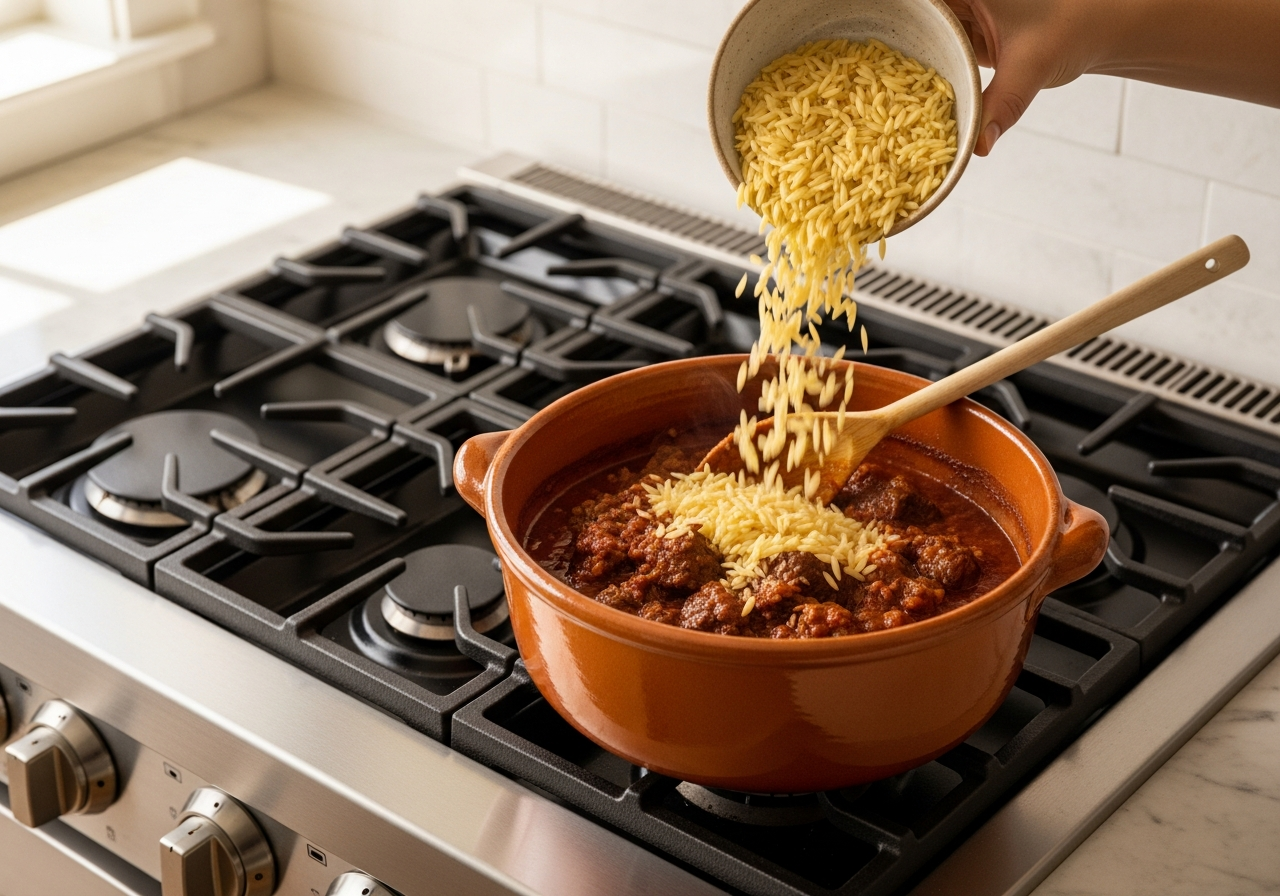
Step 6 — Add the orzo and finish baking.
Remove the pot from the oven. Taste the braising liquid and adjust the seasoning. Look at the liquid level: it should come roughly halfway up the lamb pieces. If it has reduced lower than that, add another 125–250ml (½–1 cup) of warm stock now. Remove the bay leaves and whole spices if you prefer. Stir in the dry orzo, distributing it evenly through the sauce. Return the pot to the oven, uncovered, for 30–35 minutes. At the 15-minute mark, stir gently once to ensure the orzo is cooking evenly and not sticking to the bottom. The giouvetsi is ready when the orzo is cooked through and has absorbed most of the braising liquid.
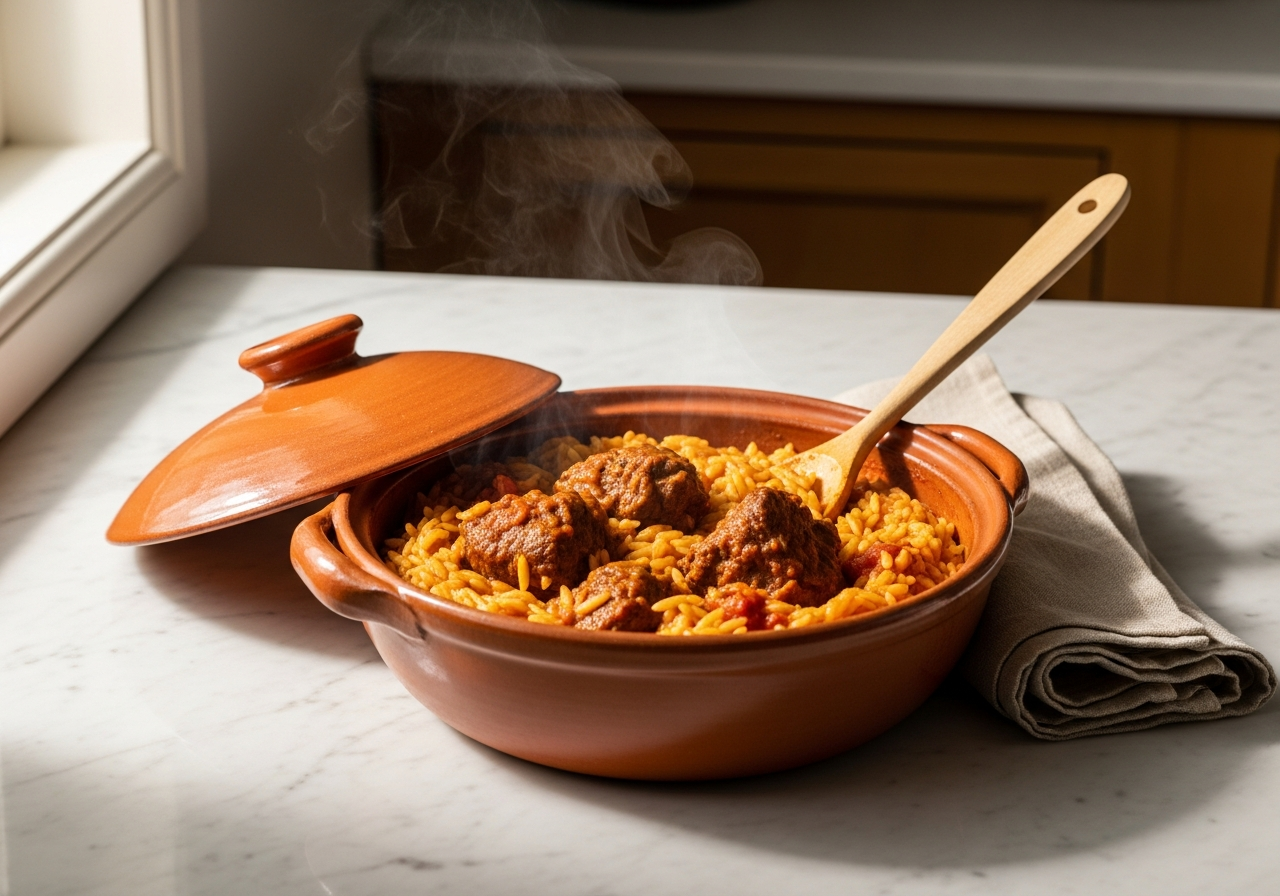
Step 7 — Rest and serve.
Remove the pot from the oven. Do not serve immediately. Let the giouvetsi rest for 10 minutes, loosely covered with a clean cloth or foil — the orzo will continue to absorb the remaining liquid and firm up as it rests. After resting, serve directly from the pot. Top each serving with a generous amount of finely grated kefalotyri or mizithra and a scatter of chopped parsley if you like.
Giouvetsi Recipe Card
Giouvetsi (Greek Baked Lamb with Orzo)
Ingredients
For the lamb
- 1.5 kg bone-in lamb shoulder 3.3 lb, cut into 6–8 large pieces
- 2 tbsp extra virgin olive oil for searing
- 1½ tsp fine salt
- ½ tsp freshly ground black pepper
For the sauce
- 60 ml extra virgin olive oil ¼ cup
- 1 medium onion finely diced
- 4 clove garlic minced
- 1 cinnamon stick
- ½ tsp ground cinnamon
- 4 allspice berries
- ½ tsp ground allspice
- 2 whole cloves
- 2 bay leaves
- 800 g crushed tomatoes 2 × 14 oz cans
- 500 ml lamb or chicken stock 2 cups, warm, plus more as needed
- 1 tsp sugar optional — if tomatoes taste sharp
- salt and freshly ground black pepper
For finishing
- 400 g orzo (kritharaki) 14 oz
- 60 g kefalotyri or dried mizithra 2 oz, finely grated
- fresh flat-leaf parsley roughly chopped, optional
Instructions
- Pat the lamb completely dry and season generously with salt and pepper. If time allows, season the evening before and refrigerate uncovered overnight.
- Preheat the oven to 180°C (350°F). Heat 2 tbsp olive oil in a heavy Dutch oven over high heat and sear the lamb in batches, 3–4 minutes per side, until deeply browned. Do not crowd the pan. Set the lamb aside.

- Reduce the heat to medium and add the remaining ¼ cup olive oil. Cook the diced onion until soft and translucent, add the garlic, then bloom the cinnamon, allspice, cloves, and bay leaves in the oil for a minute until fragrant.
- Pour in the crushed tomatoes, scraping up the browned bits, then add the warm stock and the sugar if using. Season with salt and pepper and bring to a simmer.
- Return the lamb to the pot, pressing the pieces into the sauce. Cover tightly and braise in the oven for about 2 hours, until the lamb is fork-tender.
- Remove the pot, taste and adjust the seasoning, and check the liquid — it should roughly half-cover the meat; top up with warm stock if needed. Stir in the orzo and return to the oven, uncovered, until the orzo is tender and has drunk in the sauce, about 20–25 minutes.
- Rest the giouvetsi for 10 minutes before serving — the orzo finishes absorbing as it sits. Serve showered with grated kefalotyri and parsley.
Nutrition
Chef’s Notes
On choosing your lamb cut. The single best thing you can do for this giouvetsi recipe is use bone-in meat. The collagen in the connective tissue around the bone dissolves slowly over the long braise, enriching the sauce with a body and silkiness that no amount of seasoning can replicate. Boneless shoulder will still produce a very good dish, but the sauce will be noticeably thinner. If your butcher only carries whole shoulder, ask them to cut it into pieces for you — most are happy to do it. Bone-in lamb shanks are also excellent: use one shank per person and treat them exactly as you would the shoulder pieces.
On the orzo timing. The single most common mistake with giouvetsi is misjudging when to add the orzo. Too early and it turns to mush; too late and it will be chalky in the center. The window is reliably 30–35 minutes of uncovered baking at 180°C. Set a timer and stir at the 15-minute mark. If the orzo has absorbed all the visible liquid before the timer goes off, add warm stock in ¼-cup increments and continue baking.
On liquid management. Before the orzo goes in, the braising liquid should sit roughly halfway up the lamb pieces. Different ovens run at different temperatures, different canned tomatoes have different water content, and even the exact fit of your pot lid affects how much evaporation occurs. Check the level before you add the orzo and adjust accordingly. It is far easier to add stock at this point than to rescue an overcooked, dry orzo at the end.
On variations. This recipe works equally well with beef. Bone-in beef chuck or short ribs can be substituted; increase the covered braise time to 2 hours before adding the orzo. For a chicken version, use bone-in thighs and reduce the covered braise to 45 minutes. The spice profile remains the same in all versions — the cinnamon-allspice combination is what makes this distinctly Greek.
On serving. Giouvetsi is a complete meal from the pot. I serve it with good crusty bread for the sauce and a simple green salad on the side. My Fasolakia — Greek Green Beans in Tomato Sauce pairs particularly well here, since both dishes share the same tomato-braised logic and can be made in the same oven at the same time. If you are drawn to this category of Greek slow-cooked casseroles, you will also want to explore my Classic Greek Moussaka, which uses a similar cinnamon-spiced meat sauce, or the Pastitsio — another baked Greek casserole that rewards patience in the same way.
FAQ
Can I make giouvetsi ahead of time?
Yes — and it actually benefits from it. The lamb braise (steps 1–5) can be made up to 2 days ahead and refrigerated in the pot. On the day of serving, reheat the braising liquid gently on the stovetop until it is simmering, check the liquid level, and add the orzo as directed. The lamb will have absorbed more flavor overnight, and the spices will have mellowed into the sauce more fully.
What cut of lamb is best for this giouvetsi recipe?
Bone-in lamb shoulder gives the best result: it is fatty enough to stay moist over the long braise and collagen-rich enough to enrich the sauce. Bone-in lamb shanks are the next best option — one per person, same method. Leg of lamb will work but tends to dry out over two hours of cooking; if using it, reduce the covered braise time to 1 hour and check for tenderness.
Why is my orzo dry or sticking together?
Two causes: insufficient liquid before the orzo goes in, or skipping the stir at the halfway point. Before adding the orzo, the braising liquid should look like a loose, saucy braise — not a thick reduced paste. If it has reduced too far, add 250ml (1 cup) of warm stock before adding the orzo. Always stir gently at the 15-minute mark during the final bake.
Can I make giouvetsi in a slow cooker?
Yes, with adjustments. Complete the sear and soffritto on the stovetop (steps 1–4), then transfer everything to the slow cooker. Cook on low for 7–8 hours. Remove the lamb pieces to a plate, stir in the dry orzo, return the lamb, and cook on high for 25–30 minutes until the orzo is done. The texture will differ slightly — softer, less caramelized — but the flavor holds up well.
What is the difference between giouvetsi and pastitsio?
Both are Greek baked casseroles with pasta, but they are fundamentally different dishes. Giouvetsi uses a whole braised meat (lamb or beef), orzo, and a tomato-spice sauce — no bechamel, no layering. Pastitsio is a structured, layered bake of tubular pasta, minced meat sauce, and a thick egg-enriched bechamel on top. Giouvetsi is a rustic, one-pot braise; pastitsio is an assembled, sliceable bake.
What cheese should go on top of giouvetsi?
Kefalotyri is the traditional choice: a hard, salty aged cheese that grates finely and provides sharp contrast against the rich, sweet tomato sauce beneath it. Dried mizithra is the other classic option — slightly more pungent and crumbly. Outside Greece, Pecorino Romano is the best substitute. Avoid soft fresh cheeses, which will melt into the sauce and lose their contrasting function entirely.