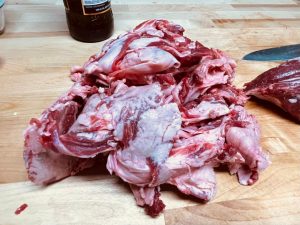
A whole filet mignon in cryovac costs a fraction per pound of what the butcher case charges for cut steaks — the catch is that you have to clean it yourself. The good news: it is a ten-minute job with a sharp knife, it gets easy after your first one, and a single whole filet yields about ten beautiful steaks plus a chateaubriand roast and stir-fry trimmings. This is the highest-return knife skill in home cooking, the 1-2-3 easy way.
What You’re Removing and Why
Out of the bag (open the cryovac over the sink — the liquid is harmless but messy), pat the filet completely dry. You are dealing with three things: the silver skin, an iridescent membrane that never softens no matter how you cook it; the chain, the fatty rope of muscle running along the side; and surface fat. The goal is a clean, uniform cylinder of pure tenderloin.
Peeling the Silver Skin
Slip the tip of a sharp, flexible knife under the edge of the silver skin, lift a tab you can grip, and angle the blade slightly upward against the membrane as you slide along — pulling the tab taut with your free hand. Angling up sacrifices a whisper of silver skin left on the board instead of a ribbon of expensive meat. Work in strips until the surface is clean and matte.
The Chain and the Trim
The chain pulls away from the main muscle mostly by hand — make a groove with your knife where it attaches, then peel it back and separate it. Do not discard it: trimmed of fat, the chain is delicious meat for tacos, stir-fries, or my quick and easy steak fajitas. Trim any remaining hard fat from the main muscle, and square off the thin tail end.
Portioning Your Steaks
The thick center section can stay whole as a chateaubriand roast, or be cut into steaks. For filets, cut confident, even slices about two inches thick — a ruler-straight cut cooks evenly. Fold the thin tail under itself and tie it with twine to make one more even steak. Ten steaks from one filet is typical.
Storing the Yield
Wrap steaks individually and refrigerate up to three days, or vacuum-bag and freeze up to six months — filet freezes exceptionally well. Label the chain meat and tips separately. Then cook one immediately: pan-sear like my porterhouse method, minus a few minutes for the smaller cut.
FAQ
What knife do I need?
A boning knife is ideal — narrow, sharp, slightly flexible. A sharp paring or utility knife works. A dull knife is the only wrong answer.
Is the white liquid in the bag bad?
No — it is purge, mostly water and protein from vacuum aging. Rinse if you like, but always pat thoroughly dry.
How much weight do I lose to trimming?
Typically 15–20% between silver skin, fat, and the chain — and the chain is usable meat, so very little is truly wasted. The per-pound math still wins by a wide margin.
Recipe Card
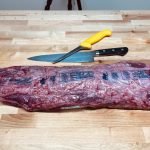
How to Clean and Trim Filet Mignon
Equipment
- 1 (Help support our site!)Cutting Board
- 1 Pairing Knife
- 1 (Help support our site!)Chefs Knife
Materials
- 1 whole Filet Mignon Pismo is the Terminology used for the meat cut.
Instructions
- Gather, clean, wash all ingredients and let's take it to the board.
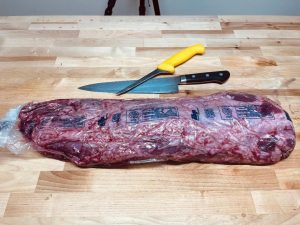
- Using a knife, open the cryovac package and place the filet on a towel to avoid fluids from going all over your table and discard packaging.
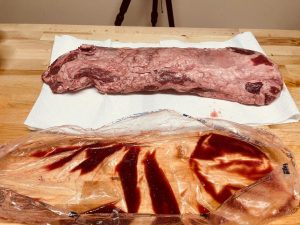
- Using your towel, pat dry and place filet on your board.
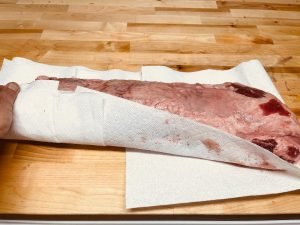
- Begin by peeling the skin downward to get to the outer chain of the filet. You can use your knife if needed.
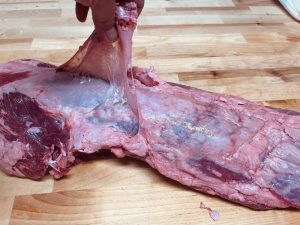
- Once you remove outer skin place your finger between the Filet Meat and the chain, run your finger down to the bottom of the Filet Mignon.
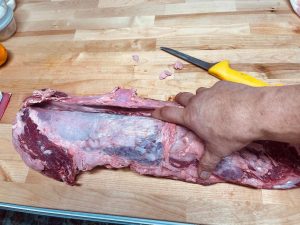
- Once you have made a grove take your chef's knife and begin to cut the chain off of the actual meat.
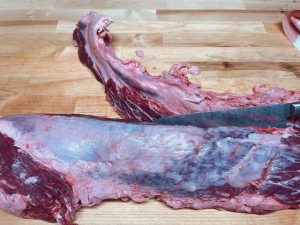
- Separate the chain and set aside for later cleaning.
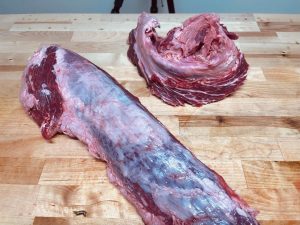
- Next using your fingers grasp the outer skin and in a downward motion remove the outer skin. It will peel right off exposing the Silver skin.* Silver skin is the membrane of the connective tissue that cannot be eaten.
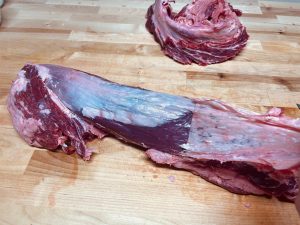
- Using your pairing knife, simply slide knife under the silver skin making sure to have your blade facing upward towards the silver skin to avoid cutting out any excess meat.
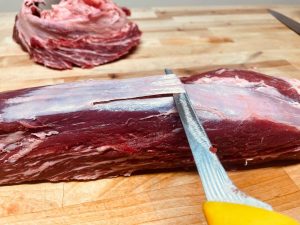
- You will see about a 4-6 inch silver skin, you remove it using your pairing knife in strips. Taking your time and use the skin as a guide for your knife.
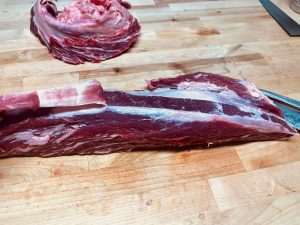
- Once you are completely done you will have a smooth membrane free filet. You can then clean off any excess fat off the sides of the meat.* Remember it is always good to retain some fat which will dissolve in the cooking process creating flavor.
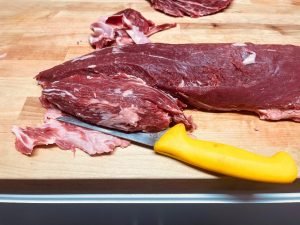
- Turn meat over and begin to clean the excess fat on the bottom. They look like square boxes, remove all the way down to the tail end.
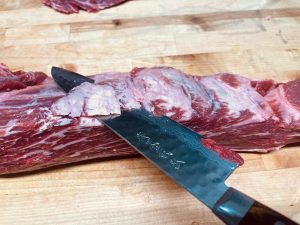
- This is what the outcome of the clean bottom should be. You are basically done cleaning of the filet mignon. Now lets clean the chain.
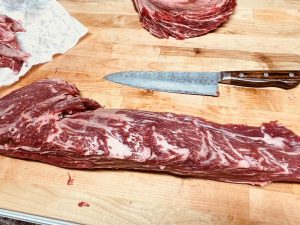
- Bring the chain and lets extract the meat.
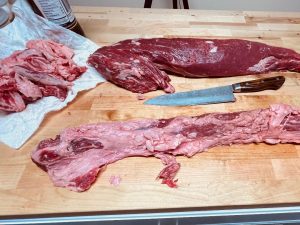
- Using a chef's knife begin to work around the larger end of the chain. just begin to pull and cut skin off and you will begin to see the meat chunks.
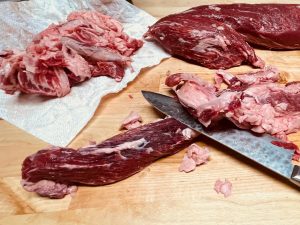
- Feel free to separate with knife also use your knife to cut excess fat from meat.
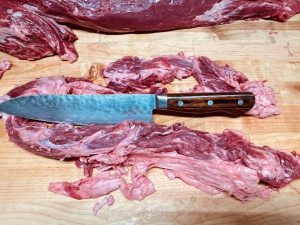
- When finished you will have your Filet Mignon cleaned and ready for use and two extra pieces for another dish.
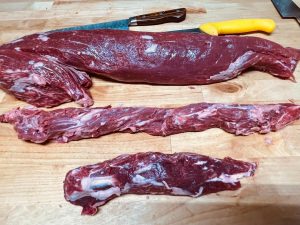
- The two extract pieces of meat that you can cut into pieces and use for steak fajitas, beef satays, dice it up and throw it into chili recipe or simply dice it and feed your favorite four legged friend.
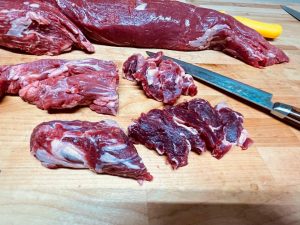
- The total yield of meat to scrap is about 3 to 4 lbs. of waste. This is determined by the quality of meat you buy according to FDA types. No Roll, Choice or Prime.