
I will never forget the first time I ordered a “Greek salad” outside of Greece. Fresh out of culinary school, I found myself at a diner in New York City, curious to see how the rest of the world interpreted this dish. What arrived at the table was a bowl of chopped iceberg lettuce, pale tomato wedges, a handful of sliced black olives from a can, and a snowfall of crumbled feta. I pushed it around my plate, confused and a little heartbroken.
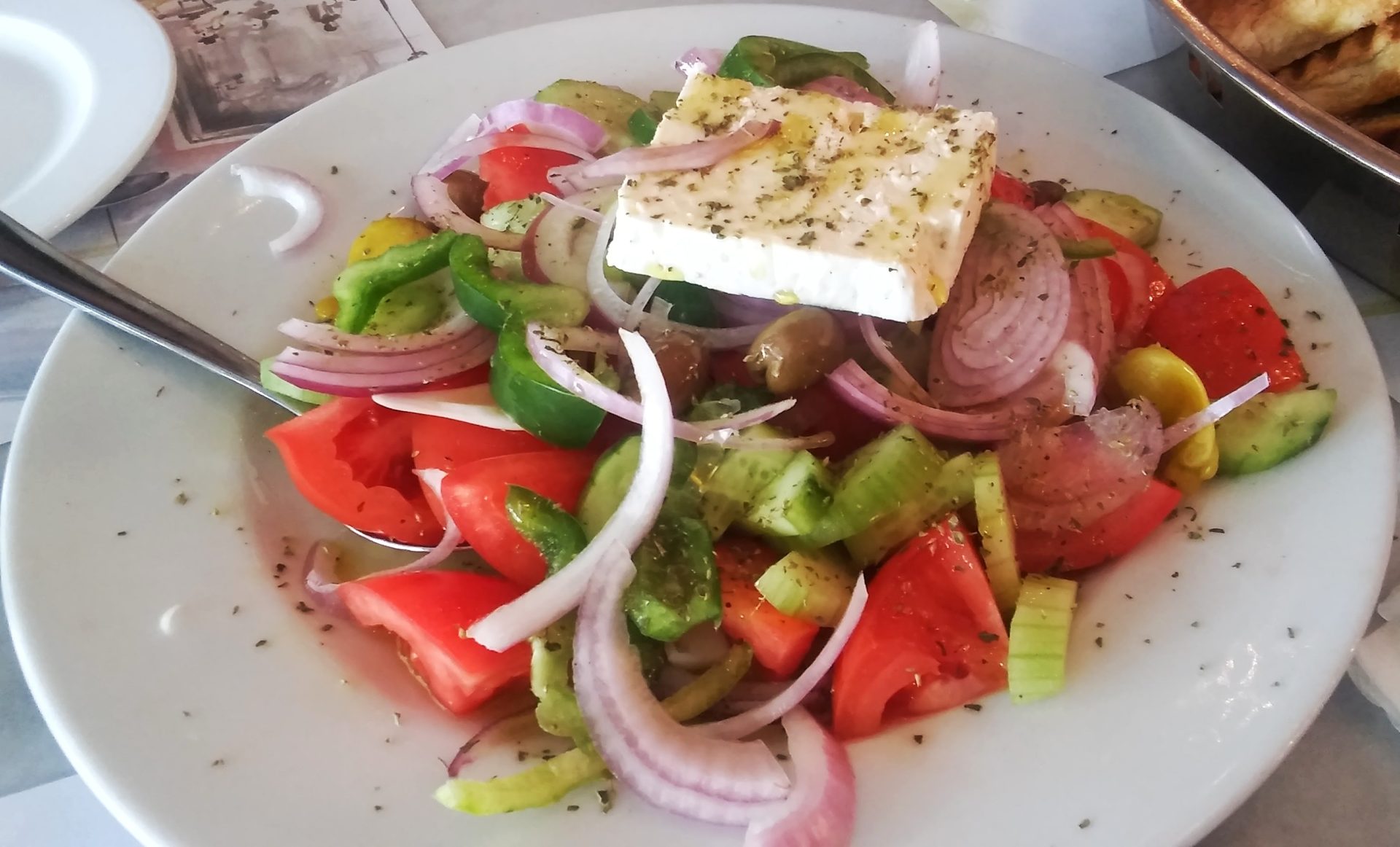
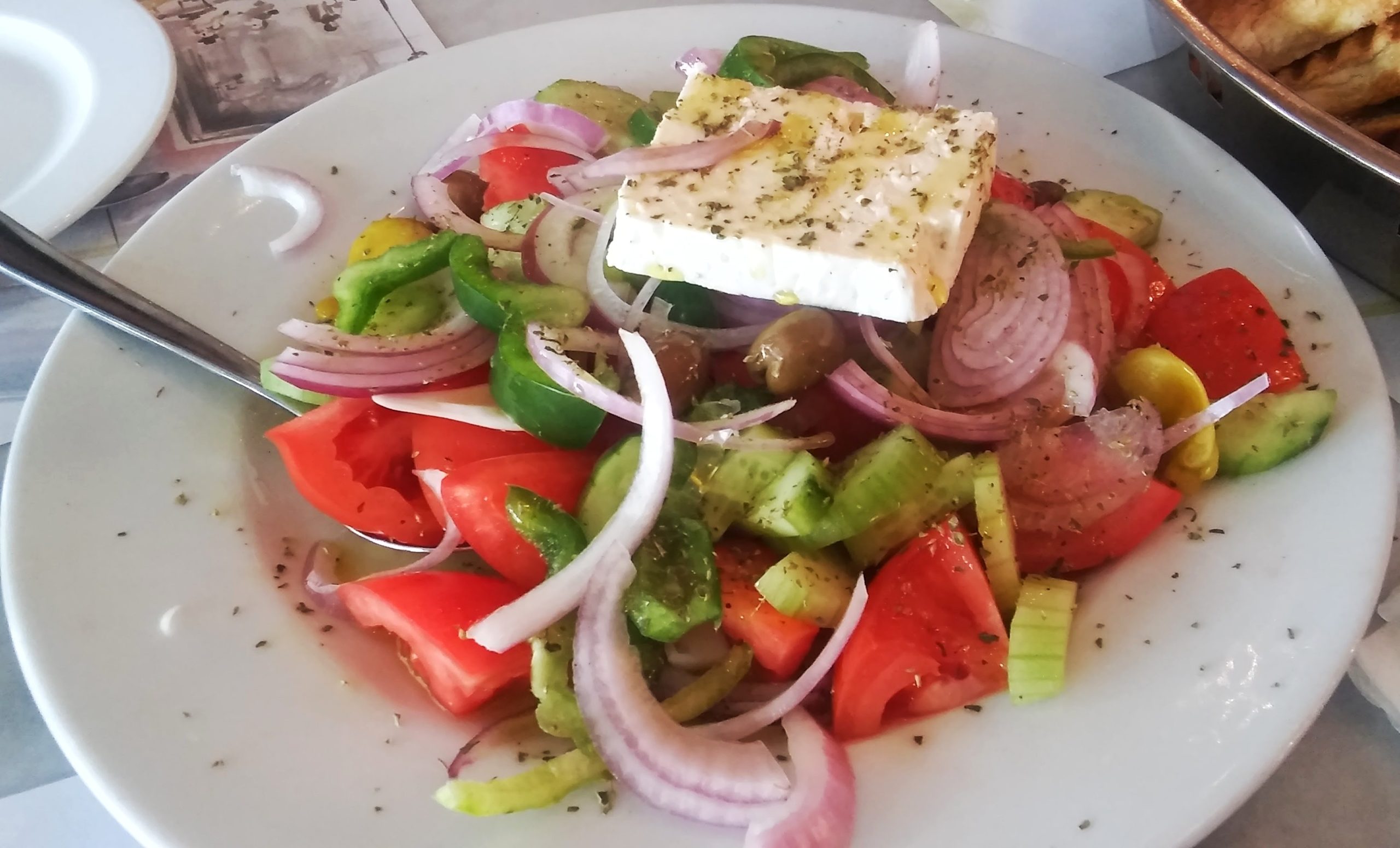
That dish had nothing to do with the Greek village salad – the horiatiki – I had eaten every summer of my life. The horiatiki I knew was a plate of thick-cut, sun-warmed tomatoes so ripe they split under the knife. Fat slices of cucumber with the seeds still cool from the garden. Rings of sharp green pepper. A generous slab of feta – never crumbled, always a proud block resting on top. A scattering of Kalamata olives with their pits still in. And over everything, a pour of the best olive oil you had in the house, a pinch of dried oregano, and nothing else.
This is the horiatiki I want to teach you. No lettuce, no fancy vinaigrettes, no shortcuts. Just the honest, traditional Greek village salad the way it has been made for generations.
Why This Greek Village Salad Recipe Works
- No lettuce, ever. Authentic horiatiki never contains lettuce. The base is ripe tomatoes and thick-cut cucumber.
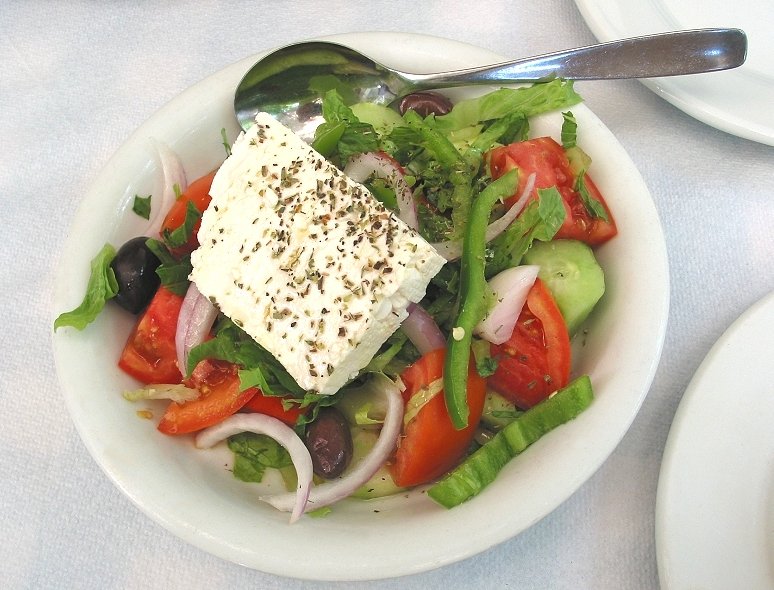
- Feta served as a slab, not crumbled. A thick slice of quality feta placed on top is the traditional presentation.
- Simplicity demands the best ingredients. Peak-season produce and good-quality Greek extra virgin olive oil are essential.
- Dried oregano, not fresh herbs. Dry Greek oregano (rigani) rubbed between your palms releases a warm, floral fragrance.
Traditional Greek Village Salad (Horiatiki) Recipe
Traditional Greek Village Salad (Horiatiki)
Ingredients
For the Salad
- 3 large ripe tomatoes about 1 lb / 450g, cut into wedges
- 1 large cucumber peeled in strips, sliced into thick half-moons
- 1 medium green bell pepper sliced into rings
- 1 small red onion thinly sliced
- 12-15 Kalamata olives whole with pits
- 7 oz Greek feta cheese 200g, in one block
For the Dressing
- 4-5 tablespoons extra virgin olive oil the best you have
- 1-2 tablespoons red wine vinegar optional — many villages skip it
- 1 teaspoon dried Greek oregano
- sea salt to taste
Instructions
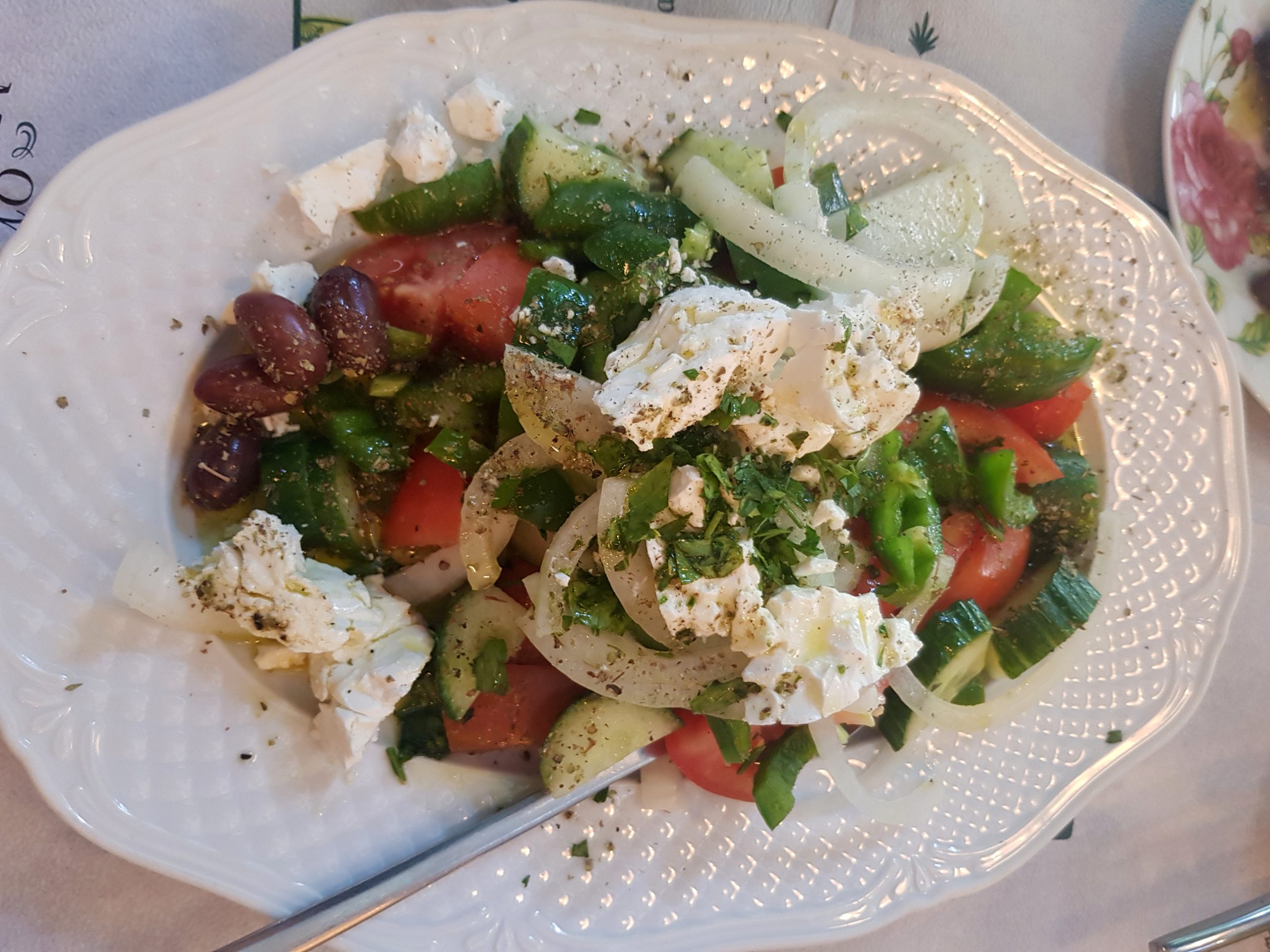
- Cut tomatoes into large, irregular wedges. Peel cucumber in alternating strips and slice into thick half-moons, about half an inch wide. Slice green pepper into rings. Thinly slice red onion.
- Arrange tomato wedges on a wide, flat plate — not a bowl. Scatter cucumber, pepper rings, and onion over and around the tomatoes. Tuck Kalamata olives among the vegetables.
- Place the block of feta on top of the salad in the center. Do not crumble it. Score lightly with a knife if desired so it is easier to break apart at the table.
- Pour extra virgin olive oil generously over everything. Drizzle with red wine vinegar if using.
- Rub dried oregano between your palms directly over the salad to release its essential oils. Finish with a pinch of sea salt.
- Serve immediately with crusty bread.
Notes
Nutrition
Step-by-Step Instructions
1. Choose Your Tomatoes Carefully
This is the single most important step. You need tomatoes that are heavy for their size, deeply colored, and fragrant at the stem end. Cut the tomatoes into large, irregular wedges – not small dice.
2. Prepare the Cucumber and Pepper
Peel the cucumber in alternating strips. Cut into thick half-moons, about half an inch wide. Slice the green pepper into rings.
3. Assemble on a Wide, Flat Plate
Arrange the tomato wedges on a wide, flat plate – not a bowl. Scatter the cucumber, pepper rings, and onion. Tuck in the Kalamata olives with pits intact.
4. Place the Feta and Dress
Set the block of feta right on top, in the center. Pour olive oil generously over everything. Rub the dried oregano between your palms directly over the salad. Finish with sea salt. Serve immediately.
Chef Notes and Variations
- Island-style with capers: In the Cyclades, capers are added alongside or instead of green pepper for a briny punch.
- Cherry tomatoes: If full-sized tomatoes are not at peak, ripe halved cherry tomatoes work well.
- Cretan dakos: Place a slab of dried barley rusk (paximadi) under the salad and let the juices soak in.
- Storage: Horiatiki does not keep. Assemble just before serving.
Frequently Asked Questions
What is the difference between horiatiki and Greek salad?
Horiatiki translates to “village salad” and is the original Greek salad. It never contains lettuce, croutons, or creamy dressings. The version many people know outside Greece, with chopped lettuce and crumbled feta, is an adaptation bearing little resemblance to the traditional dish.
Can I make horiatiki without feta cheese?
Technically yes, but it would not be a horiatiki. The feta is a defining element. If you need dairy-free, a vegan feta-style cheese can be substituted, though the flavor will differ.
Why do you leave the pits in the olives?
Olives with pits intact retain more flavor and have a firmer texture. Warn your guests and provide a small dish for discarded pits.
What is the best tomato variety for horiatiki?
Look for heirloom varieties or any tomato that smells intensely at the stem end and feels heavy in your hand. A flavorful, imperfect tomato from a farmers market will always beat a perfect-looking supermarket one.
Can I add lettuce to a Greek village salad?
No. Adding lettuce is the most common mistake made outside Greece. It dilutes the taste of the ripe tomatoes and feta. If you want a green salad with feta, that is a fine dish – but it is not a horiatiki.