
There is a particular table at a taverna in Kos Town that I have thought about more times than I can count. It sits near the harbor, just far enough from the water that the breeze does not scatter your napkins, and close enough that you can watch the fishing boats come in while you wait for your food. My father used to take us there on Friday evenings when I was a child. We always ordered the mpifteki.
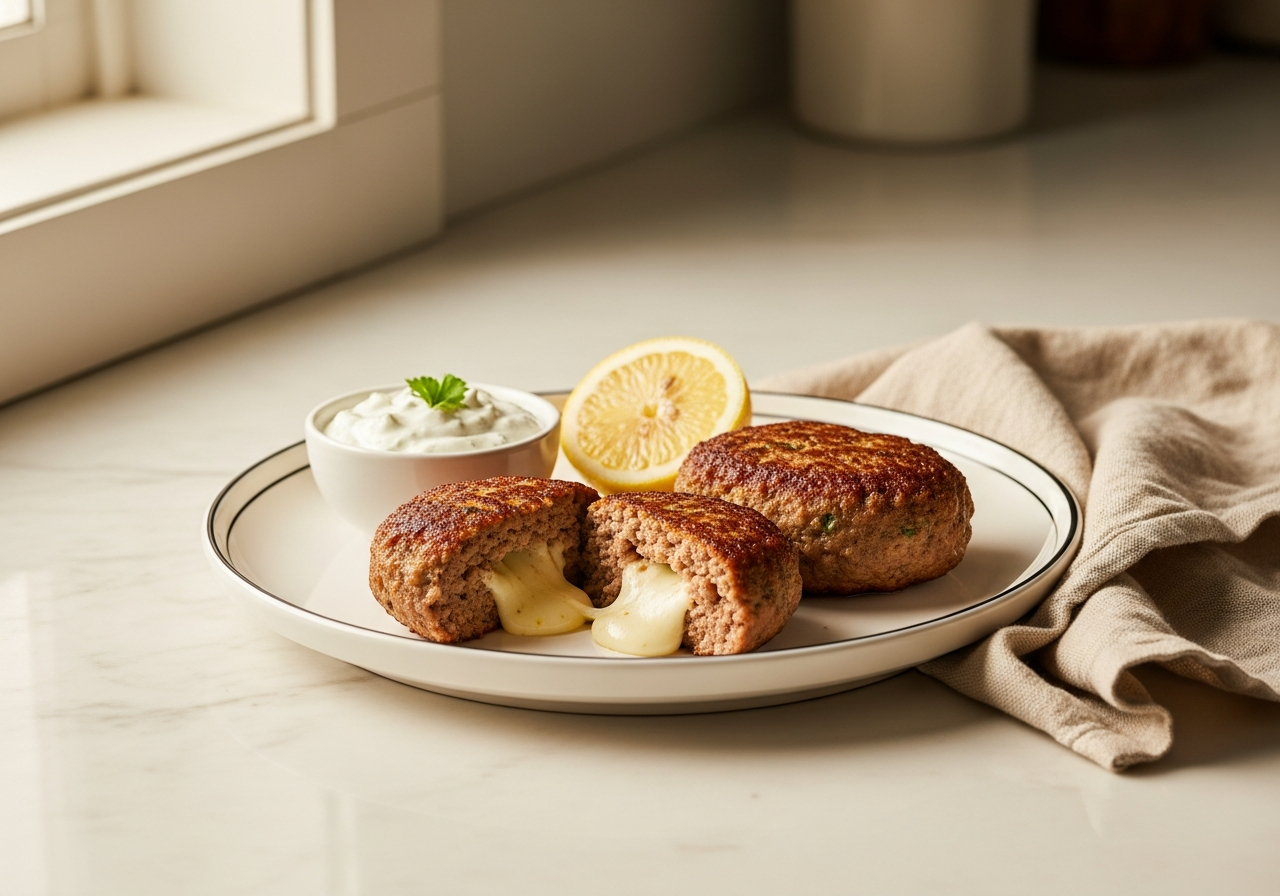
It arrived on a plain white plate — nothing fancy, no drizzles or garnishes — just a thick, hand-formed beef patty grilled over charcoal, split open to reveal the feta inside. The cheese had melted into pockets of salty creaminess throughout the meat. There was tzatziki on the side, a basket of bread, and a horiatiki salad dressed at the last minute. That was dinner. That was enough.
A good mpifteki recipe asks very little of you. Ground beef, a proper handful of feta, onion, garlic, dried oregano — the same pantry you reach for in most Greek cooking. What separates a great mpifteki from a mediocre one is not the ingredient list, but the technique: mixing gently so the meat stays tender, seasoning generously, sealing the feta so it does not escape during cooking, and getting your grill or oven hot enough to build a proper crust.
This is the mpifteki recipe I have been making for years, refined from memory and practice. Follow the four steps below and you will have something that tastes like it came off a charcoal grill by the Aegean.
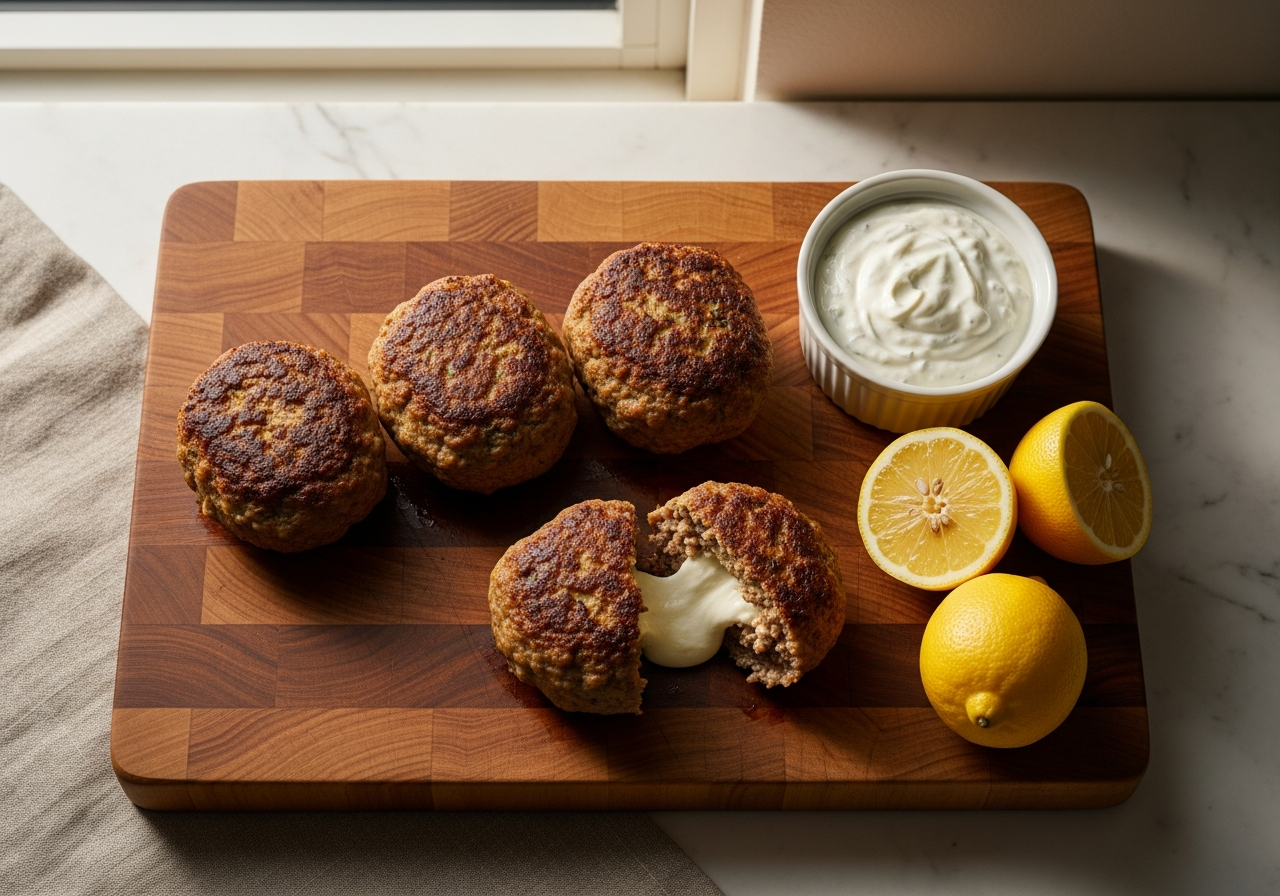
Table of Contents
- What Is Mpifteki?
- Why This Recipe Works
- Ingredients
- Mpifteki Recipe: Step-by-Step Instructions
- Chef’s Notes
- FAQ
What Is Mpifteki?
Mpifteki (μπιφτέκι) is a Greek ground meat patty, typically stuffed with feta cheese and seasoned with garlic, onion, and dried oregano. The name derives from the Turkish biftek, itself borrowed from the French bifteck (beef steak) — though the Greek version has developed its own distinct identity over generations of taverna cooking. You will find mpifteki on the menu of virtually every taverna in Greece, from the Dodecanese to the mainland.
What sets it apart from a standard burger or meatball is the stuffing: a solid piece of feta sealed inside the meat before cooking. As the patty heats through, the feta softens into a creamy, salty core. It is a simple idea that works extraordinarily well. According to Wikipedia’s entry on Bifteki, similar preparations appear throughout the Eastern Mediterranean and the Balkans — but the Greek version, with its feta heart and oregano-forward seasoning, is the one most tavernas have made famous.
Mpifteki is generally served as a main course alongside tzatziki, a Greek salad, and bread or pita. It is satisfying without being complicated, which is precisely why it has remained a staple of Greek taverna cooking for so long.
Why This Recipe Works
- The feta goes inside, not on top. Many home versions scatter crumbled feta through the meat mixture, where it melts away and disappears. Placing a whole piece in the center of each patty guarantees a genuine molten core in every bite.
- Grated onion, not chopped. Grated onion integrates completely into the beef and releases its moisture evenly, keeping each patty tender from the inside out. Chopped onion can create uneven pockets and a harsher bite.
- High heat from the start. Whether you grill or bake, the cooking surface must be properly preheated before the patties go on. A fast, hot sear builds the crust that holds everything together and seals in the feta.
- Restraint with the mixing. Overworked ground beef compresses and turns rubbery. Mix until just combined and the finished patty will have an open, tender texture — nothing like the dense, tight meatballs that come from overmixing.
Ingredients
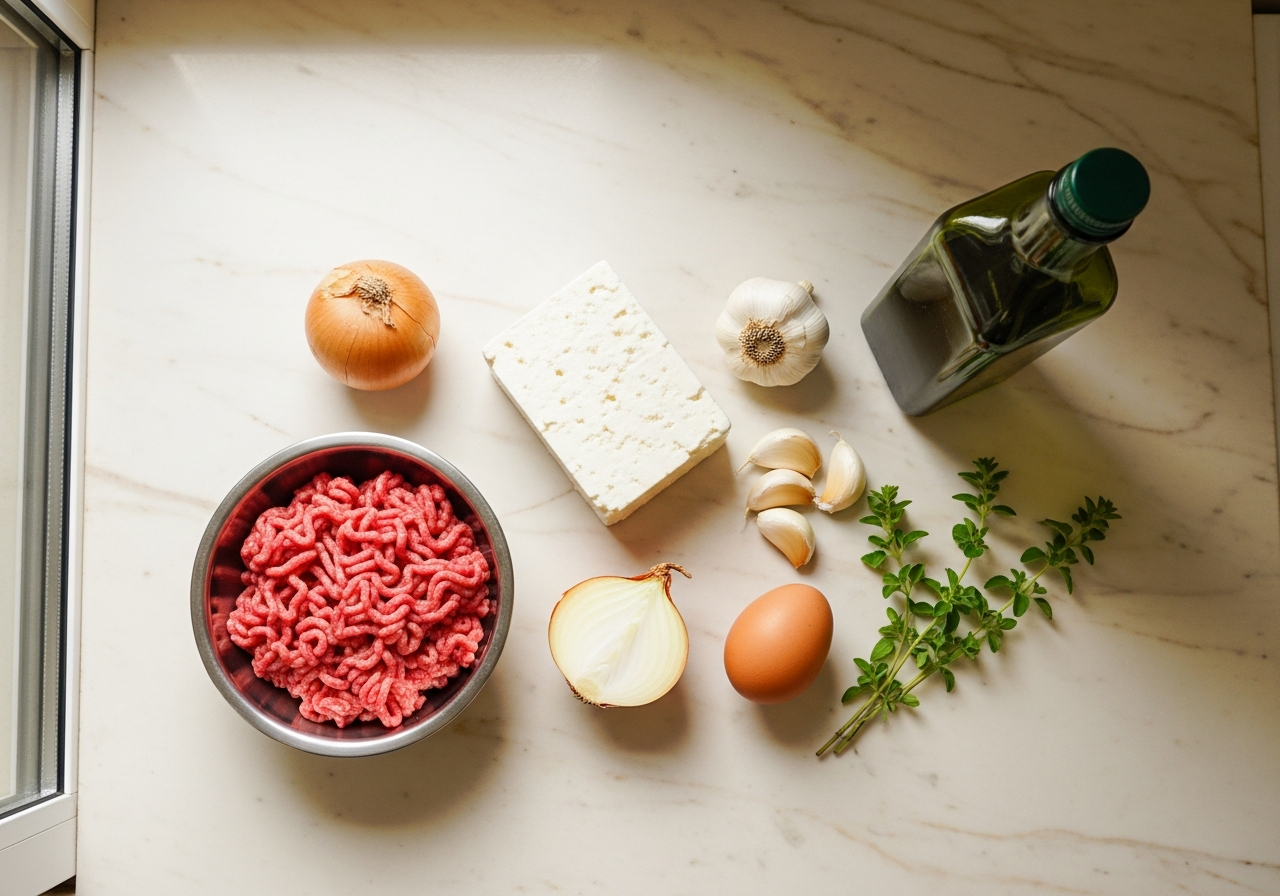
For the Meat Mixture
- 500g (1.1 lb) ground beef, 80/20 fat content
- 1 small onion (about 60g), finely grated
- 2 garlic cloves, minced
- 1 egg, lightly beaten
- 1 tsp dried oregano
- 1 tsp fine sea salt
- ½ tsp freshly ground black pepper
- 1 tbsp olive oil
For the Feta Stuffing
- 120g (4.25 oz) feta cheese, cut into 4 equal pieces
To Serve
- Tzatziki — my Tzatziki Recipe is what I make alongside
- Traditional Greek Village Salad (Horiatiki)
- Warm Homemade Pita Bread or crusty country bread
- Lemon wedges
Mpifteki Recipe: Step-by-Step Instructions
Step 1 — Make the Meat Mixture
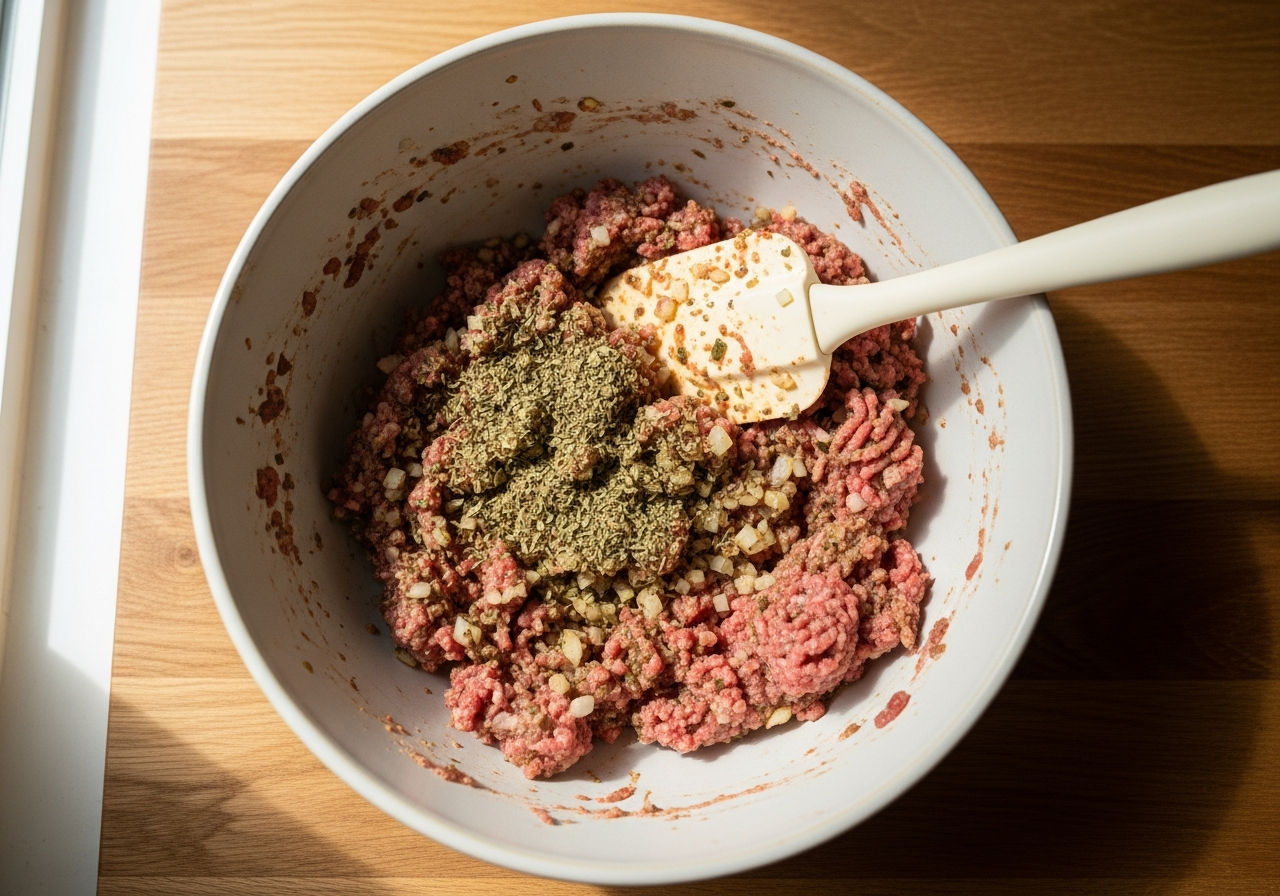
Place the ground beef in a large bowl. Grate the onion directly into the bowl — you want all of the juice that comes out with it, since that moisture is what keeps the patty tender during cooking. Add the minced garlic, beaten egg, dried oregano, salt, pepper, and olive oil.
Mix with your hands until just combined. Everything should be evenly distributed, but stop as soon as you no longer see streaks of egg. Do not knead or compress the meat. Cover the bowl and rest the mixture in the refrigerator for 15 minutes — this helps the seasoning absorb and makes the patties firmer and easier to shape.
Chef’s tip: If the mixture feels too loose to hold its shape, add a tablespoon of fine dried breadcrumbs. I prefer to leave them out when the beef is properly chilled, since they can dilute the flavor slightly.
Step 2 — Shape and Stuff the Patties
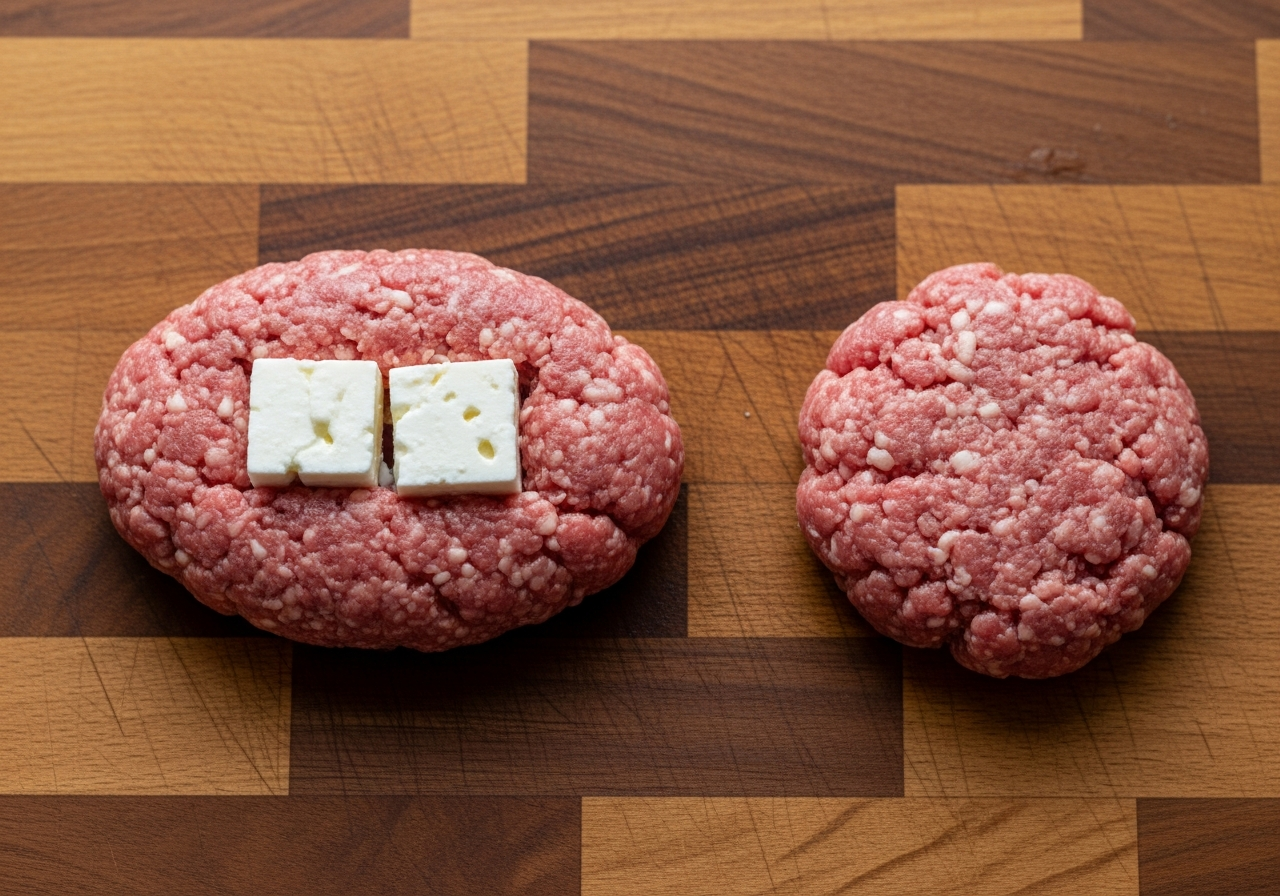
Divide the meat mixture into 4 equal portions. Working with one portion at a time, flatten it into an oval disk in the palm of your hand — aim for about 1.5cm thick. Place one piece of feta in the center. It should sit well within the edges, with at least 1.5cm of meat around it on all sides.
Fold the edges of the meat up and over the feta, pressing and pinching firmly to seal the seam. Shape the patty into a smooth oval, applying gentle pressure to close any gaps. Run your fingers around the perimeter one more time to check for weak spots — any opening will let the feta escape onto the grill.
Repeat with the remaining three portions. Place the shaped patties on a plate and refrigerate for at least 10 minutes before cooking. The chill firms them up considerably and helps them hold their shape under high heat.
Chef’s tip: If the feta you are using is particularly wet, pat each piece dry with a paper towel before stuffing. Excess moisture turns to steam inside the patty and can force it to burst open.
Step 3 — Cook the Mpifteki
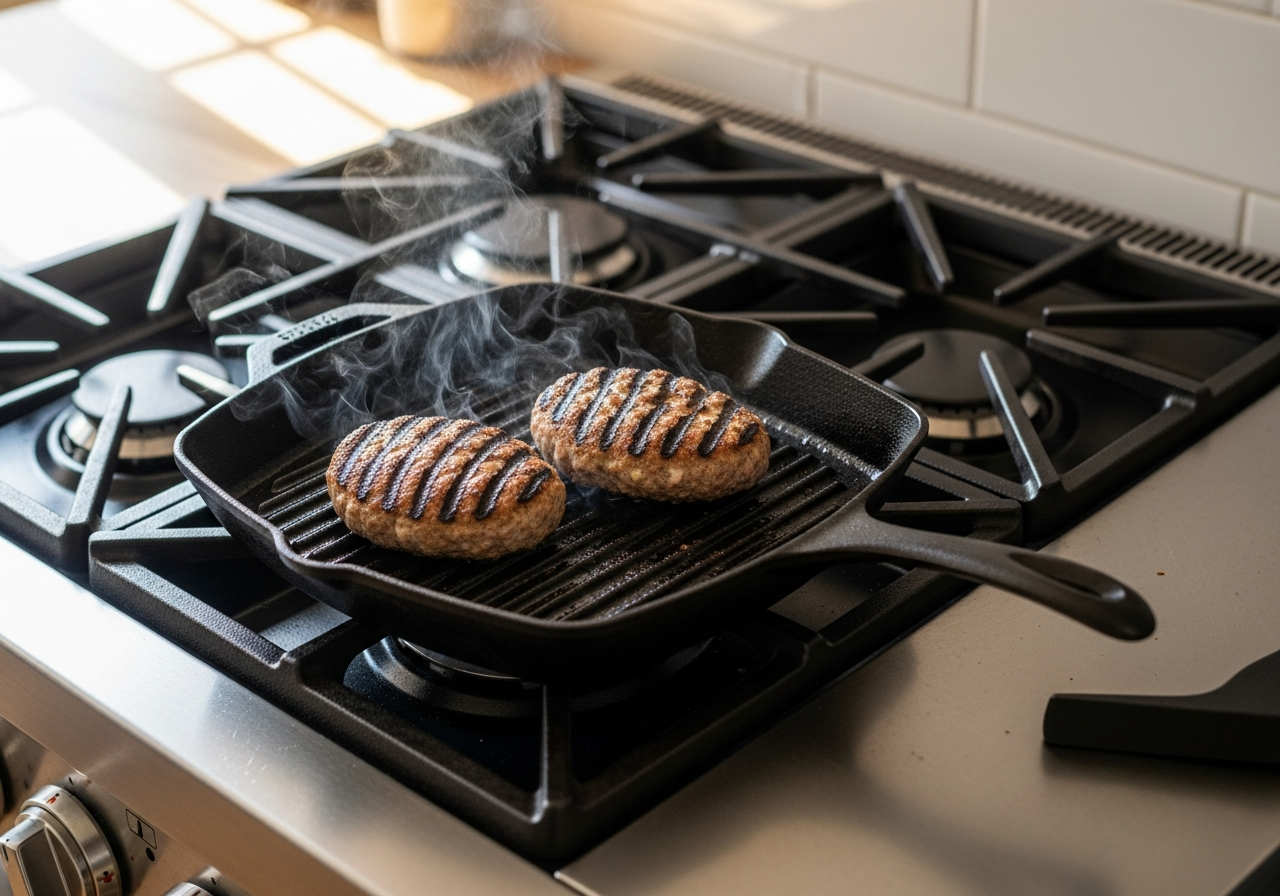
To grill: Heat a charcoal grill or cast-iron grill pan over high heat until very hot — you should not be able to hold your hand an inch above the grate for more than a second. Brush the grates or pan lightly with olive oil. Place the mpifteki on the grill and leave them undisturbed for the first 3 to 4 minutes. Moving them early will tear the crust before it has formed. Flip carefully with a wide spatula and cook for a further 4 to 5 minutes on the second side. The internal temperature should reach 70°C (160°F).
To bake: Preheat the oven to 220°C (425°F / Gas Mark 7). Arrange the mpifteki on a lightly oiled baking tray with space between them. Bake for 20 to 25 minutes, turning once at the halfway point. For a charred finish that approaches grilled texture, switch on the broiler/grill function for the final 2 to 3 minutes.
Chef’s tip: Do not press down on the patties while they cook. Pressing forces out the juice and the melted feta together — you will lose everything you were trying to keep inside.
Step 4 — Rest and Serve
Transfer the cooked mpifteki to a warm plate and rest for 3 to 4 minutes before serving. This allows the interior temperature to equalize and the feta filling to settle from fully liquid back to a rich, flowing consistency that does not pour out the moment the patty is cut.
Serve immediately with tzatziki, a horiatiki salad, and warm bread or pita. A wedge of lemon on the side is not optional — the brightness cuts through the richness of the feta in a way that ties everything together.
Chef’s Notes
On the meat: I use 80/20 ground beef — lean enough to hold its shape, fatty enough to stay juicy through the full cooking time. If you can find freshly minced beef from a butcher, use it. The texture is noticeably better than pre-packaged mince.
On the feta: Buy a block, not a tub of crumbles. Pre-crumbled feta has already lost most of its moisture and tends to dry out rather than melt inside the patty. Greek PDO feta is ideal, but Bulgarian feta works well too.
Variations:
- With Kalamata olives: Add 4 to 5 finely chopped Kalamata olives to the feta filling. The brine adds another layer of flavor that works particularly well when grilling over charcoal.
- With roasted pepper: A thin slice of roasted red pepper laid alongside the feta adds sweetness that balances the salt.
- Pork and beef blend: A 50/50 combination of pork mince and beef mince is common in parts of Greece and produces a slightly sweeter, more delicate patty.
- Without feta: Mpifteki can also be made unstuffed — just shape the seasoned meat into thick oval patties and cook as directed. The seasoning alone is good.
Make-ahead and storage: The shaped, uncooked patties keep in the refrigerator for up to 24 hours. They can also be frozen before cooking, separated by parchment paper, for up to 2 months. Cook directly from frozen, adding 5 to 7 extra minutes. Cooked mpifteki keep refrigerated for 3 days; reheat gently in a covered pan with a splash of water to prevent drying.
FAQ
What does mpifteki mean in Greek?
Mpifteki (μπιφτέκι) is a Greek word derived from the Turkish biftek and the French bifteck, meaning beef steak. In Greece, it refers to a thick, seasoned ground meat patty — almost always stuffed with feta cheese. It is a fixture on taverna menus throughout the country.
What is the difference between mpifteki and a burger?
The main differences are the stuffing and the seasoning. Mpifteki is stuffed with a solid piece of feta inside the patty rather than topped with cheese, and it is seasoned in the Greek style — dried oregano, garlic, onion — rather than with burger spices. It is also typically thicker, more oval in shape, and served with tzatziki and horiatiki rather than bun and condiments.
Can I make mpifteki without an egg?
Yes. The egg acts as a binder and adds a small amount of moisture, but it is not essential if the ground beef has a good fat content. Simply omit it. The patty will hold together provided you handle it gently and chill it well before cooking.
Can mpifteki be baked instead of grilled?
Absolutely. A very hot oven — 220°C (425°F) — produces excellent results, particularly if you finish the patties under the broiler for the last few minutes to build color and crust. The result is slightly less smoky than charcoal-grilled but still juicy and full-flavored.
What do you serve with mpifteki?
At every taverna I ate at growing up in Kos, mpifteki came with tzatziki, a horiatiki salad, and bread. Greek lemon potatoes are also a natural pairing if you want something more substantial. Keep the sides simple — the stuffed patty is the centrepiece of the plate.