
There is a particular kind of cold that comes to Kos in January — not bitter, not northern, but damp and heavy with salt air off the Aegean. It settles into you in a way that thin clothing cannot fix. Growing up, my mother had exactly one answer to this cold, and it came in a wide-bottomed pot: youvarlakia, Greek meatball soup finished with avgolemono sauce.
I can still see the kitchen on those winter mornings — my mother rolling the meatballs at the table, her hands moving fast and sure, pressing a small mound of ground meat and rice between her palms until they were perfectly round. Not too tight, she would say. You want the rice room to swell. The meatballs would go into a pot of simmering water with a glug of olive oil, and for the next half hour the house would smell of warming meat and bay leaf.
The final step — the one that turned a good soup into something exceptional — was always done at the end, off the heat, with ceremony. She would whisk the eggs and lemon together in a bowl, ladle the hot broth in slowly while whisking, then pour everything back in one steady stream. The soup would transform: cloudy, silk-smooth, bright with lemon and rounded by egg. I never saw it curdle. Not once.
Youvarlakia (pronounced yoo-var-LAH-kya) is one of the great comfort dishes in the Greek repertoire — tender meatballs made with rice stirred into the mix, simmered directly in the broth, finished with avgolemono. It is different in texture and character from keftedes, which are fried crisp and eaten as meze. Youvarlakia are gentle, yielding, built for the bowl and the spoon.
This recipe gives you both the meatballs and the egg-lemon technique in full, with four specific tips that make the difference between a flat, broken result and the silky soup my mother made every winter on Kos.
Table of Contents
Why This Recipe Works
- Rice goes inside the meatball, not the broth. The starch released as the rice cooks inside each meatball helps bind the texture and subtly thickens the surrounding broth — a quiet but important detail.
- Don’t use lean meat. A mix with some fat content (80/20 ground beef, or half beef and half pork) keeps the meatballs moist through the long simmer. Very lean meat produces dense, dry results.
- The avgolemono is tempered, not added cold. Hot broth is ladled gradually into the whisked eggs and lemon before it goes back into the pot. This stabilizes the emulsion and prevents the scrambling that ruins the dish.
- Never boil the soup after adding avgolemono. Once the egg-lemon goes in, the heat should be off. A rolling boil will break the sauce instantly — patience at the end is everything.
Ingredients
For the Meatballs
- 500g (1 lb) ground beef (80/20), or half beef and half pork
- ½ cup short-grain white rice (uncooked), such as arborio or Calrose
- 1 small yellow onion, finely grated
- 2 cloves garlic, minced
- 1 egg
- 2 tablespoons fresh flat-leaf parsley, finely chopped
- 1 teaspoon dried spearmint
- 1 teaspoon salt
- ½ teaspoon black pepper
- ¼ teaspoon ground cumin (optional)
For the Broth
- 1.5 liters (6 cups) chicken stock or water
- 2 tablespoons olive oil
- 1 teaspoon salt
- 1 bay leaf
- ½ teaspoon white pepper
For the Avgolemono Sauce
- 3 large eggs (room temperature)
- Juice of 2 lemons (about 60ml / ¼ cup)
- Salt to taste
Step-by-Step Instructions
- Make the meatball mixture. Combine the ground meat, uncooked rice, grated onion, garlic, egg, parsley, spearmint, salt, pepper, and cumin (if using) in a large bowl. Mix until just combined — do not overwork the meat, or the meatballs will be dense. Cover and refrigerate for 15–20 minutes to firm up slightly.
- Prepare the broth. Bring the chicken stock (or water) to a gentle simmer in a wide pot with the olive oil, salt, bay leaf, and white pepper. Keep at a light simmer while you form the meatballs.
- Form and add the meatballs. Wet your hands slightly. Roll the mixture into balls roughly the size of a large walnut (about 30–35g each). You should get 20–24 meatballs. Lower them gently into the simmering broth one by one. Do not stir for the first 5 minutes — let them set.
- Simmer until cooked through. Cover the pot loosely and simmer on medium-low heat for 30–35 minutes, turning the meatballs once halfway through. The rice inside will swell and the broth will become lightly cloudy. Taste and adjust salt.
- Make the avgolemono. While the soup finishes, whisk the eggs in a bowl until light and frothy, about 1–2 minutes. Add the lemon juice and whisk to combine. Now comes the critical step: ladle two full ladles of hot broth (not meatballs) very slowly into the egg-lemon mixture while whisking constantly. This tempering step raises the temperature of the eggs gradually so they don’t scramble.
- Finish the soup. Remove the pot from heat entirely. Pour the tempered avgolemono mixture back into the pot in a slow, steady stream, gently swirling the pot or stirring with a spoon. The broth will go from clear and slightly cloudy to a silky, lemon-cream colour. Do not return to heat. Taste, adjust seasoning, and serve immediately.
Recipe Card
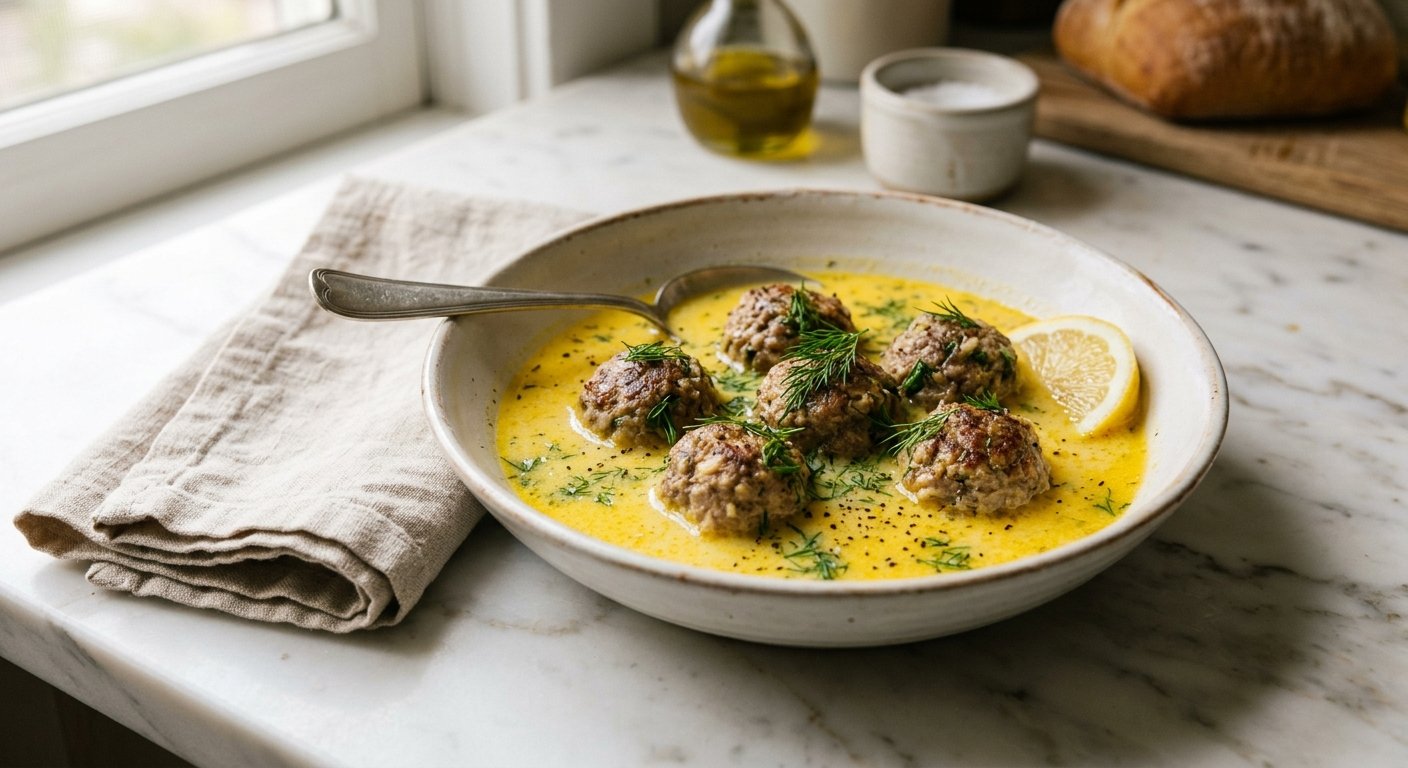
Youvarlakia (Greek Meatball Soup with Avgolemono)
Ingredients
For the Meatballs
- 500 g ground beef 80/20, or half beef/half pork
- 1/2 cup short-grain white rice uncooked
- 1 small yellow onion finely grated
- 2 clove garlic minced
- 1 egg
- 2 tablespoons fresh flat-leaf parsley finely chopped
- 1 teaspoon dried spearmint
- 1 teaspoon salt
- 1/2 teaspoon black pepper
- 1/4 teaspoon ground cumin optional
For the Broth
- 1.5 liters chicken stock or water about 6 cups
- 2 tablespoons olive oil
- 1 teaspoon salt
- 1 bay leaf
- 1/2 teaspoon white pepper
For the Avgolemono
- 3 large eggs room temperature
- 1/4 cup fresh lemon juice juice of 2 lemons
- salt to taste
Instructions
- Combine all meatball ingredients in a large bowl. Mix until just combined. Do not overwork the meat. Cover and refrigerate for 15-20 minutes to firm up slightly.
- Bring the chicken stock to a gentle simmer in a wide pot with the olive oil, salt, bay leaf, and white pepper.
- Wet your hands slightly. Roll the meat mixture into walnut-sized balls (about 30-35g each), making 20-24 total. Lower them gently into the simmering broth one by one. Do not stir for the first 5 minutes.
- Cover the pot loosely and simmer on medium-low heat for 30-35 minutes, turning the meatballs once halfway through. Taste and adjust salt.
- Whisk the eggs until light and frothy, about 1-2 minutes. Add the lemon juice and whisk to combine. Ladle two full ladles of hot broth (no meatballs) very slowly into the egg-lemon mixture while whisking constantly. This tempering step prevents the eggs from scrambling.
- Remove the pot from heat entirely. Pour the tempered avgolemono back into the pot in a slow, steady stream, gently swirling. The broth will turn silky and lemon-cream in colour. Do not return to heat. Taste, adjust seasoning, and serve immediately.
Notes
Nutrition
Chef’s Notes
On the rice: Use short-grain rice — arborio, Calrose, or any sushi-style rice. Short-grain absorbs more liquid and gives the meatballs a softer, more cohesive texture. Long-grain rice stays too firm and can make the meatballs fall apart.
On the meat: If you can, ask your butcher for a blend — some pork fat in the mix gives the meatballs a silkier texture and richer broth. The soup made with all-lean beef is noticeably less satisfying.
Avgolemono is not soup-proof. Once the egg-lemon sauce is added, serve immediately. Reheating will break the emulsion and you will end up with scrambled egg strings in a thin, sour liquid. If you need to prepare ahead, make and refrigerate the broth with meatballs, then do the avgolemono step fresh when you’re ready to serve.
Herbs: Dried spearmint is traditional in Greek meatball dishes — you’ll find it in my keftedes as well. It is a quieter herb than fresh mint and integrates into the meat rather than announcing itself. If you cannot find spearmint specifically, dried peppermint works but use slightly less.
Serving: Youvarlakia is a full meal — meatballs, starch from the rice, protein from the egg, brightness from the lemon. Serve with crusty bread and a simple salad. If you want a more substantial spread, it pairs well alongside souvlaki skewers at a larger table.
Storage: Refrigerate the broth and meatballs (without avgolemono) for up to 3 days. Reheat gently, then make the avgolemono fresh.
FAQ
What is avgolemono?
Avgolemono (avgó = egg, lemóni = lemon) is the classic Greek egg-lemon sauce used to finish soups, stews, and braises. Eggs and lemon juice are whisked together, tempered with hot liquid, and stirred in at the end to create a silky, lightly thickened finish. According to the Oxford Companion to Food, it appears across Greek and broader Mediterranean cooking as one of the oldest sauce-making techniques. For a standalone version, see my avgolemono soup post where the technique is covered in full.
Can I freeze youvarlakia?
Freeze the meatballs and broth separately from the avgolemono. The egg-lemon sauce does not freeze well — the emulsion breaks on thawing. To freeze: make the soup through step 4, cool completely, and freeze in portions. Thaw in the refrigerator, reheat gently, and add fresh avgolemono when serving.
What rice is best for youvarlakia?
Short-grain white rice is the right choice — arborio, Calrose, or similar. It holds together inside the meatball as it cooks and releases a small amount of starch into the broth, which contributes to the final texture. Do not use parboiled or instant rice; it won’t cook properly within the meatball.
Should I use beef, lamb, or pork?
Traditional recipes vary by region — some Greek home cooks use all beef, others use a beef-pork blend for the extra fat and flavor. Lamb has a more pronounced flavor that can overpower the delicate avgolemono. I prefer 80/20 ground beef, or half beef and half pork. Avoid extra-lean mince in this dish.
How do I prevent the avgolemono from curdling?
Two rules: temper the eggs slowly (never add cold eggs to hot broth), and never boil the soup after the avgolemono goes in. Use room-temperature eggs — cold eggs temper less reliably. Add the hot broth in a very slow, thin stream while whisking constantly. And take the pot fully off the heat before you pour the avgolemono in. There is no recovering a curdled avgolemono; the technique simply requires care and patience at the end.